Liquid glass screen protectors arrive with bold claims: wipe on an invisible layer, and your screen supposedly gains “9H hardness” protection against scratches and even drops. It sounds like the end of tempered glass. But how good is a liquid glass screen protector in the real world — in pockets, on desks, against the sand and grit that actually mark screens? The honest verdict is narrower than the marketing: it does one modest job reasonably well, and it is routinely credited with several jobs it cannot do at all.
This evaluation separates the chemistry from the claims — what the layer physically is, why the famous hardness number misleads, where the protection is genuine, and where it stops.
Key Takeaways
- Liquid glass is a silicon dioxide nano-coating — a layer thousands of times thinner than a tempered glass protector.
- The “9H” claim uses the pencil hardness scale, a much gentler test than the Mohs scale that governs real-world scratching by sand and grit.
- It offers mild resistance to light scuffs and keeps the screen feeling slick, but it cannot absorb impact — drops are essentially unprotected.
- Because it is invisible, you cannot tell when it has worn away; protection fades silently over months.
- Its genuine strengths are shape and feel: it fits any curved screen perfectly and adds nothing to look at or touch.
What the Layer Actually Is
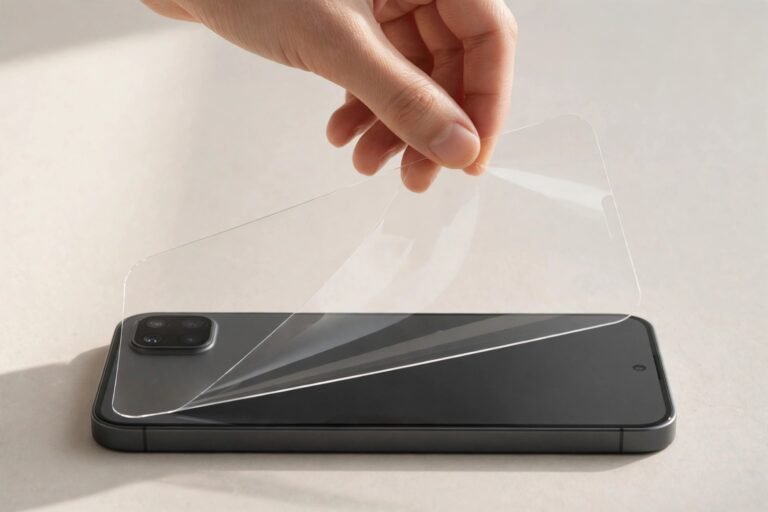
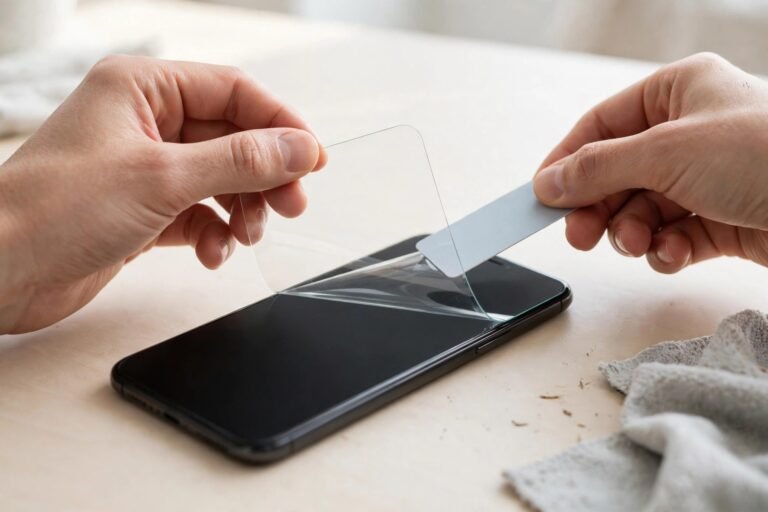
The liquid is typically silicon dioxide particles in a solvent carrier. Wiped across the screen, the solvent evaporates and the particles settle into the microscopic texture of the glass, curing into a continuous layer. The catch is scale: that layer is measured in nanometres up to a few microns. A sheet of ordinary paper is around a hundred microns thick; a tempered glass protector is roughly three hundred. In other words, the liquid layer can be a hundred times thinner than the glass sheet it claims to replace.
Thickness is not everything in scratch science, but it matters enormously for two things: how much material there is to sacrifice before the real glass is exposed, and how much energy the layer can absorb when the phone strikes the ground. On both counts, a nano-coating starts with very little to give.
The 9H Claim, Translated
“9H” sounds like a score on the Mohs hardness scale, where diamond is 10 and hardened steel sits around 6. It is not. In coatings science, 9H refers to the pencil test: pencils of increasing hardness are dragged across the surface, and 9H is the hardest pencil grade that fails to scratch it. It is a legitimate test — for paints and thin coatings. But pencil leads are far softer than the materials that scratch phone screens in real life, principally quartz grit and sand, which sit around Mohs 7 and will mark both phone glass and any coating on it.
Independent scratch testing of liquid glass products tells a consistent story: keys, coins and blades — the classic pocket villains — leave it unmarked, exactly as they leave bare modern glass unmarked. Introduce sand or a mineral stylus at realistic hardness, and the marks appear at much the same point as on an unprotected screen. The coating adds a thin margin, not a transformation.
- Whenever any protector quotes “9H”, read it as “passed the hardest pencil test” — a claim about coatings, not about surviving grit, gravel or a drop onto concrete.
- The realistic scratch enemy is sand. If a product’s demonstrations only feature keys and coins, it is showing you the test every bare screen already passes.
Where It Genuinely Helps
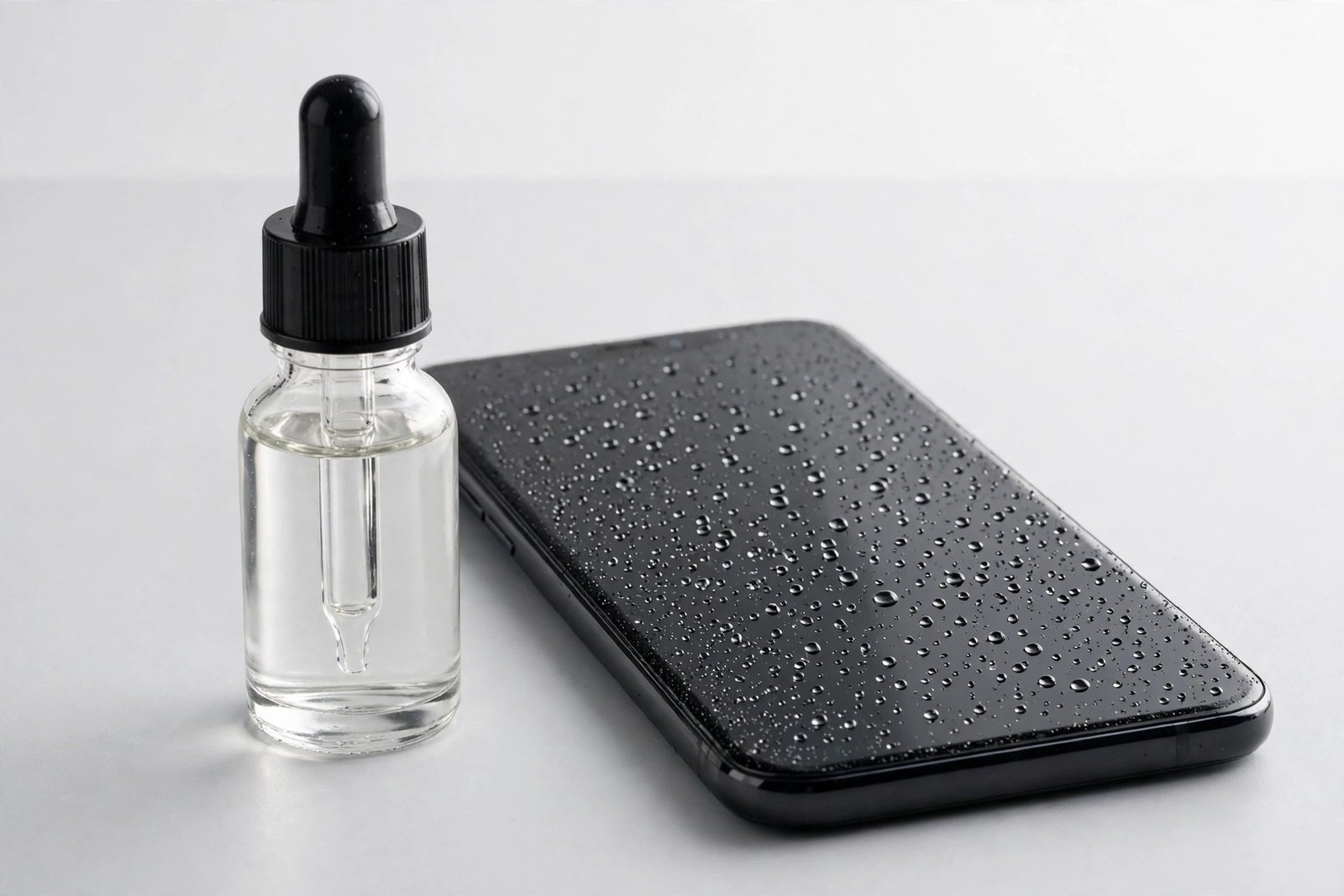
Stripped of exaggeration, liquid glass still has real virtues. The cured layer slightly hardens the surface against the lightest category of wear — the faint micro-scuffs from sliding a phone across a desk or in and out of a clean pocket — and it restores a slick, hydrophobic feel similar to a fresh oleophobic coating, so fingerprints wipe away easily. Because it is a liquid, it follows any screen geometry perfectly: sharply curved edges, unusual sizes, and devices for which no well-fitting glass sheet exists. And it is truly invisible — no borders, no cut-outs, no change to how the phone looks or feels in the hand.
Where It Falls Short
The limits are structural. Impact: a layer a few microns thick cannot spread or absorb the energy of a fall, so claims of drop protection rest on the phone’s own glass surviving — which it may or may not. Deep scratches: anything hard enough to mark the screen marks it straight through the coating. Verification: you cannot see the layer, so you cannot inspect it; a tempered glass protector announces its sacrifice with a crack, while liquid glass simply thins away over months of friction until the protection is nominally present and practically gone. Reapplication schedules exist precisely because the layer is consumable — yet nothing on the phone tells you when its time is up.
- A rough field check: water behaviour. On a healthy coating, water beads and rolls; where it has worn thin, water spreads and clings. Use it to judge the swipe zone at the centre of the screen.
- If drops are your main worry, judge protectors by thickness and material, not hardness numbers — absorbing energy is a job for a physical sheet of glass or polymer.
Frequently Asked Questions
Will liquid glass stop my screen cracking in a drop?
There is no good evidence that it meaningfully can. Crack prevention is about absorbing and spreading impact energy, and a micron-thin coating has almost no material with which to do either. Treat any drop-protection claim as marketing, and rely on the phone’s own glass, a case, and your luck — or fit a physical protector.
How long does the protection actually last?
Manufacturers typically suggest reapplying somewhere between every few months and once a year, which is a fair reflection of reality: the layer wears fastest where your thumb works hardest, so protection becomes uneven long before it disappears entirely. Heavy users and frequent screen-cleaners wear through it sooner.
Can I use liquid glass underneath a tempered glass protector?
You can, but it adds very little. The tempered glass does the protective work, and the coating beneath contributes nothing measurable to impact or scratch outcomes. Where the combination makes sense is the reverse logic: if a well-fitting glass protector does not exist for your device, liquid glass is better than nothing at all.
Judged honestly, liquid glass is a light-duty surface treatment with excellent manners — invisible, slick and easy to live with — being sold as heavy-duty armour. For gentle use it is harmless and mildly helpful; for real protection, a physical layer still has no substitute.