The install went wrong: the protector is on, but it is crooked, or there is a constellation of dust trapped underneath, or one corner refuses to sit down. Before you bin it and reach for the spare, know this — many protectors can be lifted, cleaned and reapplied successfully, and the difference between a rescue and a write-off is mostly about material and timing.
This is the second-chance guide. You will learn which protectors genuinely tolerate reapplying (film, almost always; glass, sometimes), how tape-dabbing strips dust out of exposed adhesive, how rinsing rescues wet-install film, and — just as important — how to recognise the point where the adhesive is too far gone and using the spare is the honest, cheaper answer.
Key Takeaways
- Film forgives, glass sometimes does — flexible protectors reapply well; glass allows roughly one quick retry.
- Timing decides everything: a lift within the first minutes is a rescue; a lift tomorrow is a replacement.
- Tape-dabbing is the core rescue skill — it pulls dust out of adhesive without touching or washing it.
- Wet-install film can be rinsed and refitted because it is designed to be applied wet in the first place.
- Never wash dry-install glass — water and soap wreck silicone adhesive rather than cleaning it.
- A fingerprint on the adhesive, torn film, or a cracked pane means use the spare, not another attempt.
First, Lift It Off Properly
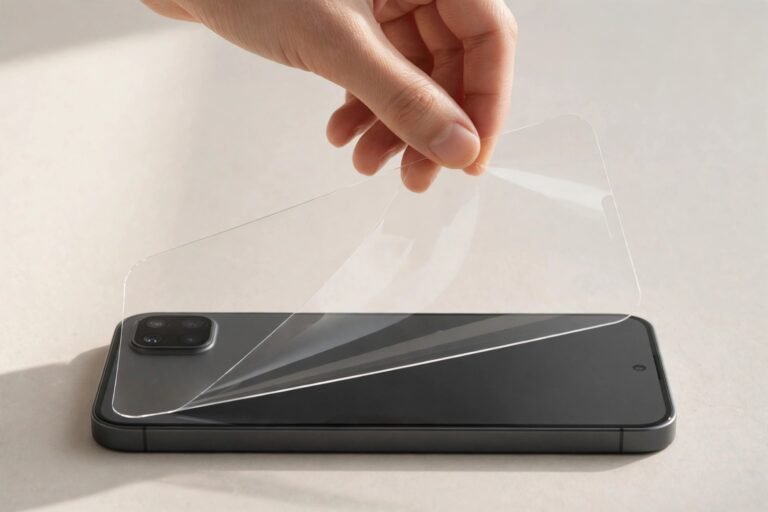
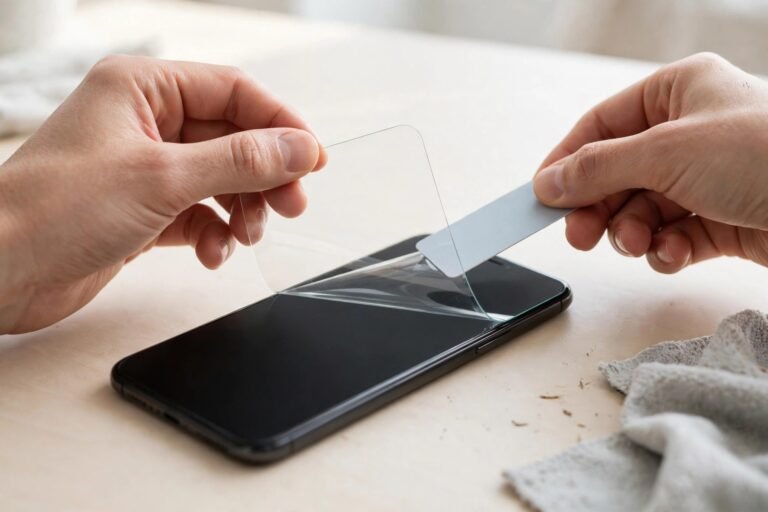
Decide quickly — every minute bonded makes the lift harder and the rescue less likely. Slide a fingernail or the edge of a piece of tape under one corner and raise it slowly, at a low angle, letting the adhesive release gradually rather than ripping the protector free. For glass, support the pane flat as it comes away so it does not flex and crack. Once it is off, hold it sticky side up, resting on its edges or its backing sheet — never lay the adhesive face down on a table, where it will pick up everything the table has to offer.
Now assess honestly. Look at the adhesive under a light: a few specks of dust are a cleaning job; a smear of fingerprint oil, a crease, or adhesive that has gone cloudy and streaky is a verdict. Clean the phone screen again fully — wet wipe, dry cloth, dust check — because whatever caused the first failure may still be sitting there.
Tape-Dabbing: Cleaning Adhesive Without Touching It
This is the technique that makes reapplying possible. Take a dust-removal sticker or a fresh strip of low-tack tape and press it gently onto the sticky side of the protector, right where a speck sits, then peel it away. The tape’s adhesion beats the speck’s grip, so the dust transfers to the tape. Work speck by speck across the whole underside, using a fresh section of tape each time — dabbing with a loaded section just deals the dust back out.
Two disciplines matter. First, never rub or wipe the adhesive — dab straight down and peel straight up, because sideways motion smears dust into the glue instead of lifting it out. Second, dab the screen the same way just before you refit: dust divides its loyalties, and half of what you saw may have stayed on the glass rather than the protector. Work under a bright light, tilt the protector constantly, and when the underside looks clean at every angle, it is ready.
- Mark each speck’s position with a dot of tape on the top of the protector before dabbing — underside dust has a gift for vanishing when you go looking for it.
- Expose the adhesive for as short a time as possible: keep the protector covered by its backing sheet between dabs so it is not collecting fresh dust while you work.
Rinsing: The Wet-Install Film Rescue
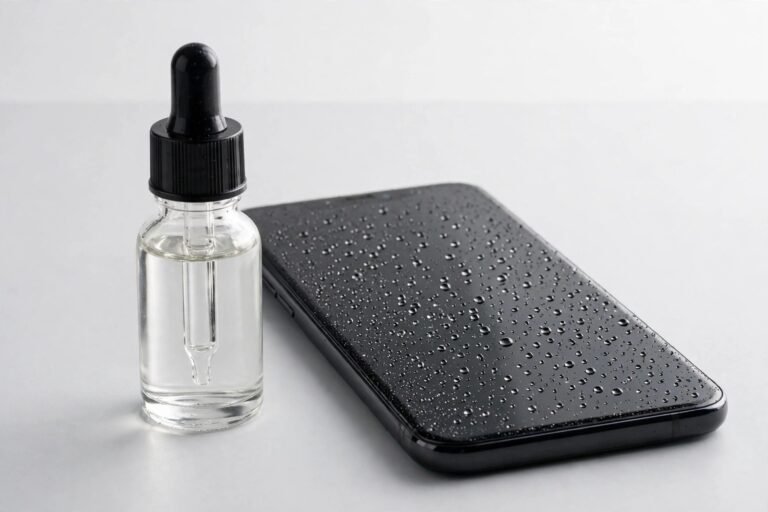
Wet-install film is the great exception to the no-water rule, because it was designed to go on wet. If yours is dusty or has lost its slip, you can rinse the adhesive side under lukewarm running water, letting the stream carry the dust away, then refit it with fresh application solution (or the faintest mist of water with a drop of the supplied solution), squeegeeing the liquid out from the centre as usual. The film’s adhesive tolerates this because it never depended on staying dry.
Draw the line firmly at everything else. Dry-install film and tempered glass must not be rinsed or washed. Their silicone adhesive clouds, weakens and can delaminate after contact with water and soap, and a pane that felt rescuable comes out of the sink genuinely finished. For those materials, tape-dabbing is the only cleaning the adhesive should ever meet.
Refitting, and When to Stop
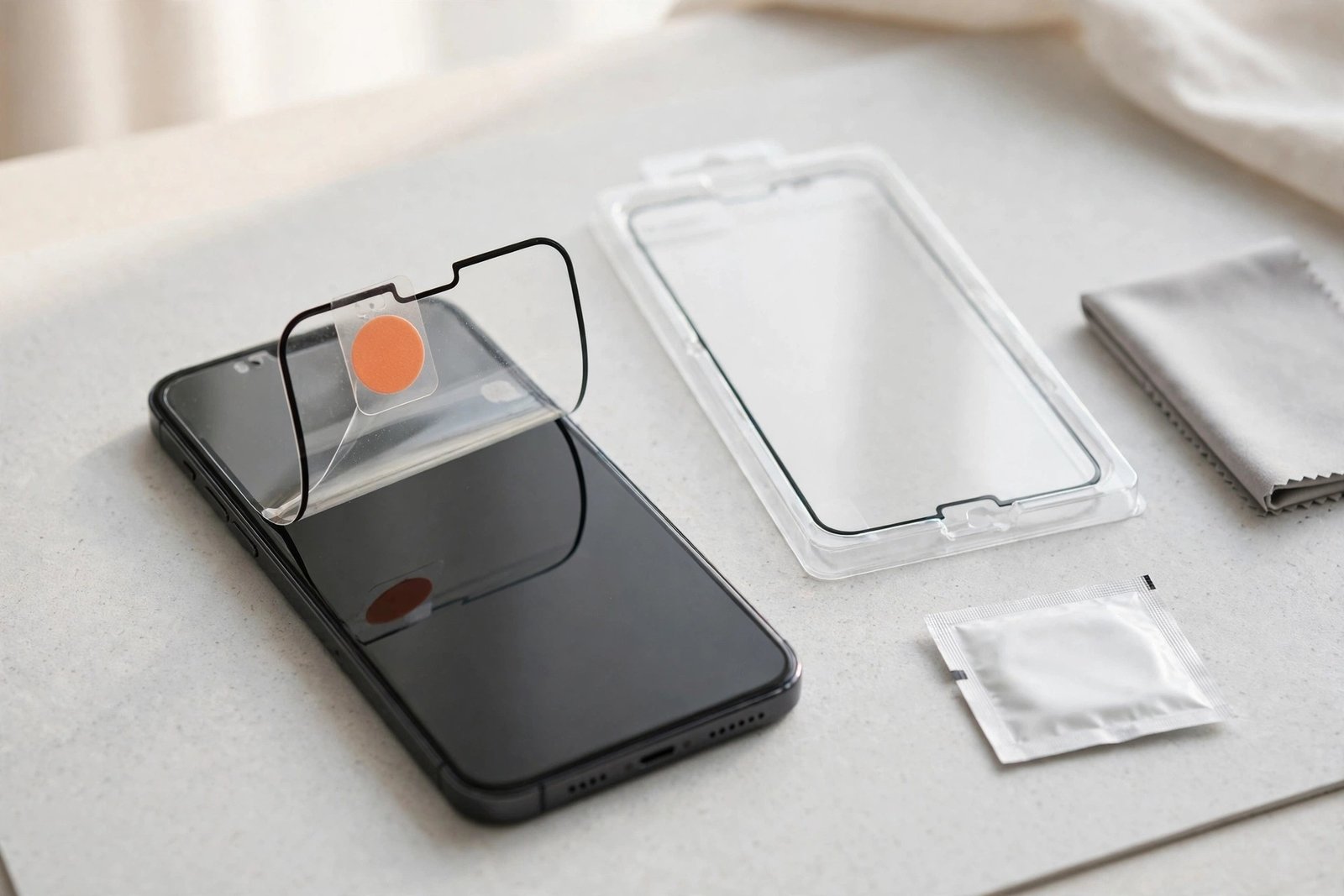
Refit exactly as you fitted the first time — align in the hover or on a tape hinge, lower once, press the centre, seat the edges. A successful reapply looks boring: flat edges, no specks, no halo. Judge the bond after half an hour, not half a minute, because reapplied adhesive flows back more slowly.
And know the stopping signals. Use the spare when: a fingerprint is visible in the adhesive and will not dab away, the film is creased or stretched, the glass is cracked or its edges are chipped, or this is already the second failed refit. Adhesive has a finite tolerance for lifting, cleaning and re-pressing; past that point each attempt is worse than the last, and the spare in the pack was included precisely so you never have to fight a lost cause.
- Photograph the trapped-dust bubbles before you lift — the picture tells you exactly where to dab on the underside and where to check the screen.
- Reapply in a steamy bathroom even if the first attempt was elsewhere: the rescue succeeds or fails on the dust in the air during the refit.
Frequently Asked Questions
How many times can I reapply the same protector?
Film, two or three careful times at most, and wet-install film a little more forgivingly still. Tempered glass, realistically once — each lift risks dust, edge damage and a weaker bond. Treat every reapply as borrowing against the adhesive, and spend the attempts sparingly.
The protector went back on but the edges will not stay down. Why?
The edge adhesive has picked up oil or dust, or the pane was slightly bent during the lift. Press the edge down firmly for a full minute and leave the case off overnight. If it still lifts by morning, the bond there is spent — that is a stopping signal, and the spare will behave properly.
Can I reapply a protector that has been on for months?
Almost never successfully. Long-bonded adhesive releases unevenly, stretches and picks up a season’s worth of edge grime as it peels. If a months-old protector is coming off, plan on it being a removal, not a rescue, and have the replacement ready before you start.
Lift it gently, dab it clean, refit it once with care — a rescued protector is a small triumph, as long as you know when to let the spare take over.