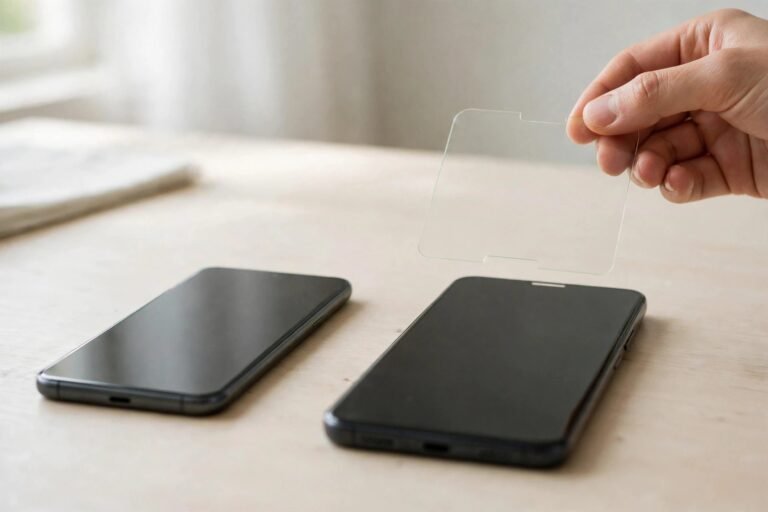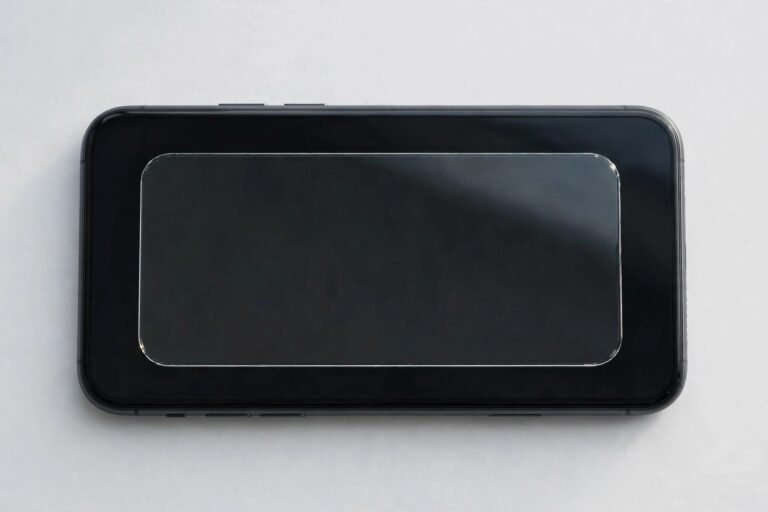
Liquid screen protectors sound like science fiction: a few drops of liquid wiped onto your phone, and suddenly the display is protected — no glass, no film, nothing to align or bubble. The marketing leans hard into nanotechnology and impressive-sounding claims. But what does that little bottle actually do to your screen, and is any of it real protection?
The short version: liquid protectors are real products that do a real, modest thing — and the marketing dramatically oversells it. This guide explains what is actually in the bottle, what the coating can and cannot do, and when it might be worth using versus a conventional protector.
Key Takeaways
- Liquid screen protectors are wipe-on coatings, usually based on silicon dioxide, that bond a microscopically thin layer to the display glass.
- They can improve scratch resistance slightly and add an oleophobic-like slickness, but the effect is far weaker than tempered glass.
- They provide essentially no drop or impact protection — there is no sacrificial layer to absorb a fall.
- The coating wears off over weeks to months of normal use and needs reapplication.
- They make most sense as a supplement for devices that cannot take conventional protectors, not as a replacement for glass.
What Is Actually in the Bottle?
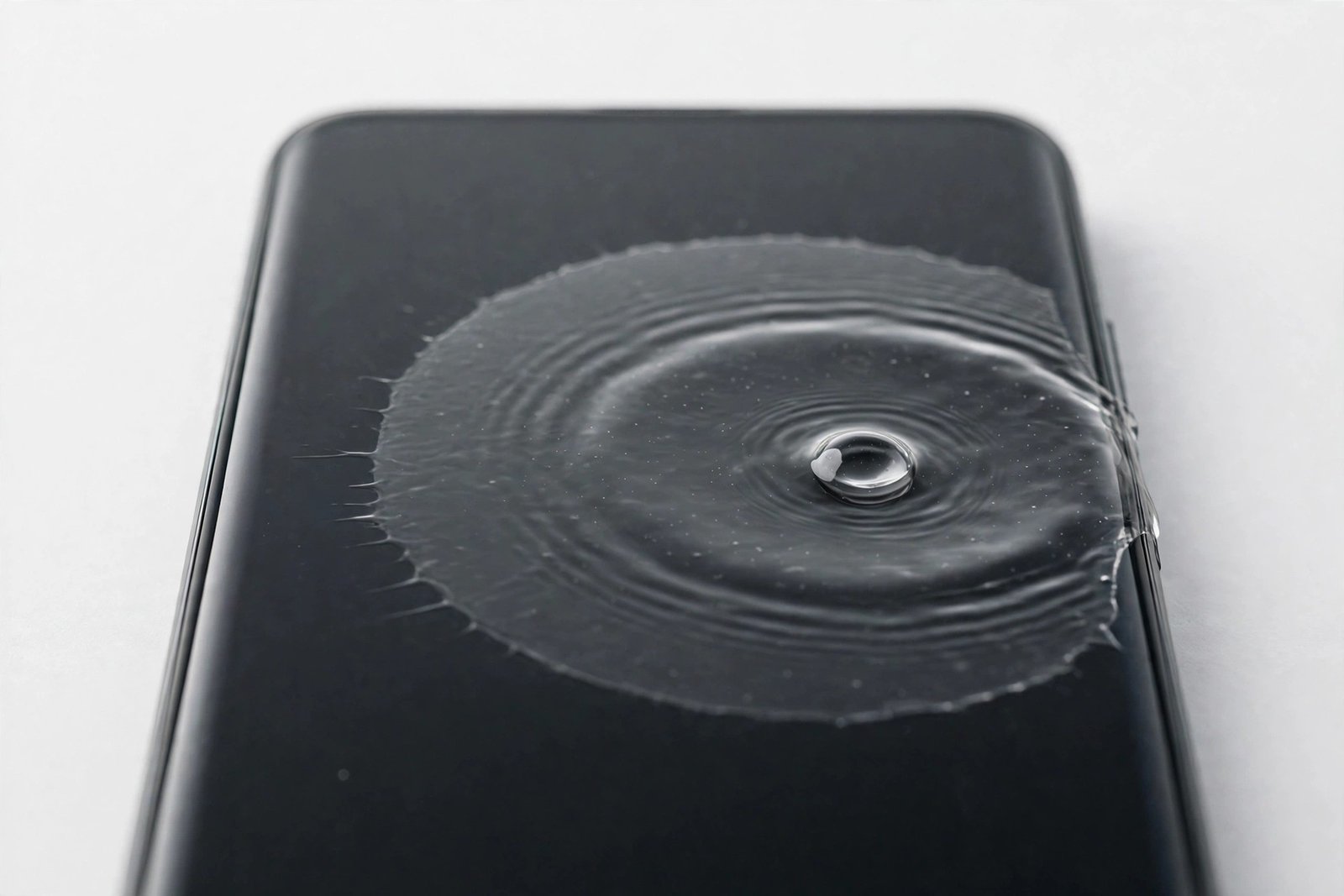
Most liquid screen protectors are built around silicon dioxide — essentially liquid glass chemistry — suspended in a solvent carrier. You wipe the solution onto the display, the solvent evaporates, and the active ingredient bonds to the glass surface, forming a layer measured in nanometres. To put that in perspective, a human hair is roughly 80,000 nanometres thick; this coating is a tiny fraction of that.
Because the layer is so thin, it is invisible and does not change the look or feel of the display in any dramatic way. Users typically report that the screen feels slightly smoother and resists fingerprints a little better for a while — similar to the factory oleophobic coating that ships on the phone, which is itself a thin chemical layer. That comparison is instructive: the phone already comes with a coating like this, and it wears off with use. The bottled version is the same idea, reapplied.
What the Coating Can Actually Do
The realistic benefits are modest but genuine. A fresh liquid coating adds a small amount of surface hardness, which can help against the lightest scratches — the micro-abrasions from pocket lint and soft cloths that dull a display over time. It also restores some of the slick, fingerprint-resistant feel that the factory coating loses as it wears. For a few weeks, the screen genuinely feels a bit nicer under the finger.
Some formulations include mild hydrophobic properties, so water beads slightly rather than sheeting. None of this is dramatic, and none of it is unique — it is the same class of effect you get from a fresh factory oleophobic coating. Think of it as a maintenance product for the screen’s surface feel, not as armour.
- Judge liquid protectors by the right standard: they compete with screen-cleaning and coating-refresh products, not with tempered glass. If you expect glass-level protection, you will be disappointed; if you want a slicker-feeling screen for a few weeks, they deliver.
What It Cannot Do: The Honest Limits
Here is where the marketing departs from physics. A nanometre-thin coating cannot absorb impact — there is simply no material there to sacrifice. Drop your phone on a corner and the coating does nothing; the display glass takes the full force, exactly as it would with no protector at all. Any claim involving hammers, drills, or dramatic drop tests is theatre, not evidence. The famous viral demonstrations invariably test scratch resistance against soft materials, never real impact.
Scratch protection is also limited. The coating may resist the very lightest abrasion, but anything that would scratch the underlying display glass — sand, grit, keys — will cut straight through a nanometre layer without slowing down. And the coating itself wears off: weeks of thumb friction, pocket abrasion, and cleaning gradually remove it, which is why the slick feeling fades and reapplication is recommended.
The Warranty Fine Print
Many liquid protector brands bundle an eye-catching warranty — sometimes promising to cover screen replacement costs up to a few hundred pounds if your display breaks while the coating is applied. Read these terms carefully before factoring them into your decision. They typically require product registration within days of purchase, proof of correct application, and a claims process with exclusions for common damage scenarios. Some require you to have reapplied the coating on schedule.
Warranties can be legitimate, but they are marketing tools first: the business model works because most buyers never claim. Do not buy a liquid protector for the warranty alone — buy it, if at all, for the modest surface benefits, and treat any warranty as a bonus with homework attached.
When Liquid Protectors Actually Make Sense
There are genuine use cases. Devices with curved displays that reject conventional glass, smartwatches with domed screens, camera lens covers, and phones you plan to trade in soon — anywhere a normal protector fits poorly or the device’s remaining life is short, a wipe-on coating is better than nothing and costs little. They are also handy as a stopgap: apply one while waiting for a proper glass protector to arrive.
Some users layer a liquid coating under or over a conventional protector, though the benefit there is marginal — the glass is doing the real work either way. The clearest honest pitch for these products is convenience and invisibility: no alignment, no bubbles, no edges to lift, and nothing to look at. For people who hate the feel or look of protectors, that alone can justify the small price.
- If you use a liquid protector on a phone you care about, pair it with a good case with a raised lip. The case handles drops, the coating handles surface feel — together they cover what neither does well alone.
Frequently Asked Questions
Does liquid screen protector really work?
Partly. It genuinely adds a thin hardened layer that improves surface slickness and resists the lightest scratches for a few weeks. It does not provide meaningful drop or deep-scratch protection, despite what the marketing implies.
How long does liquid screen protector last?
Typically a few weeks to a couple of months of normal use before the coating wears noticeably thin. Most brands recommend reapplying every one to three months, which tells you everything about its durability.
Can I use liquid protector instead of tempered glass?
Not as a substitute. Tempered glass provides sacrificial impact protection that a nanometre coating physically cannot match. Use liquid as a supplement for awkwardly shaped devices or as a stopgap — not as your primary defence on a phone you want to keep pristine.
Liquid screen protectors work — just not the way the adverts suggest. Expect a slicker screen and minor scratch resistance for a few weeks, not invisible armour. Measured against that honest standard, they are a reasonable niche product; measured against the marketing, they are a disappointment.