Walk into any phone accessory shop and you will see two products that sound almost identical: the “privacy screen protector” and the “privacy screen.” Both promise to stop nosy neighbours from reading your display on the train. Both sit on top of your screen. Are they the same thing with different names — or different products entirely?
The terminology is genuinely confusing, because the industry uses these terms loosely and interchangeably. This guide untangles what each term means, where they overlap, and which one you actually want — so you buy the right product the first time.
Key Takeaways
- A privacy screen protector is a screen protector with privacy filtering built in — it protects against both scratches and shoulder surfing.
- A “privacy screen” usually means the same thing in phone accessories, but in computing it can mean a detachable filter panel with no adhesive.
- Both use micro-louvre technology: tiny vertical blinds that black out the display at side angles.
- If it sticks to your display with adhesive, it is a protector regardless of what the box calls it.
- For phones, the terms are effectively interchangeable; for laptops, the distinction matters more.
What a Privacy Screen Protector Actually Is
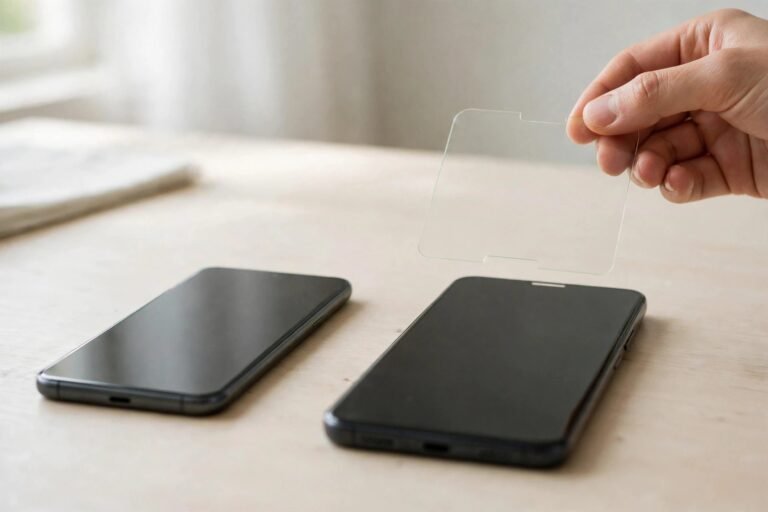
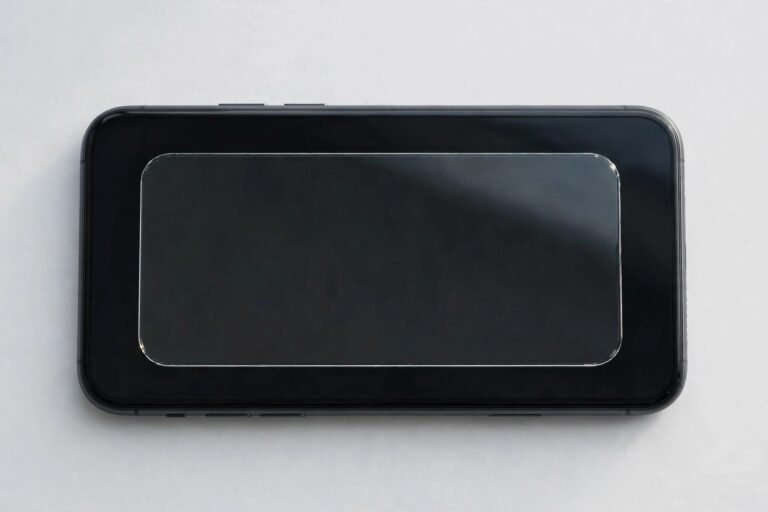
A privacy screen protector is exactly what the name says: a screen protector first, with a privacy filter laminated into it. It adheres to your display like any tempered glass or film protector, guarding against scratches and absorbing impacts — and its micro-louvre layer narrows the viewing angle so that anyone looking from the side sees a dark screen instead of your content.
In other words, you get two functions in one product: physical protection and visual privacy. This is the product most phone users mean when they say “privacy screen,” and it is what the overwhelming majority of listings titled “privacy screen” for phones actually sell.
Where “Privacy Screen” Means Something Different
The confusion comes from the laptop and monitor world. There, a “privacy screen” or “privacy filter” traditionally means a detachable panel — a thin sheet that hangs from the top of the display or attaches with adhesive strips or magnets, with no full-surface adhesive of its own. It provides the viewing-angle restriction but no impact or scratch protection worth mentioning; it is a privacy accessory, not a protector.
These detachable filters exist for phones too, in the form of magnetic or clip-on privacy covers, but they are a niche product. When a phone listing says “privacy screen,” it almost always means the adhesive protector version — the detachable kind is usually labelled more explicitly as a “magnetic privacy cover” or similar.
- The adhesive test settles it instantly: if the product sticks to the display across its full surface, it is a screen protector (with privacy features). If it hangs, clips, or magnetically attaches without adhesive, it is a privacy filter only. Buy according to which job you need done.
The Technology Is the Same
Whatever the packaging calls it, the privacy mechanism is identical: micro-louvres — microscopic vertical blinds embedded in the layer that allow light through straight-on but block it beyond roughly 30 degrees off-centre. This is why privacy products share the same trade-offs regardless of name: a dimmer display, narrower comfortable viewing angles, and the need for higher brightness.
Because the core technology is shared, reviews and buying advice transfer between the two terms. A guide to choosing a “privacy screen protector” applies equally to a product labelled just “privacy screen” for the same phone — you are evaluating the same louvre quality, the same dimming, and the same fit.
Which One Should You Buy?
For a phone, buy the adhesive privacy screen protector — the terms are interchangeable in practice, and you want the scratch and impact protection anyway. There is no reason to choose a non-adhesive privacy filter for a phone when the protector version does both jobs for a similar price.
For a laptop, think about which problem you are solving. If the machine travels and faces physical risk, an adhesive privacy protector (where available for your model) covers both bases. If it lives on a desk and you only need shoulder-surfing protection in an open office, a detachable privacy filter is more flexible — it comes off when you want full brightness and viewing angles, with no adhesive commitment.
- Read the product description, not just the title. Look for the words “adhesive,” “tempered glass,” or “9H hardness” — those confirm it is a protector. “Removable,” “hangs,” or “magnetic attachment” signal a filter-only product. The title alone will not tell you.
Frequently Asked Questions
Is a privacy screen as protective as a normal screen protector?
An adhesive privacy screen protector protects just like a standard protector of the same material — tempered glass privacy versions absorb impacts the same way. A detachable privacy filter, though, offers essentially no physical protection.
Can I put a privacy filter over my existing screen protector?
You can layer a detachable magnetic filter over a fitted protector, but stacking an adhesive privacy protector on top of another protector is a bad idea — double adhesive layers trap air, dull the display, and interfere with touch sensitivity. Pick one.
Why do some privacy products cost so much more?
Quality of the louvre layer varies enormously. Cheap versions are murky even head-on; premium ones preserve brightness and clarity while still blacking out side angles. With privacy products, the price gap usually reflects a real difference in daily livability.
So: for phones, “privacy screen” and “privacy screen protector” are the same product wearing different labels. For laptops, check whether it sticks — that one word tells you whether you are buying protection, privacy, or both.