Shopping for an iPhone 14 screen protector should be simple — until the listing says “6.1-inch” and you realise three different iPhone 14 models share roughly that size, and a fourth one does too if you squint. Screen inches are a rough guide at best: the notch, the camera cut-out, the edge curve, and even the exact glass outline all differ between models. Buy by inches alone and you can end up with glass that almost fits, which in protector terms means it does not fit at all.
This guide maps the whole iPhone 14 family — 14, 14 Plus, 14 Pro, and 14 Pro Max — to the right protector size, explains why a protector is always slightly smaller than the phone body, and shows you the one check that eliminates every sizing mistake.
Key Takeaways
- The iPhone 14 family has four models and two screen sizes: 6.1-inch (14, 14 Pro) and 6.7-inch (14 Plus, 14 Pro Max).
- Same inches does not mean same protector — the 14 and 14 Pro are both 6.1 inches but need different cut-outs (notch vs Dynamic Island).
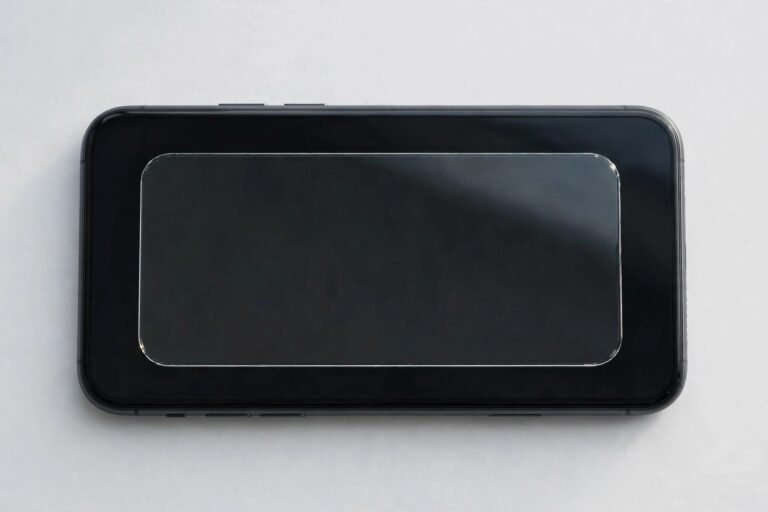
- Every correct protector is slightly smaller than the phone’s glass — a hairline margin keeps edges from lifting and cases from prising them up.
- Always buy by the exact model name (“iPhone 14”), never by screen size alone.
- Confirm your model in Settings > General > About before ordering — it takes ten seconds and prevents the most common mistake.
The iPhone 14 Family: Four Models, Two Sizes
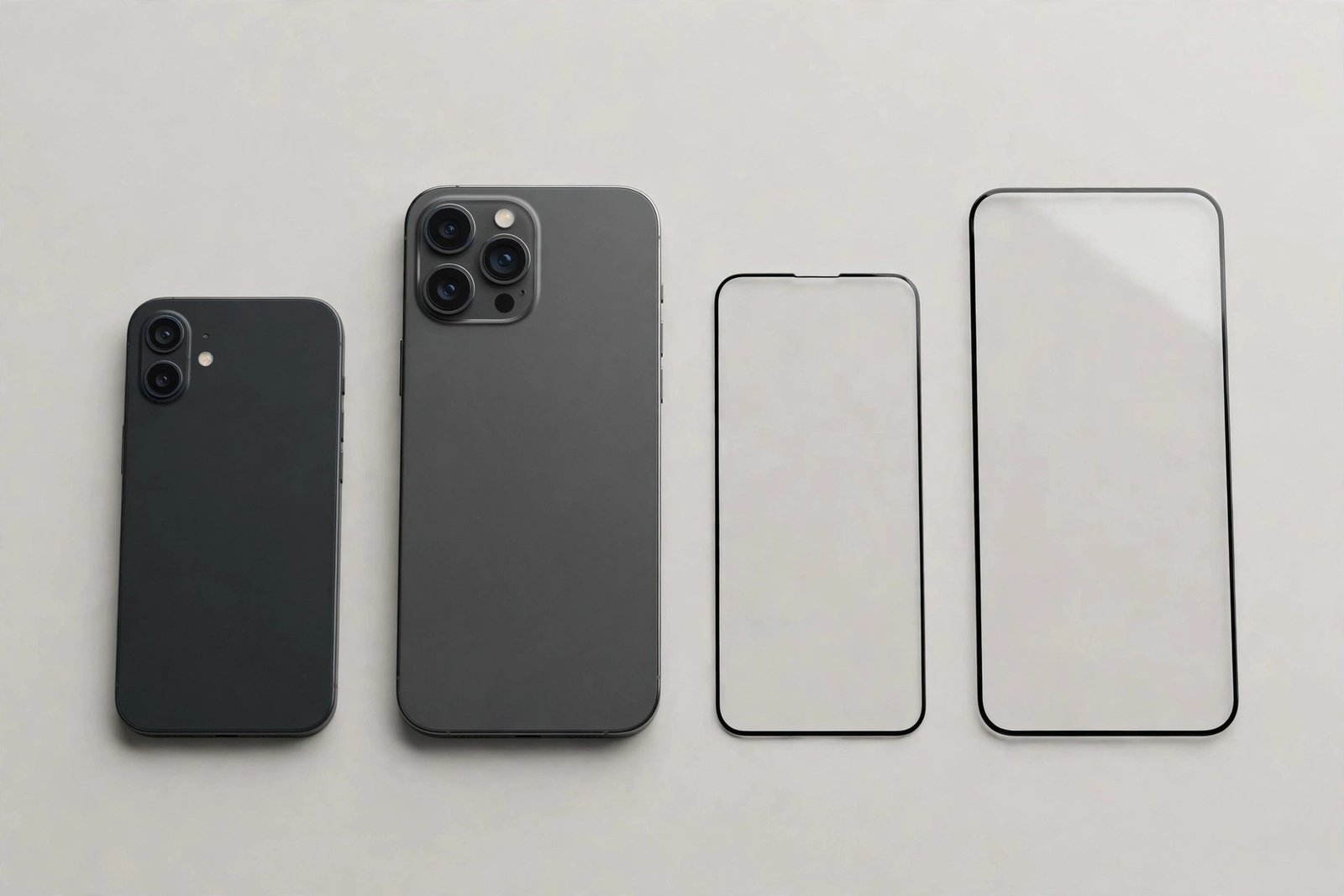
Here is the lineup. The iPhone 14 has a 6.1-inch display with the classic wide notch. The iPhone 14 Plus steps up to 6.7 inches, also with the wide notch. The iPhone 14 Pro is 6.1 inches like the standard 14 — but replaces the notch with the Dynamic Island, the pill-shaped cut-out that changes the top of the screen. The iPhone 14 Pro Max is 6.7 inches with the Dynamic Island.
Notice the trap: the 14 and the 14 Pro share a size, and the 14 Plus and 14 Pro Max share a size. Within each size pair, the front glass differs in the cut-out area and subtly in outline. A protector made for the 14’s notch will sit wrong over the 14 Pro’s Dynamic Island — the cut-out may partially cover the camera, and the adhesive geometry is different. Same inches, wrong glass.
- The fastest way to tell a 14 from a 14 Pro at a glance: look at the top of the screen. Wide notch reaching the edge means 14 or 14 Plus; a floating pill cut-out means Pro or Pro Max. Then check Settings to confirm which size you have.
Why the Protector Is Smaller Than the Phone
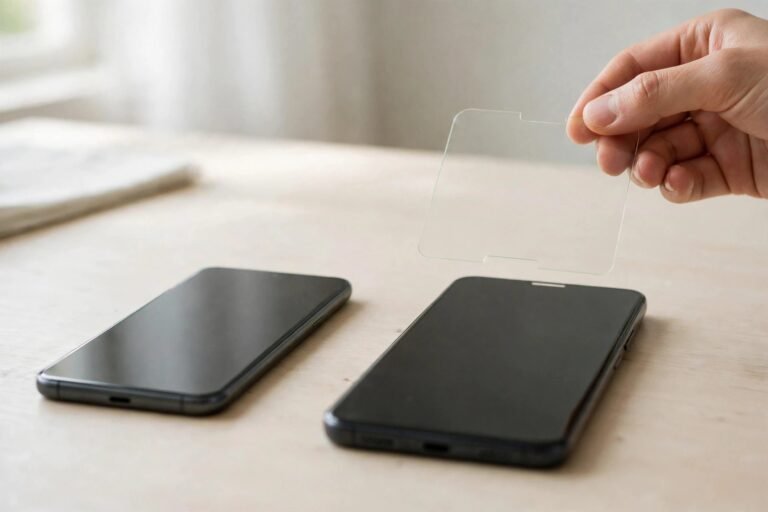
New buyers sometimes worry when the protector arrives visibly smaller than the phone’s front — as if something is wrong. It is exactly right. Display glass curves away at the edges, and adhesive only bonds to the flat central area. A protector that reached the very edge would sit on the curve, lift, and collect dust — the dreaded halo. So every correctly engineered protector is cut with a hairline margin around the perimeter, sitting fully on the flat glass.
This margin also buys case compatibility. Phone cases wrap slightly over the front edge, and a protector that extends into that territory gets levered upward every time the case flexes. The small gap — usually a millimetre or two — is what “case-friendly” means on the listing. A protector that looks slightly small is doing its job; one that reaches the absolute edge is the one to worry about.
The One Check That Prevents Every Mistake
Ignore inches. Ignore what the phone “looks like.” Open Settings > General > About and read the Model Name line. Then buy a protector whose listing names exactly that model — “for iPhone 14” if you own an iPhone 14, not “for 6.1-inch iPhones.” Reputable brands cut a distinct SKU per model precisely because the differences matter; a listing that claims one protector fits all four 14 models is cutting corners you will feel at the edges.
While you are at it, glance at the listing’s compatibility list. Quality sellers name each supported model explicitly and show the cut-out shape in the product images. If the images show a notch but you own a Pro, keep scrolling — the right protector is one search away.
- Buying for a family member’s hand-me-down? Ask them to read the Model Name from Settings rather than guessing from the phone’s appearance — the 14 and 14 Pro are nearly identical in the hand, and the 13 looks close enough to fool anyone.
Frequently Asked Questions
Will an iPhone 13 protector fit my iPhone 14?
Usually yes for the standard models — the iPhone 13 and 14 share the same 6.1-inch display and notch layout, and many brands sell one SKU for both. But a protector labelled specifically for the 14 is the safest buy, and 13 Pro protectors do not transfer to the 14 Pro’s Dynamic Island.
Why does my protector not reach the screen edges?
That is intentional. The protector is cut smaller than the full glass so its adhesive bonds only to the flat central area and stays clear of the curved edges and your case’s lip. A small margin means a lasting fit.
Do I need a different protector for the 14 Plus?
Yes — the 14 Plus is 6.7 inches, a full size class above the 6.1-inch 14. A standard 14 protector on a 14 Plus leaves a wide uncovered border; a 14 Plus protector on a 14 overhangs the edges. Buy for the Plus explicitly.
Inches describe the screen; the model name describes the glass. Buy by the name on the Settings screen, and your protector will fit the first time, every time.