OtterBox cases have a rugged reputation, so the question is fair: if your phone is already wrapped in one of the toughest cases you can buy, is a screen protector on top redundant? The short answer is that for most people, yes — you should still fit one, because a case and a screen protector protect against different things.
There is one important detail to clear up first: many people assume their OtterBox already includes a screen protector. Some older models did; most current ones do not. This guide explains what an OtterBox does and does not cover, which series include built-in screen protection, and how to pair a protector with the case without the two fighting each other.
Key Takeaways
- An OtterBox protects the back, corners, and frame superbly — but most current models leave the screen surface exposed.
- The Defender Series historically included a built-in screen protector; most newer versions are sold without one (often labelled “screenless edition”).
- A case cannot stop scratches from grit and keys, or an object landing directly on the display.
- Use a case-friendly tempered-glass protector — full-coverage glass can be prised up by the OtterBox’s tight inner shell.
- The combination of case plus protector is the standard belt-and-braces setup for people whose phones work outdoors or on site.
Does Your OtterBox Already Have a Screen Protector?
This depends entirely on the model and its age. The classic Defender Series built its name on a three-layer design that included a built-in plastic screen membrane. However, OtterBox moved most of its range to “screenless” designs years ago — modern Defender, Symmetry, Commuter, and Otter + Pop cases are engineered to work with the phone’s own glass (or a protector you add), and ship without any screen covering at all. Some current models still offer a built-in protector as a specific variant, so the only reliable check is your exact model’s packaging or product page.
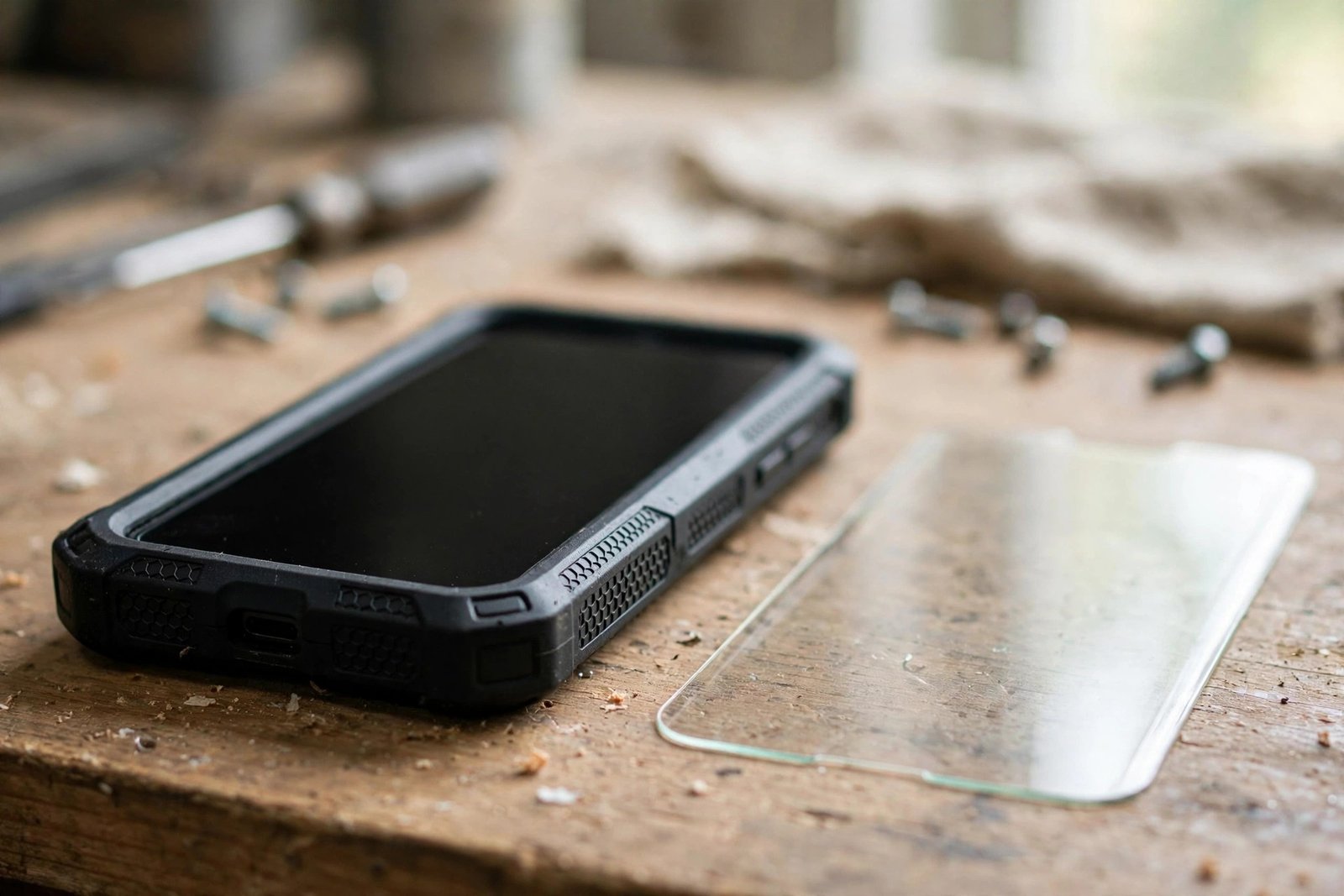
If yours is an older Defender with the built-in membrane, you already have scratch protection of a sort — though those membranes are soft plastic: they scratch visibly themselves over time, can dull the display slightly, and sometimes trap dust against the screen. Many long-time Defender users remove the built-in membrane (it pushes out of the frame) and fit tempered glass instead, keeping the case’s drop protection while upgrading the screen layer.
What a Case Cannot Protect Against
An OtterBox is engineered primarily for drops: reinforced corners, shock-absorbing layers, and raised lips that keep the screen off flat surfaces when the phone lands face-down. That is genuinely excellent protection — for impacts arriving at the phone’s edges and back.
But look at the front of the phone in its case: the entire display is open to the world. A case does nothing against the everyday enemies of glass — sand and grit grinding in a pocket or bag, keys and tools sharing a compartment, a stone or the corner of a table striking the screen directly, or the phone sliding face-down across a rough surface far enough to overrun the lip. A raised lip also cannot help when something falls onto the phone. Those are precisely the threats a screen protector exists to absorb, which is why the two products complement rather than duplicate each other.
- Think of it as corners vs surface: the OtterBox guards the phone’s structure, the protector guards the glass itself. If your work or hobbies put your phone near grit, gravel, tools, or children with keys, the surface is the part at risk.
Fitting a Protector With an OtterBox: The Compatibility Rule
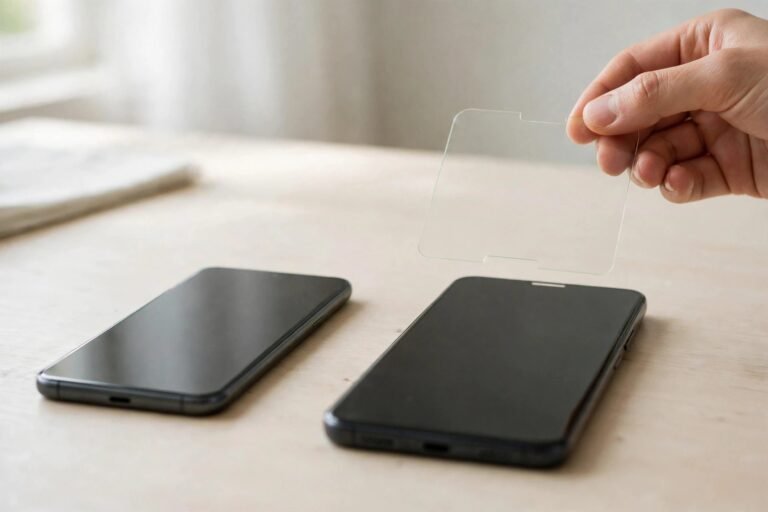
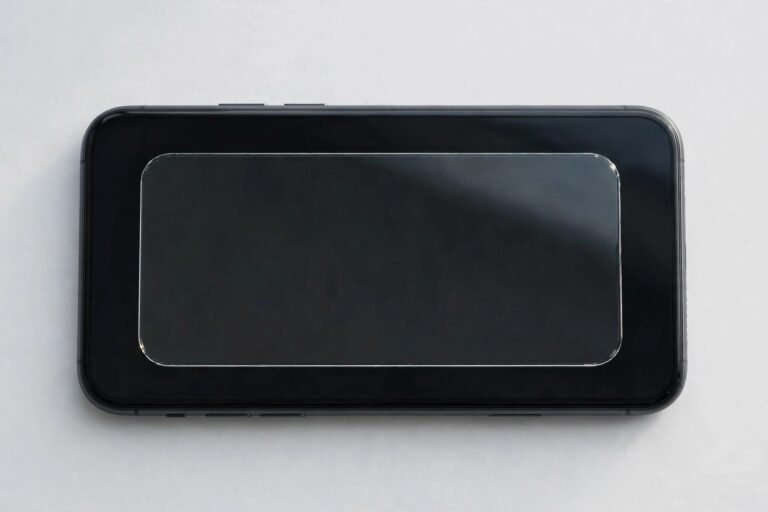
The one real complication is fit. OtterBox cases — the Defender especially — use a rigid inner shell that clips tightly around the phone, and its edges sit close to the screen’s perimeter. A full-coverage or edge-to-edge protector can end up underneath that shell edge, which prises the protector up, creates bubbles along the border, or in the worst case cracks the glass protector as the shell snaps shut.
The solution is simple: choose a case-friendly tempered-glass protector, cut slightly smaller than the full screen so its edges sit clear of the case on all sides. Fit the protector first, let the adhesive settle for at least half an hour, and only then assemble the case around the phone, checking as the shell closes that it is not catching the protector’s edge. Done in that order, case and protector coexist without any conflict, and touch sensitivity and in-display fingerprint readers work as normal — though re-registering your fingerprints after fitting the glass is always worthwhile.
- If your Defender still has its built-in plastic membrane and you want tempered glass as well, remove the membrane first — glass plus membrane together dulls touch response and traps dust between the layers. One screen layer at a time.
Frequently Asked Questions
Will a screen protector stop my OtterBox from fitting properly?
A case-friendly protector will not — it is cut to leave clearance for exactly these cases. Problems come from full-coverage glass whose edges run underneath the case’s inner shell. If you already own a full-coverage protector, fit the case slowly and check the edges; if the shell lifts the glass, swap to a case-friendly cut rather than forcing it.
Does OtterBox sell its own screen protectors?
Yes, OtterBox sells tempered-glass and film protectors under its own name, designed to be compatible with its cases. They are a safe choice for fit, but any reputable case-friendly protector sized for your exact phone model will work just as well — compatibility is about the cut, not the brand on the box.
If I skip the protector, how likely is screen damage?
Drop damage becomes unlikely — the case sees to that. Scratch damage remains a matter of time and environment: screens pick up micro-scratches from grit in pockets and bags even in careful hands, and a single unlucky contact with something harder than the glass can leave a permanent mark. The case lowers your risk a lot; the protector covers the risk that remains.
An OtterBox makes your phone hard to break. A screen protector makes it hard to scratch. Fit both, in the right order and the right size, and there is very little left to worry about.