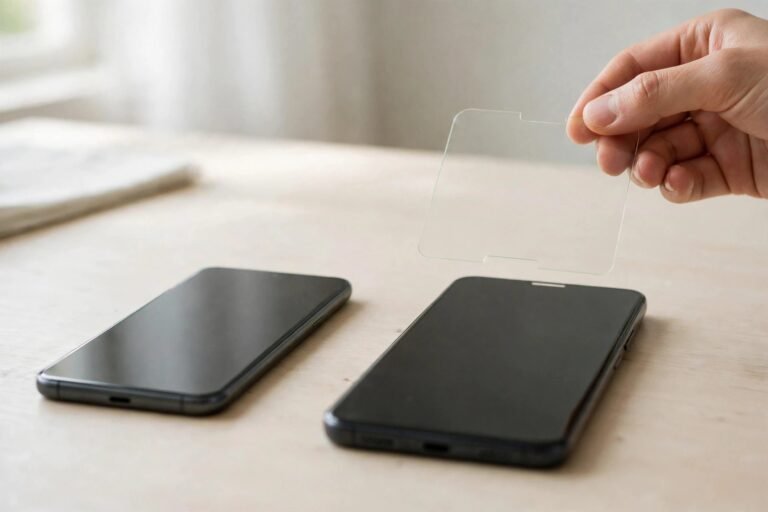
You’ve upgraded from an iPhone 12 to an iPhone 14, and there’s a spare iPhone 12 screen protector left in the drawer — or you’ve spotted one going cheap and wondered whether it would do. On paper the idea looks plausible: both phones have 6.1-inch displays, both are flat-screened, squared-off designs from the same family. Protector compatibility, though, is decided by millimetres, not by screen size on a spec sheet.
The short answer is no — an iPhone 12 screen protector does not fit an iPhone 14 properly. This guide explains exactly where the two phones differ, what actually happens if you fit one anyway, and which older iPhone protectors genuinely do work on the iPhone 14.
Key Takeaways
- Both phones have 6.1-inch displays, but the bodies differ: the iPhone 14 is slightly taller, narrower, and thicker than the iPhone 12.
- The notch is narrower on the iPhone 14, so an iPhone 12 protector’s cut-out will not line up with the speaker and sensors.
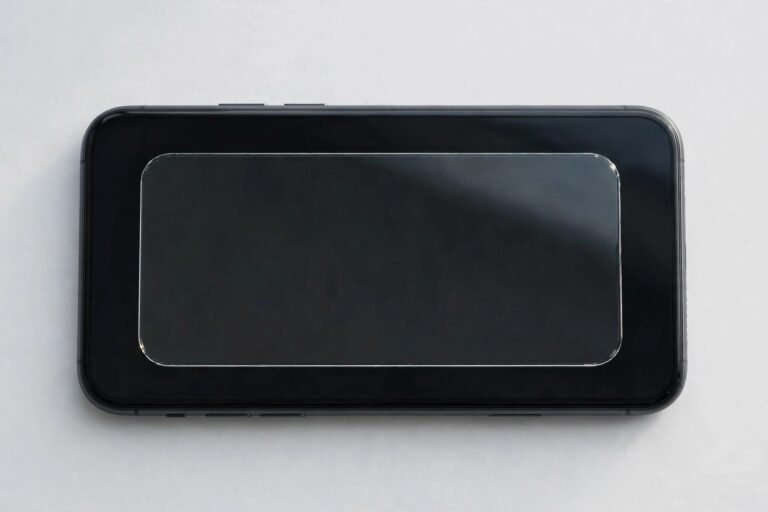
- An iPhone 12 protector on an iPhone 14 will typically overhang, misalign, or lift at the edges — and may interfere with the front camera or earpiece.
- The protector that does cross-fit the iPhone 14 is the iPhone 13 protector — those two phones share near-identical front dimensions.
- Protectors are inexpensive and model-specific for a reason — always buy the one labelled for your exact model.
Same Screen Size, Different Phone
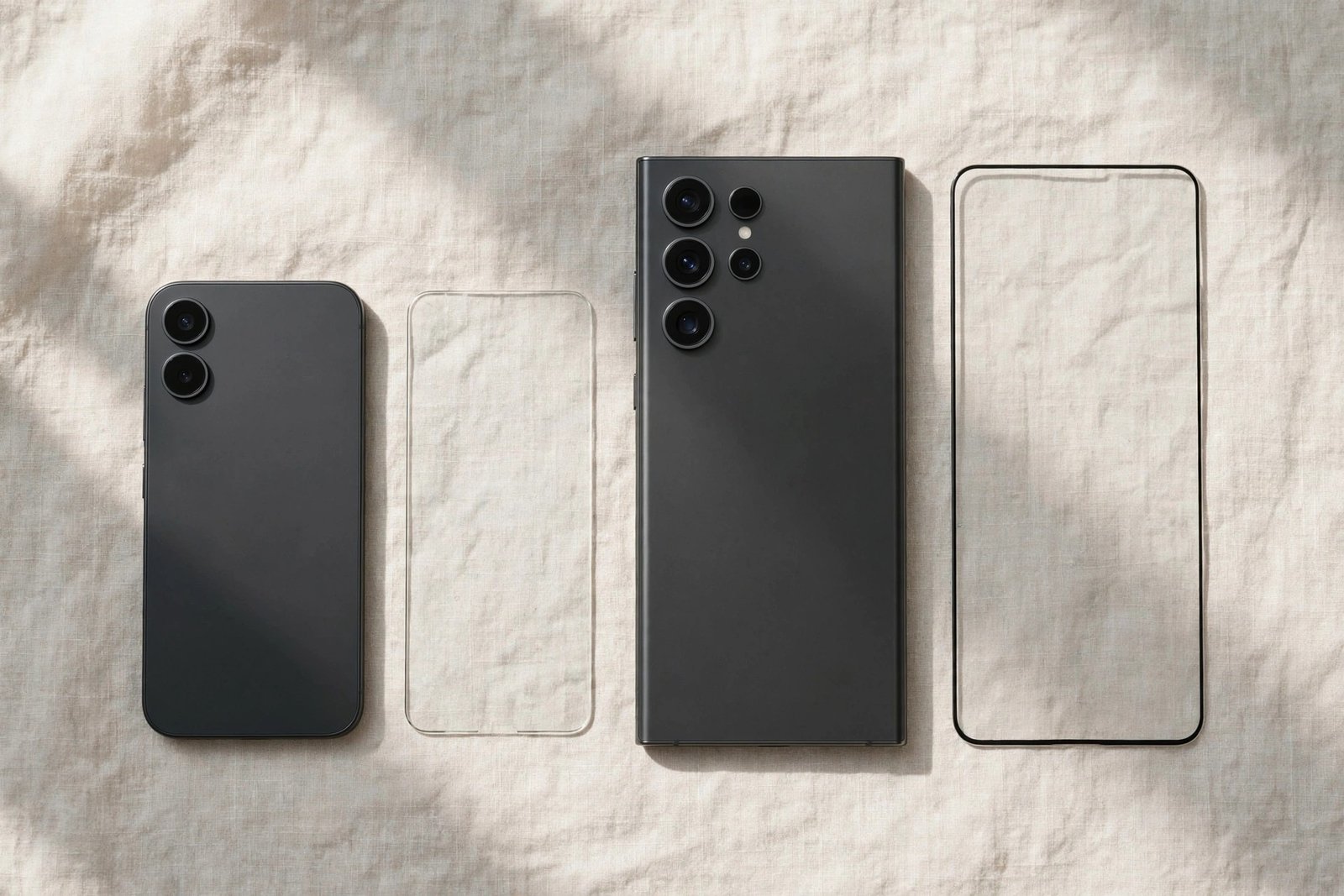
“6.1-inch” describes the diagonal of the display panel, not the shape of the glass on the front of the phone. The iPhone 12 measures roughly 146.7 × 71.5 × 7.4 mm; the iPhone 14 measures roughly 146.7 × 71.5 × 7.8 mm at first glance — but look closer and the front glass tells a different story. The iPhone 14’s body is a fraction taller and wider in the ways that matter to a die-cut sheet of glass, and the display assembly sits differently within the frame. A protector is cut to the outline of one specific front glass panel, with tolerances well under a millimetre. “Close” in phone dimensions is still a miss in protector terms.
This trips people up because the two phones genuinely look alike — same design language, same flat edges, same general proportions. But screen protectors are precision parts. A sheet of glass that is a millimetre too long doesn’t sit a millimetre proud and look slightly untidy; it rides up onto the frame, refuses to adhere at the edge, and leaves a permanent lifted lip that collects dust and eventually peels.
The Notch Problem
Even if the outer dimensions were identical, the top of the screen would stop you. The iPhone 12 carries the original wide notch. Starting with the iPhone 13, Apple shrank that notch by about 20 per cent, and the iPhone 14 kept the smaller design. The earpiece speaker also moved — on the iPhone 12 it sits within the notch; on the 13 and 14 it shifted up to the very edge of the frame.
An iPhone 12 protector is cut around the wide notch, with its opening shaped for the older sensor layout. Fitted to an iPhone 14, the cut-out sits in the wrong place relative to the smaller notch and repositioned speaker. Depending on the protector’s design, the glass may partially cover the earpiece (muffling call audio), overlap the front camera’s field of view, or leave an odd exposed strip where you don’t want one. Full-coverage protectors with a black printed border make the mismatch even more obvious, because the border is painted to trace a notch that isn’t there.
- Quick visual check before buying any “universal” 6.1-inch protector: hold it against the phone before peeling the backing. If the notch cut-out doesn’t trace your phone’s notch exactly, no amount of careful fitting will fix it.
What Happens If You Fit One Anyway?
People do try, so it’s worth being concrete about the results. Because the glass is slightly the wrong shape, you will usually get one or more of the following: an edge that never seals and shows a permanent white “halo” of trapped air; a corner that lifts every time the phone goes into a case, because the case lip pushes on the overhanging glass; reduced touch consistency near the edges; and the notch misalignment described above. The protector also can’t do its one job properly — a sheet that isn’t fully adhered absorbs impacts unevenly and is more likely to crack or pop off in a drop.
Film protectors are slightly more forgiving than tempered glass — a flexible film can be trimmed and will conform more readily — but the notch cut-out is still in the wrong place, so the fundamental problem remains. In short: it sticks, sort of, and protects, sort of. For a part that costs very little when bought correctly, “sort of” is a poor trade.
Which Protectors Actually Fit the iPhone 14?
The useful cross-compatibility runs the other way. The iPhone 13 and iPhone 14 share essentially the same front glass dimensions and the same narrower notch, so protectors sold as “iPhone 13 / 14” are genuinely interchangeable between those two models — this is a pairing manufacturers list officially, not a hack. If you have a spare iPhone 13 protector, it will fit your iPhone 14 correctly.
The iPhone 12, however, sits on its own branch of the family tree: it pairs with the iPhone 12 Pro, and that’s where its compatibility ends. When shopping, treat any listing that lumps “12 / 13 / 14” together with suspicion — a single protector cannot be correctly cut for both notch sizes, and such listings usually mean the fit on at least one model is approximate.
- Check your exact model in Settings → General → About before ordering. Hand-me-down and refurbished phones are often misremembered by a generation, and one generation is all it takes for a protector not to fit.
Frequently Asked Questions
Are iPhone 12 and iPhone 14 the same size?
Nearly — both have 6.1-inch displays and very similar body measurements — but not identically. Small differences in the front glass outline, body thickness, and above all the smaller notch on the iPhone 14 mean their screen protectors are not interchangeable.
Can I trim an iPhone 12 protector to fit my iPhone 14?
Not tempered glass — it cannot be cut at home; attempting to score or trim it will shatter it. A film protector can technically be trimmed, but the notch cut-out will still be wrong, so the result is poor. Buying the correct iPhone 14 (or iPhone 13/14) protector is cheaper in time and frustration.
Does an iPhone 14 protector fit an iPhone 12?
No — the problem is symmetrical. The iPhone 14 protector is cut for the narrower notch and slightly different glass outline, so on an iPhone 12 it will misalign around the wider notch and sit incorrectly at the edges. Each phone needs its own protector, with the iPhone 13 as the iPhone 14’s only true cross-fit partner.
Screen size is where protector compatibility starts, not where it ends. The iPhone 12 and iPhone 14 look like siblings, but millimetres and a smaller notch make them strangers — buy the protector cut for your exact phone.