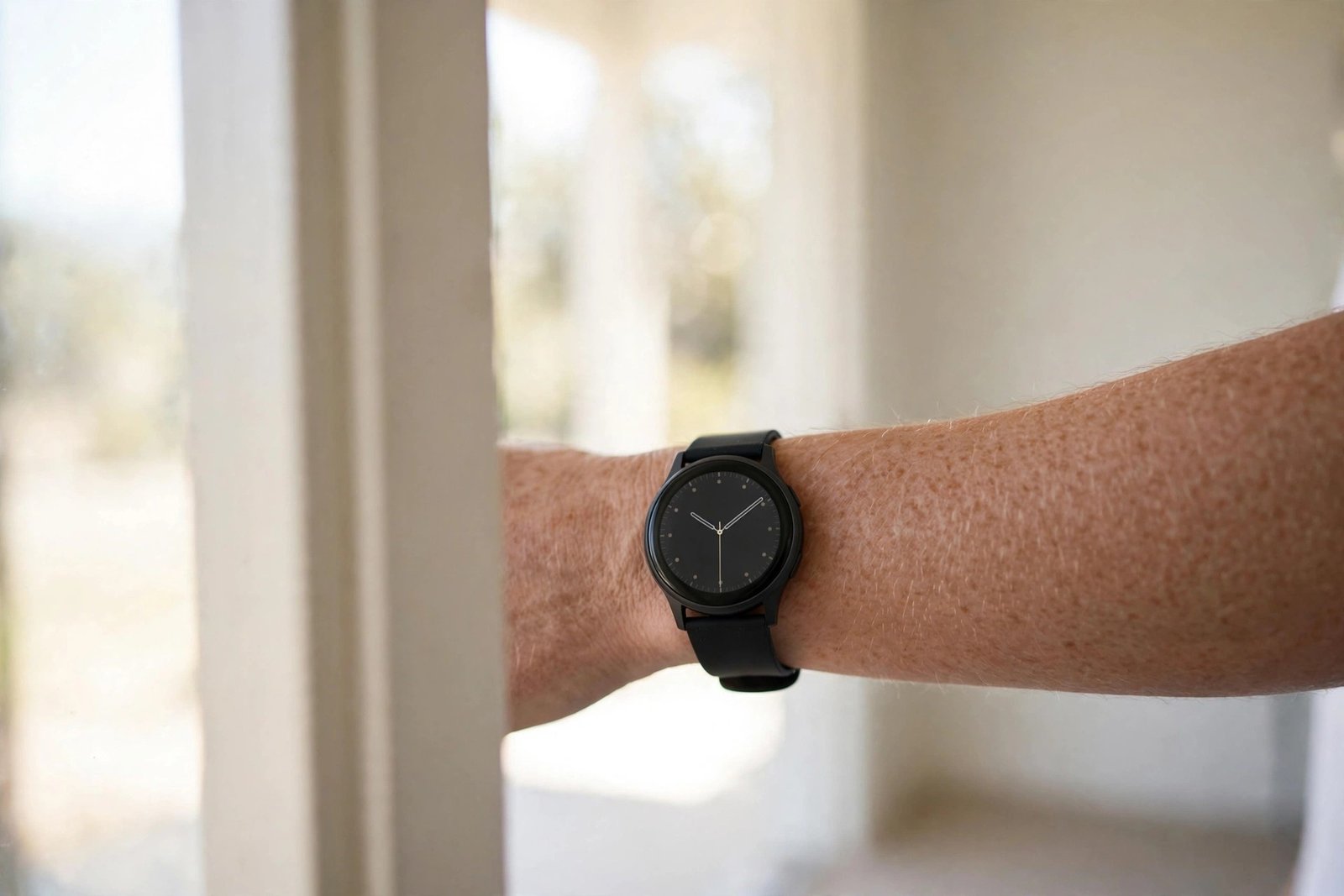
A phone spends much of its life in a pocket or bag. A watch spends its entire life strapped to the most accident-prone part of your body — your swinging wrist. Door frames, wall corners, seatbelt buckles, gym equipment and desk edges all seem to find the watch face eventually, which raises the question: does an Apple Watch actually need a screen protector?
For many owners, yes — but it depends on which Apple Watch you have and how you live in it. The models use two quite different front materials, and they face very different levels of risk. This guide explains the difference, what typically damages a watch face, and the kinds of protection that actually work on a small, curved screen.
Key Takeaways
- A watch face is constantly exposed — it catches door frames, walls and buckles that a phone would never meet.
- Aluminium models use Ion-X glass, which is light and shatter-resistant but comparatively easy to scratch.
- Stainless steel models and the Ultra line use sapphire crystal, which resists scratches superbly but can still chip or crack on a hard impact.
- Small curved screens make protectors trickier — snap-on case-style covers are often the most practical option.
- If you work with your hands, train in a gym, or wear the watch all day, protection is cheap insurance against an expensive repair.
Ion-X Glass vs Sapphire: Know Which One You Own
The aluminium Apple Watch models use Ion-X glass, a strengthened glass similar in spirit to phone glass. It is light and relatively forgiving in a drop, but it scratches more readily than people expect — grit, metal edges and rough walls can all leave their mark, and the small scratches catch the light every time you raise your wrist.
The stainless steel models, and the Ultra models, use a sapphire crystal front. Sapphire is one of the hardest materials used on any consumer device and shrugs off the everyday abrasions that mark glass. It is not invincible, though: sapphire is hard but comparatively brittle, so a sharp knock against concrete or stone can chip or crack it, and repairs are costly. Exactly which material your watch has depends on the model and generation, so check your specific version before deciding how careful you need to be.
Why Watches Get Damaged Differently from Phones
Your wrist swings at roughly hip height as you walk — exactly the height of door handles, worktops, railings and gate latches. The watch face sits proud of your skin with nothing around it, so it tends to be the first thing to make contact. Most watch screen damage isn’t from dramatic accidents; it’s the accumulation of ordinary grazes, plus the occasional hard smack against a door frame that chips an edge.
Environment matters too. Gym equipment is textured metal. Swimming pools have rough tiles and lane ropes. Manual work brings tools, bricks and gravel. If your watch is on your wrist through any of that, its screen is doing far harder duty than a phone screen ever sees.
- Check which side of your wrist takes the knocks. Most people catch the outer edge of the watch as they pass through doorways — a case-style cover with a raised rim protects exactly that edge, not just the flat face.
What Kind of Protection Works on a Watch?
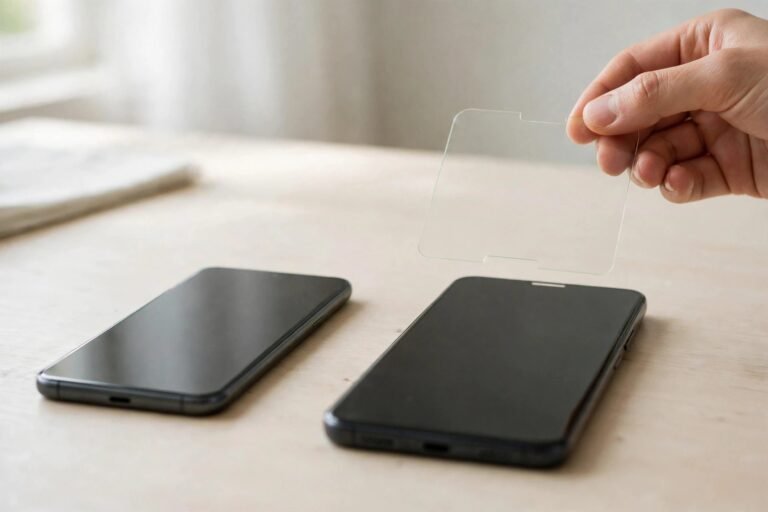
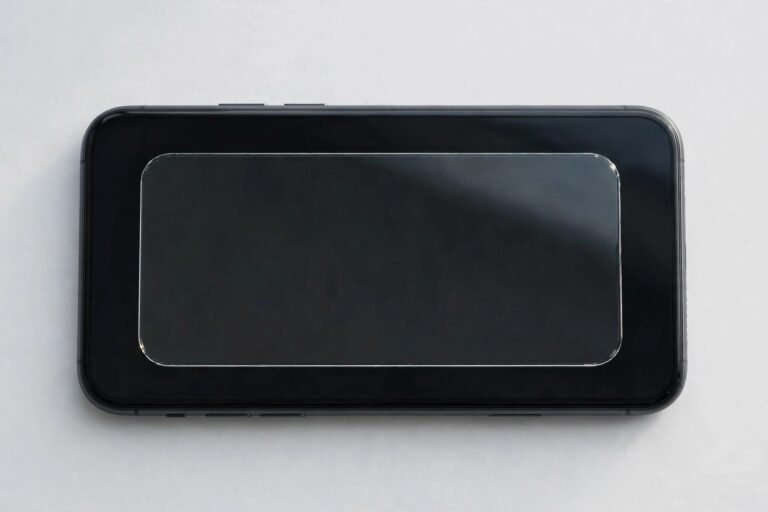
The small, curved display rules out some options and favours others. Thin film protectors follow the curve well and are nearly invisible, but they only guard against scratches. Tempered glass protectors exist for watch faces, though on strongly curved edges they can struggle to adhere fully and may lift at the borders. Snap-on case covers — a shell that clips over the whole watch with a built-in front — are popular precisely because they avoid the adhesion problem and add edge protection too, at the cost of a slightly bulkier look.
Whichever route you choose, keep two practical points in mind. First, some full covers can trap moisture underneath after swimming or heavy rain, which dulls touch response until you pop the cover off and dry both surfaces. Second, a protector that clouds or lifts after a month hasn’t failed you — on something worn and washed daily, treat protectors as consumables and replace them when they look tired.
- If you swim with your watch, choose a simple film or glass protector rather than a sealed snap-on cover, and rinse and dry the watch afterwards — trapped water under a cover is the most common cause of “my touchscreen stopped working” complaints.
Frequently Asked Questions
Does a protector affect the Apple Watch touchscreen?
A well-fitted film or glass protector generally doesn’t — taps and swipes register normally. Thick snap-on covers can feel slightly less responsive, especially with wet fingers, and moisture trapped underneath is the usual culprit when response does suffer.
My watch has a sapphire screen. Do I still need one?
For scratch protection, honestly, no — sapphire handles everyday abrasion better than any protector you could add. The case for a protector on a sapphire model is impact: a cover or case can help against the chip-or-crack knock. Many sapphire owners simply use a rimmed case for sports and work, and nothing the rest of the time.
Can I fit a protector over existing scratches?
Yes. The adhesive layer on film and glass protectors fills in very fine scratches as it bonds, which often makes light marks on an Ion-X screen much less visible. Deep scratches will still show through, but the protector prevents the collection growing.
A phone hides from the world; a watch meets it head-on, hundreds of times a day. Unless your watch wears a sapphire face and your days are gentle, a protector is one of the cheapest forms of peace of mind you can strap on.