Not every clear sheet that sits on your phone is glass. Some protectors are genuinely made from tempered glass, others are thin plastic film, and a growing number are hybrids that blend the two. The packaging does not always make the difference obvious, and the wrong assumption can leave you expecting drop protection that a film simply cannot offer.
Learning to tell the materials apart is useful when you are shopping, when you are comparing two protectors side by side, and when you are trying to work out what is already fitted to a second-hand device. With a few simple checks — how it feels, how it flexes, and how its edges look — you can usually identify the material in under a minute.
Key Takeaways
- Tempered glass feels rigid and cool to the touch, much like the phone screen itself.
- Plastic film flexes and bends easily, and can be creased or dented with a fingernail.
- Glass has a visible, slightly rounded edge you can catch with a fingernail; film sits almost flush.
- Packaging terms matter: “tempered glass” and “9H” suggest glass, while “PET”, “TPU” and “film” point to plastic.
- Hybrid protectors combine a plastic base with a glass-like coating, so they feel in between the two.
- The material affects impact protection, scratch resistance, clarity and price, so it is worth checking before you buy.
The Feel and Flex Test
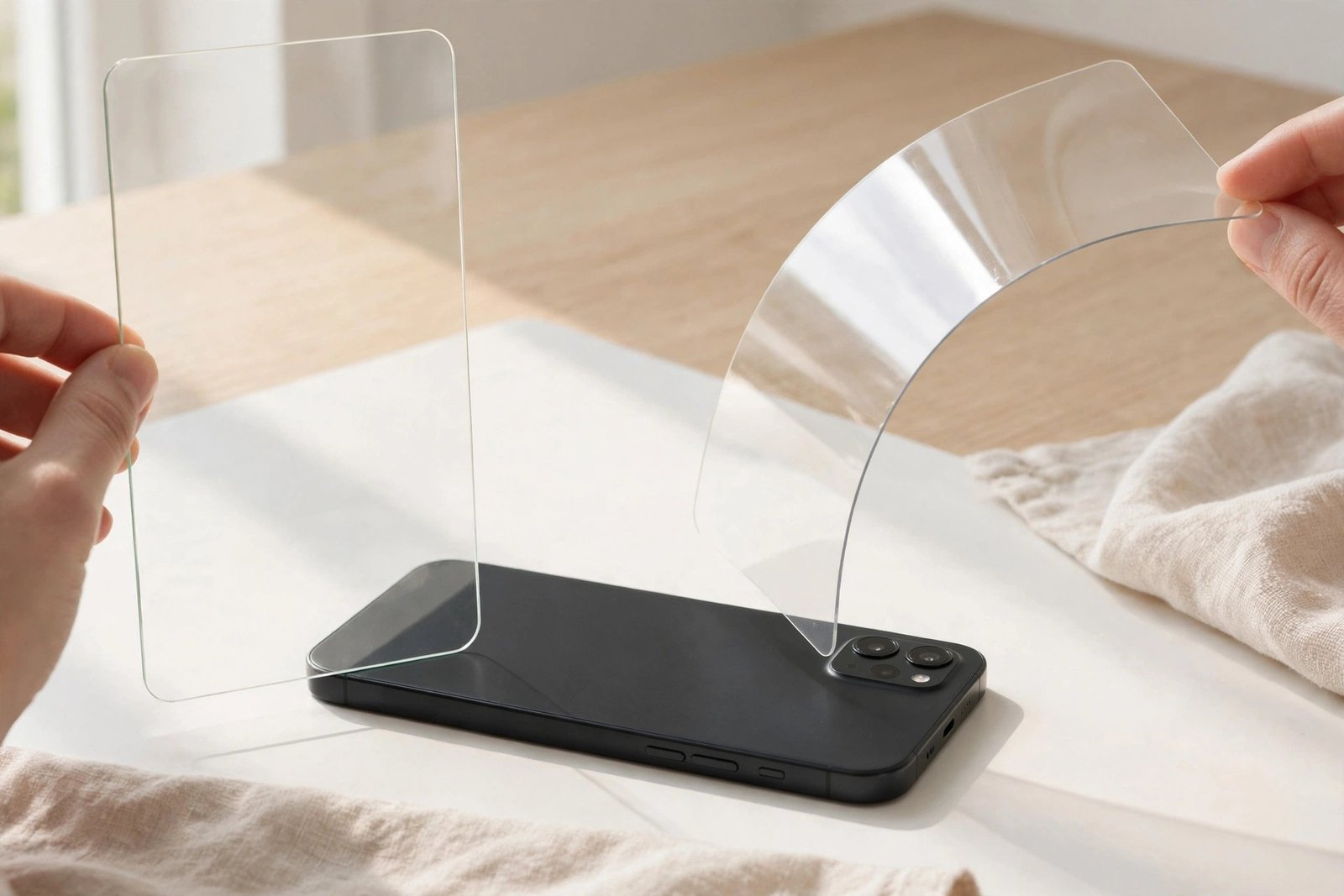
The quickest test needs no tools at all. Before a protector is fitted, hold it between your fingers. Tempered glass is noticeably stiff: it holds its shape, resists bending, and will snap rather than fold if you force it — so never actually try to bend it far. It also feels cool and smooth, very much like a bare phone screen, because it is essentially a thin sheet of treated glass.
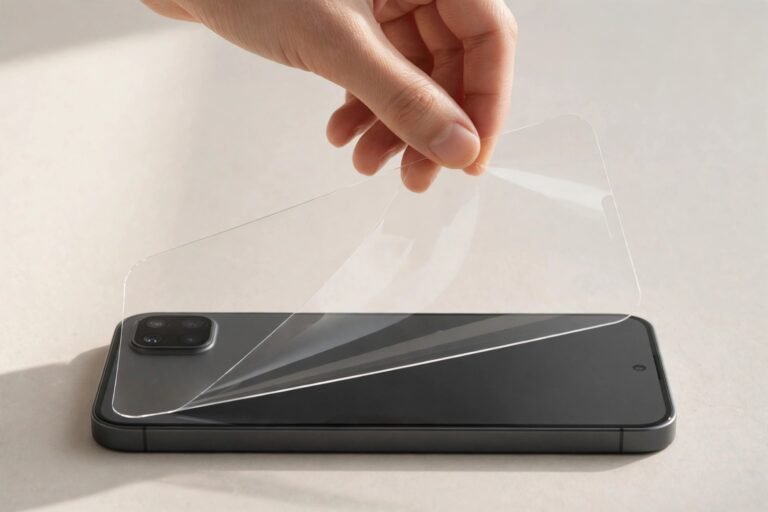
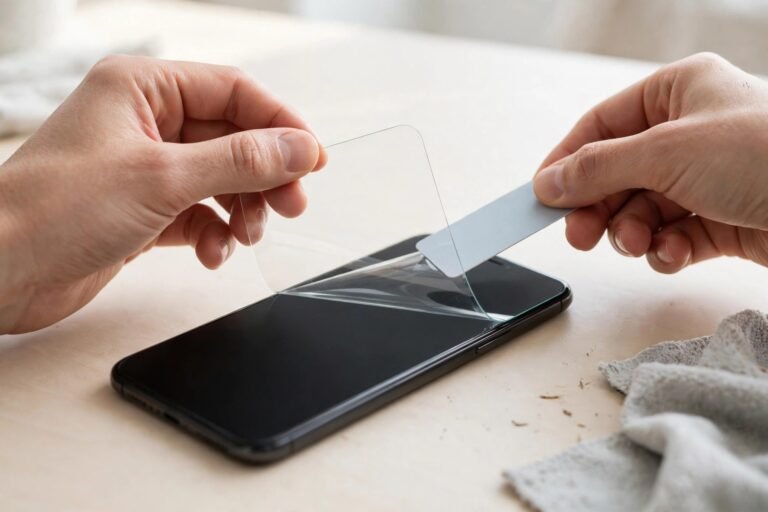
Plastic film behaves completely differently. A PET or TPU protector is floppy, lightweight and flexible enough to curl or roll. You can dent it lightly with a fingernail, and it may already show fine creases from handling. If the protector arrives on a flexible backing sheet and peels away like a sticker, it is film, not glass.
Once a protector is already on the phone, use touch instead. Run a fingertip across the surface: glass feels hard and slick with very little drag, while film often feels slightly softer, warmer and grippier, particularly after some use. Tapping with a fingernail also helps — glass gives a crisp, higher-pitched click, whereas film sounds duller and more muted.
- Compare the protector against the phone’s own exposed glass near a cut-out or edge — if both feel identical, the protector is probably glass.
- Check the weight in your hand before fitting: a glass protector for a large phone feels surprisingly heavy for its size, while film weighs almost nothing.
Look at the Edges and Thickness
Edges give the material away. Tempered glass has real thickness — commonly a few tenths of a millimetre — so its edge forms a small step you can see in profile and catch with a fingernail. Many glass protectors also have polished or slightly rounded edges, sometimes described as 2.5D, which catch the light as a bright line around the perimeter.
Film, by contrast, is extremely thin and sits almost flush with the screen. Its edge is harder to spot, may look slightly soft or matte, and on curved screens it often wraps or shrinks back from the edge in a way glass cannot. If you can barely find the border at all, you are almost certainly looking at film — or at a very thin hybrid.
Reading the Packaging and Product Description
Manufacturers use fairly consistent vocabulary, even if it is not always prominent. “Tempered glass”, “real glass” and a “9H hardness” rating all point to glass, although the 9H figure refers to a pencil-hardness scale and is best treated as an indication rather than a guarantee. Listings for film tend to say “PET film”, “TPU”, “flexible film” or “screen film”, and may emphasise self-healing or full coverage of curved edges — things rigid glass cannot do.
Be cautious with vague phrases such as “glass-like”, “glass feel” or “anti-shatter film”, which often describe coated plastic. Hybrid protectors sit honestly in the middle: a flexible plastic base with a harder glass-like top layer, offering some flex for curved screens with a smoother feel than plain film. Exact constructions vary by brand, so if the listing never plainly says tempered glass, assume it is not.
- Shatter behaviour is a clue after damage: tempered glass cracks into a web of small lines but holds together, while film tends to tear, stretch or peel at the damage point.
- If a protector claims to heal scratches or wrap fully around a curved edge, it contains plastic — real glass can do neither.
Why the Material Matters
The material decides what protection you actually get. Tempered glass is generally better at absorbing impact and resisting deep scratches, and it preserves the original feel of the screen. Film is thinner and cheaper, works on strongly curved displays, and guards against scuffs and light scratches, but it offers far less help in a drop. Hybrids try to split the difference, with durability that varies considerably between products.
Knowing which you have also sets sensible expectations for replacement: glass should be swapped once it cracks, while film is usually changed when it clouds, peels or accumulates marks. Either is better than nothing — but only glass behaves like glass.
Frequently Asked Questions
Can a magnet or water test tell glass from plastic?
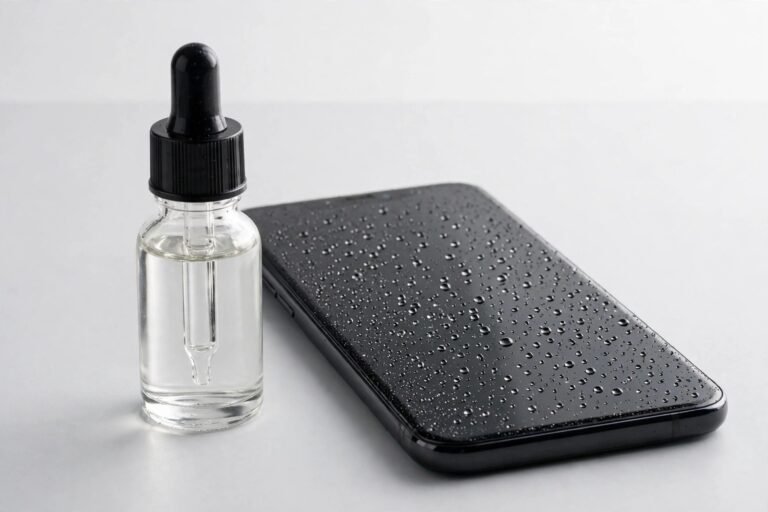
Not reliably. Household tricks circulating online are inconsistent and risk damaging the protector or the phone. The feel, flex, edge and packaging checks described above are safer and, used together, are accurate in the great majority of cases.
Is a hybrid protector as strong as tempered glass?
Usually not quite. Hybrids improve on plain film for scratch resistance and feel, and their flexibility can help on curved screens, but their impact absorption generally falls short of solid tempered glass. Performance varies by product, so treat any single rating with caution.
Does 9H on the box prove it is real glass?
No. The 9H label is used loosely across the industry and occasionally appears on coated plastics. Use it as one clue among several: if the protector also feels rigid, has a distinct polished edge and is described as tempered glass, it almost certainly is.
When in doubt, trust your fingers: real glass feels like the screen it protects, while film feels like what it is — a sheet of plastic doing a quieter, lighter job.