A Pela screen protector is a flexible film rather than a rigid sheet of glass, so it behaves differently in your hands. It can curl, attract dust, and show every fingerprint you leave on its sticky side. The trick is not force or speed but a calm, clean routine: prepare the phone properly, handle the film by its edges, and lay it down in one smooth, controlled movement.
Whether you are fitting it before or after the case goes on, the method below works for any standard flat or gently curved screen. Set aside ten unhurried minutes.
Key Takeaways
- Film protectors need a dust-free surface — even a single speck becomes a permanent bubble under flexible film.
- Handle the film by the edges only and keep the tabs on until the moment of application.
- Anchor one edge first, then roll the film down slowly while pushing air ahead of it.
- Work in a steamy bathroom if you can — humidity settles airborne dust before you start.
- Small bubbles often settle within a day or two as the adhesive cures.
- Put the case on after the protector, never before.
What You Will Need
Most film protectors arrive with the basics in the packet: a wet wipe, a dry microfibre cloth, and one or two dust-removal stickers. Lay everything out before you begin, along with a rigid card wrapped in microfibre for smoothing. If your packet has no alignment stickers, a couple of small pieces of low-tack tape will do the same job for holding the film in place while you line it up.
Wash and dry your hands first. Oils from your fingers transfer easily to both the screen and the sticky side of the film, and they show up later as smudges that no amount of smoothing will remove. Work on a clean, flat table in good light so you can see dust and alignment clearly.
Step 1: Remove the Case and Old Protector
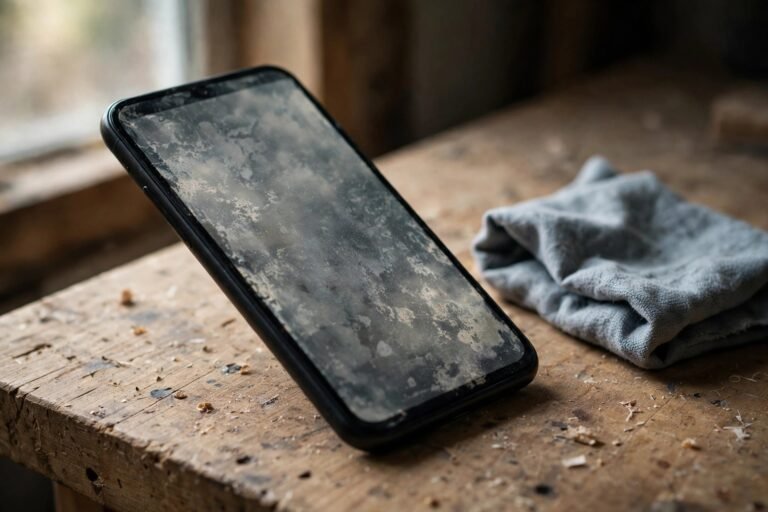
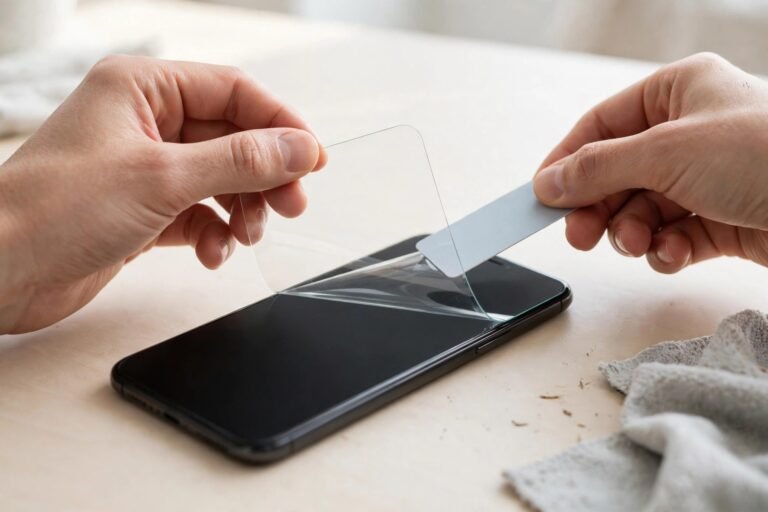
Take the phone out of its case completely. A case left on the phone gets in the way of the film edges and can push the film up before the adhesive has set. If an old protector is still on the screen, lift one corner gently with a fingernail or a piece of tape and peel it away slowly. Wipe away any old adhesive residue before moving on, since a bumpy surface will show straight through a thin film.
Step 2: Clean the Screen Twice
Cleaning matters more with film than with glass, because film follows every contour of the surface beneath it. Wipe the whole screen with the wet wipe in overlapping strokes, paying attention to the edges and corners where grime collects. Buff it dry immediately with the microfibre cloth, then press a dust-removal sticker across the entire screen and peel it off. That final pass lifts the invisible specks the cloth leaves behind.
Hold the phone at an angle under a bright light and inspect it. If you spot a speck, dab it with the sticker again rather than touching the screen. From this point on, do not touch the screen surface at all — not even to check whether it feels clean.
Step 3: Line the Film Up Before Peeling
Do not peel anything yet. Hold the film, still in its backing, over the screen and line up the speaker cutout, camera hole, and edges. If your film has hinge tabs, stick one long edge down with tape so the film swings into place like a hinge. This dry run takes thirty seconds and prevents the most common mistake: discovering halfway through that the film is crooked.
- Line up the top edge and speaker cutout first — if those sit correctly, the rest of the film usually follows.
- Mark the correct position lightly with two tiny pieces of tape on the phone frame as guides, then remove them after the film is down.
Step 4: Apply the Film Slowly
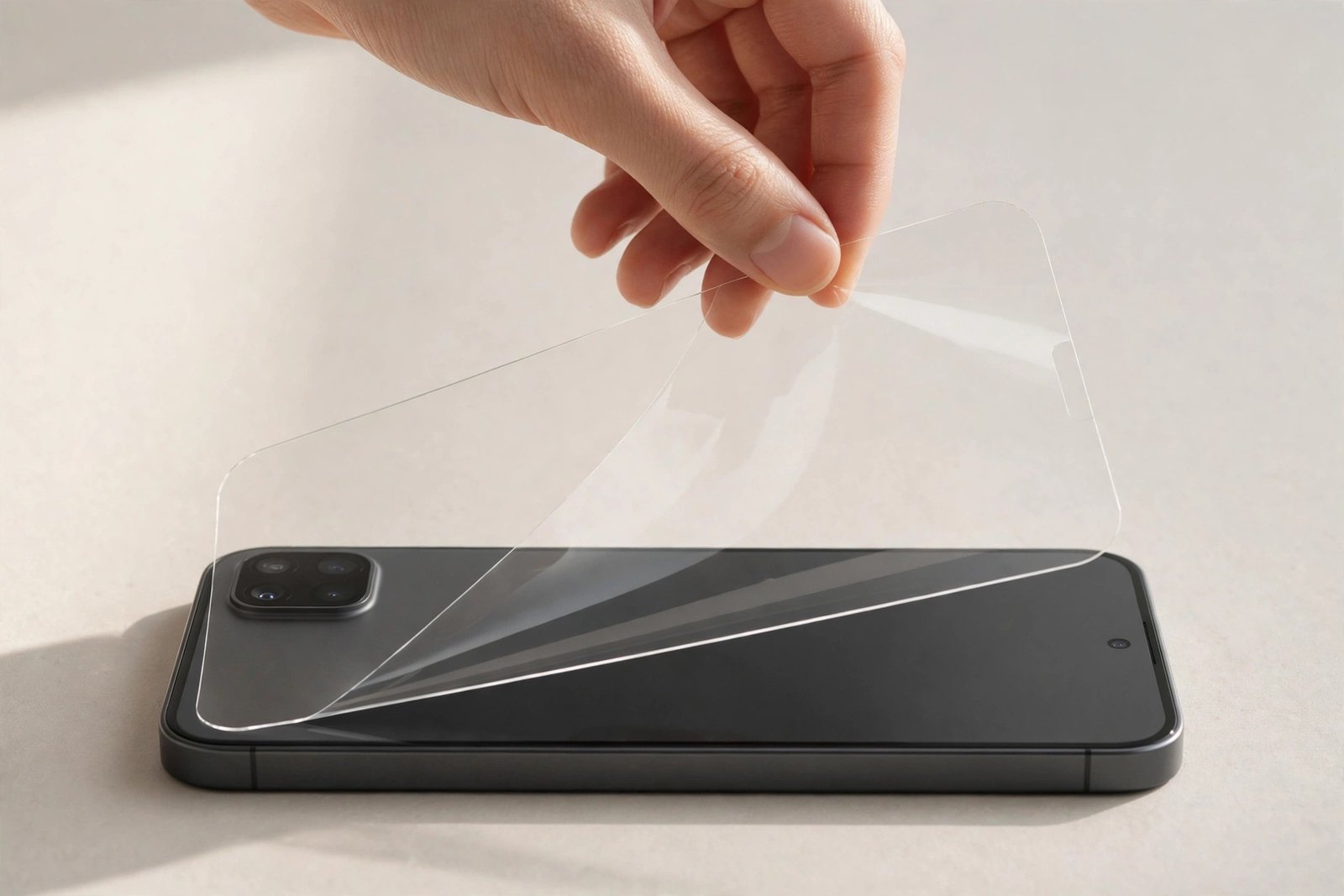
Peel back the first centimetre of backing and anchor that edge exactly where you rehearsed it. Now work steadily down the screen, peeling a little more backing at a time while smoothing behind it with the wrapped card. Push from the anchored edge outward, keeping the film taut but not stretched. Stretching a flexible film is a mistake: it may look fine at first and then creep back, lifting at the edges within hours.
If a large bubble appears, lift the film back to just before the bubble and lay it down again rather than trying to force the air out through the adhesive. Forcing air sideways under film tends to crease it, and a crease cannot be smoothed away. Patience here is worth more than any tool.
Step 5: Smooth, Trim, and Finish
Once the film is fully down, smooth the whole surface once more from the centre outward with the wrapped card. Check the edges all the way around: they should sit flat against the screen with no lifting or overhang. If an edge lifts, press it down firmly for thirty seconds rather than re-peeling it, since repeated lifting weakens the adhesive and invites dust underneath.
Peel off any top protective layer the film shipped with, if one is present, and inspect the screen again in bright light. Tiny micro-bubbles without dust inside them usually fade within twenty-four to forty-eight hours as the adhesive settles.
- Wait at least thirty minutes before fitting a case, so the case edge cannot catch the film and peel it up.
- If the film edge keeps lifting, check that the case is not too tight — a case that overlaps the screen edge will fight the film constantly.
Caring for a Film Protector
Film protectors scratch more easily than glass, so treat the surface kindly. Wipe it with a soft, dry microfibre cloth and avoid abrasive pads or harsh solvents, which can cloud the film. Keep the phone out of pockets shared with keys and coins where possible, and do not press hard on the screen when cleaning. A gentle routine will keep the film clear for much longer than aggressive scrubbing ever will.
Replace the film when scratches start to interfere with reading the screen or when an edge has lifted and will no longer stay down. Because film is thin, a worn protector can actually make the screen harder to see in sunlight, which defeats its purpose. Fitting a fresh one takes only minutes once you know the routine.
Frequently Asked Questions
Can I reposition a Pela film protector after applying it?
Yes, but only immediately and only once or twice. Lift the film gently from a corner with tape, realign it, and lay it back down before dust can settle underneath. Once the adhesive has set, repeated lifting weakens it and usually makes the result worse rather than better.
Why does my film protector have bubbles that glass protectors did not?
Flexible film follows the surface beneath it exactly, so it traps air and dust more readily than rigid glass, which bridges tiny imperfections. The fix is preparation: a properly cleaned, dust-free screen and a slow, card-smoothed application leave very few bubbles behind.
How long should I wait before using a case?
Give the adhesive at least thirty minutes to set, and ideally a few hours, before fitting a snug case. A case fitted immediately can shift the film or catch an edge and peel it upward, undoing a careful application in seconds.
Film application rewards patience more than skill: clean twice, anchor one edge, roll slowly, and let the adhesive do the rest.