Scratched, cloudy plastic usually gets one of two bad answers: a synthetic compound with a miracle claim, or the bin. I spent several weeks testing the older, simpler route instead — ten natural buffing media, from volcanic pumice and walnut shell to chalk whiting and clay — on acrylic panels, ABS trim, polycarbonate and a Bakelite knob, by hand, on a felt wheel and in a tumbler.
One warning before the picks: a buffing medium can only remove a scratch if it is harder than the plastic. Media softer than the surface — walnut shell, corncob, kaolin, whiting — can clean and gloss beautifully, but they will never level a scratch, whatever the label implies. Every pick below is marked with which job it can honestly do.
Key Takeaways
- Best overall: Bon Ami Powder Cleanser — the gentle feldspar start for hard plastics
- Scratch removal needs a harder mineral used wet: pumice to level, tripoli on a wheel, cerium oxide to finish
- Softer media (walnut shell, corncob, kaolin, whiting) clean and gloss only — they cannot remove scratches
- Match the medium to the plastic: kaolin for Bakelite and vintage, cerium oxide for hard acrylic only
- Wear a dust mask with every dry powder here — and never substitute pool-grade diatomaceous earth
The 10 Best Natural Buffing Media for Plastic Compared



More Details on My Top Picks
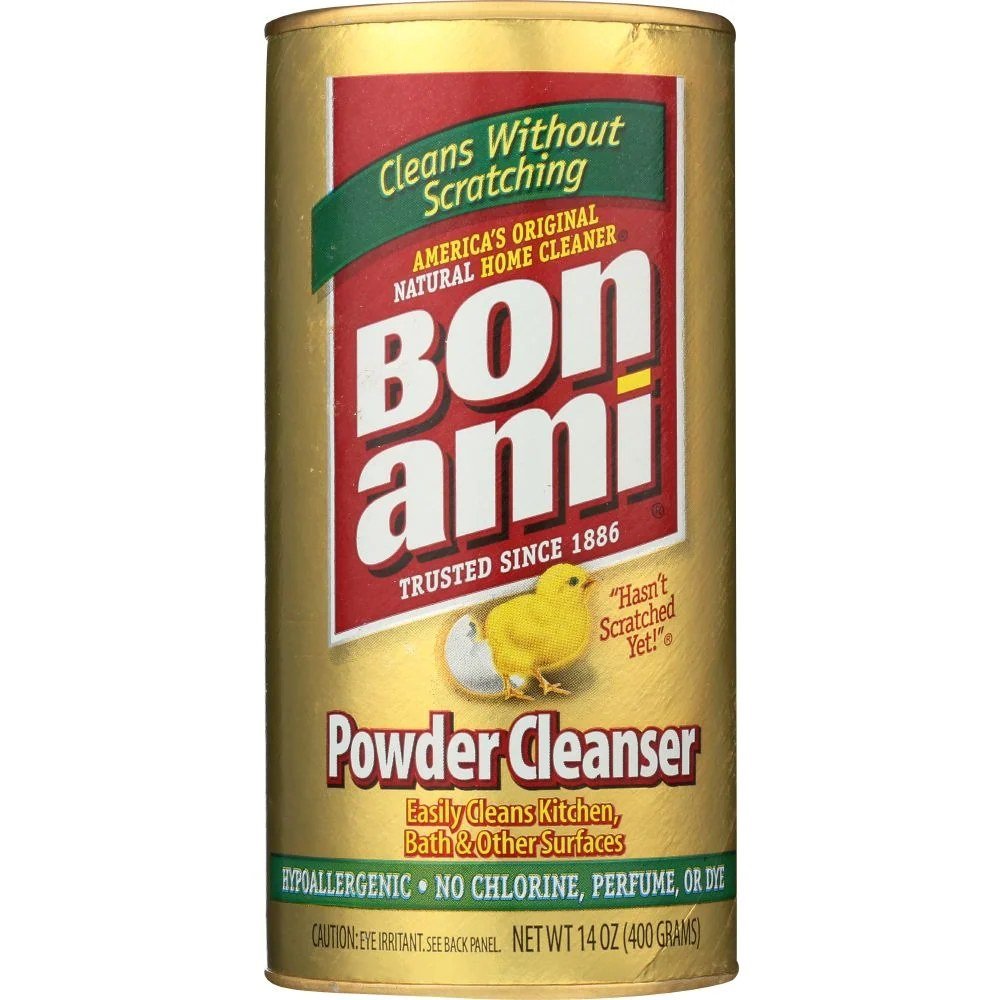
Bon Ami Powder Cleanser 14 oz (Pack of 2)
Bon Ami is the oldest recipe here: ground feldspar — a natural mineral — in a tallow soap base, sold since 1886 as the cleanser that ‘hasn’t scratched yet’. Worked as a wet paste on a soft cloth, it strips oxidised grime and levels the lightest surface haze on hard plastics.
On my ABS trim and a fibreglass panel it was the safest first step of the ten — the soap lubricates the cut, the powder rinses clean, and light bloom came off without new marking. It is slow, controllable hand work, almost impossible to overdo on hard surfaces.
The honest limit is hardness. Feldspar sits around Mohs 6, harder than acrylic, so on soft, glossy acrylic it can haze what you meant to save. Keep it for hard plastics and test patches; it cleans and levels, nothing deeper.
- ✅ The gentlest scratch-levelling start here
- ✅ Soap base lubricates as it polishes
- ✅ Cheap, shelf-stable, easy to find
- ❌ Feldspar is harder than acrylic — test first
- ❌ Not for soft, high-gloss acrylic or lenses
- Size: 14 oz (400 g) per can, pack of 2
- Abrasive: Natural feldspar powder
- Base: Tallow soap, no chlorine, perfume or dye
- Use: Wet paste on a soft cloth, hand pressure
- Best on: Hard plastics, ABS trim, fibreglass
- Origin: Made in the USA, since 1886
ClearLee Cosmetic Grade Pumice, Fine Grain, 8 oz
Pumice is ground volcanic rock — in its traditional F-grades, the rubbing-out powder for polished finishes for over a century. This bag is sold as a cosmetic exfoliant — I am flagging that plainly — but the material is the same pure pumice, in exactly the grade you would choose for plastic.
Mixed to a thin slurry and worked on a felt pad, it was my best hand tool for acrylic: it levelled the fine swirl haze evenly, without the digging-in of coarser powders. Keep it wet, pressure light, and rinse between checks so spent grit cannot drag.
Two cautions. Pumice is harder than any plastic here, so it cuts — never park on one spot, and keep it off soft polycarbonate unless you polish the whole panel. And use it wet or masked: dry pumice dust is a respirable powder.
- ✅ Consistent, fine particle size
- ✅ Works as a slurry with water or oil
- ✅ A small bag lasts through many panels
- ❌ Sold as a cosmetic — no buffing instructions
- ❌ Dry dust needs a mask; always use it wet
- Size: 8 oz (227 g) resealable pouch
- Material: 100% natural volcanic pumice
- Grade: Fine grain, cosmetic grade
- Use: Wet slurry on felt or flannel, hand or low-speed bob
- Best on: Acrylic, cured finishes, hard plastics
- Safety: Use wet or wear a dust mask
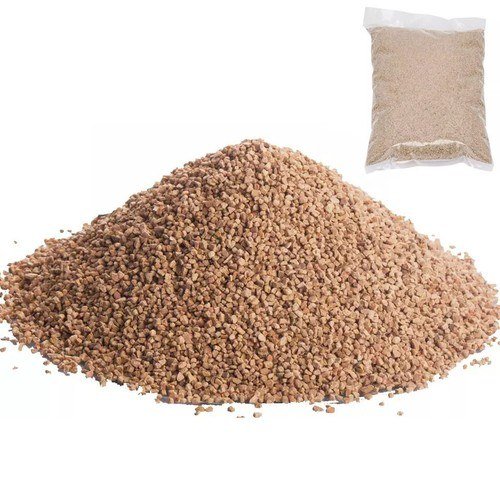
GRITSMITH Walnut Shell Media 18-40 Grit, 5 lb
Walnut shell is the soft end of the buffing world: crushed shells, graded to a fine 18-40 grit, that clean by rubbing rather than cutting. GRITSMITH’s listing explicitly names plastic as a compatible material, which is why this bag, not a generic blasting grit, made the roundup.
In my vibratory tumbler it did exactly one job and did it well: a batch of grubby ABS parts came out clean, de-flashed and evenly matt after a few hours, with edges and fine detail untouched. That is the appeal: gentle agitation with zero risk to sharp moulding lines.
Be clear about the limit: walnut shell will not remove a scratch or scuff, because it is barely harder than the plastic itself. It is a cleaning and prep medium — if surface damage is the problem, you need a mineral powder from further up this list.
- ✅ Reusable for several tumbler runs
- ✅ Biodegradable and silica-free
- ✅ Ideal for batches of small plastic parts
- ❌ Cannot remove scratches — it only cleans
- ❌ Nut-shell dust: keep away from nut allergies
- Size: 5 lb (2.3 kg) bag
- Material: 100% ground walnut shell
- Grit: 18-40 (0.42-1 mm particles)
- Hardness: Mohs 4.5-5 per the listing
- Use: Vibratory tumbler or gentle blast cabinet
- Part number: G-WS-1840-5
Lyman Corncob Plus Media, 10 lb
Corncob is the traditional second act in a tumbler: where walnut shell cleans, ground cob burnishes. Lyman’s Corncob Plus is factory-treated with a polishing agent — not bare farm corncob — and that treatment is what puts the sheen on.
Run after the walnut stage, it took my tumbled ABS parts from clean-and-matt to a soft, even satin that looked moulded, not refinished. The cob also absorbs the oils and grime the first stage loosened, so parts come out dry and ready to handle.
Like walnut shell, it removes nothing. Think of it as the gloss step for batches of small parts — switch housings, knobs, model parts. For a single flat panel, the hand powders here serve you better.
- ✅ Softest media here — safest on detail
- ✅ Big 10 lb box is good value per run
- ✅ Absorbs oils and residue as it polishes
- ❌ Polishing treatment is an additive, not bare cob
- ❌ Cleaning only — no scratch removal at all
- Size: 10 lb box
- Material: Ground corncob, factory treated
- Treatment: Added polishing agent (Corncob Plus)
- Use: Vibratory tumbler, final stage
- Best on: Small plastic parts, knobs, fittings
- Part number: 7631320
HARRIS Diatomaceous Earth Food Grade, 5 lb
Diatomaceous earth is fossilised algae shells — a natural silica powder so fine it feels like flour. The grade matters: this bag is food grade and OMRI Listed — amorphous freshwater DE. Pool-filter DE is calcined, full of crystalline silica, and has no place near your lungs or your plastic.
As a polish it is the tortoise here. Worked wet on flannel, it slowly took the cloudy haze off an acrylic panel and left a clean, even clarity — but it took patience, several applications, and it never touched the deeper scratches.
Buy it as a gentle final polish, and respect the dust: even food-grade DE is a fine silica powder, so mask up when handling it dry and prefer wet methods. The included duster actually helps lay down a thin, even coat.
- ✅ Cheapest fine polish per pound here
- ✅ Food-grade purity means no calcined silica grades
- ✅ Included duster helps apply a thin, even coat
- ❌ Very slow — a haze polish, not a scratch remover
- ❌ Dust mask essential; never use pool-grade DE
- Size: 5 lb (2.26 kg) resealable bag
- Material: 100% freshwater diatomaceous earth
- Grade: Food grade, OMRI Listed
- Use: Wet paste on a soft cloth, hand polishing
- Best on: Acrylic haze, light cloudiness
- Safety: Dust mask; amorphous, not calcined
Gold Label Detailing Cerium Oxide, 8 oz
Honesty first: cerium oxide is a mined rare-earth mineral, refined industrially — a natural mineral, but nobody should call it natural-organic. It earns its place because it is the optical industry’s finishing polish, and on hard acrylic it gave me the closest thing to a glass-clear finish of anything tested.
On glass it works chemically as well as mechanically; on acrylic it is a very fine, even mechanical polish. As a water slurry on a felt bob at low speed, it erased the haze my pumice stage left and brought a scratched panel back to genuinely clear.
The disciplines are heat and patience. The slurry dries as you work, friction climbs, and acrylic warps with heat — keep the surface wet, the speed low and the bob moving. Keep it off coated lenses and soft polycarbonate.
- ✅ Optical-grade consistency, made for lenses
- ✅ Brings hard acrylic closest to a glass finish
- ✅ Works by hand or on a slow felt bob
- ❌ A mined rare-earth mineral — not natural-organic
- ❌ Heat builds fast on a wheel; keep it wet and slow
- Size: 8 oz powder
- Material: Cerium oxide, optical grade
- Grade: Fine micron, high TREO purity class
- Use: Water slurry on felt, hand or low-speed drill
- Best on: Hard acrylic, clear panels and covers
- Not for: Coated optics or soft polycarbonate
DSmart Brown Tripoli Buffing Compound, 1 lb Bar
Tripoli is powdered silica rock — the rottenstone family — bound into bars, and brown tripoli is the classic first cut. The abrasive is a natural mineral; the wax binder is a manufactured carrier, and I would rather say so than dress the bar up as a farm product.
Loaded onto a flannel wheel, it was the fastest scratch-leveller I tested on hard plastics: moulding lines on ABS and the deeper scuffs on my acrylic panel faded in passes that took hand powders many minutes. It leaves a uniform satin for the finer media to gloss.
Power is the risk: a wheel concentrates heat where plastic is weakest, and a paused wheel will melt an edge in seconds. Keep the work moving, use light pressure, practise on scrap, and keep tripoli away from thin or soft plastics.
- ✅ Fastest scratch-levelling here on a wheel
- ✅ Standard cut stage before finer compounds
- ✅ One bar is a long-term supply
- ❌ Wheel heat can melt plastic edges — keep moving
- ❌ Too aggressive for thin or soft plastics
- Size: 1 lb solid bar
- Abrasive: Tripoli (natural silica, rottenstone family)
- Cut: Medium-coarse, first-stage compound
- Use: Load onto a rotating cotton or flannel wheel
- Best on: Hard acrylic, ABS, Bakelite, composites
- Follow with: A finer polish from this list
Bare Essentials Living White Kaolin Clay, 2 lb
Kaolin is china clay — the soft white mineral behind porcelain — and at around Mohs 2 it is softer than every plastic in my test pile. This bag is sold for cosmetics and soap making; the mineral is the same one traditional polishers used as a gentle finishing powder.
On a 1940s Bakelite radio knob and a crazed vintage handset, a kaolin paste lifted decades of grime and brought back a low sheen without touching the moulded detail or the surface crazing I wanted to preserve. Nothing else here is as safe on old plastic.
Do not ask it to do more: kaolin cannot level a scratch or cut heavy oxidation — it cleans and gently glosses. On modern hard acrylic it will feel like nothing is happening, because almost nothing is. For vintage pieces, that restraint is the point.
- ✅ Almost no cut — will not round detail
- ✅ Gentle on aged, crazed or brittle surfaces
- ✅ Big 2 lb bag covers many projects
- ❌ Sold as a cosmetic clay, not a buffing product
- ❌ Removes nothing but grime and the lightest haze
- Size: 2 lb bag
- Material: 100% natural white kaolin clay
- Origin: Georgia, USA, per the listing
- Hardness: Around Mohs 2-2.5 — softer than plastic
- Use: Wet paste on a soft cloth, hand only
- Best on: Bakelite, vintage and delicate plastics
Glassco Whiting Powder, 16 oz
Whiting is finely ground chalk — calcium carbonate — the final-polish powder of the glass and silver trades for centuries. This Glassco bag is sold to stained-glass workers, and the listing is admirably plain about the material: 100% calcium carbonate, nothing else.
As a barely-damp paste on flannel, it was my favourite last step: after the pumice and cerium stages, whiting took my acrylic panel from polished to finished — an even, soft gloss with no streaks — lifting residue and fingerprints as it goes.
It is a finisher, full stop: at Mohs 3 it will not remove scratches, and starting with whiting on a damaged panel wastes your afternoon. The listing itself recommends a dust mask — the right habit for every powder here.
- ✅ Extremely gentle, even finish
- ✅ Also cleans residue and fingerprints as it polishes
- ✅ A 16 oz bag lasts a long time
- ❌ Final stage only — no scratch removal
- ❌ Listing itself advises a dust mask
- Size: 16 oz bag
- Material: 100% calcium carbonate (whiting)
- Hardness: Around Mohs 3
- Use: Damp paste on flannel, hand polishing
- Best on: Acrylic, ABS, smooth hard plastics
- Safety: Dust mask when dry, per the listing
Interactivia Walnut Shell Media 18-40 Grit, 16 lb
This is the same idea at workshop scale: 16 lb of 18-40 grit ground walnut shell from Interactivia, a brand that sells nothing but finishing media, and the most consistently graded shell I handled.
In the tumbler it behaved like its smaller rival — hours of gentle rubbing that cleaned grubby parts, softened flash and left detail crisp. Media is a consumable you refresh as it loads with grime, so regular users burn through a 5 lb bag fast.
The same honesty applies: walnut shell cleans and preps, it does not repair. Buy bulk if you tumble monthly, the small bag for a one-off. Either way, keep dust down and shell media away from anyone with a nut allergy.
- ✅ Bulk box suits workshops and repeat jobs
- ✅ Consistent grading from a finishing-media brand
- ✅ Reusable across several runs
- ❌ Overkill if you tumble once a year
- ❌ Cleaning only — no scratch removal
- Size: 16 lb (7.2 kg) box
- Material: Ground walnut shell
- Grit: 18-40, fine
- Use: Vibratory tumbler or gentle blast cabinet
- Best on: Batches of small plastic parts
- Brand: Interactivia Finishing Media
How Natural Abrasives Actually Polish Plastic
Every medium here sits on the Mohs hardness ladder, and the ladder explains all of my results. Acrylic and ABS sit around Mohs 2-3. Kaolin (about 2), whiting (about 3) and the plant media are at or below that, so they rub the surface clean and burnish it without cutting: gloss, not repair.
The minerals above plastic do the cutting. Pumice and tripoli level a scratch by removing the plastic around it until the groove disappears — which is why they work wet, slowly and across the whole panel. Cerium oxide refines what the cutters leave. Grade order matters more than brand: cut, level, gloss.
How I Tested These Media
Each medium was tested on the same pieces: scratched cast-acrylic panels, ABS trim, a polycarbonate sheet, and vintage Bakelite parts. Powders were used as water slurries on felt and flannel, tripoli on a flannel wheel at low speed, and the shell and cob media in a tumbler over timed runs.
I scored scratch removal, final gloss, safety on detail, and mess. The control result worth repeating: walnut shell left my deepest test scratch completely untouched after four hours — cleaned around it beautifully, removed none of it. That is the honest summary of soft media.
Choosing Between Them: Cut, Clean, or Just Gloss
Start by naming the damage. A visible scratch needs a cutter: tripoli on a wheel for hard plastics if you have the skill, fine pumice by hand if you do not, then cerium oxide or whiting to finish. Haze on acrylic responds to the fine powders — pumice, food-grade diatomaceous earth, cerium oxide — worked wet and patiently.
Match the plastic. Polycarbonate is soft and hates heat, so keep it to the gentlest hand media or leave it alone. Bakelite and vintage plastics get kaolin or whiting and nothing stronger. Small parts in batches belong in a tumbler with walnut shell, then corncob. And whatever you choose: wet methods or a mask, always — natural dust is still dust.
My money goes on a small kit rather than one hero product: Bon Ami for hard-plastic cleaning, ClearLee pumice for wet levelling, cerium oxide for the final acrylic gloss, kaolin in reserve for anything old or delicate. Buy the stage your damage needs, work wet, and let soft media do the cleaning jobs they are genuinely good at.
As an Amazon Associate, I earn from qualifying purchases made through links in this article, at no extra cost to you.