Finding a crack spiderwebbing across your screen protector is never a pleasant surprise. Your first thought is probably the worst one: is the screen underneath broken too? Take a breath — in most cases, the crack is exactly what the protector was built for. A screen protector is a sacrificial layer, and a cracked one has often just absorbed a hit that would otherwise have gone straight into your phone’s display.
So yes — screen protectors can and do crack. Why it happens, what the crack type tells you, and what to do next depends on the kind of protector you have.
Key Takeaways
- Tempered glass is engineered to crack in place of your screen — surface compression makes it shatter into small, blunt granules rather than sharp shards.
- Drops and corner impacts cause most cracks, but pressure points in pockets or bags and sudden temperature changes can trigger them too.
- A hairline crack and a shattered protector need different responses — learn to tell them apart.
- Film protectors cannot crack — being plastic, they scratch, crease, or tear instead, and absorb less impact energy.
- Replace a cracked protector promptly — it cannot absorb a second hit properly, and loose edges can lift further.
Yes — It Is Supposed to Happen
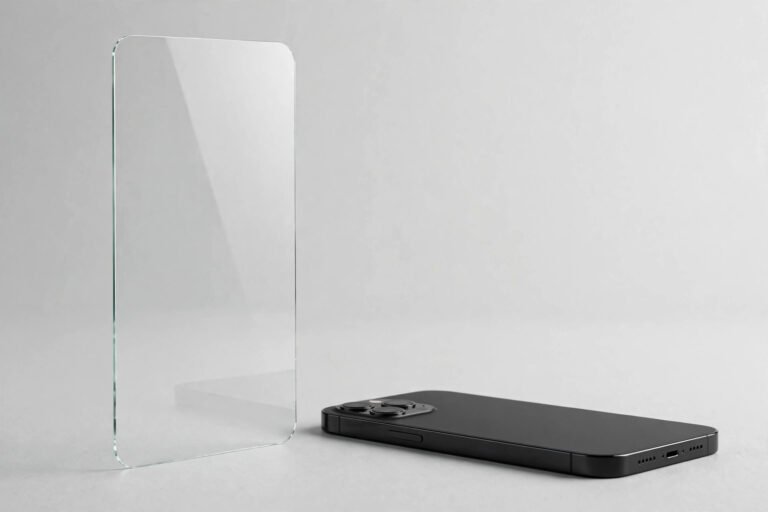
A tempered glass protector is not meant to be indestructible. It is meant to be breakable in the right way. During manufacturing, the glass is heated and rapidly cooled, leaving the outer surfaces in compression while the interior stays in tension. When a blow overcomes that compression, the stored tension releases and the glass breaks into small, granular, relatively blunt pieces instead of long jagged shards.
That crack is the protector spending its strength so your display does not have to — a success story, not a product failure. It took the energy, fractured to dissipate it, and stopped the force reaching the screen beneath. A cracked protector means the shield worked.
The Most Common Causes of a Cracked Protector
Drops are the obvious cause, but the details matter. A flat face-down drop onto a smooth floor is often survived unmarked, while a fall of a few centimetres onto a raised point — a pebble, a table corner, a metal zip — concentrates all the force into one tiny spot. The height matters less than what the phone lands on. Corner and edge impacts are the protector’s weak spot, since the edges carry the least compression strength.
Pressure points are the sneaky cause: sitting with the phone in a back pocket, wedging it into an overstuffed bag against keys, or leaning on a phone left on a sofa arm can flex the glass just enough to start a crack — sometimes hours later. Temperature swings play a smaller role, but going from a freezing dashboard to a hot pocket can crack a protector from thermal stress alone.
- A case with a raised lip around the screen takes corner impacts before they reach the protector, cutting the most common crack cause dramatically.
- Run a fingertip around the edges of a new protector — a tiny pre-existing chip there is the most likely birthplace of a future crack.
Hairline Crack vs Fully Shattered
A hairline crack is a single thin line, sometimes only visible when light catches the screen. The protector is still in one piece and fully adhered, and touch feels normal. It is damaged but stable — you have time to order a replacement rather than panic-buying one.
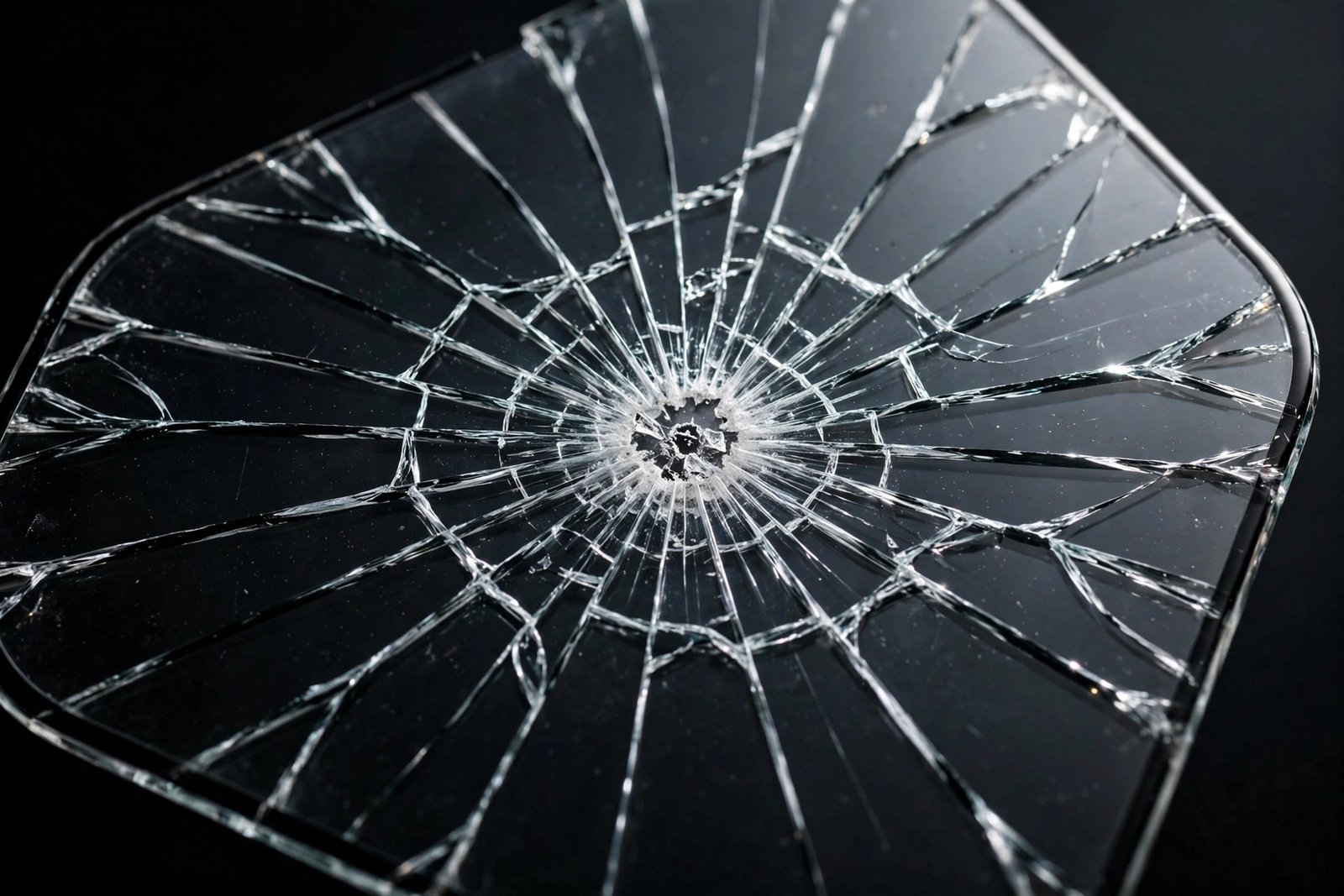
A fully shattered protector looks like a spiderweb, with cracks radiating across the surface. The pieces are usually held together by the adhesive underneath, so it will not fall apart in your hand — but the structure is gone, and any further impact will transfer straight through to your screen. Between the two sits the chipped edge: a small flake missing from the border, which acts as a stress concentrator — treat it as a countdown to a full crack, not a cosmetic issue.
Film Protectors: Why They Do Not Crack
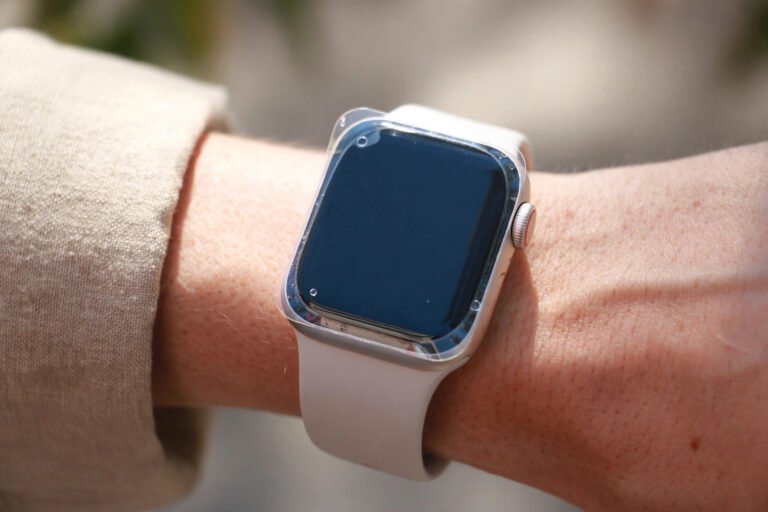
PET and TPU film protectors are plastic, and plastic does not fracture like glass. Film cannot crack; instead it scratches, develops permanent creases from folds or pressure, and can tear or puncture if something sharp presses through it.
A film protector survives impacts that would crack glass, but absorbs far less energy doing so — it flexes and passes more force through to your screen. Film is excellent against scratches; for drops, tempered glass remains the better choice despite being the one that cracks.
Is Your Actual Screen Safe?
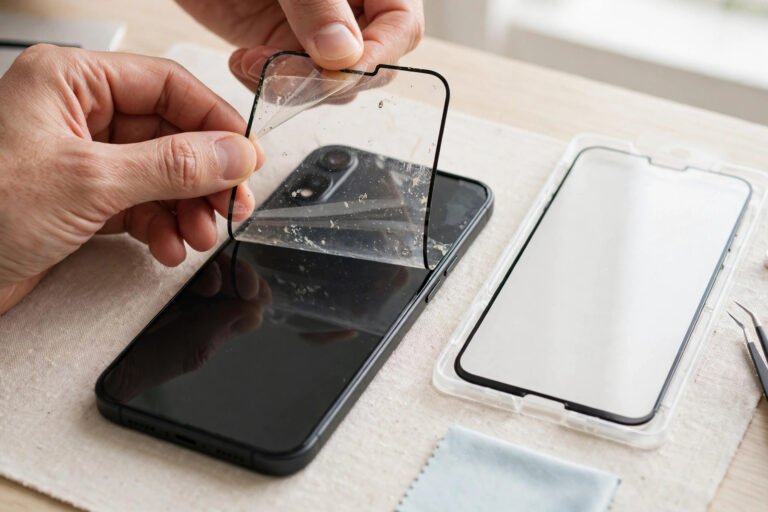
In the great majority of cases, yes — a cracked protector over a perfect screen is the normal outcome. To check, peel the protector off (cover a shattered one with packing tape first so the pieces come away together) and inspect the bare display under a bright light. A flawless screen means the protector did its job.
Can cracked glass scratch your actual screen? While firmly adhered, no — the adhesive locks the fragments in place. The risk appears only when the protector lifts at the edges, letting grit work underneath or a loose fragment shift. Lifted edges can also catch a fingertip or irritate your ear on calls. It will not cut you badly — tempered fragments are blunt by design — but a lifting protector is already on borrowed time.
- Replace a shattered protector immediately; a hairline crack can wait a few days while a replacement arrives. Never leave either on for weeks.
- When removing a badly cracked protector, press packing tape over the whole surface first — the glass peels off in one safe sheet instead of scattering.
Does a Cracked Protector Still Protect?
Only marginally. Once tempered glass fractures, its internal compression is spent, and a second impact on an already-cracked area will pass through almost unopposed. Think of it like a bike helmet after a crash — it did its job once and cannot be trusted to do it again. It still guards against scratches, but its drop protection is effectively gone.
Replace it immediately if the glass is shattered, any piece is lifting or missing, touch feels rough, or cracks cross the front camera or earpiece. A single stable hairline crack can wait a few days — but order the replacement now, because the next bump is the one that finishes it.
Frequently Asked Questions
Why did my screen protector crack without any drop?
Most “mystery cracks” have a mundane explanation: pressure in a pocket or bag, a knock against a table edge you barely noticed, or a tiny pre-existing edge chip that finally gave way. Thermal stress from rapid temperature changes is the other classic culprit. The protector absorbed a real force — you just did not witness the moment.
Does a cracked protector still offer protection?
Only against scratches. Once the glass fractures, its tempering is spent and a second impact transfers through with little resistance. Do not rely on it for drop protection — replace it rather than trusting it.
Can the cracked glass scratch my actual screen?
While firmly adhered, no — the adhesive locks the fragments in place so they cannot grind against the display. The risk only appears if the protector lifts at the edges, letting grit underneath or a loose fragment shift. If you see lifting, peel it off, inspect the screen, and replace the protector promptly.
A cracked screen protector is a small bill paid to avoid a large one — it broke so your display did not have to. Check the screen underneath and put a fresh protector on before the next drop finds you unguarded.