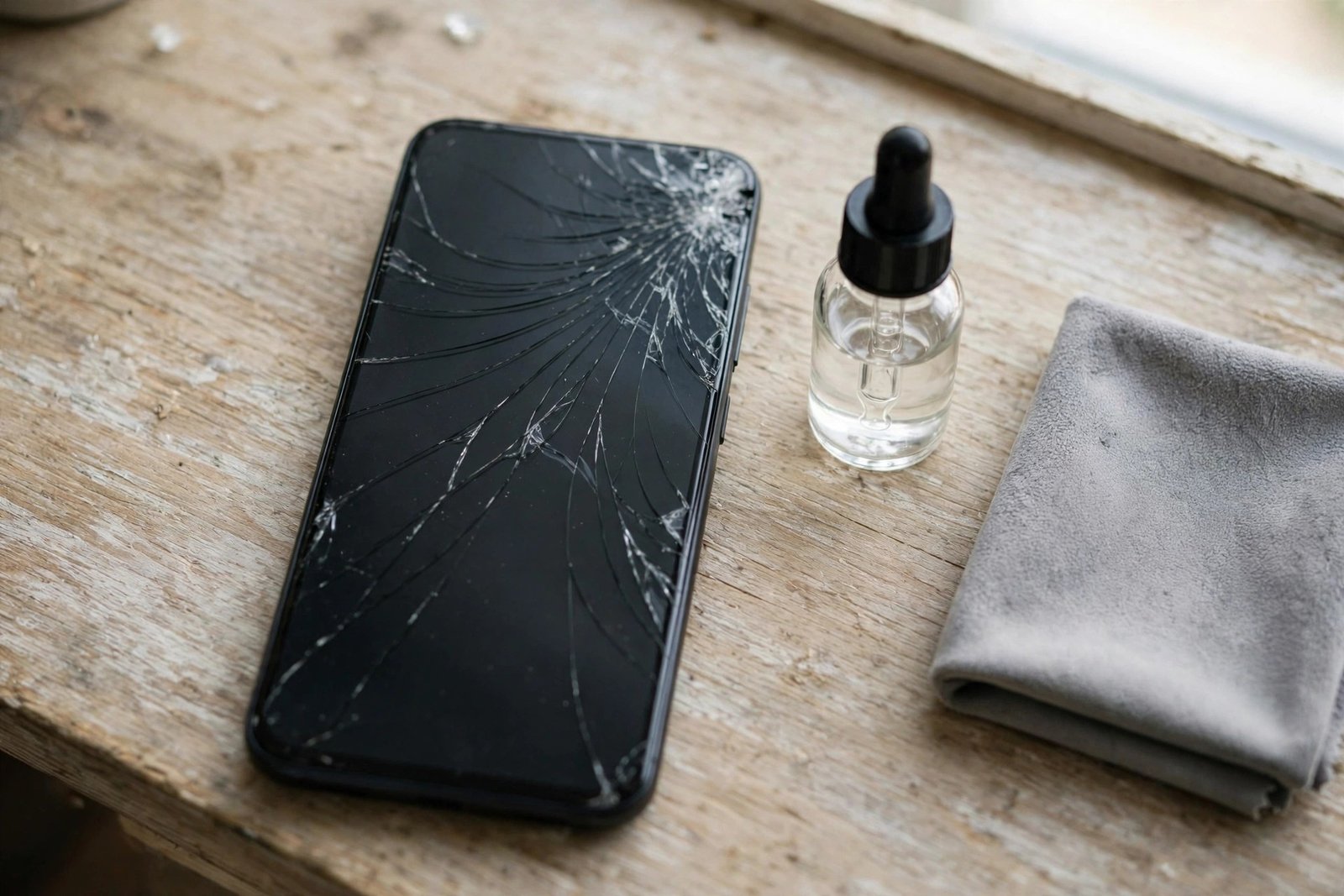
Your screen has cracked, and somewhere you have read that a liquid screen protector “bonds to the glass” and adds a layer of protection. It is tempting to wonder whether wiping one on might hold the crack together, seal it, or at least stop it spreading. The short answer is no — a liquid protector cannot do any of those things, and applying one over broken glass can actually create new problems.
Liquid protectors are widely misunderstood. They are not a liquid form of glass that hardens into a sheet; they are a very thin nano-coating, far thinner than a human hair, designed to make an intact screen a little more resistant to fine scratches. A crack is a completely different problem — a structural failure in the glass itself. This guide explains what the coating really does, why it cannot repair or stabilise a crack, the safety issues involved, and what actually helps instead.
Key Takeaways
- A liquid screen protector is a nano-coating measured in nanometres — it cannot fill, bridge or bond a crack.
- It adds no meaningful impact or structural strength, even on an undamaged screen.
- Wiping coating over cracked glass can trap liquid and fibres in the crack and push against loose shards.
- Cracked glass is a safety issue: shards and sharp edges can cut fingers and shed fragments into pockets and bags.
- A tempered glass protector over the crack is the sensible stopgap; a screen repair is the actual fix.
What a Liquid Protector Actually Is
Liquid screen protectors are typically based on silicon dioxide suspended in a solvent. You wipe the solution across the screen, the solvent evaporates, and a microscopically thin layer is left behind that bonds to the surface of the glass. That layer can modestly improve resistance to the kind of fine, shallow scratching caused by keys or grit, and it can make the surface feel slicker. That is the honest extent of it.
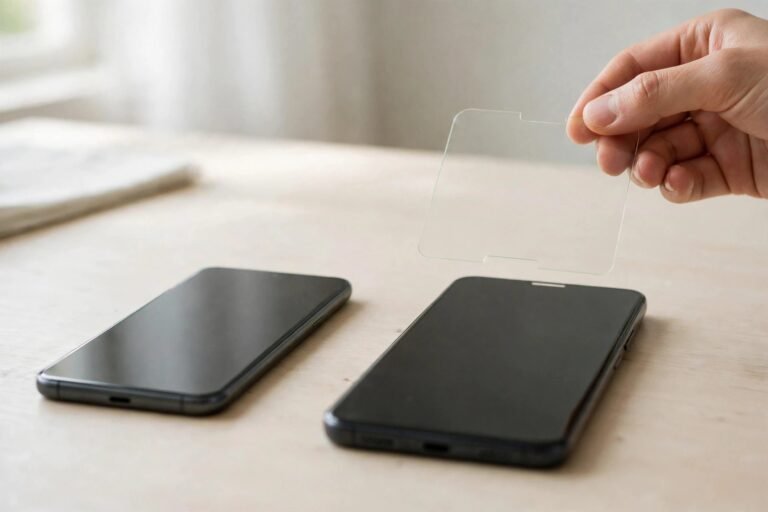
To put the scale in perspective: a tempered glass protector is roughly a third of a millimetre thick, while a cured liquid coating is thousands of times thinner. It has no structural presence at all. It cannot span a gap, resist flexing, or hold two pieces of cracked glass together, because there is simply not enough material there to do any mechanical work. Marketing language about “9H hardness” refers to surface scratch resistance under specific test conditions, not to strength, and it certainly does not mean the coating behaves like a sheet of glass.
Why It Cannot Fix or Stabilise a Crack
A crack is a fracture running through the glass. For anything to stabilise it, that thing would need to penetrate the full depth of the fracture, bond strongly to both faces, and resist the flexing that makes cracks grow. A surface coating fails on all three counts. It sits on top of the glass, not inside the crack in any meaningful depth; its bond is designed for a smooth, clean, intact surface; and a layer measured in nanometres cannot resist the mechanical forces that spread a fracture when you tap, press or simply change temperature.
There is also a practical risk during application. Fitting a liquid protector involves wiping and buffing the screen with a cloth — exactly the kind of rubbing motion you should avoid over broken glass. The pressure can work loose fragments free, drag a shard across the surface to scratch it further, and push fibres and liquid into the crack, where they can wick towards the display layers underneath. If moisture reaches the digitiser or display through a crack, a cosmetic problem can turn into a functional one: dead spots, lines on the screen, or touch failure.
- If you must keep using a cracked phone for a few days, cover the crack with clear packing tape or a tempered glass protector before you do anything else — it keeps shards in place and stops the edges catching on your fingers.
What Actually Helps: Stopgap and Repair
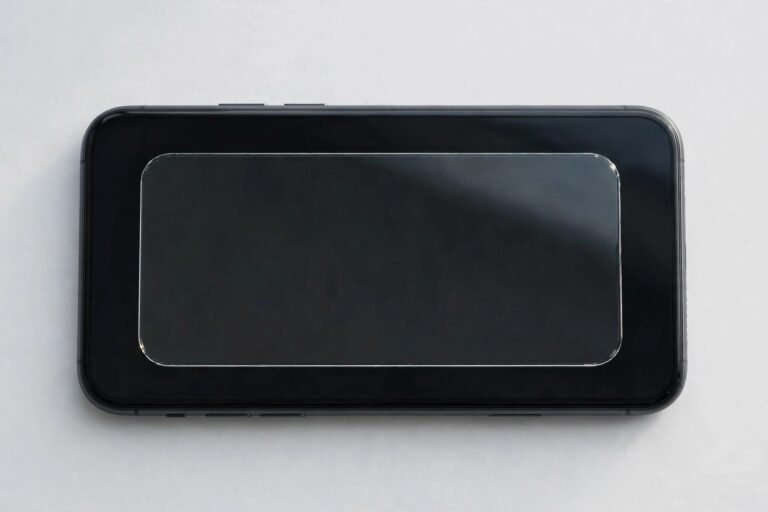
The sensible stopgap is a tempered glass screen protector fitted over the crack. Unlike a liquid coating, a sheet of glass has real structure: it holds loose fragments in place, presents a smooth surface to your fingers, and keeps dust and moisture out of the fracture while you arrange a repair. Clean the screen very gently first — dab rather than rub — and be honest with yourself that this is a temporary measure. Touch sensitivity can suffer over the cracked area, and the underlying crack can still spread.
The actual fix is a screen replacement, either through the manufacturer, an authorised service provider, or a reputable independent repairer. Costs vary widely by model and region, and whether the display assembly includes other components, so it is worth getting more than one quote. If the phone is covered by an accidental-damage plan, check the excess and terms before paying out of pocket. And before any repair, back up the phone — a cracked screen can fail completely without warning, and repairs sometimes involve resets.
- Handle a cracked phone with care and keep it away from children — glass fragments shed from a crack are genuinely sharp. If shards are coming loose, tape the screen and stop using the phone until it is repaired.
Frequently Asked Questions
Will a liquid protector at least stop a crack from spreading?
No. Crack growth is driven by mechanical stress in the glass — pressure, flexing, impacts and temperature changes. A surface coating a few nanometres thick cannot restrain any of that. Only avoiding stress on the area, or replacing the screen, slows a crack down.
Can liquid protector fill in scratches, if not cracks?
Not really. The coating can sit within extremely shallow surface marks and make them slightly less visible in some light, but it does not fill or remove scratches in the glass itself. Any scratch you can feel with a fingernail is far deeper than the coating is thick.
Is it safe to keep using a cracked screen under a glass protector?
As a short-term measure, generally yes, provided the glass protector fully covers the damaged area and no fragments are loose. It is not a long-term solution — moisture can still work in at the edges, and the crack may spread — so treat it as a bridge to a proper repair.
A liquid protector is a raincoat, not a cast: it can shed scratches on healthy glass, but a broken screen needs real structure over it now and a proper repair soon.