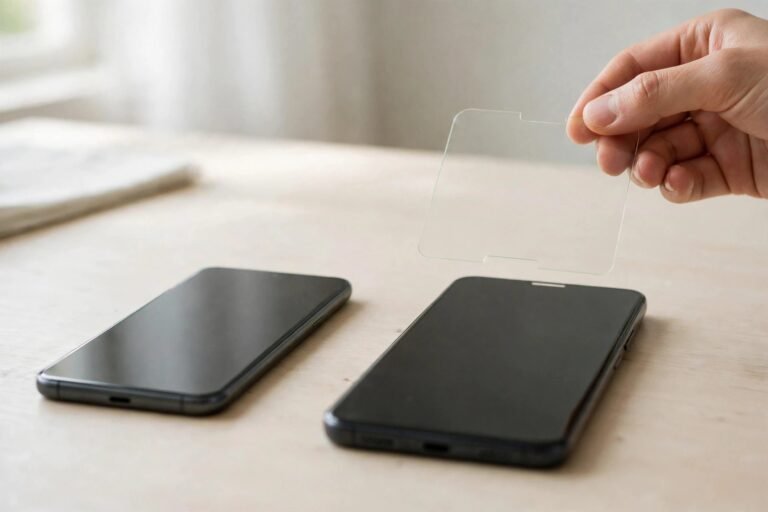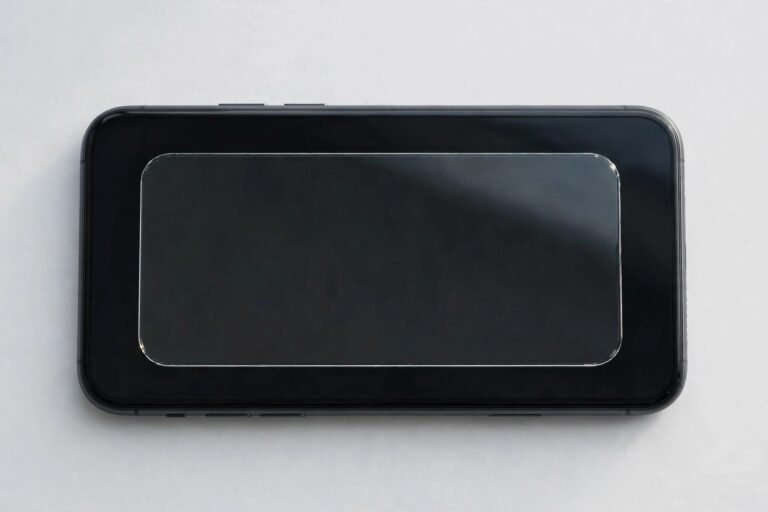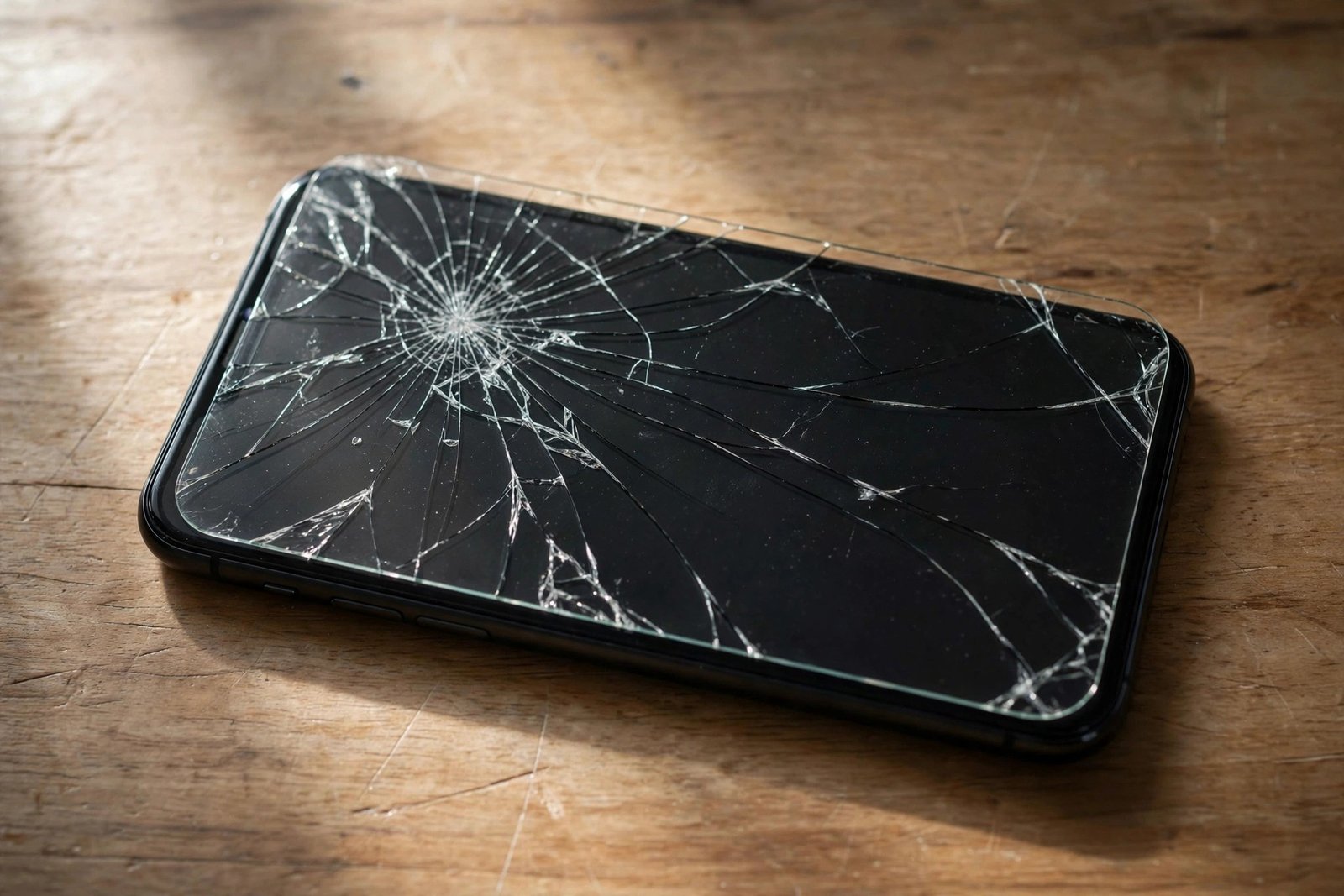
It is a frustrating surprise: you fitted a screen protector on day one, and yet a single drop still left a crack across the display underneath. It feels like the protector failed at its one job. The honest answer is yes — your screen can crack with a screen protector on, and understanding why will help you protect your phone far more realistically.
A protector is insurance that reduces risk, not a guarantee that removes it. It excels at stopping scratches and absorbing certain impacts, but physics sets limits no thin layer of glass or film can overcome. This guide explains what protectors genuinely do, when screens still crack beneath them, and the habits and accessories that give a display its best realistic chance.
Key Takeaways
- Yes, a screen can crack under a protector — protectors reduce the risk and severity of damage but cannot eliminate it.
- A protector works mainly as a sacrificial layer: it takes scratches and some impact energy so the screen beneath does not have to.
- Point impacts, corner drops, and uneven surfaces are the most common ways screens crack despite a protector.
- Tempered glass offers more impact help than thin film, but even glass has clear limits against hard, focused force.
- A case with raised edges plus a protector protects far better than either accessory on its own.
- If the protector cracks, replace it promptly — a cracked protector offers much less protection the second time.
What a Screen Protector Actually Does
A protector’s most reliable job is scratch protection. Keys, coins, grit, and sand in pockets and bags are hard enough to mark a bare display, and a protector takes all of that abrasion instead. This alone justifies using one for most people, because scratches accumulate gradually and permanently weaken and disfigure glass. Film and glass protectors both perform this role well, and a scratched protector can be replaced cheaply, while a scratched screen cannot.
For impacts, a tempered glass protector helps in two ways. First, it spreads a blow over a slightly wider area than the object striking it, reducing the concentration of force at a single point. Secondly, it acts sacrificially: the protector itself may crack and, in doing so, absorb energy that would otherwise have gone entirely into the display. This is why you will often see a shattered protector peeled away to reveal an intact screen beneath. That outcome is real and common — but it depends heavily on the angle, height, and surface involved in the drop.
How Screens Still Crack Beneath a Protector
Point impacts are the clearest limitation. If a phone lands face-down on a small stone, a corner of concrete, or the edge of a step, the force is concentrated into a tiny area. That focused pressure can exceed what both the protector and the display can withstand, and a crack can start at that point and spread beneath an otherwise intact-looking protector. Uneven surfaces are dangerous for the same reason: a flat landing distributes force, while a protruding point delivers all of it in one place.
Corner and edge drops are the other major weakness. Most cracks begin at the corners and edges of a display, where the glass is most vulnerable and where a protector’s coverage is thinnest or absent altogether. Case-friendly protectors deliberately stop short of the edges, and curved displays leave their sloping sides partly exposed. A drop that lands on the corner of the phone transmits force directly into the frame and the edge of the glass, largely bypassing the protector on the front. Height matters too: a fall from a pocket is very different from a fall from a moving bicycle or a first-floor balcony, and no accessory is designed for the extremes.
- After any hard drop, inspect the screen with the protector still on and then, if you suspect damage, under bright angled light. Hairline cracks beneath a protector can be hard to see at first but tend to spread over the following days — catching one early helps you plan a repair before it worsens.
Glass, Film, and the Limits of Each
Tempered glass protectors provide the most impact assistance of the common types because their rigidity spreads force and their thickness gives them something to sacrifice. Even so, they are only a fraction of a millimetre thick, and their hardness rating — often marketed as 9H — refers to scratch resistance against pencils of graded hardness, not to drop-proofing. A glass protector improves your odds in a typical waist-height drop onto a flat floor; it does not make the phone drop-proof, and marketing language should never be read as a promise.
Film protectors, including plastic and hydrogel types, are thinner and more flexible. They are excellent against scratches and can self-heal minor marks, but they absorb very little impact energy, so a screen beneath film is only marginally better off in a serious drop than a bare screen. Liquid coatings are thinner still and should be regarded purely as scratch assistance. Glass improves impact odds; it does not change the answer that cracking remains possible with any of them.
The Combination That Protects Best
Because protectors are weakest at the edges and corners, the single most effective partner for one is a case with a raised lip around the screen and reinforced corners. The lip keeps the display from striking flat surfaces directly, and corner cushioning absorbs the impacts that bypass the protector entirely. Used together, case and glass protector cover each other’s weaknesses: the protector guards the face against scratches and flat impacts, while the case guards the frame, corners, and edges. Neither alone offers the same coverage.
Habits matter as much as accessories. Keeping a phone out of back pockets, off table edges, and away from keys removes the most common damage scenarios. Replace a cracked protector straight away — once cracked, its ability to absorb force is largely spent. For an expensive flagship, the modest cost of a good glass protector plus a decent case is small compared with a single screen repair, even accepting that the protection is probabilistic rather than absolute.
- Think of protection in layers: glass protector for the face, raised-lip case for the corners, and careful habits for everything else. Any single layer can be beaten by an unlucky drop — the three together make that outcome far less likely.
Frequently Asked Questions
If my protector cracked but the screen looks fine, is the screen really undamaged?
Usually, yes — that is the sacrificial layer doing exactly its job. Peel the cracked protector off carefully and inspect the display under bright light at several angles. If you find no cracks or marks, fit a fresh protector straight away, because the phone is unprotected in the meantime.
Does a cracked protector mean my screen underneath must be cracked too?
No. Protectors crack far more readily than the displays beneath them, and in many drops the protector cracks precisely because it absorbed energy that spared the screen. Equally, the reverse can happen — the screen cracks while the protector survives — which is why inspection after a serious drop is always worthwhile.
Will two protectors layered together stop my screen cracking?
Layering protectors is not recommended. Two layers adhere poorly, trap dust and bubbles, reduce touch sensitivity and clarity, and do not combine into meaningfully stronger impact protection. One well-fitted tempered glass protector, paired with a good case, is the more effective setup.
A protector that cracks so your screen does not has done its job well — judge protectors by the damage they reduce, not by a promise no thin sheet of glass could honestly keep.