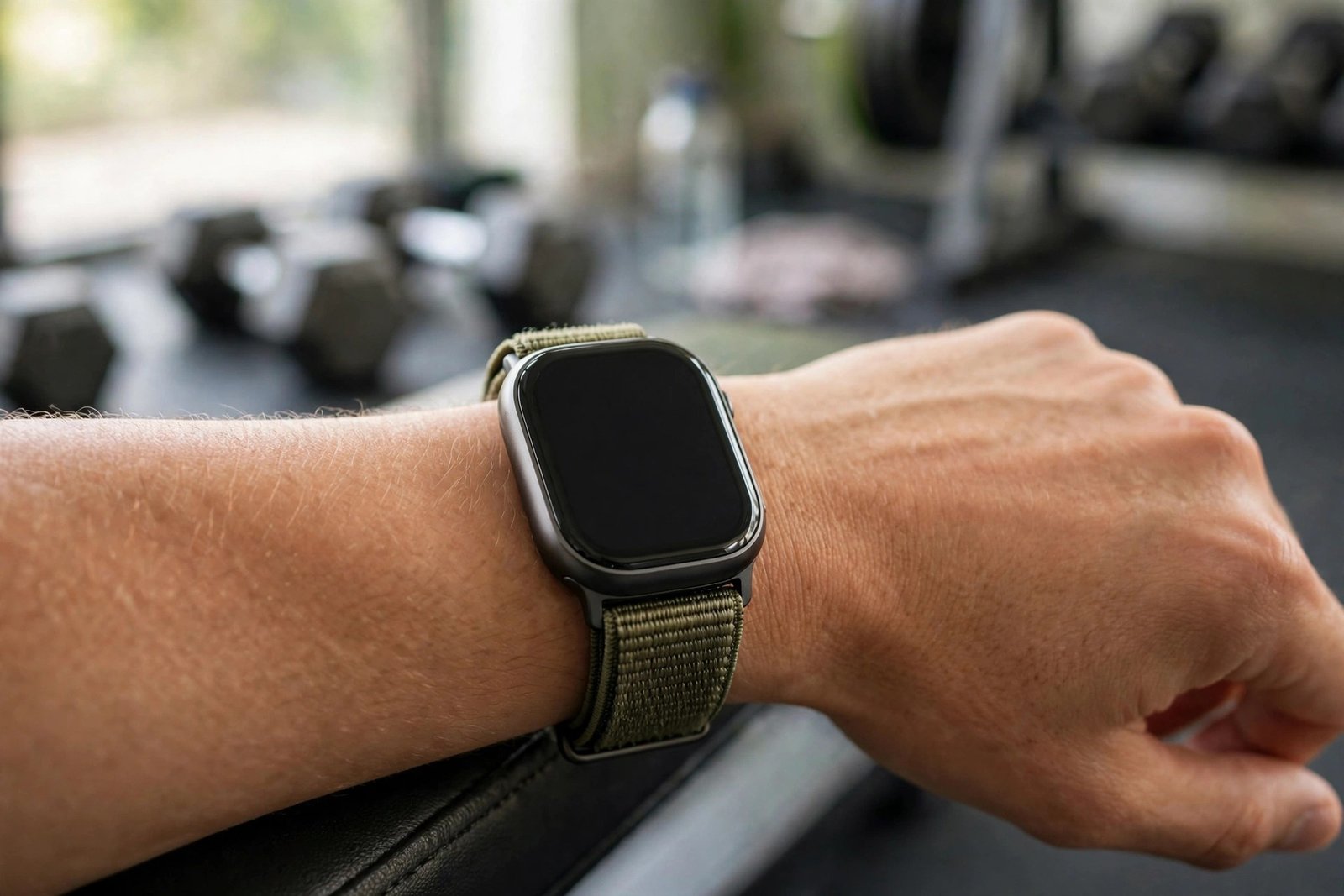
Forget the specification sheet for a moment and think about yesterday. Your Apple Watch rode on your wrist through all of it — the door frame you clipped, the desk edge you leant on, the weights rack, the seatbelt buckle, the toddler who grabbed it. No pocket, no case-friendly desk drawer, nowhere to hide. So: does your watch, in your routine, need a screen protector?
This guide answers the question from your day outwards rather than from the product inwards. You will audit your own routine, check which face is actually on your wrist, and then match yourself to one of three answers — film, snap-on case, or nothing at all. Two honest minutes now beats a scratched watch later.
Key Takeaways
- Your routine decides, not the marketing. Count what your wrist actually meets in a week — that number is your answer in disguise.
- Know your face: sapphire models shrug off scratches; aluminium Ion-X models collect them the way phone screens do.
- Hands-on jobs vote yes. Trades, gyms, climbing, gardening and small children all put hard objects against your watch daily.
- Film protects the face; a snap-on case protects face and edges together. Pick based on where your knocks land.
- Desk-and-sofa routines can honestly skip it — especially on sapphire — and enjoy the watch as designed.
- Watch films are consumables. On a small, curved face they lift and cloud sooner than phone protectors; budget for spares.
Take the Two-Minute Wrist Audit
Run through yesterday — an ordinary day, not your calmest one — and give yourself a point for each of these that happened. Your wrist swung within a few centimetres of a door frame, wall or car door. You reached into a bag, engine bay, cupboard or machinery. You lifted, carried or stacked anything hard. A child or pet made contact with the watch. You trained, gardened, climbed, cycled or did DIY. You knocked the watch at least once and thought nothing of it.
Scored three or more? Your watch lives in harm’s way, and protection of some kind is not paranoia — it is pattern recognition. Scored one or two? You are in the judgement zone, where the type of glass on your wrist makes the decision (next section). Scored zero, and most of your days look like that? Your routine is gentle enough that you can take the rest of this guide as information rather than instruction.
- Audit a week, not a day. The beach trip, the flat-pack build and the gym session rarely fall on the same day, but your watch meets all three — protection is for your worst regular day, not your average one.
- Check your current watch face under a lamp at an angle. The hairlines you can already see are your audit score written in glass.
Now Check Which Face Is on Your Wrist
Your audit score only means something alongside your watch’s material. Stainless steel, titanium and Ultra models wear sapphire crystal — so hard that keys, steel and concrete dust cannot scratch it in normal encounters. For a sapphire owner, even a busy audit mostly argues for edge protection, not scratch protection. Aluminium models wear Ion-X glass, which behaves like phone glass: decent against knocks, steadily marked by grit, zips, walls and gym floors.
Combine the two. Sapphire plus a gentle routine: go bare with confidence. Sapphire plus a rough routine: think case, not film. Ion-X plus a gentle routine: film is optional insurance. Ion-X plus a busy audit: protect it — your wrist will write the same story on that glass that your pockets wrote on your last unprotected phone, only faster. If you are unsure which face you have, the case material engraved on the back of the watch, or listed in the Watch app, tells you.
Film or Case: Match the Cover to Your Routine
If your knocks arrive as scrapes and rubs — sleeves, straps, desk edges, light contact — a full-coverage flexible film is your match. It wraps the curved face, stays nearly invisible, and sacrifices itself to the hairline scratches that would otherwise accumulate on Ion-X glass. Expect to replace it every few months; on a watch, that is normal wear, not failure.
If your knocks arrive as impacts — barbells, rock faces, toolboxes, door frames met at speed — a film is the wrong tool and a snap-on case or bumper is the right one. It stands proud of the screen, absorbs the edge strikes that do the real damage, and protects the watch body at the same time. The cost is bulk and a slightly less elegant profile. Many hands-on owners run a case on workdays and the bare watch at weekends, which is a perfectly sensible routine-based compromise.
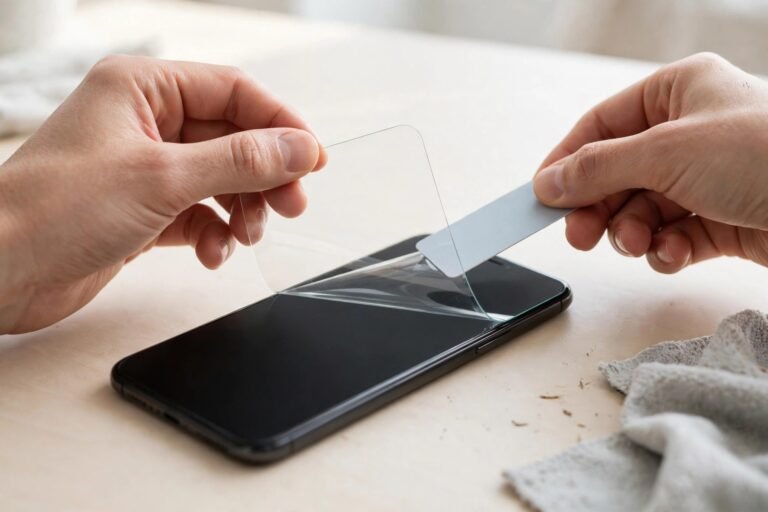
- Whichever you choose, fit it after a proper clean and let a film settle overnight before wearing the watch to bed — sleeves and bedding peel more fresh watch films than water ever does.
- Use a snap-on case? Take it off weekly and rinse it. Grit trapped between case and watch can scratch the very thing you fitted it to protect.
Frequently Asked Questions
I have the Ultra with sapphire. Is a protector pointless for me?
For scratches, largely yes — almost nothing in daily life marks sapphire. For impacts, a bumper case still has a job to do, because sapphire’s hardness comes with brittleness: a hard strike on stone or tile can crack what it cannot scratch. Your audit score, not the glass, decides that one.
Will a film affect workouts, heart-rate readings or touch?
No. A face film sits on the display, while the heart-rate and other health sensors work from the back of the watch against your skin. Touch remains responsive through a well-fitted film; only thick covered-screen cases tend to soften edge swipes slightly.
My routine changes — desk job in winter, building work in summer. What then?
Protect for the rough season. Fit a film or snap on a case when your routine turns physical, and remove it when life calms down. Protection matched to your current routine beats a permanent decision made for a life you are not living this month.
Your wrist already knows the answer — it has been keeping score against every door frame for months. Audit your routine, check your glass, and protect the watch you actually wear through the day you actually have.