Liquid screen protectors make a tempting claim: wipe the coating on, and fine scratches on your phone screen will fill in and vanish. It is an appealing idea — a bottle that erases months of pocket wear without a new screen or a new phone. But what the coating physically does to a scratch, and what it cannot do, are two quite different things.
This guide explains how liquid nano coatings actually interact with scratched glass, which marks they can genuinely improve, which ones they cannot touch, and the honest limits behind the “fills in scratches” claim — so you can decide whether a liquid protector is a cosmetic refresh, a real fix, or neither.
Key Takeaways
- Liquid protectors deposit a microscopically thin silicon-dioxide layer — it can sit inside the lightest surface scuffs, but it does not rebuild missing glass.
- The faintest hairline marks may look slightly less visible because the coating changes how light reflects off the groove.
- Deep scratches you can feel with a fingernail will not fill in — the coating is far too thin to level them.
- The coating adds no meaningful impact protection and does not restore the screen’s original strength.
- Any cosmetic improvement wears away over weeks to months as the coating degrades, and the scratch reappears.
- For visible scratches, a tempered glass protector fitted over the top hides them far more effectively than any liquid.
What a Liquid Protector Actually Puts on Your Screen
A liquid screen protector is a nano coating, typically based on silicon dioxide — the same chemistry as glass, delivered in liquid form. You wipe it across the screen, let it cure, and it bonds to the surface as a layer so thin it is measured in nanometres. For scale, a human hair is roughly 80,000 nanometres thick; the cured coating is a tiny fraction of that.
That thinness is the key fact. The coating does add real properties: it restores the slick, water-beading feel of a fresh oleophobic layer, and it can marginally increase resistance to new micro-scratches. But a layer that thin cannot structurally repair anything. It is a surface treatment, not a filler in the way a resin fills a windscreen chip.
Why Very Light Scratches Can Look Better
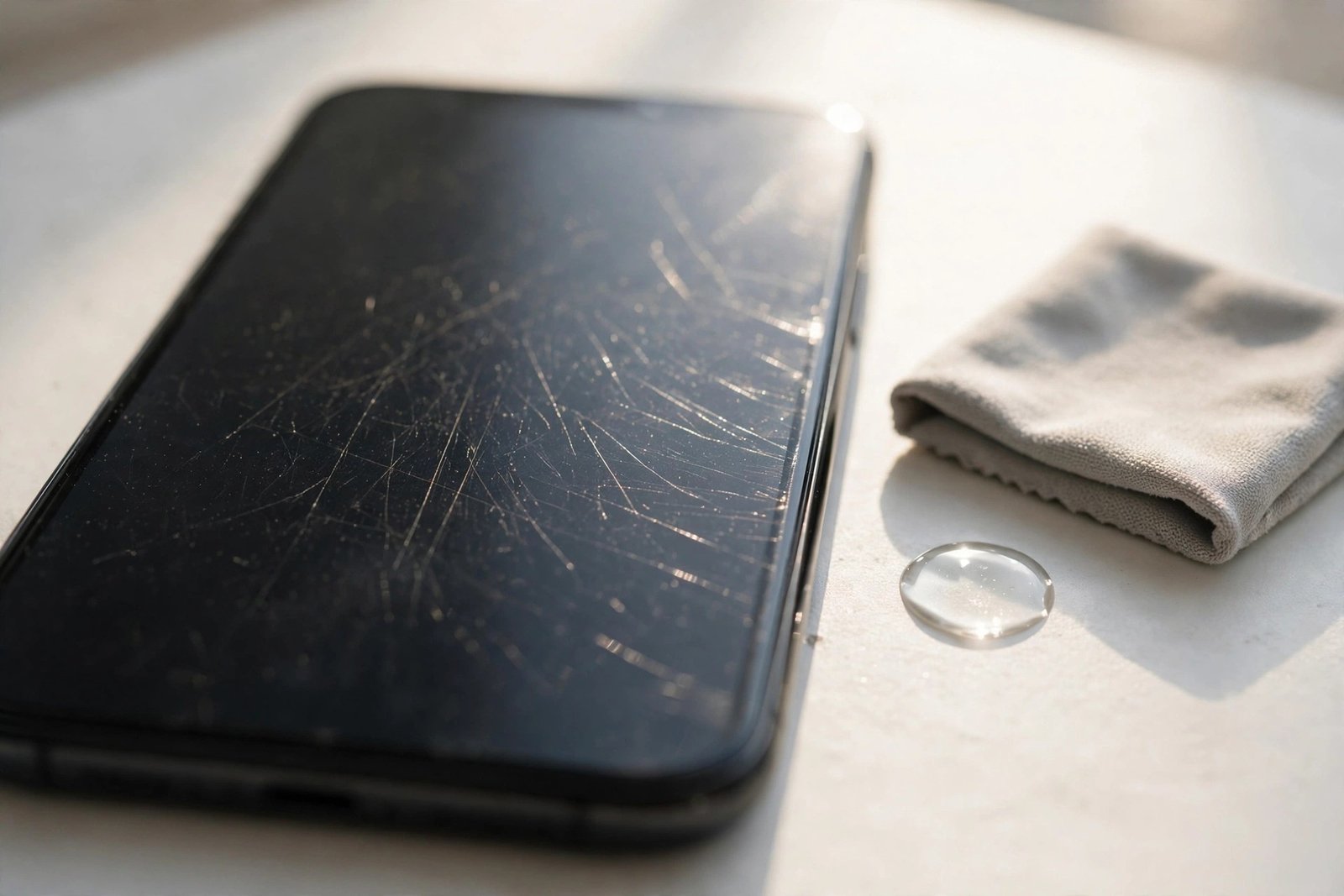
Here is the grain of truth in the marketing. The lightest scratches — the faint swirl marks and hairlines you only see when the screen is off and tilted under a lamp — are shallow grooves in the surface. When the liquid coating is applied, a small amount settles into those grooves before curing. The filled groove reflects and refracts light differently from an empty one, so the scratch catches the eye less.
Notice the wording: the scratch looks better. The glass has not been restored, and under the right light the mark is still there. Think of it as the difference between polishing a scuff and repairing it. For a phone covered in faint micro-marring, the overall effect can be a genuinely fresher-looking screen — as long as your expectations stop at cosmetic.
- Use the fingernail test before buying any liquid protector. Run a fingernail lightly across the scratch: if your nail catches in the groove, the scratch is too deep for a nano coating to improve — whatever the packaging promises.
What It Cannot Fill: Deeper Scratches and Real Damage
Any scratch you can feel — the key scratch across the middle, the gravel graze from a drop onto pavement — is a channel cut into the glass that is thousands of times deeper than the coating itself. Wiping a nanometre-scale layer over it is like painting a road and expecting the potholes to disappear. The coating follows the contour of the damage; it does not level it.
It also cannot help with anything beyond scratching. Chips at the edge of the glass, cracks, and the white stress marks that appear after an impact are all structural damage. No wipe-on product reverses them, and be wary of any listing that blurs the line between “reduces the appearance of fine scratches” and “repairs your screen”. Those are very different claims, and only the modest one is true.
The Improvement Does Not Last
Even where a liquid coating does soften the look of a light scratch, the effect is temporary. The coating sits on the most handled surface of the device you own, and it wears — through swiping, pocket friction, cleaning, and the oils from your hands. Most nano coatings degrade noticeably within a few months, and as the layer thins, whatever it was masking gradually re-emerges.
Manufacturers generally acknowledge this by recommending reapplication every few months to a year. That is reasonable for a surface treatment, but it reframes the purchase: you are not fixing the scratch once, you are subscribing to keeping it covered. Factor that in before comparing the cost with alternatives.
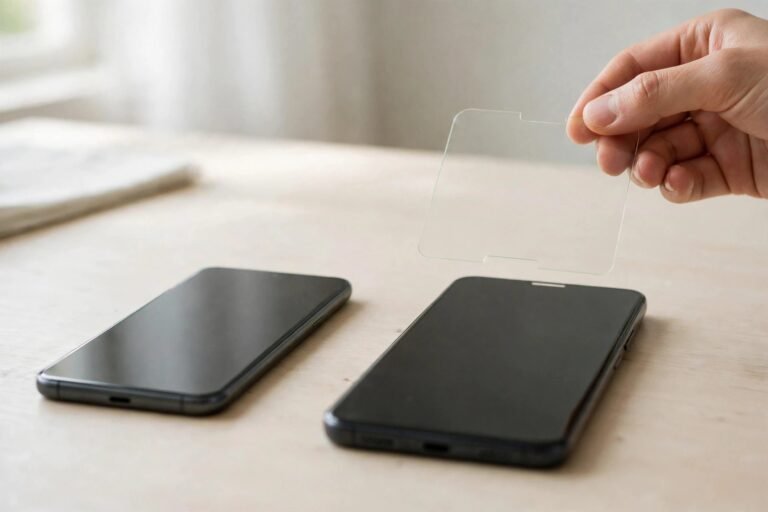
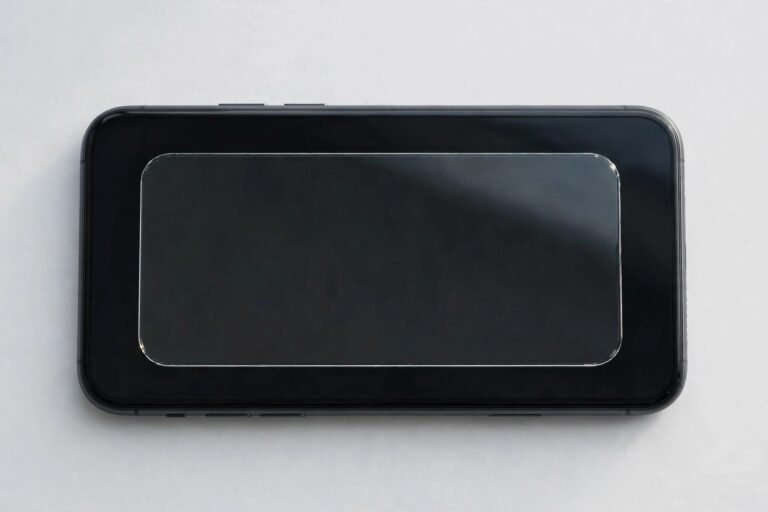
- If your goal is purely to hide existing scratches, fit a tempered glass protector instead. Its adhesive layer flows into fine scratches as it bonds, optically erasing most of them — and unlike a liquid coating, the effect lasts as long as the protector does.
Frequently Asked Questions
Can a liquid screen protector remove scratches completely?
No. It can reduce the visibility of the very lightest surface marks for a while, but it removes nothing — the scratch remains in the glass underneath the coating, and it becomes visible again as the coating wears away.
Will a liquid protector fill a deep key scratch?
No. A deep scratch is a groove far deeper than the coating is thick. The liquid follows the shape of the groove rather than levelling it, so a scratch you can feel with a fingernail will look essentially the same after application.
Does applying a liquid protector make my screen stronger?
Not in any meaningful structural sense. The cured layer may add slight resistance to new surface scuffing, but it does not restore strength lost to existing damage and provides no significant protection against drops or cracks.
A liquid protector can polish the story your screen tells, but it cannot rewrite it — faint marks may fade from view for a season, while real scratches remain exactly where life left them.