The iPhone 14 Pro Max launched with Apple’s toughest phone glass yet — a Ceramic Shield front that the company rates as more durable than any other smartphone glass of its generation. So it’s a fair question: if the screen is that tough, does it actually need a protector at all? The honest answer sits somewhere between the marketing and the fear — this guide weighs both sides so you can decide with clear eyes.
The short version: a protector is not compulsory, but it remains the cheapest insurance you can buy for one of the most expensive screens Apple has ever fitted to a phone. Here’s why toughness and scratch resistance are not the same thing, and who should — and shouldn’t — bother.
Key Takeaways
- The 14 Pro Max front is Ceramic Shield — exceptionally resistant to cracking in drops, but not immune to scratches.
- Drop toughness and scratch resistance are different properties: glass toughened against shattering can still be marked by sand, grit and keys over time.
- A screen replacement for this model is one of the priciest repairs in the iPhone range, while protectors cost very little by comparison (prices vary by region).
- A protector preserves resale and trade-in value — a flawless screen is worth noticeably more than a micro-scratched one.
- Choose a protector with a proper Dynamic Island cut-out or sensor-safe window so Face ID and the front camera are never covered by adhesive edges.
- If you skip the protector, a good case with a raised lip becomes much more important.
What Ceramic Shield Actually Protects Against
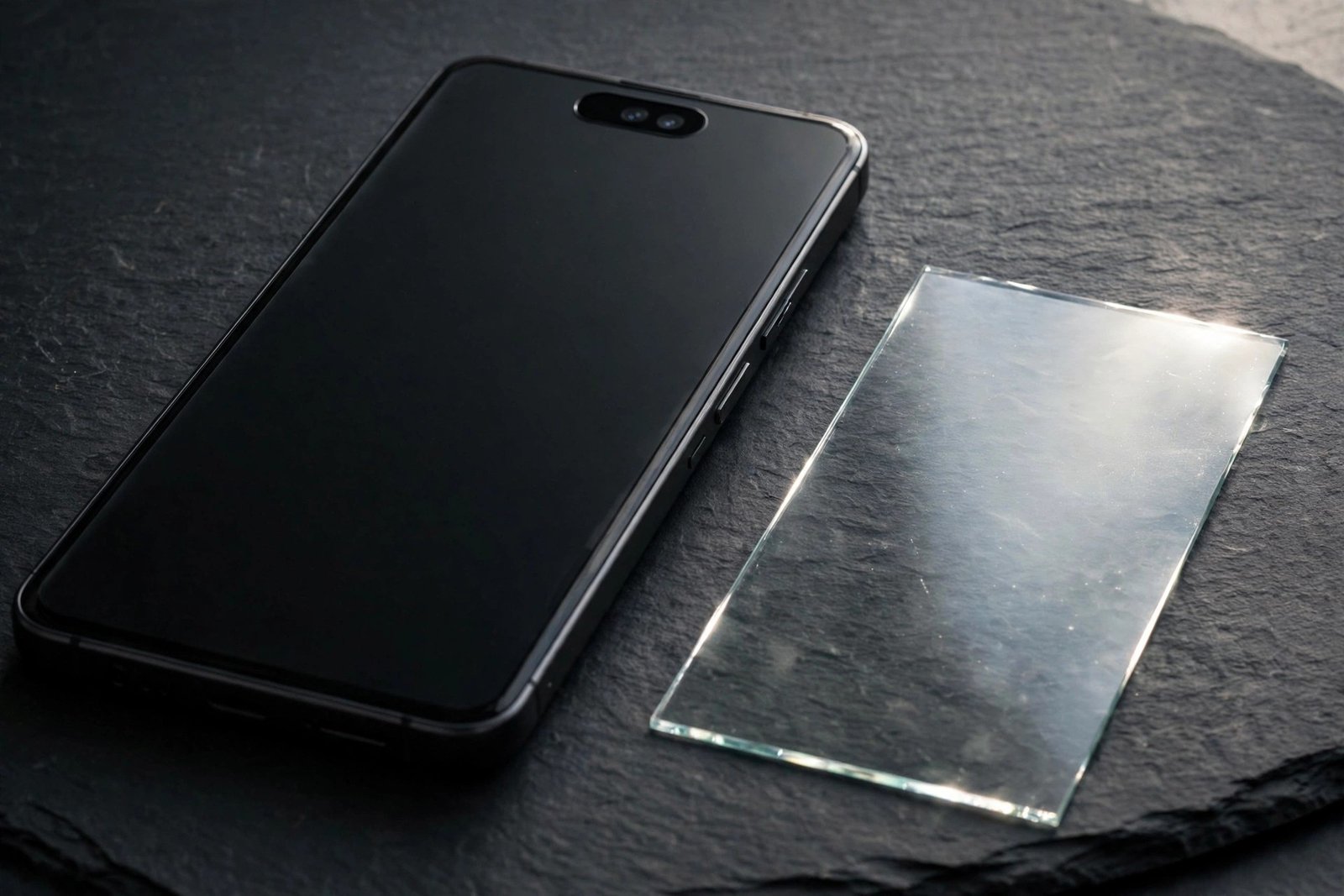
Ceramic Shield is made by introducing nano-ceramic crystals into the glass, and Apple’s headline claim for it has always been about drop performance — surviving falls onto hard surfaces that would crack ordinary glass. On that measure it genuinely impresses, and many 14 Pro Max owners have dropped their phones and walked away with nothing worse than a scare.
Scratches are a different test, governed by hardness rather than toughness. Materials harder than the glass surface will mark it, and the most common culprit in daily life is sand and grit — quartz particles in pockets, beach bags and car seats that are harder than any phone glass. Keys and coins are softer than the glass and rarely scratch it directly, but they drag grit across the surface. The result is familiar to owners of every “tough” phone: after months of use, a web of fine micro-scratches that shows up under bright light, even on a screen that has never cracked. Ceramic Shield reduces your crack risk dramatically; it does not exempt you from scratch accumulation.
The Dynamic Island Question
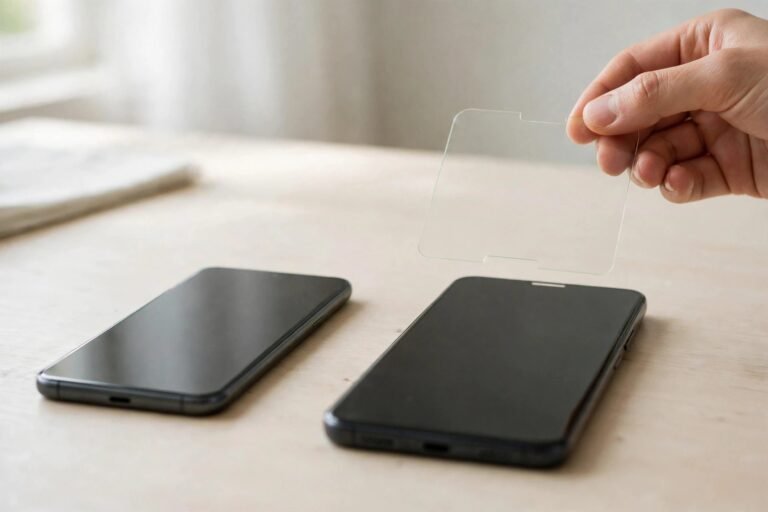
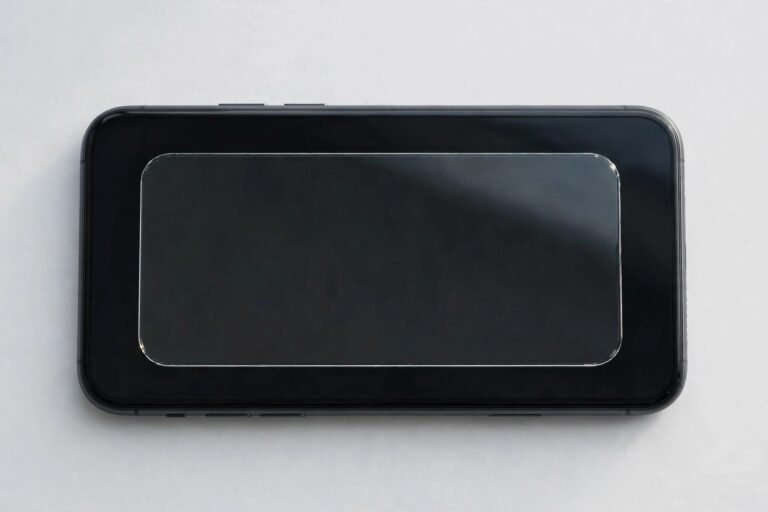
The 14 Pro Max replaced the notch with the Dynamic Island — a pill-shaped cut-out housing the front camera and Face ID sensors, surrounded by live display pixels. This matters for protector choice. Some protectors cover the whole front including the Island area with clear glass; others have a cut-out around it. Both can work, but a full-coverage sheet whose adhesive or printed border sits awkwardly over the sensor area can interfere with the camera or Face ID, and dust tends to collect around cut-out edges.
Whichever style you choose, check that the listing is specifically for the 14 Pro Max — not the 14 Pro (smaller), and not the 13 Pro Max (notch instead of Dynamic Island, and slightly different dimensions). A correct protector keeps the Island fully functional, and after fitting, a quick Face ID test and a selfie check will confirm the sensors are unobstructed.
- Apply your protector on day one, before the first pocket. A brand-new screen is the cleanest surface you’ll ever fit to — no micro-scratches to seal in, no ingrained oils — and the protector keeps it in that condition for the life of the phone.
The Cost Equation
Out-of-warranty screen replacement for a Pro Max model sits at the very top of Apple’s repair pricing — it is, by any measure, a repair that costs a substantial fraction of what the phone is worth, with exact figures varying by country. Against that, a quality tempered glass protector costs a tiny fraction of one repair, and multi-packs mean a cracked protector can be swapped in minutes. The maths only needs the protector to save your screen once — or merely to keep it scratch-free until trade-in — to have paid for itself many times over.
There is also a middle path some owners choose: a protector or extended accidental-damage cover, rather than both. If you carry insurance that makes screen replacement cheap, the case for a protector rests mainly on convenience and resale value. If you don’t, a protector plus a decent case is the closest thing to a guarantee you can get without a policy. What doesn’t stack up is having neither — a bare, uninsured Pro Max screen is an expensive accident waiting for a hard floor.
The Honest Case for Going Bare
Plenty of careful owners use this phone without a protector and never regret it. If your phone lives in a case with a raised lip, travels in its own pocket or a lined bag compartment, and rarely meets sand, grit or shared surfaces with tools and keys, your realistic scratch risk is low and your crack risk is already well handled by the Ceramic Shield and case. There’s also a genuine tactile argument: no protector feels quite as smooth as the factory glass and its oleophobic coating.
So the balanced verdict is this: need is too strong a word, but sensible is not. Fit a protector if you want scratch insurance, resale value, or you work around grit and hard surfaces. Skip it, knowingly, if your handling is gentle and your case is good. Either way, decide deliberately — the worst outcome is assuming Ceramic Shield makes the phone invulnerable and discovering the limits of “tough” the expensive way.
- No protector? Then at minimum, keep the phone out of beach bags and gritty pockets, and wipe the screen with a clean microfibre cloth rather than a sleeve — trapped grit on fabric is a common cause of the fine scratches owners blame on “nothing at all”.
Frequently Asked Questions
Will a protector affect the 14 Pro Max’s display quality or touch?
A quality tempered glass protector has no meaningful effect on brightness, colour or touch responsiveness — modern protectors are optically clear and thin enough that the digitiser reads through them perfectly. Very cheap glass can add glare or a slight rainbow effect; mid-range and premium protectors avoid this.
Does a protector interfere with Face ID or Dynamic Island?
Not if it’s the correct model-specific protector. Designs either cut out around the Dynamic Island or cover it with properly clear, sensor-safe glass. Problems only arise with protectors made for other models or with printed borders straying over the sensor area.
If my protector cracks, has it done its job?
Very likely, yes. A protector is a sacrificial layer — it absorbs and spreads impact energy, cracking in place of the screen beneath. Peel it off carefully, check the display underneath, and fit the next one from the pack. A cracked protector left in place offers little further protection and can feel sharp at the edges.
Ceramic Shield makes the 14 Pro Max hard to crack, not hard to scratch — a protector is optional, inexpensive, and still the smartest small purchase most owners will make.