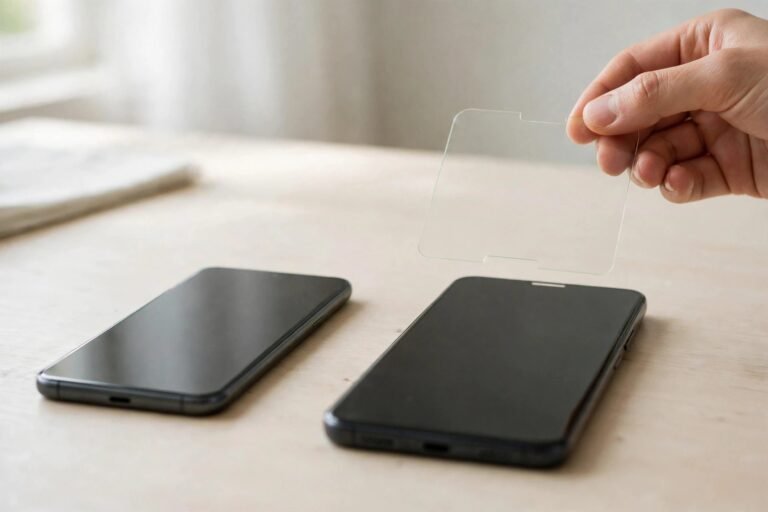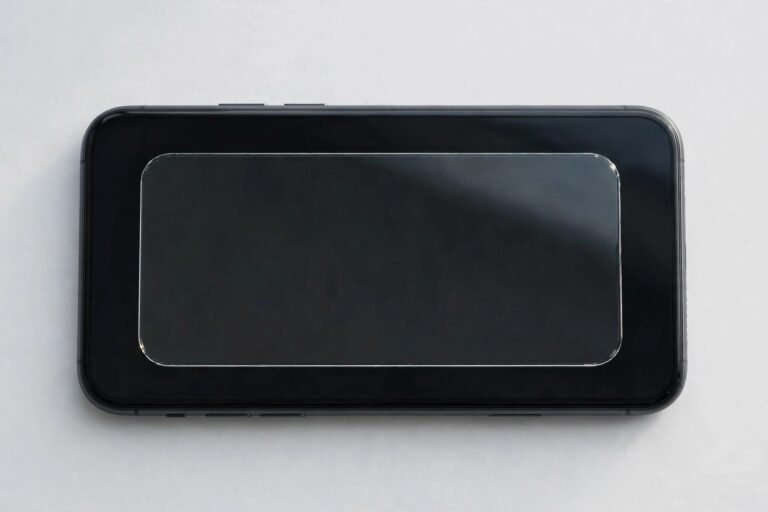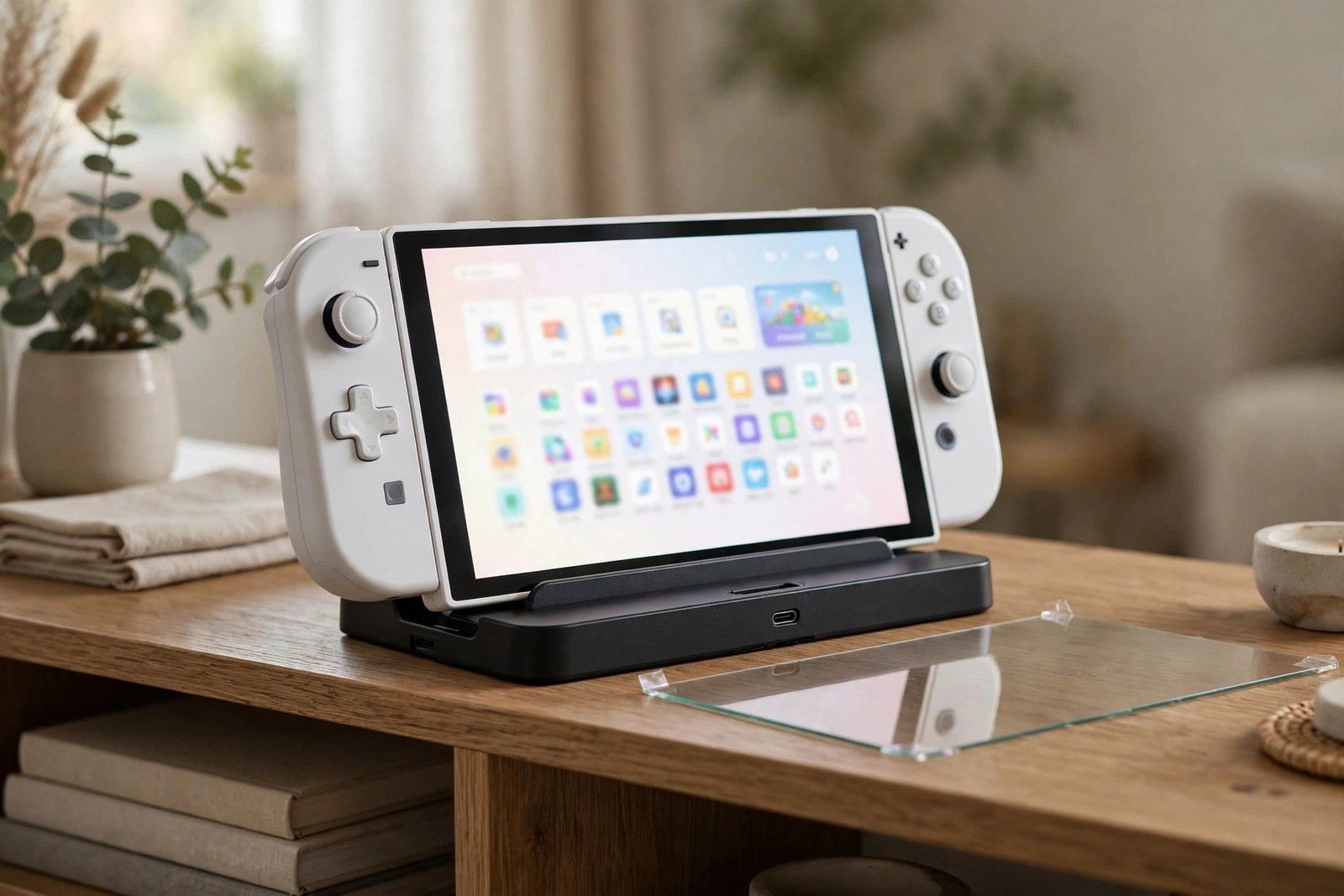
Yes — the Nintendo Switch OLED does come with something on its screen, but it is not quite what most people mean by a screen protector. The Switch OLED’s display is glass, and Nintendo fits an anti-scattering adhesive film to it in the factory. That film is part of the console as designed, and Nintendo’s guidance is clear: do not peel it off.
This guide explains what that factory film actually does, why it should be left alone, and the separate question of whether you should add a real screen protector over the top — a question worth asking, because the Switch OLED’s glass screen is more scratch-prone than the original Switch’s plastic one.
Key Takeaways
- The Switch OLED ships with a factory-fitted anti-scattering film on its glass screen — it is meant to stay on permanently.
- The film’s job is safety, not scratch protection: it holds the glass together if the screen ever shatters.
- Do not peel it off. Nintendo advises against removing it, and it is not sold as a replaceable part.
- You can — and many owners should — fit a tempered glass protector over the film for genuine scratch protection.
- The docking station is the screen’s biggest scratch risk, which is exactly what an added protector defends against.
What the Pre-Applied Film Actually Is
When Nintendo moved from the original Switch’s plastic screen to a glass screen on the OLED model, it added the film for a sensible reason. Glass that breaks can scatter into sharp fragments; a phone-style adhesive film bonded across the surface holds those fragments together if the worst happens. Nintendo describes it as an anti-scattering film and states in its own documentation that it should not be removed.
What the film is not is a screen protector in the usual sense. It is a thin layer designed to stay invisible in normal use, not a sacrificial shield engineered to take scratches and be swapped when it wears out. It offers only minimal protection against scuffs, and because it cannot be replaced, wearing it out is a one-way street. Treating it as “a protector is already fitted, job done” misunderstands what it is for.
Why You Should Leave the Film Alone
Some owners notice the film’s edge, assume it is shipping plastic, and reach for a corner to peel. Resist that instinct. There is separate transit packaging on a new console that is meant to come off, but the bonded film on the screen itself is not part of it. Peeling at it risks leaving adhesive residue, lifting or damaging the film, and removing a safety feature Nintendo deliberately fitted — and since the film is not a user-replaceable part, there is no clean way to put it back.
If you are unsure whether what you are looking at is the film or packaging, the test is simple: transit plastic is loose and peels away easily from a tab, while the anti-scattering film sits perfectly flat and edge-to-edge with no tab and no easy starting corner. If it does not want to come off, that is because it is not supposed to.
- Fitting a glass protector over the factory film? Clean the screen gently with a microfibre cloth only — never lift a corner of the film to “clean under it”. The film is the surface you fit onto, exactly as it is.
Should You Add a Real Protector Over It?
For most owners, yes. The Switch OLED’s glass front is a step up in image quality from the original model’s plastic screen, but glass screens collect scratches — and the Switch has a unique scratch hazard built into its daily routine: the dock. Sliding the console in and out of the dock brings the screen close to hard plastic guides, and dust or grit inside the dock can drag across the display. Dock scratches are one of the most commonly reported cosmetic issues with the console.
The good news is that adding protection is easy and fully compatible with the factory film. A tempered glass protector made for the Switch OLED fits over the film without any need to remove anything, feels like the bare glass, and takes the dock scrapes and everyday scuffs on itself. Note the model specificity: the OLED’s screen is larger than the original Switch’s, so protectors made for the older model do not fit — buy the OLED size.
Fitting and Living With One
Fitting is the same process as on a phone: clean the screen with the supplied wipes, align carefully — the Switch’s big, flat front makes alignment forgiving — and let the glass settle from one edge. Touch sensitivity is unaffected by a correctly fitted protector, and the console docks normally; the added thickness is well within the dock’s tolerance, though you should confirm the protector is seated fully before the first dock so nothing catches.
Day to day, the routine is simple. Keep the inside of the dock dust-free, avoid sliding the console in at an angle, and let the protector do its sacrificial job. When it eventually picks up the scratches that would otherwise be in your screen — or cracks in a drop — peel the protector off (the factory film stays right where it is) and fit a fresh one.
- Blow or wipe out the inside of the dock every few weeks. Most dock scratches come from grit trapped in the dock, not the dock plastic itself — a clean dock plus a glass protector is close to complete protection.
Frequently Asked Questions
Is the film on my Switch OLED just packaging I should remove?
No. The loose plastic used for shipping is separate. The flat, edge-to-edge film bonded to the screen is an anti-scattering safety layer fitted by Nintendo, and it is designed to remain on the console permanently. Do not attempt to peel it.
Can I put a tempered glass protector over the factory film?
Yes — that is exactly the recommended setup. The glass protector adheres to the film’s surface just as it would to bare glass, and the two coexist without affecting touch or docking. Just make sure the protector is the Switch OLED size, not the smaller original Switch size.
What if the factory film gets scratched or starts to lift?
Leave it in place and fit a glass protector over the top — the protector will cover minor film wear and stop it getting worse. If the film is seriously damaged, that is a job for Nintendo’s repair service rather than a DIY fix, since the film is part of the screen assembly.
Your Switch OLED arrived with a safety film, not a screen protector — leave that film exactly where Nintendo put it, add a sheet of tempered glass over the top, and the screen is properly protected at last.