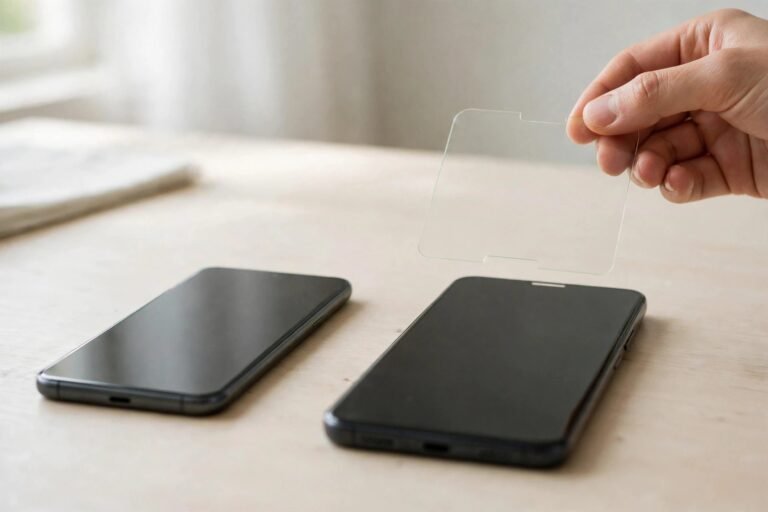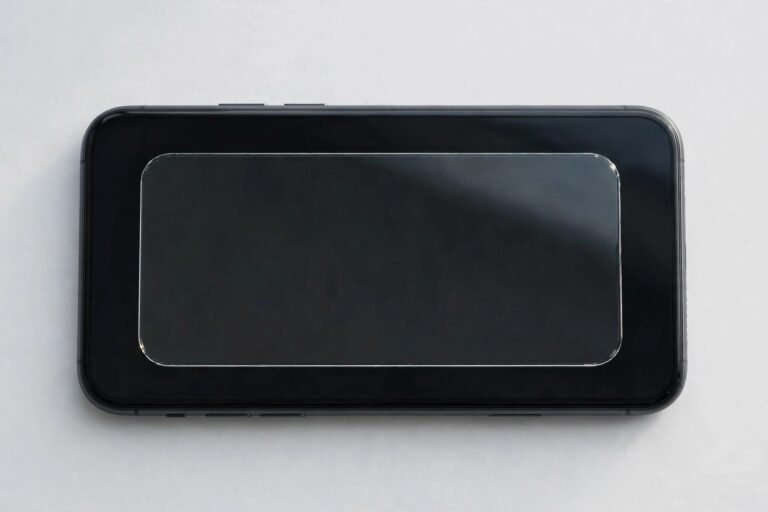
If you’re looking for the edge of your Liquipel protector so you can peel it off, here’s the short answer: there is no edge, and there’s nothing to peel. Liquipel is a nano-coating — an invisible layer bonded to your screen at a molecular level — not a sheet of glass or film. It can’t be lifted, prised or peeled away like a conventional protector, and trying to scrub it off can do more harm than good.
So what can you actually do if you want it gone? This guide explains what the coating is, why removal isn’t really a thing, and the realistic options: letting it wear away naturally, asking a professional, or simply fitting a glass protector over the top.
Key Takeaways
- Liquipel is a nano-coating, typically applied as a service using a machine or applied treatment — there’s no physical layer to peel off.
- You cannot remove it at home with tools, tape or solvents; aggressive scrubbing risks the screen’s own factory coating instead.
- The coating wears away gradually with everyday use — friction from fingers, pockets and cleaning slowly thins it over time.
- If you want it dealt with sooner, a phone repair professional or the service that applied it is the safest route — check current terms with them first.
- You can usually fit a tempered glass protector over it if what you really want is more protection rather than removal.
What Liquipel Actually Is
Liquipel built its name on water-resistant nano-coating technology, and its screen protection products follow the same principle: a liquid treatment is applied to the device — historically via a vacuum-chamber machine at a retail service point, and in some product versions as a wipe-on treatment — and it cures into an invisible layer measured in nanometres. The coating bonds to the surface of the glass and is marketed as adding scratch resistance without any visible film. Product lines and application methods have changed over the years, so the exact details of your treatment may vary; check the brand’s current documentation if you need specifics.
The practical consequence is simple. A glass protector is an object; a nano-coating is a surface treatment. Removing an object is easy. Removing a bonded microscopic treatment is a completely different problem — rather like asking how to peel the waterproofing off a treated jacket.
Why You Can’t Peel or Scrub It Off
Because the coating is thinner than the factory oleophobic layer’s surface texture in places and bonded directly to the glass, there’s no seam for a card, blade or fingernail to get under. Attempts to attack it with solvents, abrasive polishes or scouring pads won’t selectively remove the coating — they’ll attack everything on the surface, including the screen’s fingerprint-resistant coating, and can leave the display cloudy, patchy or permanently marked. In other words, the cure is worse than the coating.
It’s also worth asking why you want it removed. The coating is invisible and doesn’t affect touch, clarity or case fit, so in most cases there’s nothing to gain by removing it — it isn’t like a yellowed film or a cracked sheet of glass spoiling the phone. If your concern is that it isn’t protecting enough, the answer isn’t removal at all: it’s adding a physical protector over the top, covered below.
- Before doing anything drastic, check whether your coating came with a warranty or service agreement — some applications were sold with protection plans or guarantees. Check current terms with the provider before paying anyone to deal with it.
Your Realistic Options
Option one: let it wear away. Nano-coatings are not permanent. Months of swiping, pocket friction and routine cleaning gradually thin and remove them, fastest in the areas your fingers use most. If the coating doesn’t bother you, time solves the problem for free. Option two: ask a professional. A reputable phone repair shop — or the retailer that applied the coating — can advise whether machine polishing or another controlled method is appropriate for your device; this is specialist work, and you should check current prices and terms before agreeing to anything.
Option three: fit glass over it. Tempered glass protectors adhere to the screen’s surface, and a cured nano-coating generally doesn’t prevent adhesion — clean the screen thoroughly, fit the glass as normal, and the coating simply becomes an irrelevant layer underneath. For most people who “want it gone”, what they actually want is proper, visible, replaceable protection — and this delivers it without touching the coating at all.
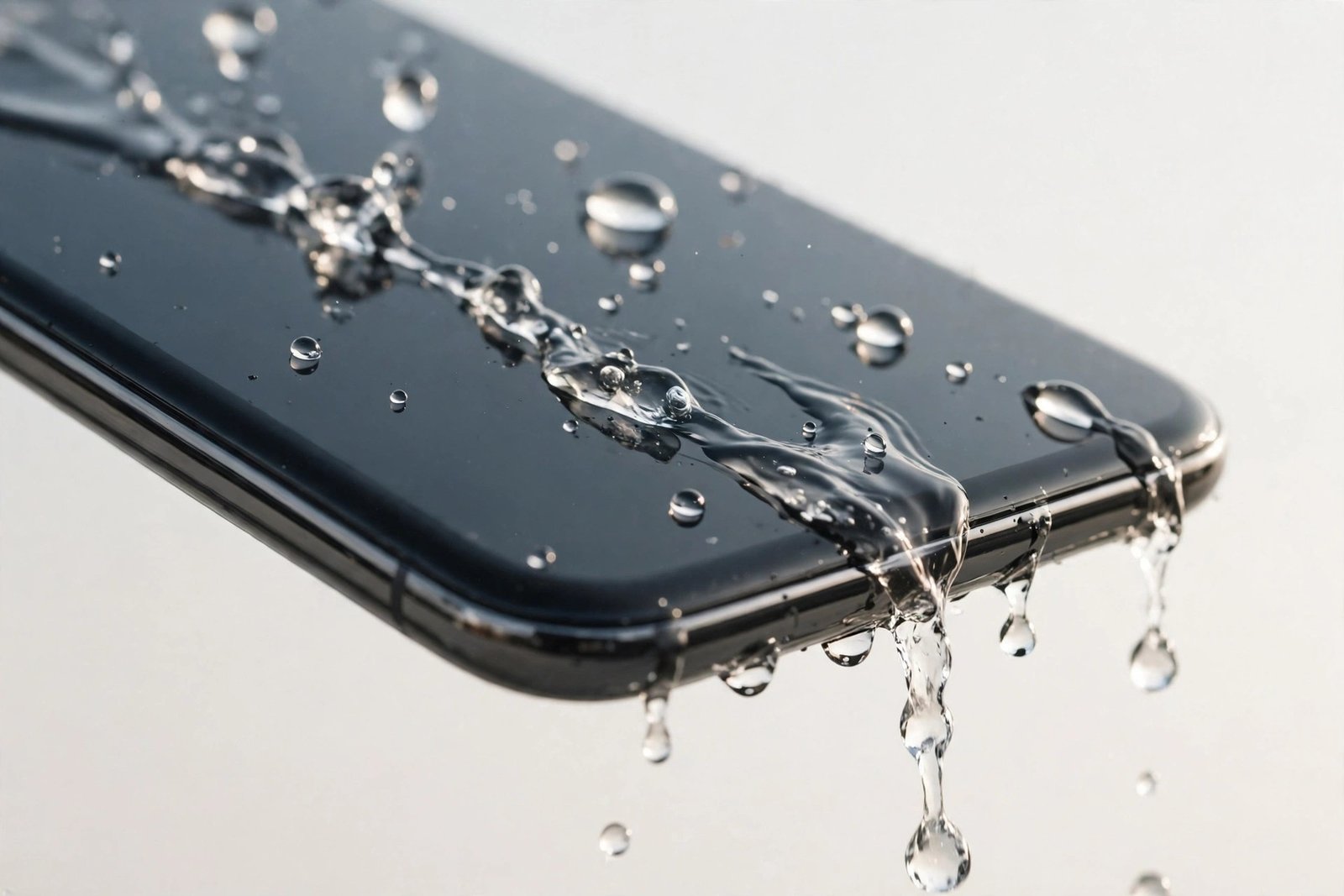
- Wondering whether the coating is still there at all? Watch how water behaves on the screen: on a coated surface it tends to bead and run off more readily. If water spreads and clings like it does on bare glass, the coating has largely worn away already.
Frequently Asked Questions
Will alcohol, acetone or polish remove a Liquipel coating?
Not safely or selectively. Those substances and abrasives act on every surface layer at once, including the screen’s factory oleophobic coating, and can leave permanent clouding or patchiness. Whatever they do to the nano-coating isn’t worth the risk to the display itself.
How long does a nano-coating last before wearing off?
It varies with the product, how it was applied and how heavily the phone is used — heavy-use areas like the centre of the screen wear first. Manufacturers’ longevity claims differ between product versions, so treat any specific figure cautiously and check current product details if it matters to you.
Can I apply a new coating or protector over the old one?
A tempered glass protector, yes — clean the screen and fit it normally. A second liquid coating is less predictable: follow the new product’s instructions, since some specify application to a clean, uncoated screen. If in doubt, the glass-over-the-top route is the simplest and most reliable.
You can’t peel a coating that was never a sheet — but you don’t need to. Let it wear, ask a professional, or put real glass over it, and get on with using your phone.