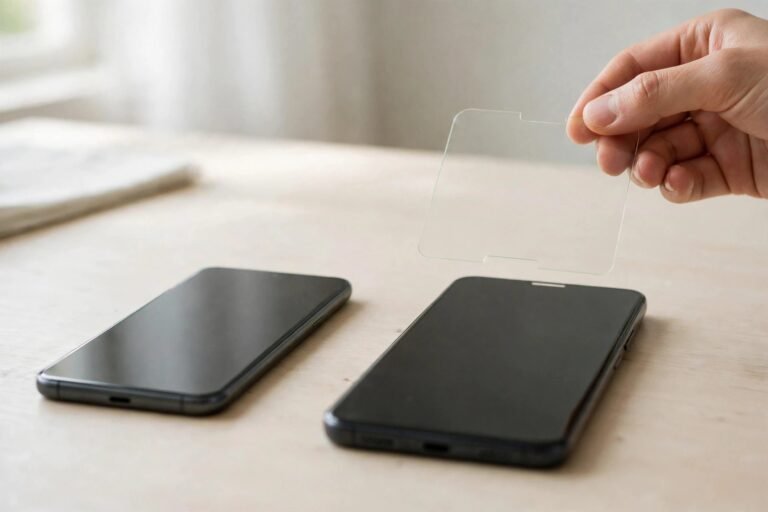
You have just bought a second-hand phone, inherited one from a family member, or simply cannot remember whether you ever fitted a protector in the first place. The screen looks fine — but is that the actual display, or a protector doing its job so well you forgot it was there? It is a surprisingly common question, and answering it matters: you do not want to peel at your display glass thinking it is a disposable film.
Fortunately, a fitted screen protector leaves several tell-tale signs if you know where to look. This guide walks through the quick checks — from the edge inspection to the tap test — that reveal whether your phone is wearing invisible armour.
Key Takeaways
- The edge check is the fastest test: run a fingernail around the display perimeter and feel for a raised lip.
- Tempered glass protectors have a visible edge line, especially noticeable at the corners and around cutouts.
- The tap test distinguishes glass protectors from film: glass clicks crisply, film thuds dully.
- Factory-fitted films (common on folding phones) are extremely hard to spot — check the manufacturer’s guidance before peeling.
- When in doubt, do not peel at it: a wrong guess can damage the display’s oleophobic coating.
The Edge Check: Your First and Best Test
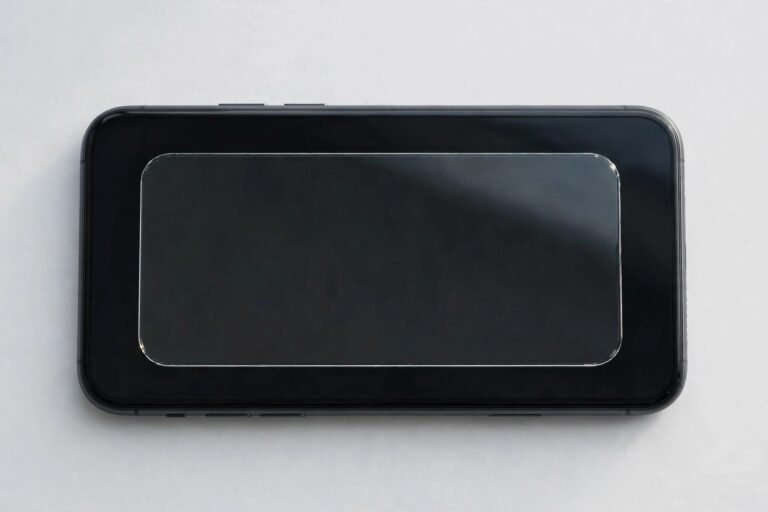
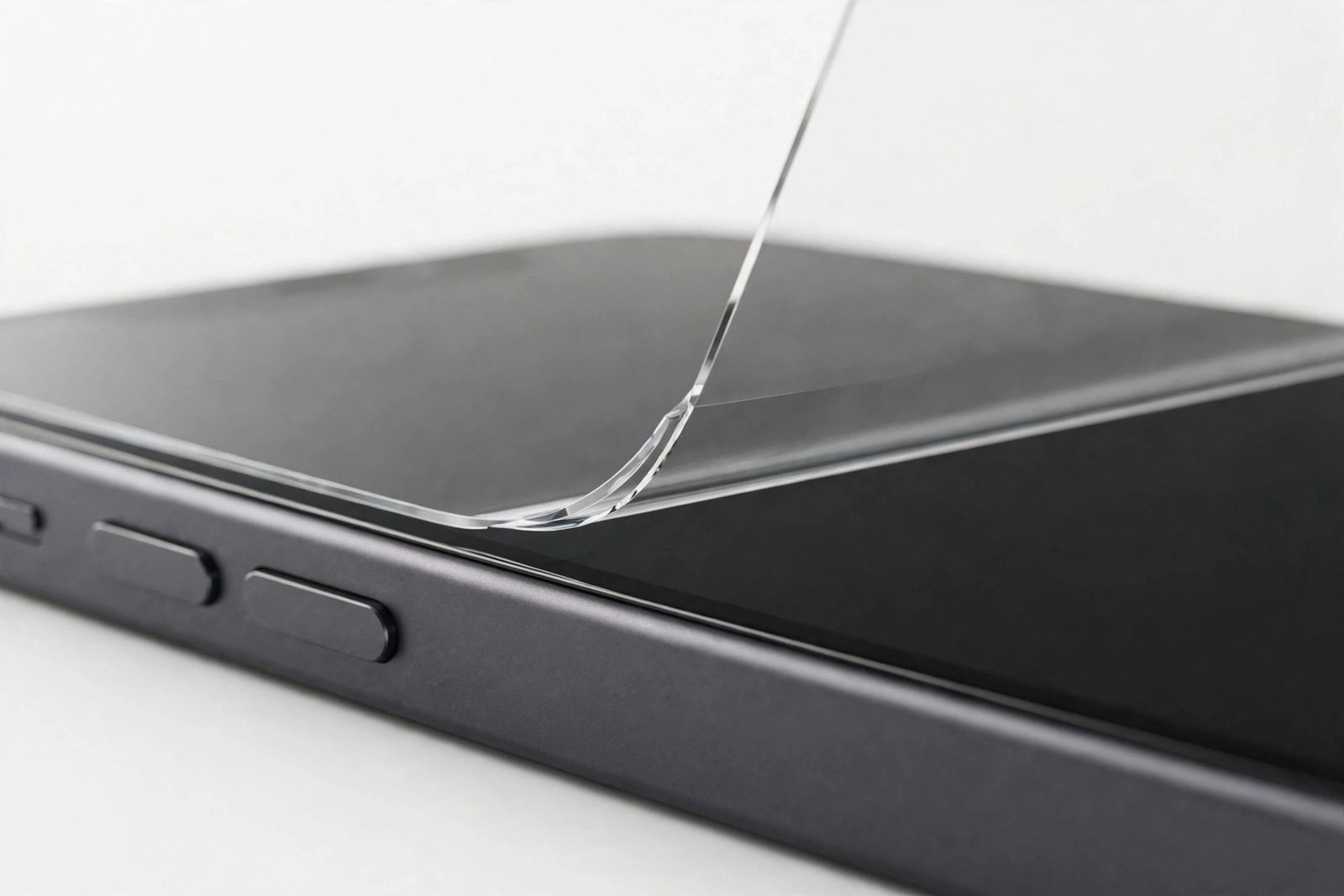
Run your fingernail slowly around the very edge of the display, where the glass meets the frame. A fitted tempered glass protector — typically 0.3 to 0.5 millimetres thick — creates a small but unmistakable step: your nail will catch on a raised lip as it crosses from the protector onto the bezel. On a bare display, the transition from glass to frame is smooth and continuous.
Pay special attention to the corners and the area around the front camera and speaker cutouts. Protector edges are most visible where the cutting is most intricate — a tiny gap or halo around a cutout is a dead giveaway. Hold the phone at an angle under a bright light: the protector’s edge will catch the light as a fine line tracing the display perimeter.
The Reflection and Smudge Test
Turn the screen off and hold it under a lamp, tilting it slowly. A tempered glass protector often shows a slightly different reflection from the display beneath — you may see a faint double edge or a subtle change in reflectivity at the protector’s boundary. Film protectors are harder to spot this way, but they tend to show smudges and fine scratches more readily than bare display glass, which has a tougher oleophobic coating.
Another clue: the finger-glide feel. Fresh display glass feels exceptionally slick; a worn protector — especially film — feels slightly draggy or textured by comparison. If the screen feels less glassy than you would expect from a new phone, a tired protector is a likely explanation.
- The water droplet test works too: place a tiny drop of water on the screen. On a fresh oleophobic coating (bare display or new protector), the droplet beads up tightly; on a worn protector with a degraded coating, it spreads flat. A flat-spreading drop on a “new” phone strongly suggests an old fitted protector.
The Tap Test: Glass vs Film vs Bare
Flick the display gently with your fingernail and listen. A tempered glass protector produces a crisp, slightly hollow click — the sound of one thin sheet of glass sitting on another. A film protector gives a duller, softer thud. A bare display sounds solid and high-pitched, with no layered resonance. With a little practice, the three are easy to tell apart.
This test is particularly useful for distinguishing glass from film, which the edge check alone may not resolve — a well-fitted film can be nearly invisible to the nail. The acoustic difference, though subtle, is consistent.
The Tricky Cases: Factory Films and Edge-to-Edge Glass
Some phones ship with factory-fitted protective films — most notably folding phones, where the inner display film is a structural part of the screen assembly. These are deliberately inconspicuous and can be nearly impossible to detect by feel. The rule here is simple: check the manufacturer’s guidance for your exact model before attempting any removal. Peeling a structural film on a folding phone can destroy the display.
Similarly, some premium edge-to-edge glass protectors are cut so precisely that the lip is minimal. In these cases, the cutout inspection is your best bet: even the best protector cannot perfectly hide the camera and sensor openings, and a magnifying glance at those areas usually reveals the truth.
- If you are buying second-hand, ask the seller directly whether a protector is fitted — and whether it is the original factory film. It is the fastest answer, and it avoids the one mistake you cannot undo: peeling something that was never meant to come off.
Frequently Asked Questions
Can I damage my phone by peeling at the screen to check?
Yes — picking at the display edge with a nail or tool can chip the oleophobic coating or, worse, lift a factory-fitted structural film. Use the non-invasive tests above (edge feel, light angle, tap test) rather than digging at anything.
Why would a phone have a protector I cannot see?
Many retailers fit a protector at the point of sale, previous owners forget to mention it, and factory films are designed to be unobtrusive. A well-fitted quality protector is genuinely hard to notice — which is, after all, the point.
Should I remove an old protector I just discovered?
Inspect it first. If it is intact, clear, and sitting flat, it is still protecting your display — leave it. If it is scratched, hazy, or lifting at the edges, replace it: a worn protector degrades the viewing experience while giving a false sense of security.
Your phone may have been quietly protected all along. A thirty-second edge check tells you the truth — and knowing is always better than guessing, especially before you start peeling.