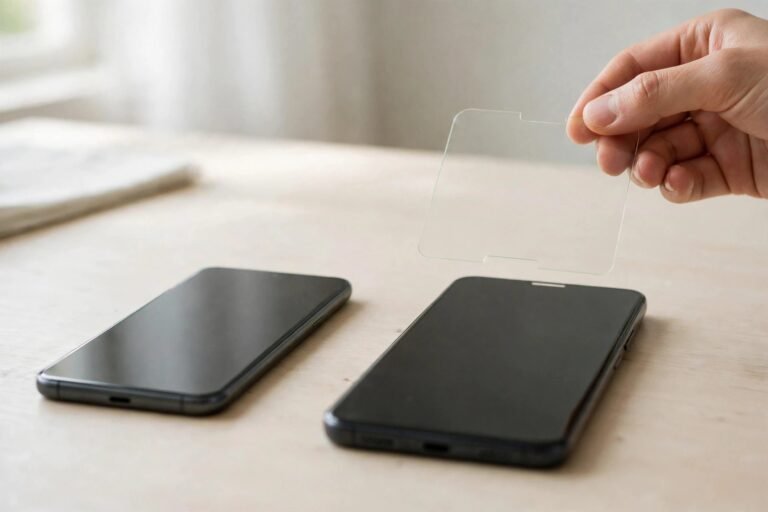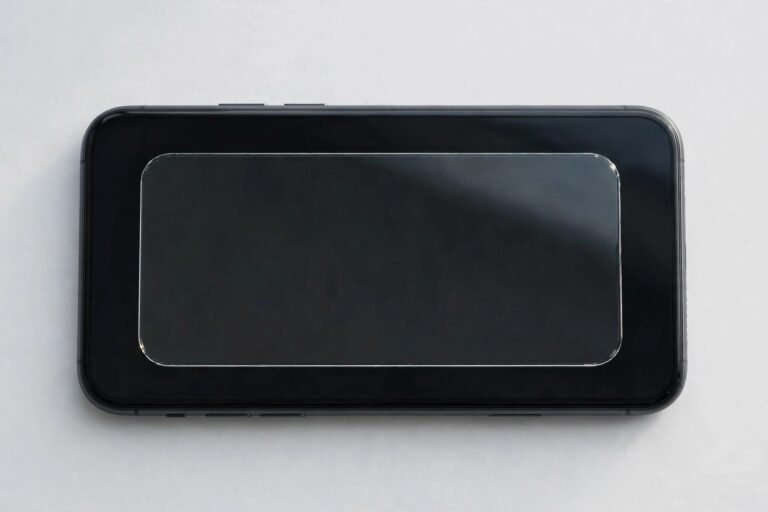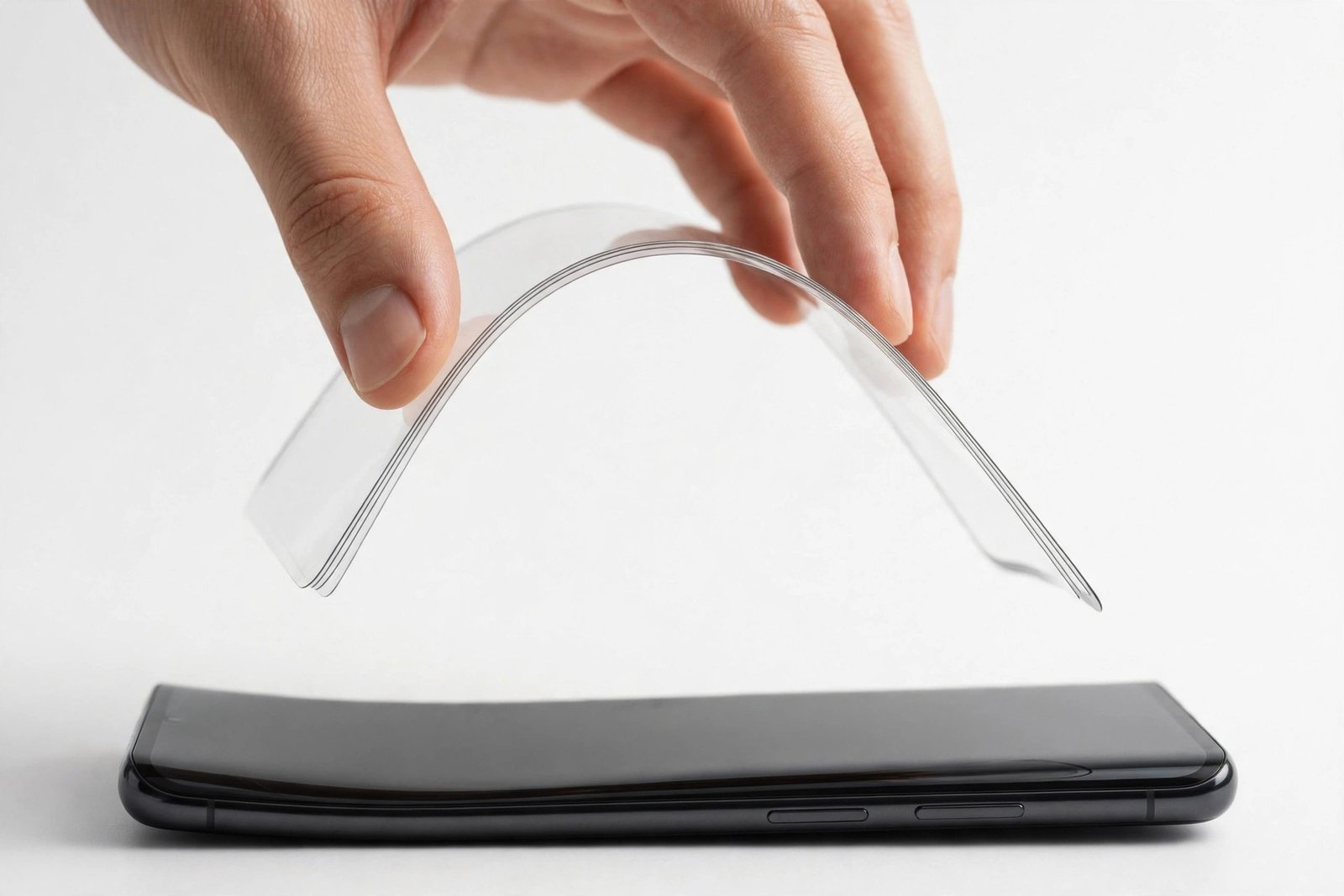
Shop for a screen protector today and alongside the familiar choices of tempered glass and plastic film you will increasingly meet a third option: the hybrid screen protector. The name promises the best of both worlds, and while that claim needs some unpacking, hybrid protectors occupy a genuinely useful middle ground. They flex where glass cannot, feel smoother than basic film, and suit certain phones better than either traditional option.
A hybrid protector is a layered construction, typically combining flexible plastic layers with a harder, glass-like coating. This guide explains how hybrids are built, how they compare with glass and film, and which phones they suit best — as well as where their limits lie.
Key Takeaways
- A hybrid protector layers flexible PET or TPU materials with a glass-like coating to combine flexibility with a smoother, harder surface.
- It sits between film and tempered glass: tougher and better-feeling than basic film, more flexible than glass, but with less impact protection than glass.
- Hybrids are a strong choice for curved-edge screens and under-display fingerprint sensors, where rigid glass often struggles.
- Many hybrids offer self-healing surfaces that fade minor scratches over time.
- Unlike tempered glass, a hybrid bends rather than shatters, so it never leaves sharp fragments after an impact.
- Choose glass instead if maximum drop protection is your priority and your phone has a flat screen.
How a Hybrid Protector Is Built
A hybrid protector is a laminate of several thin layers, each doing a different job. The base is usually a flexible polymer such as PET or TPU, which gives the protector its ability to bend and to follow the contours of a screen, including gentle edge curves that rigid glass cannot cover without leaving gaps. Above that base sit one or more intermediate layers that add tear resistance and help the protector absorb and spread light impacts rather than transmitting them straight through.
The top layer is what you actually touch: a hardened coating designed to feel smooth and glass-like under the finger, to resist surface scratches, and often to carry an oleophobic treatment that reduces fingerprint smudging. Some designs blend fine glass particles into a polymer matrix rather than using distinct layers, but the principle is the same — flexible body, harder skin. Total thickness varies by brand and design, but hybrids generally sit between a very thin film and a standard tempered glass sheet, which is a fair summary of their character overall.
Hybrid vs Tempered Glass vs Film
Against basic plastic film, a hybrid is an improvement in almost every respect except price. It feels smoother and less rubbery, resists scratches better, lasts longer before looking tired, and offers somewhat more substance against knocks. Against tempered glass, the comparison reverses on the most important protective measure: glass remains the better impact absorber for flat screens, because its rigidity spreads force and its sacrificial cracking dissipates energy. A hybrid bends under a blow rather than breaking, which means more of a hard impact’s energy can pass through to the display beneath.
Where the hybrid wins back ground is coverage and compatibility. Glass protectors on curved screens must either stop short of the edges or use adhesive only around their borders, both of which cause well-known problems with lifting, dust, and touch response. A hybrid’s flexibility lets it follow the curve and adhere across its full surface. Hybrids also tend to work reliably with under-display fingerprint sensors, because their thinner, fully adhered construction avoids the air gap that can interfere with ultrasonic readers under some glass designs; compatibility still varies by product, so checking the listing for your model remains worthwhile.
- If your phone has a curved display and an in-screen fingerprint sensor, a hybrid or film protector is often the pragmatic choice — full-surface adhesion keeps both the edges sealed and the sensor responsive, which is exactly where budget glass protectors most often disappoint.
Self-Healing and Everyday Durability
Many hybrid protectors advertise self-healing surfaces, and within limits the claim is fair. The elastic top coating can slowly flow back into very fine scratches and swirl marks, so light damage from pockets and cloths fades over hours or days rather than accumulating visibly. This keeps a hybrid looking clearer for longer than a basic film, which records every scuff permanently. Self-healing has firm limits, however: it addresses only the shallowest surface marks. A deep scratch from a key or grit cuts through the coating and stays, just as it would on any other protector.
In general wear, hybrids age differently from glass. They do not chip or develop spreading cracks; instead they gradually accumulate dents and scratches until they look shabby enough to replace. Many users replace a hybrid on appearance grounds after several months rather than because it failed — a reasonable trade for a consumable that degrades gracefully and never produces sharp fragments.
Who Should Choose a Hybrid Protector?
A hybrid makes most sense for owners of curved-screen phones, where glass coverage is compromised by design; for users who rely heavily on an under-display fingerprint sensor and have had recognition problems with glass; and for people who dislike the thickness and occasional sharp edge feel of glass but want something more substantial and longer-lasting than basic film. It also suits those who mainly fear scratches and scuffs — the most common damage of all — and who pair the protector with a good case to handle corner and edge impacts.
Conversely, if your phone has a flat screen, you work in rough environments, or drop protection is your overriding concern, tempered glass remains the more protective choice, usually at a lower price. Think of the decision as choosing which risk you are managing: hybrids manage scratches, fit, and sensor reliability exceptionally well, while glass manages impact energy best. Neither is universally superior; the right answer depends on your phone’s shape and your own habits, and a hybrid chosen for sound reasons is a considered choice rather than a compromise accepted blindly.
- Fit a hybrid protector slowly and use the supplied squeegee from the centre outward. Its flexibility makes it more prone to trapped bubbles during fitting than glass, but the same flexibility makes bubbles easier to work out to the edge afterwards.
Frequently Asked Questions
Is a hybrid screen protector as strong as tempered glass?
For scratches, a good hybrid is broadly comparable. For impact protection, no — tempered glass absorbs and spreads drop energy more effectively, which is why glass is recommended where drop protection is the priority. Hardness figures quoted for hybrids describe surface scratch resistance, not drop strength.
Will a hybrid protector work with my fingerprint sensor?
Generally yes, and often more reliably than glass, because hybrids adhere fully to the screen with no air gap over the sensor area. After fitting any new protector, delete and re-register your fingerprints so the sensor learns your prints through the new layer — this improves recognition with every protector type.
How long does a hybrid screen protector last?
It varies with use, but many users get several months to around a year before accumulated scratches, dents, or edge wear make replacement worthwhile. Unlike glass, a hybrid rarely fails suddenly by cracking; it tends to look gradually more worn, which is your cue to replace it.
The hybrid protector earns its place not by beating glass at its own game, but by fitting the phones and fingers that glass struggles with — flexibility, in the right situation, is a feature rather than a flaw.