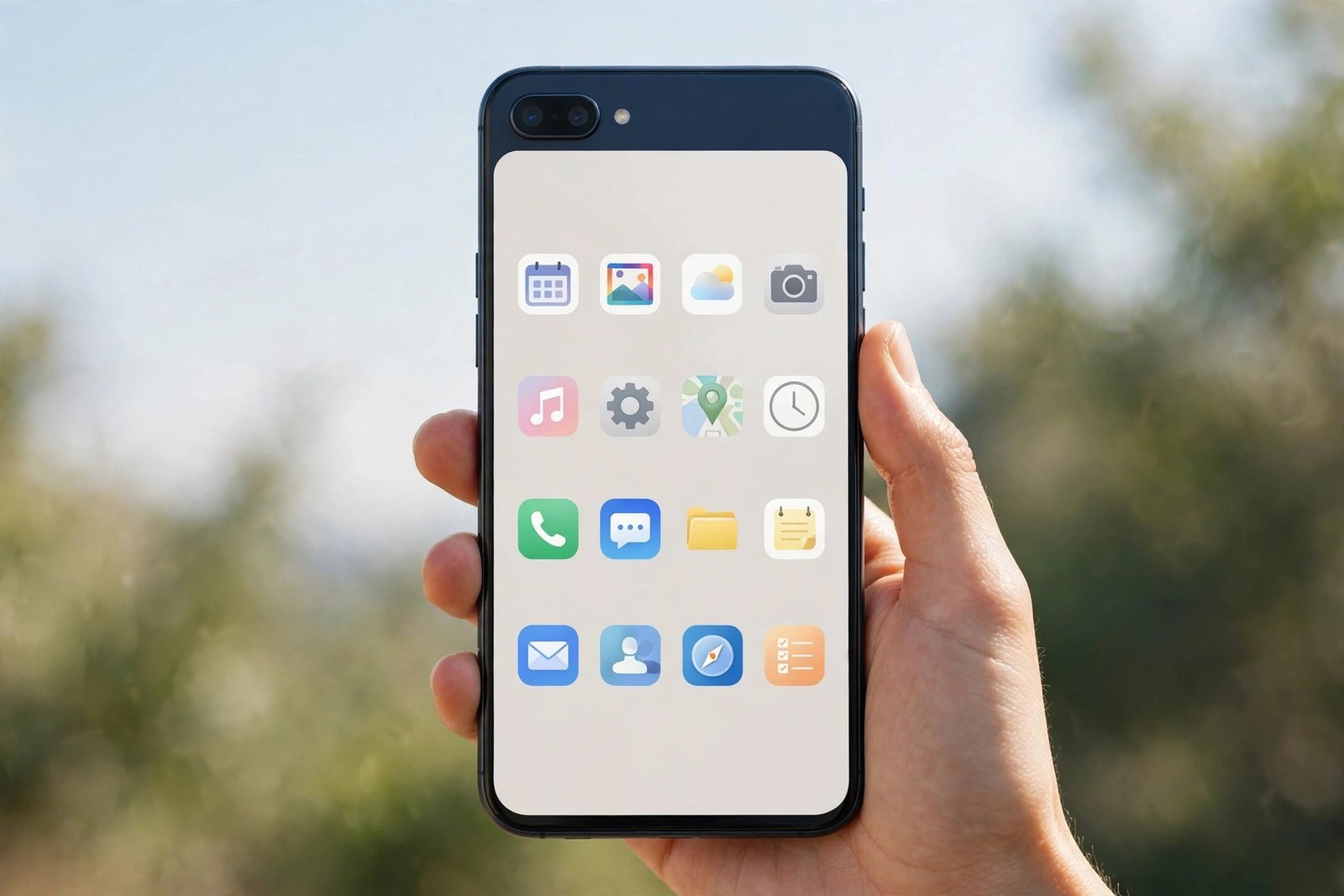
Step outside on a sunny day and your phone screen turns into a mirror: the display is still on, but all you can see is your own face squinting back at you. This is the problem the anti-glare screen protector exists to solve. It will not suit everyone — but for the right user, it transforms a phone from unusable outdoors to perfectly readable.
This guide explains what an anti-glare screen protector actually is, how its matte surface works, the clarity trade-off you accept in exchange for glare-free viewing, and who genuinely benefits from fitting one.
Key Takeaways
- An anti-glare protector has a matte, micro-textured surface that scatters reflected light instead of bouncing it back as a mirror image.
- It makes screens far more readable in bright sunlight and under harsh indoor lighting.
- The trade-off is a slight loss of sharpness and a visible “sparkle” effect on light backgrounds, especially on high-density displays.
- Matte surfaces also hide fingerprints and let fingers glide more smoothly than glossy glass.
- Best suited to outdoor workers, drivers, and frequent travellers — less ideal for photo editing or media purists.
What Is an Anti-Glare Screen Protector?
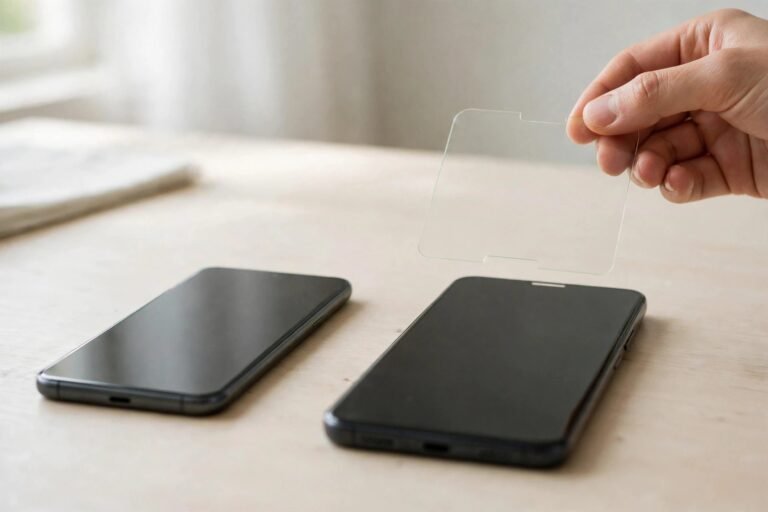
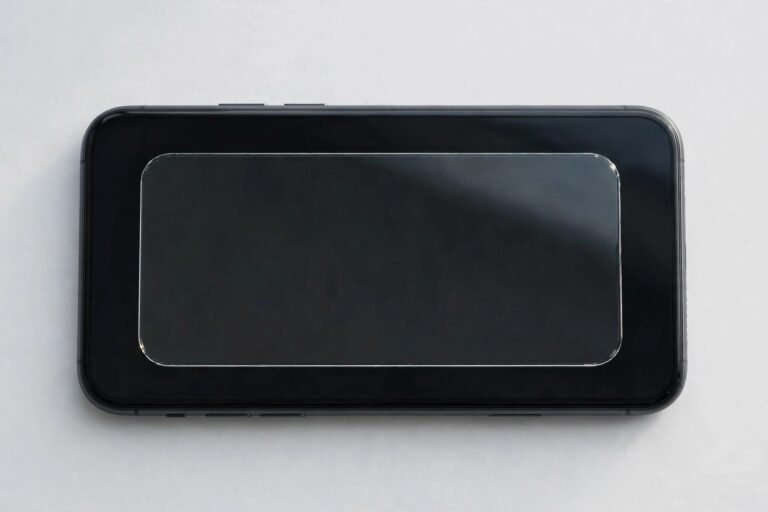
An anti-glare screen protector is a protector — tempered glass or film — finished with a matte coating rather than the smooth, glossy surface of a standard protector. Hold one up to the light before fitting and the difference is obvious: where a clear protector is mirror-shiny, the anti-glare version looks frosted, diffusing reflections into a soft haze.
That matte finish is not just cosmetic. It is a deliberate optical treatment, usually created by microscopically etching or coating the surface so it is covered in tiny irregularities. The protector still does the protector’s basic jobs — scratch resistance, a sacrificial layer against knocks, fingerprint management — but its defining feature is what it does to light.
How Anti-Glare Works: Scattering the Reflection
Glare happens because a smooth surface acts like a mirror: light from the sun or a lamp hits it and bounces back in an organised way, painting a bright reflection over your screen content. Your display then has to compete with that reflection — and outdoors, it loses.
The matte surface breaks the mirror. Its microscopic texture scatters incoming light in many directions instead of reflecting it coherently, so instead of a sharp, bright image of the sky or a window, you get a faint, diffuse glow spread thinly across the surface. The reflection is still there in energy terms, but it is no longer concentrated enough to wash out your screen. The result: text, maps, and photos stay legible in conditions where a glossy screen shows you nothing but glare.
- Anti-glare is not the same as anti-reflective. True anti-reflective coatings (found on some premium displays) cancel reflections optically and stay glossy; anti-glare matte finishes scatter them. Matte is far more common in protectors, cheaper, and more effective in direct sun — but it is the one that changes how the screen looks.
The Trade-Off: Clarity and the “Sparkle” Effect
Scattering light is a two-way street. The same texture that diffuses reflections also slightly diffuses the light coming out of your display, which softens the image. Text looks marginally less crisp, colours lose a touch of punch, and whites can look very slightly grainy compared with a bare screen or clear protector.
On modern high-resolution displays, many users also notice the “sparkle” effect: tiny shimmering coloured specks in white and light-grey areas, caused by the matte texture refracting the sub-pixels beneath it. Some people stop noticing it within a day; others find it permanently distracting. It tends to be more pronounced on OLED screens with very high pixel density. This is the honest price of glare control — whether it is worth paying depends entirely on where and how you use your phone.
Who Benefits Most
For outdoor workers — builders, delivery drivers, surveyors, farmers, anyone whose job happens under the sky — an anti-glare protector is close to essential equipment. Reading a job sheet, a map, or a delivery app in midday sun goes from a shade-hunting squint to a non-event. Drivers using phone navigation benefit similarly: a matte screen mounted on a dashboard stays readable and throws fewer distracting reflections around the cabin.
There are secondary beneficiaries too. The matte surface barely shows fingerprints, so the screen looks cleaner with less wiping. Fingers glide across it with a smooth, slightly papery feel that many people prefer for swiping and typing. And anyone who works under harsh office lighting or films their screen will notice fewer hot spots and reflections day to day.
- If you draw or take notes with a stylus, look for matte protectors described as “paper-feel” — they use a similar anti-glare texture tuned for pencil friction. You get glare reduction and a better writing surface in one product, with the same clarity trade-off.
Who Should Probably Skip It
If your phone is primarily a media device — films, photos, social feeds consumed indoors — a clear protector will serve you better. Photographers and anyone who edits images on their phone should also think twice: the softened contrast and sparkle make precise colour judgement harder. And if you simply love the deep blacks and razor sharpness of a modern OLED display, a matte layer will feel like a downgrade every time you look at it.
Frequently Asked Questions
Does an anti-glare protector reduce screen brightness?
Slightly, in effect. The matte layer diffuses some of the display’s output, so the screen can look a touch dimmer than with a clear protector, and many users nudge brightness up a little outdoors — partly offset by the fact that you no longer need maximum brightness to fight reflections. Battery impact in real use is minor.
Is an anti-glare protector the same as a matte or paper-feel protector?
They are close relatives. All use a micro-textured matte surface; “anti-glare” describes the purpose, “matte” the finish, and “paper-feel” a version with extra friction for stylus use. The optical behaviour — scattered reflections, slightly softened clarity — is common to all three.
Can I remove an anti-glare protector if I don’t like it?
Yes — it removes exactly like any other protector: lift a corner and peel slowly. Nothing about the matte coating bonds permanently to the display. That removability makes it a low-risk experiment if you are curious whether the glare benefit beats the clarity cost for you.
An anti-glare protector trades a little of your screen’s sparkle for a lot of everyday readability. If your life happens outdoors, it is one of the most practical few pounds you can spend on your phone.