Most phone owners know the feeling: tilting your screen under bright light and spotting a web of hairline scratches. The instinctive thought follows — will a screen protector hide the scratches and make the screen look new again?
The honest answer: a protector can make light, shallow scratches far less visible — sometimes invisible — but it cannot erase deep scratches, chips, or cracks. Success depends on the depth of the damage, the type of protector, and the care of the application.
Key Takeaways
- A screen protector can mask light micro-scratches by filling them with adhesive, making them far less visible.
- It cannot hide deep scratches, gouges, chips, or cracks — structural damage in the glass itself.
- Film protectors mask scratches better than tempered glass: film conforms into grooves instead of bridging them.
- Covering a cracked screen is risky: it can trap moisture and spread the crack.
- Careful preparation separates a nearly invisible result from a dusty, bubbled mess.
- Expect improvement, not perfection: fine scratches vanish head-on but may catch light at certain angles.
The Short Answer
If your screen has fine hairline scratches — visible only at an angle, unfelt by a fingernail — then yes, a protector can hide them. Its adhesive flows into those tiny grooves and smooths the surface optically, so the scratches often seem to disappear.
If your screen has scratches you can feel, visible chips, or any crack, then no: a protector will not hide them. It may make the screen look slightly more uniform, but the damage stays visible — and can look more pronounced under a clear layer.
Why Light Scratches Seem to Disappear
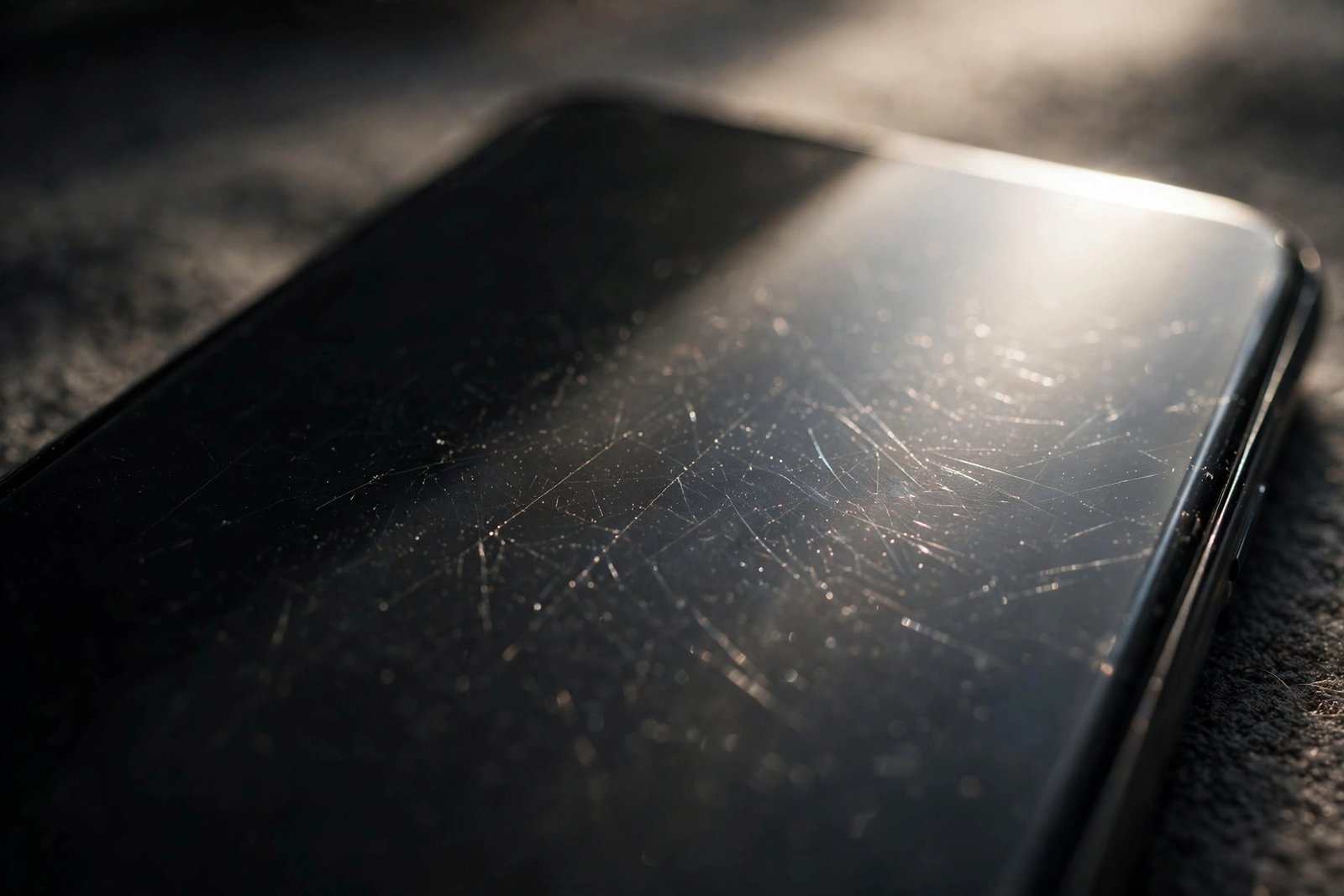
You see a scratch because it is a tiny groove in the glass whose edges scatter light differently from the smooth surface — which is why scratches flash white when they catch light. The shallower the groove, the less it scatters, and the easier it is to hide.
Optical Filling: How Adhesive Erases Micro-Scratches
Every protector bonds to your screen with an adhesive layer. Pressed down, that adhesive flows into the microscopic grooves of fine scratches and fills them. Once filled with a material whose optical behaviour resembles glass, light passes through almost as if the groove were not there — the scratch is still physically present, but the scattering that made it visible is gone.
The Fingernail Test
To predict your result, run a fingernail gently across the scratch. No catch means it is shallow enough to mask. If your nail catches, even slightly, the groove is too deep for adhesive to fill completely and the scratch will stay partly visible.
Glass vs Film vs Liquid: Which Hides Scratches Best?
Protector types differ in concealment, because their adhesive systems work differently.
Plastic Film Protectors
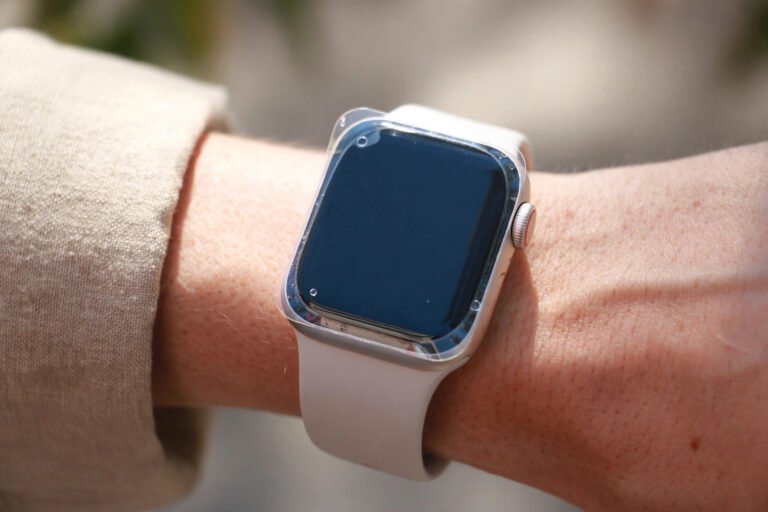
Film protectors are the best at hiding fine scratches. Their thin, flexible build — often wet-installed — lets adhesive conform into every shallow groove instead of bridging over it. For pure scratch concealment, a well-applied film is hard to beat.
Liquid Adhesive Protectors
Liquid systems — resin applied and cured over the screen — mask well too, as the liquid pools into scratches before hardening. The trade-off is a more involved application.
Tempered Glass Protectors
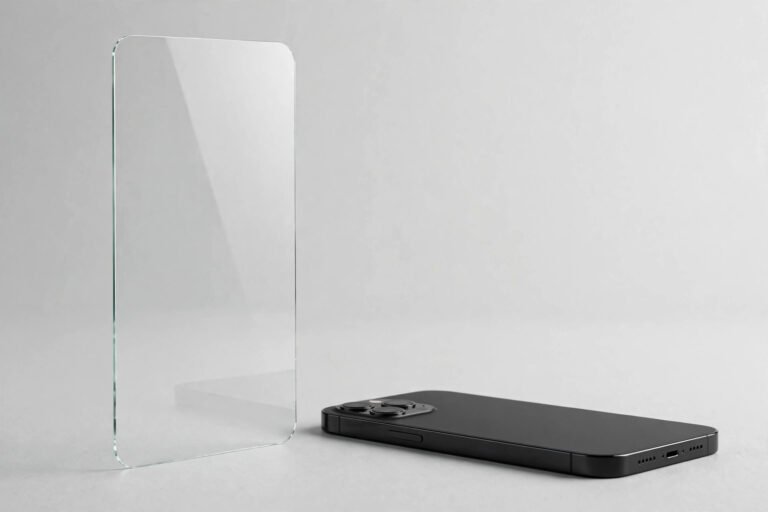
Tempered glass is the best defence against future damage but the least effective at hiding existing scratches. Being rigid, it sits on top of the screen rather than flowing into grooves, so anything with real depth stays visible and trapped air can form halos.
- If your screen is already scratched and your goal is cosmetic, choose a wet-install film protector over tempered glass. Wet application lets adhesive settle fully into fine scratches — just allow the full drying time before judging.
What a Screen Protector Cannot Hide
A protector is an optical trick, not a repair. Here are its hard limits.
Deep Scratches and Gouges
Once a scratch catches your fingernail, no adhesive can fill it completely. A deep groove still traps air and scatters light, so it stays visible — sometimes more so under a clear protector. At best, a protector softens it.
Chips and Cracks
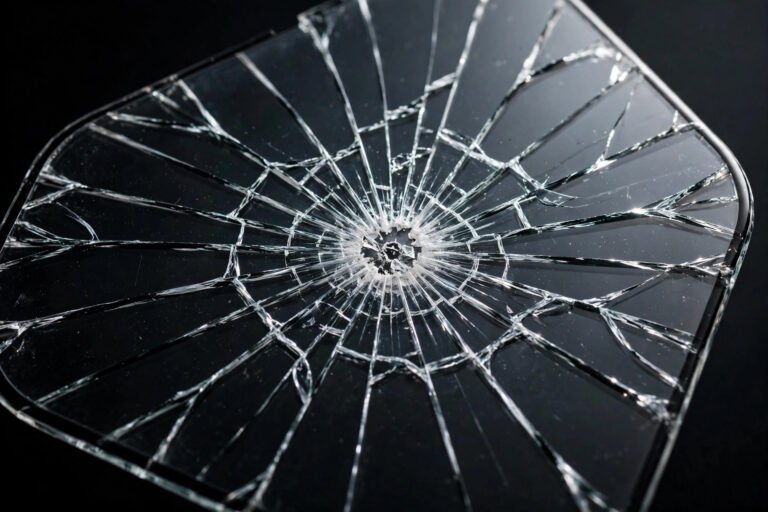
Chips are missing glass — there is nothing for adhesive to blend. Cracks are fractures through the glass, catching light along their length. No protector hides either. Worse, pressing one down can spread a crack, and trapped moisture can worsen the damage.
Why Covering a Cracked Screen Is a Bad Idea
A protector over a cracked screen may hold loose fragments in place, but it is not a safe fix. A cracked screen is structurally compromised: touch sensitivity can degrade, water resistance is lost, and a sharp knock can shatter the panel regardless. If the screen is cracked, get a proper repair.
Already Scratched: Protector or Replacement?
It comes down to severity. If the damage is cosmetic — hairlines visible only in certain light, with touch and display unaffected — a protector is a cheap, sensible way to improve how the screen looks. A lightly scratched screen often looks nearly new after a careful film application.
If the damage affects function — dead touch zones, discolouration, cracks, or distracting scratches — a protector is cosmetic denial. You will still see the damage every day. Price up a screen repair instead: it is often cheaper than expected, and it fixes the screen properly.
How to Prep a Scratched Screen Before Applying
Prep matters more on a damaged screen: dust trapped in scratches gets sealed in permanently. Clean thoroughly — microfibre for loose dust, a cleaning wipe for oils, then a dust-removal sticker. A steamy bathroom helps, as humidity pulls airborne dust out of the air. Inspect the screen at an angle under light after.
Apply slowly, working air out from the centre. With film, take your time squeegeeing — trapped air in a scratch groove is the main reason a scratch stays visible. If dust gets under on the first attempt, peel back immediately with dust-removal tape and redo it.
- Apply immediately after cleaning — even a few minutes lets new dust settle into the scratches. Wash and dry your hands first, and keep lint-shedding fabric away from your workspace.
Managing Expectations: Visibility at Angles
Even a perfect application has limits: scratches that vanish head-on can reappear faintly when you tilt the device in bright sunlight, where light meets the filled groove differently. In everyday use, you will not notice them.
Give it time, too: wet-install films need 24 to 48 hours before the adhesive fully bonds. Tiny hazes and small bubbles that seem alarming on day one usually vanish. Judge the result after drying.
Frequently Asked Questions
Will a screen protector hide scratches on the back of my phone?
The same principle applies: adhesive fills micro-scratches, but deep damage stays visible. Back-of-phone scratches run deeper from keys and coins, so expect less improvement than on the display.
Can I remove the protector later without making scratches worse?
Yes. Removing a protector does not damage the screen — scratches simply become visible again, exactly as they were. The masking lasts only while the protector is in place, which at least prevents new scratches.
Do “scratch-filling” liquids actually work?
They work on the same optical-filling principle, settling into fine scratches to reduce light scattering. They can improve lightly scratched screens but offer no real protection and wear off — a cosmetic touch-up, not a protector.
Will a protector stop my scratches getting worse?
It stops new scratches forming on the covered area — the main benefit. It will not repair existing damage: a deep scratch remains a weak point. If the screen is structurally compromised, replacement is the only real fix.
Bottom line: a screen protector is an excellent disguise for light micro-scratches — the kind you see only at an angle — but it is not a repair. Do the fingernail test: if you cannot feel the scratch, film will likely make it vanish; if you can feel it, save your money for a screen repair.