The iPhone 12 was the phone that reset Apple’s design language: flat edges, a squared-off frame, and a 6.1-inch display with the notch. Millions are still in daily use, and because the model is now a few years old, its protectors are cheap and plentiful — but the 12 family is exactly where buyers trip up. Four models share the “iPhone 12” name, three different screen sizes sit across the range, and the flat-edge design changed what a well-fitting protector looks like.
This guide covers precisely which protector fits the standard iPhone 12, why it is not interchangeable with its siblings despite some shared measurements, and what to look for in a cut that works with both the flat glass and your case.
Key Takeaways
- The standard iPhone 12 has a 6.1-inch display with flat edges and a wide notch — buy protectors labelled specifically for iPhone 12 (6.1-inch).
- The iPhone 12 mini (5.4-inch) and 12 Pro Max (6.7-inch) take completely different protectors.
- The 12 Pro shares the 6.1-inch size, and many protectors fit both — but check the listing, as sensor and finish details can differ.
- The flat-edge design means protectors can run closer to the edge than on curved-glass iPhones, but a case-friendly cut is still the safer choice.
- Do not use iPhone 11 or 13 protectors: different dimensions, different notch, different fit.
The iPhone 12 Display: What You Are Fitting
The standard iPhone 12 (released 2020) has a 6.1-inch Super Retina XDR OLED display at 2532×1170 resolution, set into a flat aluminium frame. The front glass is protected by Ceramic Shield and sits essentially flat — a sharp break from the curved-edge glass of the iPhone 11 generation before it. At the top sits the full-width notch housing the TrueDepth camera, speaker, and Face ID sensors.
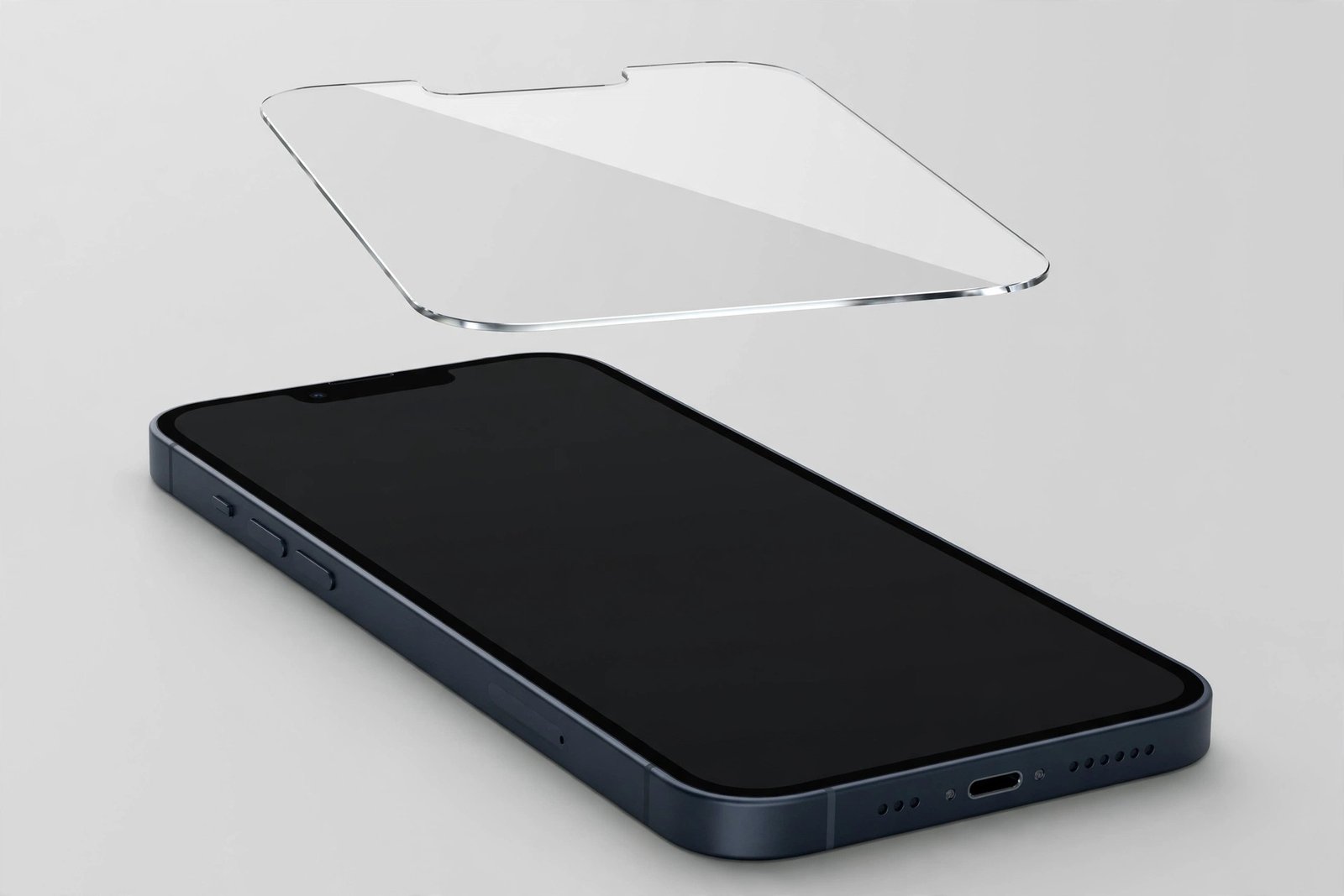
For protector shopping, the two facts that matter are the flat glass and the notch. Flat glass is good news: the protector can cover more of the surface without the edge-lift problems that plague curved screens. The notch means the protector’s top section must be shaped or cut to accommodate it exactly — there is no tolerance for approximate fits around the sensors.
Sorting the Family: Mini, Pro, and Pro Max
Apple sold four iPhone 12 models, and their protectors are a small minefield. The 12 mini is a 5.4-inch phone — much smaller, obviously incompatible. The 12 Pro Max is 6.7 inches — equally obvious. The subtle trap is the 12 Pro: it shares the standard 12’s 6.1-inch display and near-identical body dimensions, and in practice the large majority of protectors are sold as fitting both models.
That shared fit is genuine for most glass protectors, because the front glass outline and notch are the same. Where you should still read the listing carefully: some privacy and specialty protectors position their treatment or cut-outs with model-specific precision, and a small number of products are validated only for one of the pair. If a listing says “iPhone 12 / 12 Pro (6.1-inch)”, you are covered either way. If it names only one, buy the one that names yours.
- Confirm your exact model in Settings > General > About before ordering. “iPhone 12” in conversation often means any of the four — and the mini and standard 12 are confused surprisingly often when buying for family members.
Why iPhone 11 and 13 Protectors Do Not Fit
It is tempting to reach for an iPhone 11 protector — same nominal 6.1-inch class, often cheaper still. Do not. The 11 is a larger-bodied phone with curved glass edges and an LCD panel; its protectors are a different outline entirely, and on the flat 12 they will misalign and overhang. The iPhone 13 is the nearer miss — similar design language — but Apple narrowed the notch and shifted dimensions fractionally, so 13 protectors sit wrong around the 12’s wider notch and can foul the sensors.
The pattern is the same across all iPhones: protectors are generation-specific parts. The good news is that the iPhone 12’s popularity means dedicated protectors remain in production and are inexpensive — there is never a financial reason to gamble on a neighbouring generation.
Choosing the Cut: Full Coverage vs Case-Friendly
Because the 12’s glass is flat, you will see “full coverage” or “edge-to-edge” protectors that would be a liability on a curved screen — here they can genuinely work, running close to the frame for a near-invisible fit. They are the right choice if you use your phone without a case or with a slim, low-lipped one.
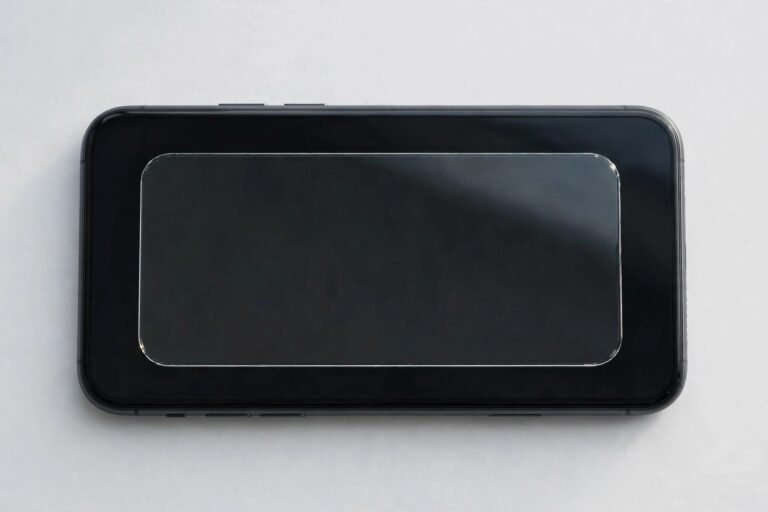
If you use a case — most people do — a case-friendly cut is the safer buy. These stop a fraction of a millimetre short of the edges all round, leaving room for the case’s lip to grip the phone without prising the protector’s corners up. The visible difference is negligible; the difference in whether the protector is still sealed after a month in your pocket is not.
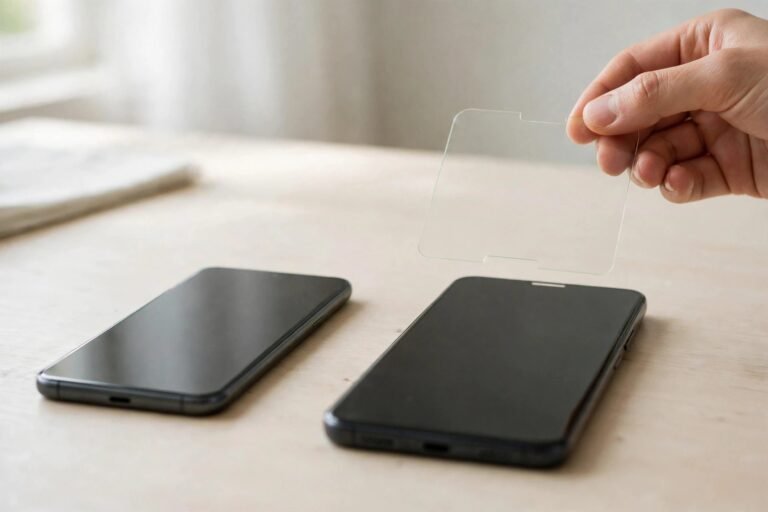
- Alignment frames earn their keep on the iPhone 12: the flat edges give you no curve to register against, so freehand fitting drifts easily. A protector bundled with a fitting frame is worth choosing over a marginally cheaper one without.
Frequently Asked Questions
Will an iPhone 12 Pro screen protector fit my iPhone 12?
Almost always, yes — the two phones share the same 6.1-inch front glass and notch, and most protectors are explicitly sold as fitting both. Check the listing names your model, particularly for privacy or specialty protectors, but standard tempered glass cross-fits between the 12 and 12 Pro reliably.
Does the iPhone 12 need a screen protector with Ceramic Shield?
Ceramic Shield improved drop resistance, but it did not make the glass scratch-proof — keys, grit, and everyday abrasion still mark it. A protector remains the cheap, replaceable layer that takes that wear. Given how inexpensive 12 protectors now are, fitting one is an easy decision.
Will a protector interfere with Face ID on the iPhone 12?
A correctly cut protector will not — the notch area is either left open or precisely shaped so the TrueDepth sensors have an unobstructed view. If Face ID becomes unreliable after fitting, the protector is misaligned or cut for the wrong model; refit or replace it.
For the iPhone 12, the formula is simple: 6.1-inch, notch-aware, case-friendly if you use a case. Buy for the exact model and the flat glass makes fitting the easiest it has ever been.