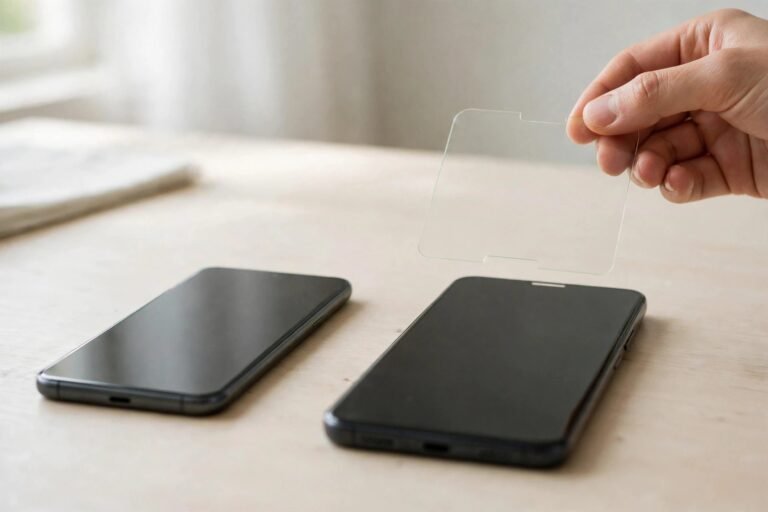
An anti-fingerprint screen protector is a protector with a special surface coating designed to resist the oils your fingers leave behind. Instead of the usual smears and cloudy smudge trails, fingerprints sit less visibly on the surface and wipe away with a single pass of a cloth.
If you have ever held your phone up to the light and winced at the state of the screen, you already understand the appeal. This guide explains what the coating actually is, how it works, how it differs from the coating on an ordinary protector, how long it lasts, and the one honest trade-off nobody mentions: the matte finish that fights fingerprints best also changes how your screen looks.
Key Takeaways
- Anti-fingerprint protectors use an oleophobic (oil-repelling) coating that stops skin oils spreading into visible smears.
- There are two types: glossy protectors with a stronger coating, and matte protectors whose textured surface hides prints best of all.
- The coating wears off gradually — typically over several months — faster where your thumb swipes most.
- Matte versions reduce glare too, but slightly soften screen sharpness and can add a faint sparkle to white backgrounds.
- Harsh cleaners, alcohol wipes, and abrasive cloths strip the coating — clean with a dry or barely damp microfibre cloth.
The Science: What “Oleophobic” Actually Means
Your fingertips constantly secrete natural oils. On bare glass or a plain protector, those oils spread out into a thin film that catches the light — that is the smudge you see. An oleophobic coating is a microscopically thin layer, usually a fluoropolymer, bonded to the surface of the protector. “Oleophobic” literally means oil-fearing: the coating has such low surface energy that oil cannot spread across it.
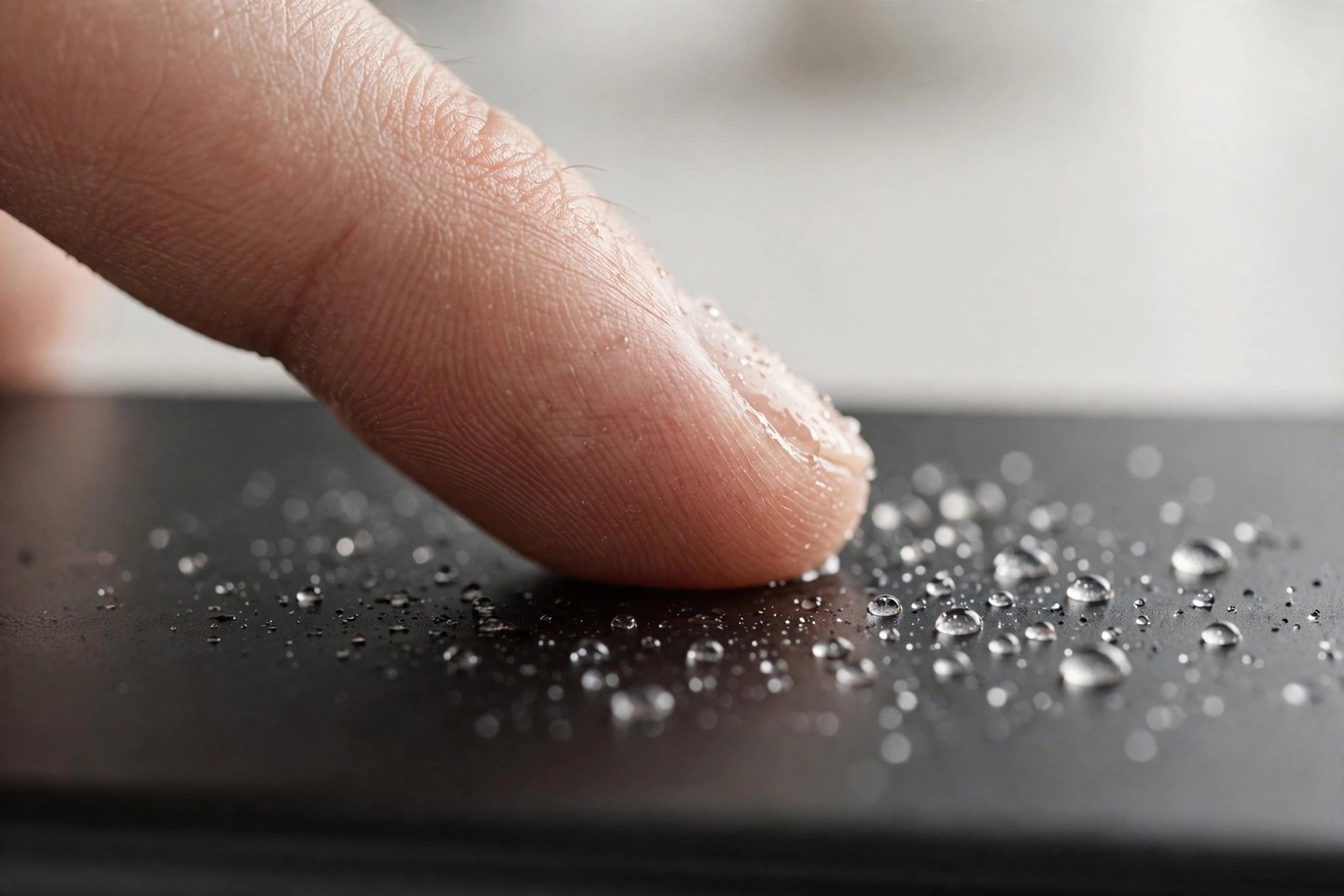
Instead of spreading, the oil beads up into tiny, separate droplets that are far less visible and do not merge into that greasy film. The practical result is a screen that looks cleaner for longer, feels smoother and more slippery under your thumb, and needs only a quick wipe to look new again. Almost all modern phone screens have such a coating from the factory — an anti-fingerprint protector simply gives you a fresh, renewable one on top.
Two Kinds: Coated Glossy vs Matte
Not every anti-fingerprint protector works the same way. Glossy anti-fingerprint protectors look like ordinary clear tempered glass — because optically they are — but carry a higher-quality oleophobic coating than budget glass. They keep the screen’s colours and sharpness fully intact and reduce smudging noticeably, though they do not eliminate it.
Matte anti-fingerprint protectors take a different approach: a microscopically textured, anti-glare surface that scatters light and breaks up the oil film physically. Fingerprints are dramatically less visible on matte finishes — near invisible in most lighting — and glare from windows and overhead lights drops too. Many products sold explicitly as “anti-fingerprint” are matte for exactly this reason. The cost is optical: the texture slightly diffuses the display, so text looks a touch softer and bright whites can show a subtle shimmer or “sparkle,” most noticeable on high-resolution screens.
- Choose by where you use your phone: pick matte if you read outdoors, commute, or hate glare; pick coated glossy if you watch a lot of video or edit photos and want full sharpness and colour.
- Gamers often prefer matte — the textured surface lets thumbs glide with less friction during long sessions, and prints from sweaty hands barely show.
How Long Does the Coating Last?
The honest answer is: not forever. An oleophobic coating is only nanometres thick, and every swipe, wipe, and pocket journey wears it away molecule by molecule. On a good protector you can expect the strong anti-smudge effect to last several months of daily use, fading gradually rather than failing overnight. The area under your thumb’s main swipe zone wears first, which is why an ageing protector often looks clean at the edges but smudgy in the middle.
You can slow the wear considerably. Clean with a dry microfibre cloth, or one barely dampened with water. Avoid alcohol-based cleaners, antibacterial wipes, and household sprays — they attack the coating directly. Paper tissues and rough fabrics act like fine sandpaper on it. This, incidentally, is a genuine advantage of putting the coating on a replaceable protector rather than relying on your phone’s factory coating: when it wears out, you peel it off and fit a fresh one, instead of living with a permanently smudge-prone screen.
Does It Affect Touch or Protection?
No — with one small exception. The coating sits on the top surface of the protector, facing your fingers, so it has no effect on the adhesive, the touch signals passing through to the screen, or the protector’s ability to absorb scratches and impacts. A coated tempered-glass protector protects exactly as well as an uncoated one of the same thickness.
The small exception is matte texture and styluses: a matte surface adds slight drag, which many note-takers actually enjoy because it feels more like paper, but it wears stylus nibs a little faster. Under-display fingerprint sensors work normally through both glossy and matte protectors, though as with any protector, re-registering your fingerprints after fitting is a sensible step.
- Test whether a coating is still working with a drop of water: on a healthy oleophobic surface, water beads into a round droplet; on a worn one, it flattens and smears. It is a quick way to check before blaming the protector.
Frequently Asked Questions
Do anti-fingerprint protectors really work?
Yes, within limits. A good oleophobic coating genuinely reduces visible smudging and makes prints far easier to wipe away, and a matte finish hides them even better. No protector makes fingerprints impossible — oils still land on the surface — but the difference between a coated and uncoated screen is easy to see after a day of use.
Is a matte protector the same as an anti-fingerprint protector?
Not exactly. Matte describes the textured, anti-glare finish, which happens to hide fingerprints extremely well. Anti-fingerprint describes the goal — and glossy protectors with a strong oleophobic coating pursue it without the matte texture. Many matte protectors also carry an oleophobic coating, so the two often overlap, but they are not synonyms.
Can I restore the anti-fingerprint coating once it wears off?
Not reliably. Aftermarket oleophobic coating kits exist, but results are patchy and short-lived compared with a factory-applied coating. In practice, the sensible “restoration” is the one protectors are designed for: replace the protector and start again with a fresh coating.
An anti-fingerprint protector will not make your screen magic — but it will make it look cared-for instead of handled, and that small daily pleasure is exactly what the coating is for.