Your phone screen already has a crack — maybe a hairline from a drop months ago that you have been living with, or a fresh fracture you cannot afford to repair right now. Then someone suggests a screen protector: “just put one on, it will stop the crack spreading.” It sounds plausible. A layer of glass holding everything together — what could go wrong?
The truth is more complicated. A screen protector can help contain an already-cracked display in certain situations — but it is not a repair, it has real limits, and in some cases it can make things subtly worse. This guide explains exactly what a protector does and does not do for a cracked screen.
Key Takeaways
- A screen protector will not repair a cracked display — the damage underneath remains and can still worsen.
- It can slow crack propagation by holding glass fragments stable and keeping dust and moisture out of the fracture.
- Clear packing tape is actually the better emergency containment — cheaper, more conforming, and easier to replace.
- A rigid glass protector over a bulging or lifting crack can trap pressure and worsen the damage.
- The only real fix is screen repair or replacement — a protector is a stopgap, not a solution.
Why People Think It Works
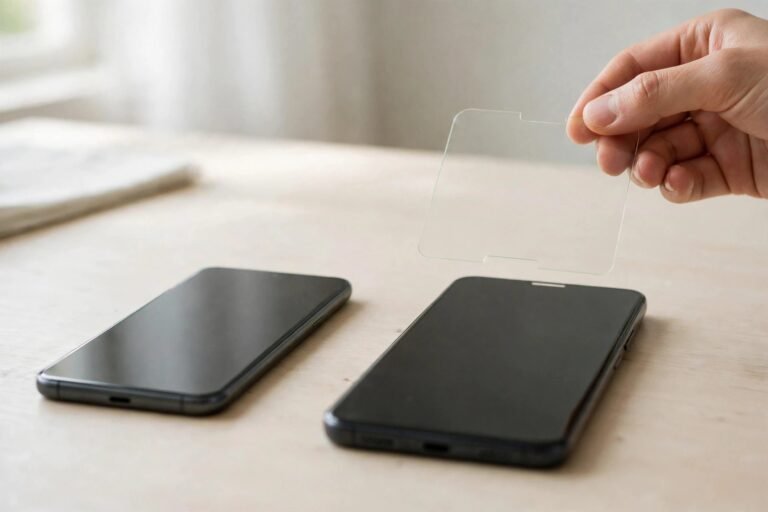
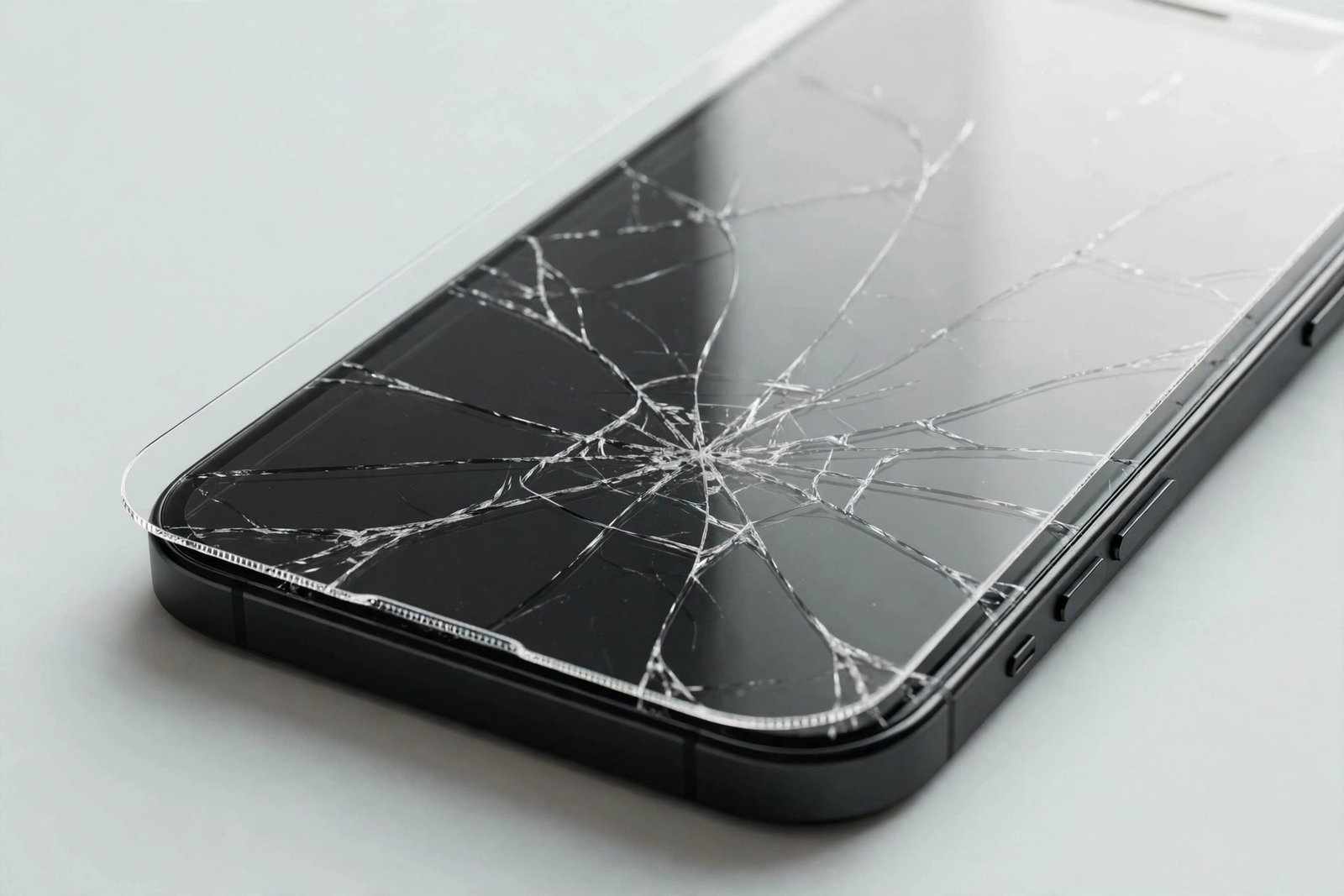
The logic feels sound: a screen protector is a sheet of toughened glass bonded across the display with full-surface adhesive. Applied over a crack, that adhesive bridges the fracture lines, holding the separated glass edges in alignment and preventing the tiny flexing movements that let cracks creep further. It also seals the crack against dust and moisture — two accelerants of crack growth, since grit in the fracture acts like a wedge and moisture corrodes the stressed glass at the crack tip.
And to be fair, this is not entirely wrong. A well-applied protector over a stable hairline crack genuinely does slow things down. The crack is immobilised, sealed, and shielded from the daily micro-impacts — pocket pressure, table contact, thumb flexing — that would otherwise work it wider. Many people have carried a taped or protected cracked screen for months without visible worsening.
What It Cannot Do
Here is the critical limit: a protector adds no structural strength to the display. The crack is still there, the glass is still compromised, and the next real impact — a drop, a knock, even firm pressure on the wrong spot — can still propagate the fracture right under the protector. The protector guards the surface; it does not reinforce the panel.
Worse, the underlying damage can progress invisibly. Display cracks sometimes damage the OLED layer beneath the glass, causing dead pixels, discolouration, or touch failure that spreads over days or weeks regardless of what sits on top. A protector hides this deterioration cosmetically while doing nothing to stop it — which can delay the repair until the damage is worse and more expensive.
- Watch for spreading discolouration — black blotches, coloured lines, or flickering near the crack. These mean the display panel itself is failing beneath the glass, and no protector will stop it. That is your signal to repair promptly, before touch failure strands you.
When a Protector Can Make Things Worse
There are situations where applying a rigid tempered glass protector over a cracked screen is actively unwise. If the crack has caused any lifting or bulging — glass edges raised above the surface — pressing a rigid protector down forces those raised fragments flat, concentrating pressure on the fracture and potentially extending it. The adhesive can also wick into an open crack and cure there, making eventual professional repair messier.
Similarly, if glass fragments are loose or missing, a protector’s adhesive will bond unevenly, trapping air and creating pressure points. In these cases the screen needs stabilisation, not a rigid overlay — which brings us to the better emergency option.
The Better Stopgap: Packing Tape
For containing a cracked display, clear packing tape beats a screen protector on every practical measure. It conforms to uneven surfaces instead of bridging them rigidly, so it does not concentrate pressure on raised fragments. It is cheap and replaceable — when it gets scratched or peels, you just apply fresh tape. And it comes off cleanly whenever the real repair happens, with no cured adhesive in the crack to complicate the technician’s work.
Apply it smoothly in overlapping strips, pressing gently to follow the surface without forcing anything flat. It looks inelegant, but as a bridge to a proper repair — days or weeks, not months — it is the most effective containment available. Many repair technicians actually prefer receiving a taped phone over one with a protector glued across the damage.
- Back up your phone immediately when the screen cracks, before worrying about containment. A cracked display can fail suddenly — touch stops responding, the screen goes black — and a phone you cannot unlock is a phone you cannot back up. Containment second, backup first.
Frequently Asked Questions
Will a screen protector stop my cracked screen getting worse?
It can slow the worsening by stabilising the fracture and sealing out dust and moisture — but it cannot stop it. The structural damage remains, and the next impact can still propagate the crack. Think of it as a splint, not a cure.
Should I put a tempered glass protector on a cracked screen?
Only if the crack is a stable hairline with nothing lifting. If fragments are raised, loose, or missing, use packing tape instead — a rigid protector can concentrate pressure on the damage and make it worse.
How long can I use a phone with a cracked screen?
A stable hairline crack with no display symptoms can last months with tape containment — but it is borrowed time. Once you see discolouration, dead touch zones, or flickering, the panel is failing and repair becomes urgent. Budget for the repair rather than hoping the crack holds indefinitely.
A screen protector over a cracked display is a splint on a fracture: useful, stabilising, and absolutely not a substitute for treatment. Contain it, back it up, and get it properly repaired.