Most liquid screen protector brands promise protection for up to 12 months per application — but the honest answer to how long one actually lasts is “it depends, and you cannot check.” A liquid protector is an invisible nano-coating, so unlike a cracked sheet of tempered glass, it gives you no visible sign of when it has worn away.
This guide explains what a liquid screen protector is, how long the coating realistically survives in daily use, what wears it out fastest, and how it compares with tempered glass over time — so you can decide whether the invisible option fits how you actually use your phone.
Key Takeaways
- Manufacturers typically claim 6–12 months per application; heavy use wears the coating faster.
- The coating wears gradually and unevenly — thumb-swipe areas and edges go first.
- There is no way to inspect a nano-coating: you cannot see or feel when it has gone.
- Alcohol cleaners, abrasion, and frequent wiping shorten its life significantly.
- Even when fresh, a liquid protector offers scratch resistance, not impact protection — lifespan is only half the story.
What a Liquid Screen Protector Actually Is
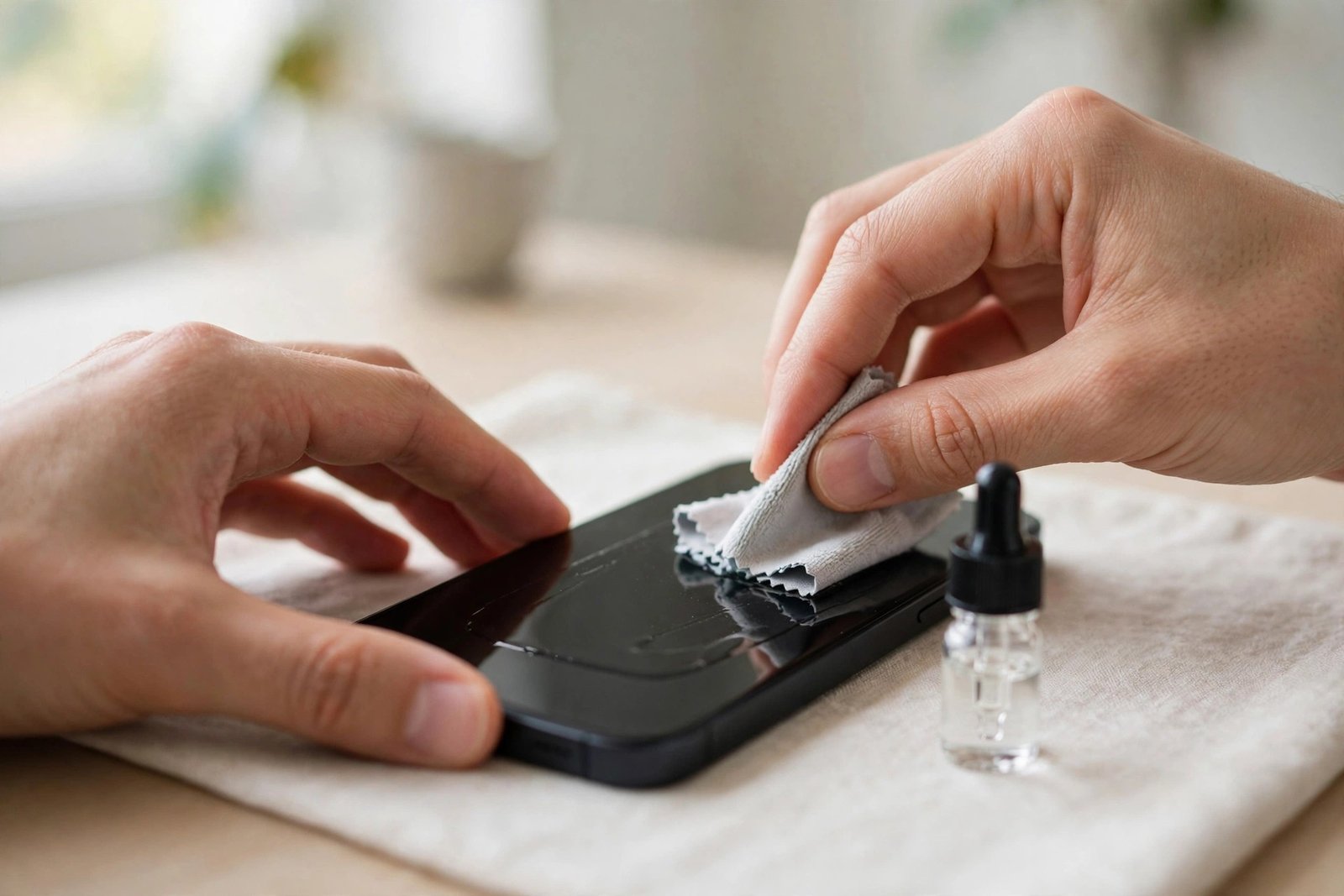
A liquid screen protector is a silicon-dioxide (SiO₂) nano-coating. You wipe the liquid onto a clean screen, let it cure, and it bonds to the glass as a layer measured in nanometres — thousands of times thinner than a tempered-glass protector. It fills the microscopic pores of the glass surface, making it smoother, slightly harder at the very surface, and more water- and oil-repellent.
That thinness is both its selling point and its weakness. Because there is no physical sheet, there are no edges to lift, no bubbles, no case conflicts, and nothing to see. But because the layer is so thin, it can only do so much: it improves resistance to fine surface scratches and restores a slick, fingerprint-shedding feel to an older screen. It does not add a sacrificial barrier, and it cannot absorb the energy of a drop.
So How Long Does It Really Last?
Brand claims cluster around one year, and under gentle conditions that is achievable: a phone used moderately, cleaned with a soft dry cloth, and kept out of abrasive environments may retain useful coating for most of that period. In heavier real-world use — constant swiping, gaming, frequent cleaning, pockets shared with keys and grit — the effective life is more realistically in the three-to-six-month range before the coating in the high-wear zones has substantially worn away.
The wear pattern matters as much as the timeline. The coating does not expire all at once like a battery; it thins gradually, fastest exactly where you touch most. The centre of the screen, where your thumb lives, loses its coating long before the corners do. That means “how long does it last” has no single answer even on one phone — protection quietly becomes patchy, and because the layer is invisible, you will not know which stage yours has reached.
- The water-bead test gives a rough indication: drip a little water on the screen. On a fresh coating it beads up and rolls; on a worn one it spreads flatter. It is not precise, but a screen where water no longer beads at all is a screen whose coating has largely gone.
- If you rely on a liquid protector, set a calendar reminder at six months to reapply rather than waiting for the full claimed year.
What Wears It Out Fastest
Four habits shorten a liquid coating’s life more than anything. Abrasion is the biggest: sand and grit are harder than the coating and strip it mechanically — beach days and dusty work environments are hard on any screen treatment. Chemical cleaners come next: alcohol-based sprays and antibacterial wipes dissolve and degrade nano-coatings, sometimes in a handful of cleans. Frequent vigorous wiping, even with a microfibre cloth, adds steady friction wear. And heat and UV slowly break down the bonded layer over time, so a phone that lives on a sunny car dashboard ages its coating faster.
To get the most from an application: clean the phone before applying exactly as the instructions say (a coating applied over oils or residue bonds poorly and fails early), let it cure for the full recommended time before using the phone, and afterwards clean only with a dry or barely damp microfibre cloth.
Lifespan Compared With Tempered Glass
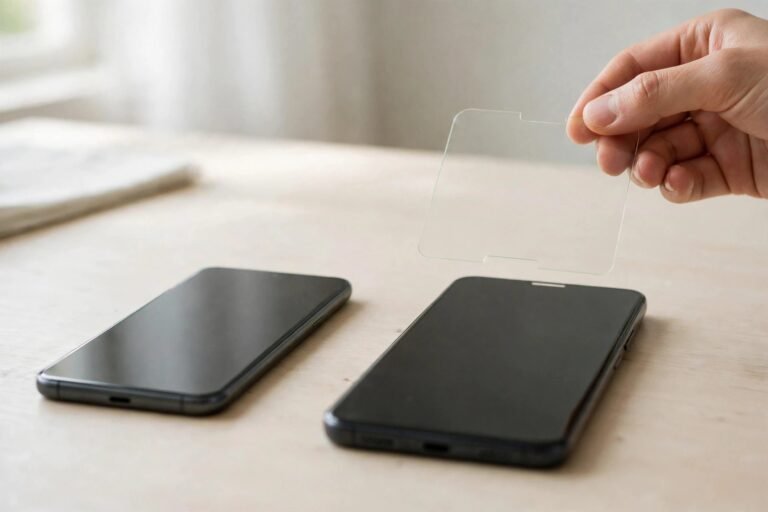
A tempered-glass protector has no fixed expiry date at all: it lasts until it cracks, chips, or its edges lift — commonly many months to well over a year — and crucially, its condition is obvious at a glance. You always know where you stand. A liquid protector inverts that bargain: nothing to crack or peel, but a silent, steady decline you cannot monitor, and a fixed reapplication cycle if you want the claimed protection maintained.
Cost follows the same pattern. One liquid application may look inexpensive, but reapplying two or more times a year to keep the coating honest adds up — while a glass protector is a one-off purchase that announces its own end-of-life by cracking. Neither is “better” in the abstract; the question is whether you prefer protection you can see ageing, or protection you must remember to renew.
- You can layer the two: apply a liquid coating, let it cure fully, then fit tempered glass over it. The glass does the protective heavy lifting while the coating keeps the surface slick — and when the glass cracks, the coating underneath is still there.
Frequently Asked Questions
Can I reapply a liquid screen protector?
Yes — reapplication is part of the product’s design. Clean the screen thoroughly, apply a fresh coating exactly as you did the first time, and let it cure fully. Most brands suggest reapplying every 6–12 months, or sooner if the water-bead test suggests the old coating has worn away.
How do I know when my liquid protector has worn off?
You cannot know precisely — that is the product’s inherent drawback. Indirect signs include water no longer beading on the surface, fingerprints becoming harder to wipe away than they were after application, and fine scratches beginning to appear. If those show up well before the claimed lifespan, the coating in those areas has effectively gone.
Does a liquid protector protect against drops while it lasts?
No. However fresh the application, a nanometre-thin coating cannot absorb or spread the energy of an impact. Drops that would crack an unprotected screen will crack a liquid-coated one in much the same circumstances. Liquid protectors are a scratch-resistance treatment, not drop insurance — for impact protection you need a physical layer such as tempered glass.
A liquid protector lasts as long as you remember to renew it — up to a year on the label, less under your thumb. If you want protection that shows you when it’s done, glass tells you; liquid makes you guess.