Phone glass has never been tougher, and every launch event says so. So it is a fair question: with names like Gorilla Glass Victus and Ceramic Shield on the spec sheet, how important is a screen protector, really? The honest answer is that it depends — but probably not in the way the marketing of either camp suggests. Drop resistance has genuinely improved. Scratch resistance has barely moved. And a screen protector addresses both, unevenly.
This guide gives a balanced assessment rather than a sales pitch: what a protector actually protects against, where modern glass still fails, the money argument, and the situations where skipping a protector is a perfectly reasonable choice.
Key Takeaways
- A protector does two jobs: prevent scratches and act as a sacrificial layer that can crack in a drop so the screen does not.
- Modern flagship glass resists shattering far better than it used to, but still scratches — sand and quartz grit are harder than any phone glass made.
- Importance scales with your life: pockets shared with keys, beaches, building sites, children, and keeping a phone for three years or more all raise it sharply.
- A flagship screen replacement typically costs many times more than a protector, and a scratched screen cuts trade-in value — the economics are lopsided.
- It is genuinely optional for careful users with a good case, device insurance, and an annual upgrade habit.
What a Protector Actually Protects Against
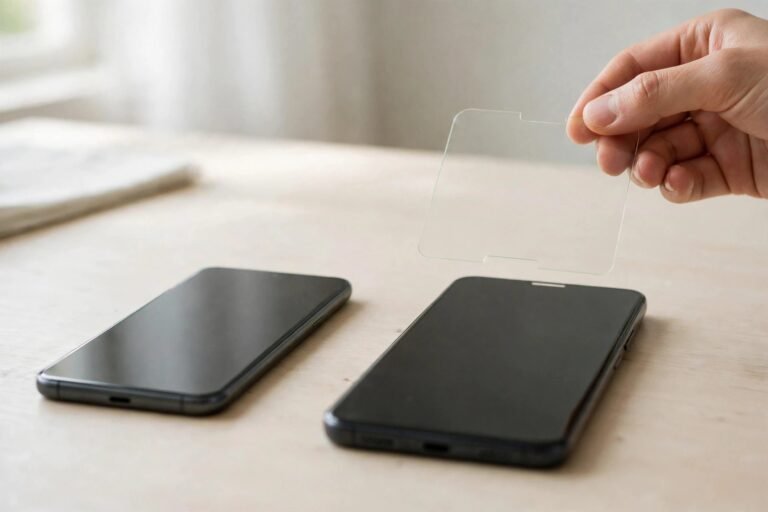
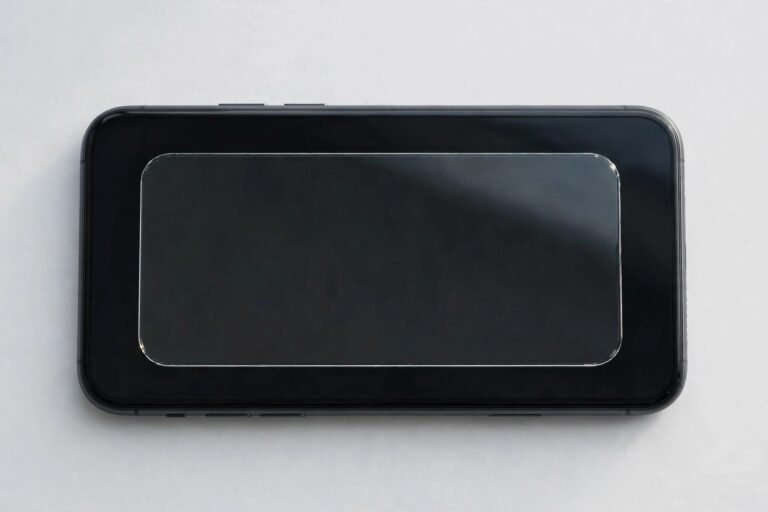
Start with what the product does. Against scratches, both film and tempered glass protectors are close to completely effective: the protector takes the abrasion, and when it looks tired, you peel it off to reveal a pristine screen. Against drops, the honest claim is narrower. A tempered glass protector absorbs and spreads impact energy, and very often cracks in place of the screen — you will have seen the shattered-protector-over-perfect-screen outcome. But it is a probability improvement, not a guarantee: a bad landing on a corner or a stone can defeat protector and screen together.
Film protectors, it should be said plainly, do only the first job. They guard against scratches and contribute essentially nothing in a drop. Knowing which of the two risks you actually care about tells you which type — if any — belongs on your phone.
The Scratch Problem Hasn’t Gone Away
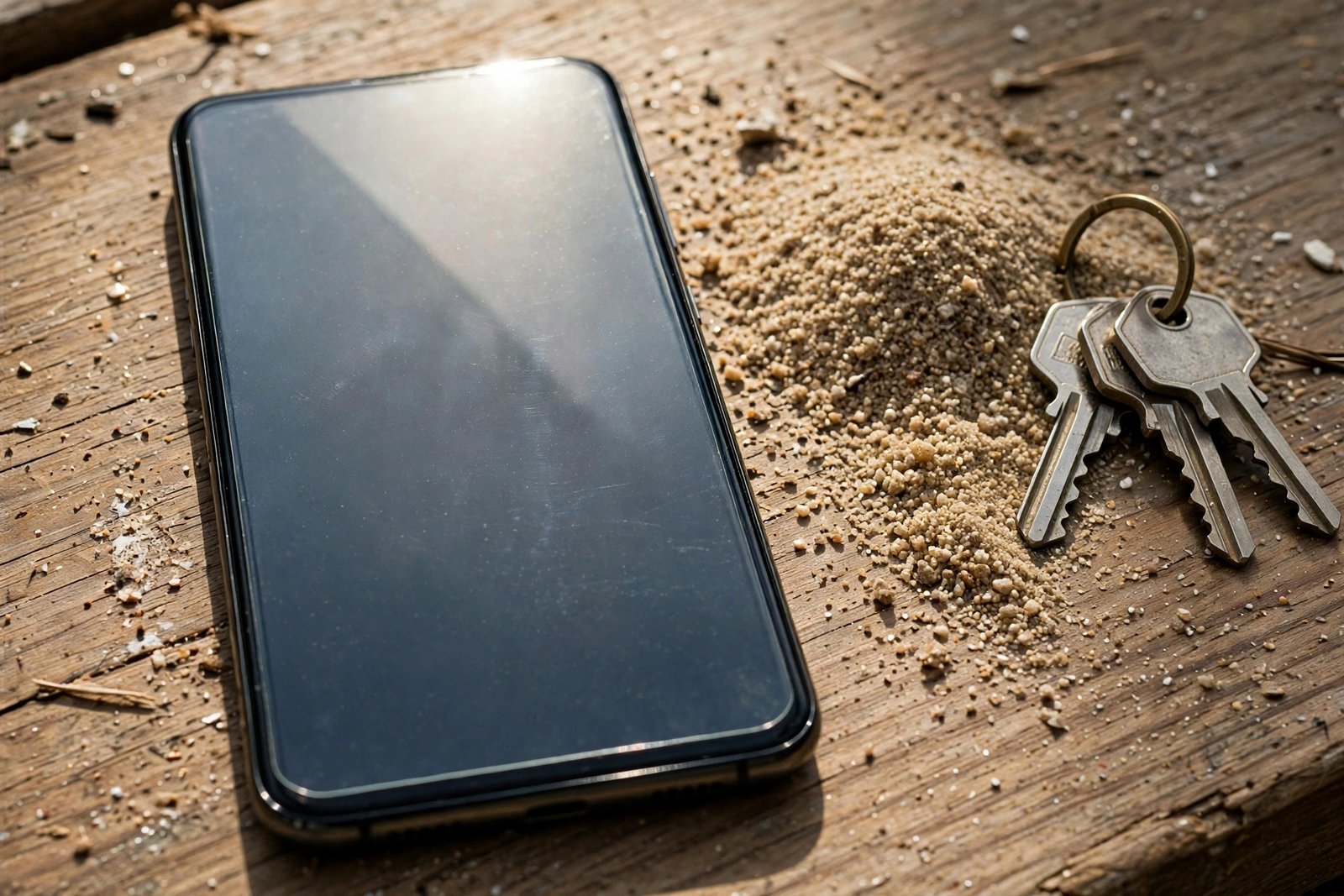
Here is the fact that launch events gloss over. Scratch resistance is governed by hardness, and phone glass — every generation of it — scratches at around level 6 on the Mohs scale, with deeper grooves at level 7. Quartz, the main ingredient of sand and much household grit, sits at level 7. That means the invisible grit in a pocket, on a kitchen worktop, or at the beach is hard enough to mark the most advanced glass Apple or Corning has ever shipped.
There is a reason manufacturers have not simply fixed this. Glass that is harder is also more brittle; glass formulated to survive drops flexes and absorbs, at the cost of scratching more easily. Each generation is a trade-off between the two failure modes — which is why shatter resistance keeps improving in the headlines while the scratch story quietly stays the same. A sacrificial layer sidesteps the trade-off entirely.
- Apply the pocket test: if your phone shares a pocket or bag compartment with keys, coins, or grit — or your life includes beaches, gardening, or a trade — your scratch risk is high regardless of what glass your phone uses. That is the profile a protector matters most for.
The Money Argument
Strip away the marketing and the arithmetic is blunt. A quality tempered glass protector in a multipack costs very little. A replacement screen for a current flagship, fitted out of warranty, costs as much as a respectable budget phone. Even if a protector only saves you from that bill once in several phones’ lifetimes — and only improves your odds rather than guaranteeing anything — it pays for itself many times over.
The quieter cost is resale. Trade-in and resale grading is ruthless about screens: a display covered in visible scratches drops a phone a grade or more, while a phone that has worn a protector since day one presents a flawless screen the moment the old protector comes off. Add the inconvenience of a repair — days without the phone, data risk, travel to a service centre — and the protector’s case rests on economics as much as on fear of drops.
When Skipping One Is Reasonable
Balance matters, so here is the other side. If you use a case with properly raised lips, handle your phone carefully, keep it in a pocket of its own, and upgrade every year, your realistic risk is mostly cosmetic — and you may rationally accept it in exchange for the bare-glass feel. If you carry insurance with a modest excess, a cracked screen is an inconvenience rather than a financial event. And on some strongly curved screens, protectors fit so poorly that the daily annoyance of lifting edges outweighs the protection on offer.
What is not reasonable is the middle muddle: no protector, no case, phone loose in a bag with keys, and surprise when the screen is a web of scratches by Christmas. Importance is not a property of the protector — it is a property of your habits. Judge yours honestly.
- Cannot stand the feel of glass protectors? A thin film protector is the middle path — it preserves the near-bare feel and keeps the screen resale-perfect against scratches, which is the risk modern glass handles worst. You give up impact help, not the whole benefit.
Frequently Asked Questions
Isn’t a good case enough on its own?
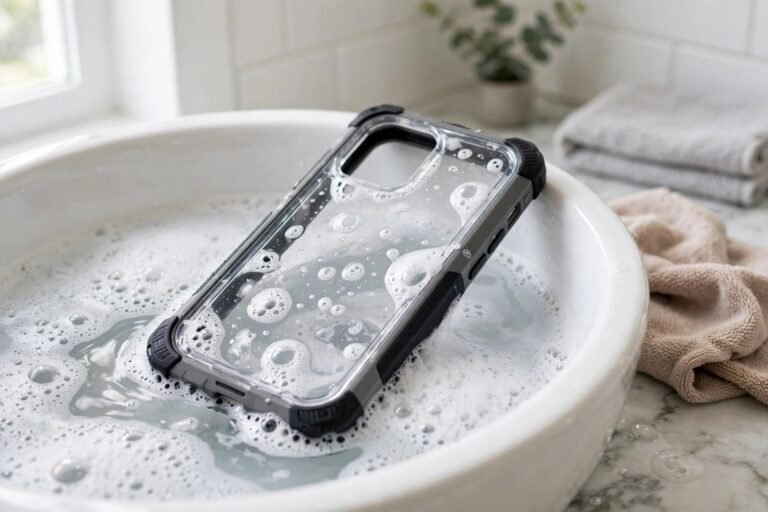
A case protects the corners, back, and frame, and raised lips guard the screen against flat surfaces. But it does nothing when the phone lands face-down on grit or gravel, and nothing at all against scratches in a pocket. Case and protector cover different risks; many people sensibly use both.
My phone has Ceramic Shield or Gorilla Glass Victus. Do I still need one?
Those technologies mainly improve crack and shatter resistance — genuinely, and substantially. They do not make the glass scratch-proof, because hardness has not changed in step. If scratches and resale value matter to you, a protector still earns its place; if only drop survival matters, your need is smaller than it used to be.
Do protectors make the screen look or feel worse?
A quality tempered glass protector is close to invisible and feels like the screen itself once its oleophobic coating is fresh. Cheap glass can reduce clarity slightly, and film has a marginally softer feel under the thumb. The difference between good and bad protectors here is much larger than the difference between a good protector and bare glass.
A screen protector is not essential equipment — phones survive without them every day. But measured against the cost of a screen, the value of a flawless display, and the grit waiting in every pocket, it remains the cheapest insurance in the whole accessory drawer for most people.