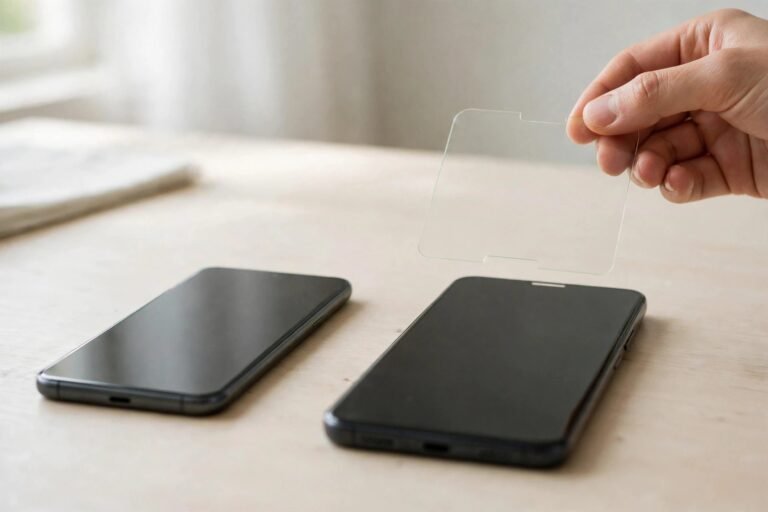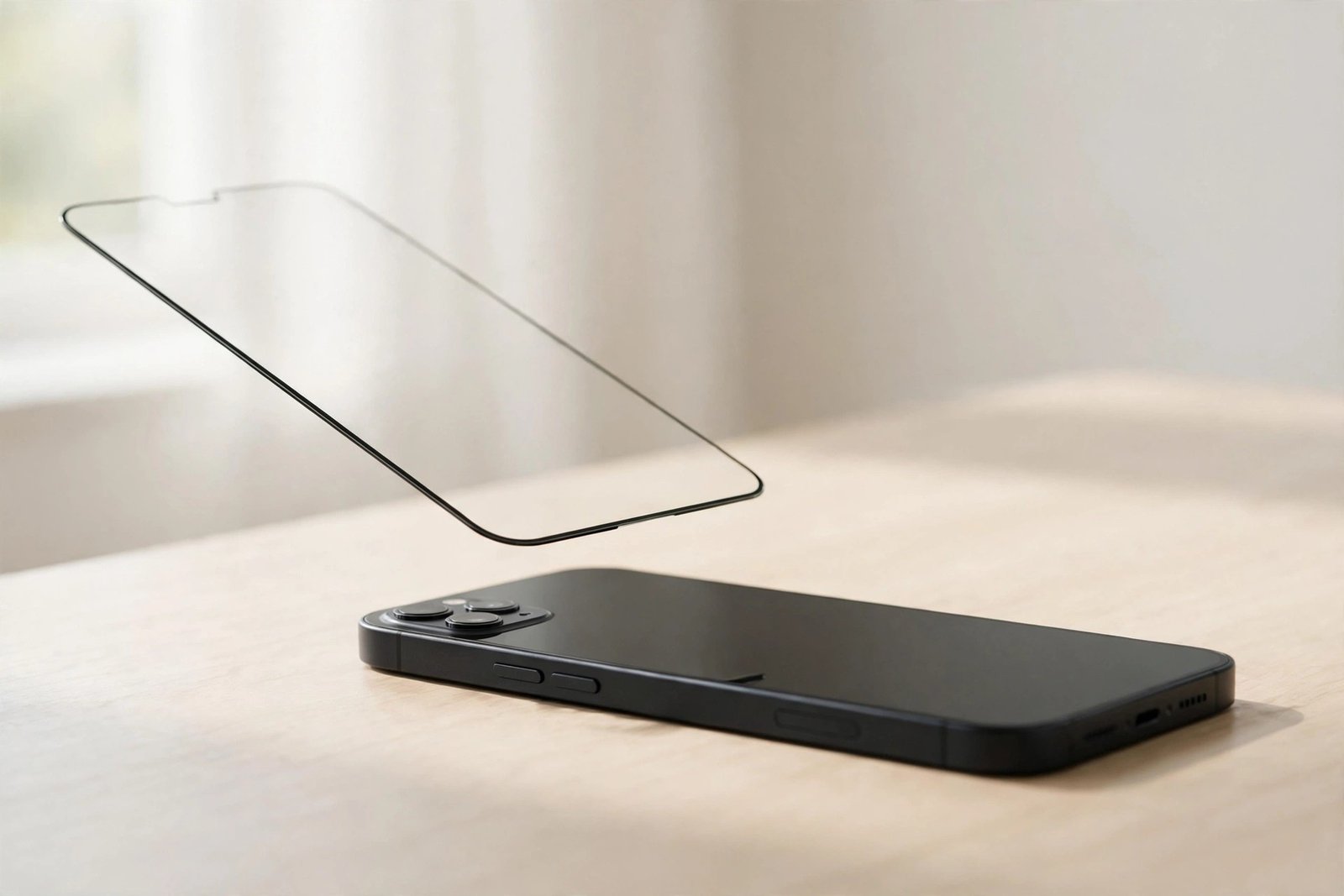
The iPhone 13 arrived with a lot of marketing around Ceramic Shield, the glass-ceramic front that Apple described as tougher than any other smartphone glass. That leaves plenty of owners asking a reasonable question: if the front of the phone is already that tough, is a screen protector pointless?
The honest answer is that an iPhone 13 can survive without a protector — but most owners are still better off fitting one. Ceramic Shield is genuinely strong against drops, yet drops are only half of what damages screens. This guide explains what the glass does well, where it still comes up short, and how to decide based on how you actually use your phone.
Key Takeaways
- Ceramic Shield is excellent in drops, but it still scratches at around level 6 on the Mohs hardness scale — much like ordinary phone glass.
- Scratches from sand, grit and pocket debris are the most common screen damage, and unlike a protector, a scratched screen cannot be swapped in five minutes.
- An out-of-warranty screen replacement typically costs a few hundred in local currency; a protector costs a small fraction of that.
- A case on its own leaves the screen fully exposed every minute the phone is in your hand.
- If you are careful, use a good case and accept the risk, going without is a legitimate choice — just make it an informed one.
What Ceramic Shield Actually Does Well
Ceramic Shield is made by growing nano-ceramic crystals inside the glass, which makes it considerably more resistant to cracking when the phone hits the ground. Apple promoted it as offering up to four times better drop performance than the glass it replaced, and in real-world drop testing the iPhone 13’s front generally holds up impressively well for a sheet of glass.
The catch is that drop resistance and scratch resistance are two different properties. A material can be tough — able to absorb impact without shattering — without being especially hard, and hardness is what resists scratches. Ceramic Shield’s headline strength is about surviving the fall onto the pavement, not about shrugging off the grit in your pocket. Judged purely on scratching, it behaves much like the glass on any other modern phone.
The Scratch Problem Is the Real Argument
Most phone screens are not killed by dramatic drops. They are slowly marked up by everyday abrasion: sand on a desk, grit in a bag, the lining of a pocket that has picked up dust, a zip or earring brushing the glass. Sand is the worst offender because quartz is harder than phone glass — around level 7 on the Mohs scale, against roughly level 6 for the screen — so a single grain dragged across the display under pressure can leave a permanent line.
Once those fine scratches are in the glass, they are there for good. They catch the light, show up as a faint web across dark content, and the only real fix is a screen replacement. A tempered glass protector changes the equation completely: it collects the scratches instead of your screen, and when it looks tired you peel it off and fit a fresh one for a few pounds or dollars.
- Apply the pocket test: if your phone shares a pocket or bag compartment with keys, coins or loose grit — from a beach bag, work trousers or a building site — fit a protector even if you never drop your phone. Scratches, not cracks, are what you will actually collect.
The Cost Equation: Protector vs Repair
The financial argument is lopsided. A decent tempered glass protector costs very little and is often sold in multipacks, so a replacement is already sitting in a drawer. An out-of-warranty iPhone 13 screen replacement, by contrast, typically runs to a few hundred pounds or dollars depending on your region and the exact model — the larger Pro Max variants cost more than the standard phone — plus the inconvenience of being without your device while it is repaired.
There is also resale value to consider. A screen covered in fine scratches knocks money off what you get when you sell or trade in the phone. A screen that has lived under a protector since day one looks essentially new the moment you peel the protector off — which means the few pounds the protector cost can protect a much larger sum at upgrade time.
When Skipping a Protector Is Perfectly Reasonable
None of this makes a protector compulsory. If your phone lives in a dedicated pocket or a soft pouch, you use a case with a properly raised lip, and you are the sort of person who has never cracked or badly scratched a phone, the risk you are running is genuinely small. Owners with accidental-damage cover may also decide the remaining risk is already paid for.
Some people simply prefer the feel of the bare glass, or replace their phone every year before scratches have time to accumulate. That is a perfectly defensible position — as long as it is a choice made with open eyes. The mistake is skipping a protector because you believed the marketing made the screen scratch-proof. It didn’t; it made it drop-resistant, which is a different promise.
- If you go without a protector, keep one pocket for the phone alone and check the screen under bright light after the first month. Most mystery scratches appear early — if the glass is still pristine, your routine really is low-risk; if not, fit a protector before the marks multiply.
Frequently Asked Questions
Does a screen protector affect Face ID or display quality on the iPhone 13?
No, not when it is a model-specific protector fitted properly. Quality tempered glass is optically clear, and protectors for the iPhone 13 are cut so the notch housing the Face ID sensors is either left open or covered only by glass the sensors can see through. If Face ID behaves oddly after fitting one, the protector is almost always misaligned over the notch.
Will my case protect the iPhone 13 screen on its own?
Partly. A case with raised edges helps when the phone lands face-down on a flat surface, because the lip touches down before the glass does. But a case does nothing against scratches in a pocket, a pointed impact from gravel or a table corner, or the simple fact that the screen is uncovered every moment the phone is in your hand. A case and a protector protect against different things.
I have AppleCare+ — do I still need a protector?
It becomes optional rather than essential. Cover such as AppleCare+ reduces the cost of a screen repair, although an excess usually still applies and exact terms vary by region. Many covered owners still fit a protector, because avoiding the repair altogether — the booking, the trip, the time without the phone — is worth more than the small saving on the repair bill.
Ceramic Shield makes the iPhone 13 tougher, not invincible — and the one kind of damage it cannot prevent, everyday scratching, is exactly the kind a cheap protector absorbs. Fit one, and the only screen you ever have to replace is the one that costs a few pounds.