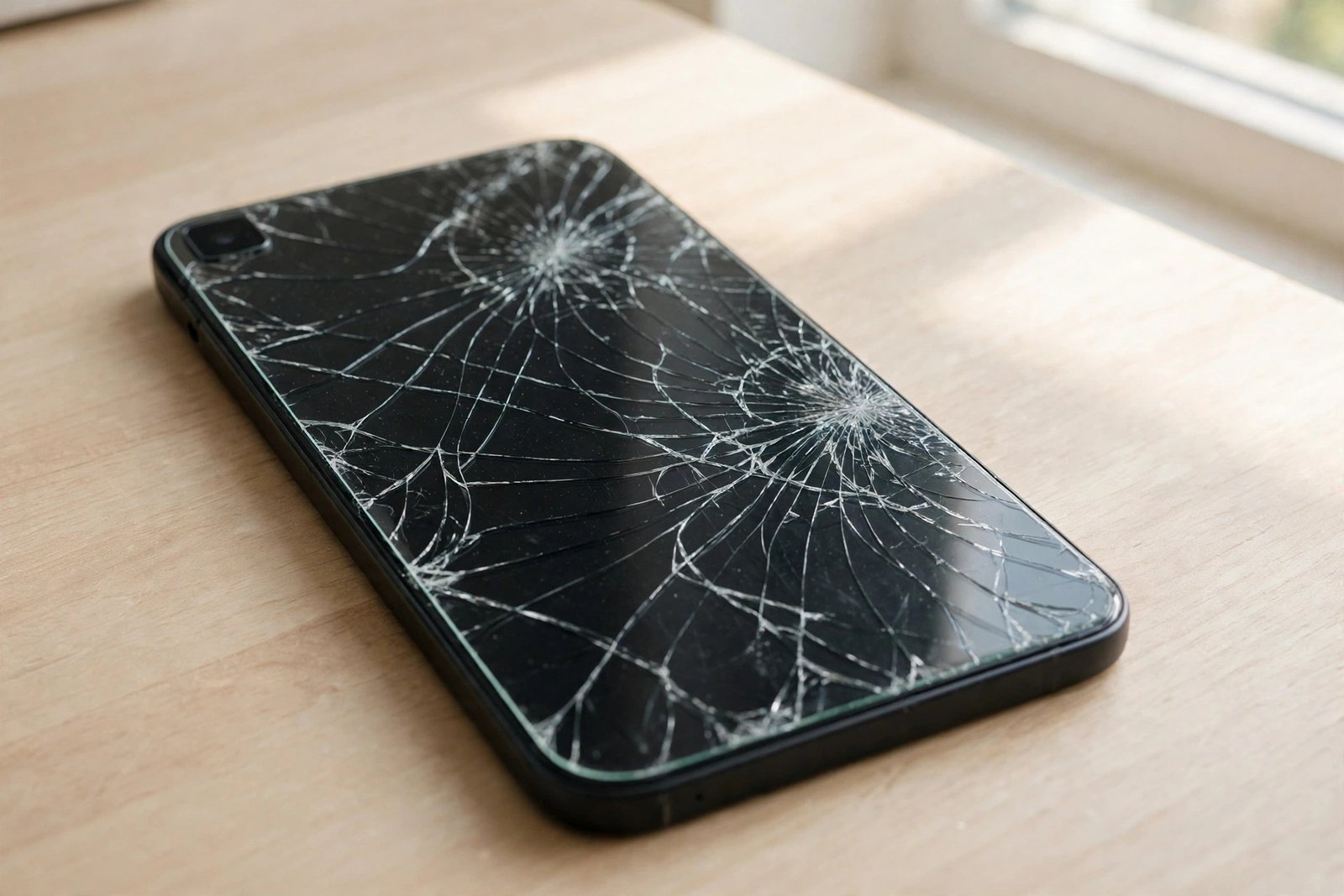
The crack appeared the moment your phone hit the pavement, and your first thought was probably not about the protector at all — it was whether the screen underneath had survived. Here is the reassuring part first: a cracked protector is usually a protector that has done its job. Tempered glass is designed to fracture so your display does not have to, and in the great majority of cases the phone beneath a cracked protector is completely unharmed.
That said, “usually fine” is not the whole story. Keep using a cracked protector for weeks and it can interfere with touch, rough up your fingertips, trap grime against the glass, and quietly stop protecting the phone the way it should. This guide explains what a cracked protector actually does to your phone — and what it does not.
Key Takeaways
- A cracked protector rarely harms the phone itself — cracking is how tempered glass absorbs the energy of an impact.
- Touch can feel less accurate along crack lines and lifted edges, and fingerprint readers may struggle where cracks cross the sensor area.
- Cracked glass can feel sharp under your thumb and may shed tiny fragments — a comfort and safety issue for you, not the phone.
- Cracks break the adhesive seal, letting dust, lint and moisture creep underneath and cloud the display.
- Once cracked, a protector’s ability to absorb the next impact falls sharply — replacement is the sensible move.
Your Screen Underneath Is Usually Unharmed
Tempered glass protects sacrificially. When your phone lands face down, the protector takes the blow, and the energy that would otherwise concentrate on your display is spent cracking the glass instead. That is why so many people peel away a spiderwebbed protector to find a flawless screen beneath it. Before assuming the worst, inspect your display carefully: switch the screen off and tilt the phone under a bright light, looking for any crack that continues beyond the protector’s edge or catches the light differently from the cracks above it.
Signs that the phone itself may be damaged include cracks that extend past the edge of the protector, coloured lines or dead patches on the display, and areas that no longer respond to touch at all. If you see any of those, the protector has not been enough this time and the phone needs a proper assessment. If the damage is confined to the protector’s outline, you are almost certainly looking at a cheap fix rather than an expensive one.
Touch Sensitivity and Fingerprint Readers
Your touchscreen senses your finger through the protector, and it works best when the glass is in uniform, close contact with the display. A crack disrupts that contact. Fine hairline cracks rarely cause trouble, but a network of cracks introduces tiny air gaps and an uneven surface, so swipes that cross a crack line can feel inconsistent, and areas near a lifted edge may register touches less reliably. The effect is usually a mild annoyance rather than a failure, but it is real.
In-display fingerprint readers are the most sensitive to this. Optical and ultrasonic sensors read your fingerprint through the glass, and cracks or lifted adhesive over the sensor area scatter that reading — failed unlocks are a common complaint with a badly cracked protector. Exactly how much trouble you get varies by phone model and crack position; if your unlocks only fail where a crack crosses the sensor zone, the protector is the culprit, not the phone.
- If your fingerprint reader has become unreliable after a drop, replace the protector before blaming the phone — then delete and re-register your fingerprints with the new glass fitted, as you should after any protector change.
Sharp Edges, Fragments and Your Fingers
The most immediate way a cracked protector “affects” your phone use is through your own fingertips. Hairline cracks feel rough as you swipe; deeper or spiderwebbed cracks can catch on skin, snag on pocket fabric, and occasionally shed tiny slivers of glass. This is rarely dangerous in any dramatic sense, but it is uncomfortable, and it is a good reason to keep a badly shattered protector away from children’s hands until it has been replaced.
Dirt and Moisture Creep Underneath
An intact protector is sealed to the screen by its adhesive layer. Cracks break that seal. Dust and pocket lint work their way into the crack lines, moisture from rain or a steamy bathroom can condense underneath and form cloudy patches, and fine grit trapped in a crack sits in direct contact with your display — precisely what the protector was meant to prevent. Over weeks, the adhesive around cracks tends to lift further, so the cloudy, dirty area grows. None of this typically damages the phone quickly, but it steadily undermines both the look of the screen and the protection you are relying on.
- If you must live with a badly cracked protector for a few days, a strip of clear tape over the worst of the cracks holds loose fragments together and keeps the surface smooth enough to use safely until the replacement arrives.
Frequently Asked Questions
Can a cracked screen protector damage the actual screen over time?
Directly, it is unlikely — the protector sits on top of the display and its cracks do not transfer into the glass below. The indirect risks are grit trapped within cracks scratching the screen, and lifted glass rubbing as it moves. Replacing a cracked protector promptly removes both risks almost entirely.
How can I tell whether it is the protector or the screen that is cracked?
With the display off, tilt the phone under a bright light and run a fingernail gently over the damage: protector cracks usually feel raised or rough, and they stop at the protector’s edge. If a crack continues beyond that edge, or the display shows lines, blotches or dead areas, the screen itself is probably damaged. The surest check is careful removal — peel the protector away slowly and inspect the bare glass.
Should I replace a protector with just one hairline crack?
You can reasonably wait a short while if touch still works well and the edges are not lifting — a single hairline crack is mostly cosmetic at first. Bear in mind, though, that the protector’s impact protection is already compromised and the crack will tend to spread. Sooner rather than later is the sensible call.
A cracked protector is evidence of protection that worked, not a phone that is broken — but it has spent its strength doing it. Replace it promptly and your phone keeps the usability, and the safety net, it had before the drop.