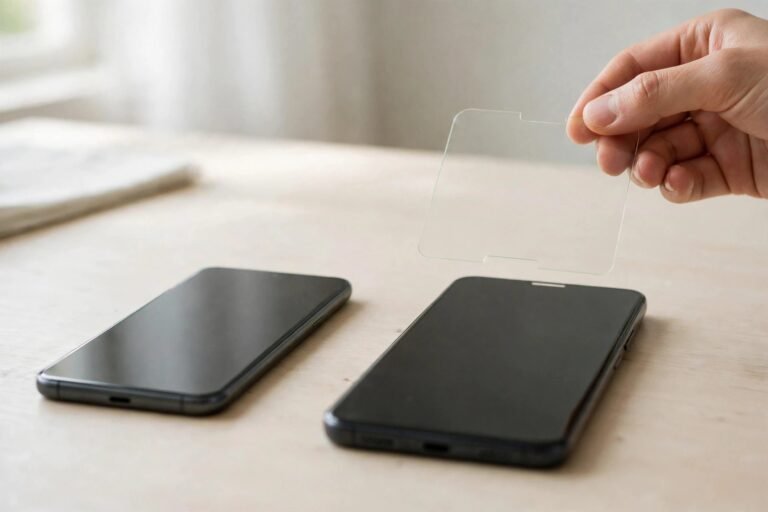
If you’re still using an iPhone XS, you might have noticed that protectors listed specifically for it are getting harder to find. The good news is that you have a reliable alternative: the iPhone X and iPhone XS share the same body, so protectors made for either phone fit both. The less obvious part is knowing which nearby models to avoid — because several similar-looking iPhones use completely different sizes.
This guide sets out exactly which protectors fit the iPhone XS, why the iPhone X is its true twin, and how to choose between full-coverage and case-friendly cuts for the XS’s gently curved screen edges.
Key Takeaways
- The iPhone XS has a 5.8-inch display in a body measuring about 143.6 × 70.9 mm.
- iPhone X protectors are the true cross-fit — the X and XS share identical body dimensions, notch and speaker placement.
- iPhone XR and iPhone 11 protectors do not fit — those phones are larger, with 6.1-inch displays in bigger bodies.
- The XS screen has curved edges, so flat glass won’t cover edge-to-edge; choose between standard, full-coverage and case-friendly cuts deliberately.
- Make sure the protector’s notch cut-out or sensor window matches the XS’s Face ID array — this is identical on the X, so X/XS listings line up correctly.
- Listings that combine “iPhone X / XS” are common and correct; listings bundling the XS with the XR or 11 are mislabelled.
The iPhone XS Size, Explained
The iPhone XS was Apple’s flagship 5.8-inch model from 2018. Its body measures roughly 143.6 mm tall by 70.9 mm wide, fronted by an OLED display with the wide notch that houses the TrueDepth camera system for Face ID. That combination — 5.8-inch screen, wide notch, those exact body dimensions — is the fingerprint you need to match when buying a protector.
The confusion arises because Apple reused similar names across different sizes. The XS Max is a much larger 6.5-inch phone. The XR, released alongside the XS, is a 6.1-inch phone in a noticeably bigger body, and the later iPhone 11 inherited that larger size. Meanwhile the iPhone 11 Pro returned to 5.8 inches but with different dimensions and a different notch area. Among all of these, only one phone matches the XS exactly: its predecessor, the iPhone X.
Why iPhone X Protectors Fit Perfectly
The iPhone XS was an evolution of the iPhone X, not a redesign. Apple kept the same chassis dimensions, the same 5.8-inch display size, the same notch shape and the same speaker and sensor layout. Because a screen protector only cares about the front face of the phone — its outline, its curves and where the openings sit — a protector precision-cut for the iPhone X is, by geometry, precision-cut for the XS too.
This is why most manufacturers sold a single product listed as “iPhone X / XS”, and why remaining stock is usually labelled that way. When you shop, searching for the combined listing gives you far more choice than searching for the XS alone, and the fit will be correct — the same outline, the same notch window, the same edge profile. It is one of the few cross-model fits in the iPhone range that is genuinely exact rather than approximate.
- Be wary of listings titled “iPhone X / XS / XR” or “XS / 11”. The XR and 11 are larger phones, so any protector claiming to fit both size classes has been made for neither. A correct listing pairs the X with the XS only.
Curved Edges: Full-Coverage vs Case-Friendly
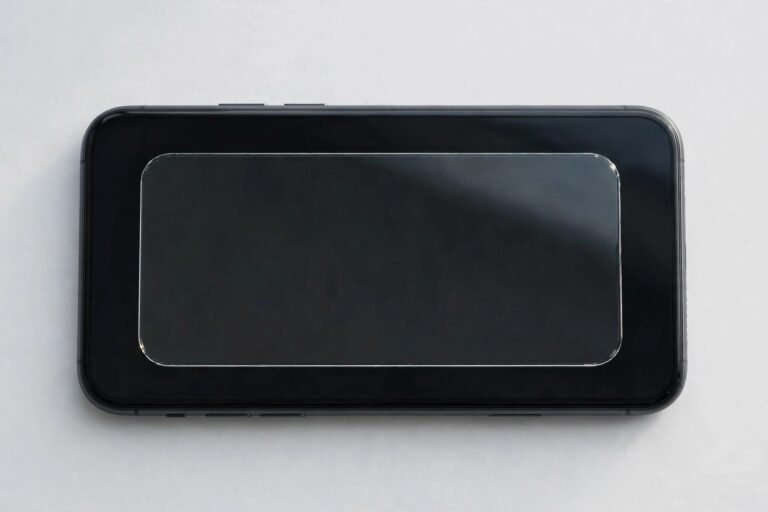
Like most modern iPhones, the XS display glass curves gently down at the edges into the stainless steel frame. Rigid tempered glass cannot bend to follow that curve, so protectors come in two main styles. Standard (case-friendly) protectors are cut slightly smaller than the screen, covering the flat central area and stopping just short of where the curve begins. That small uncovered border is deliberate: it keeps the adhesive on flat glass, where it seals properly, and leaves room for a case’s lip so the case doesn’t pry the protector’s edges up.
Full-coverage protectors extend further towards the edges, usually with a coloured or black printed border that hides the curved margin and gives a more “edge-to-edge” look. They can look neater, but the border means a fraction of the visible display edge sits under printed trim, and cheaper examples are prone to the edges not bonding — the white-edged “halo” effect. Neither style is wrong; choose case-friendly if you use a case (most people should), and full-coverage only if you run the phone bare and prioritise looks.
Fitting Notes for the XS
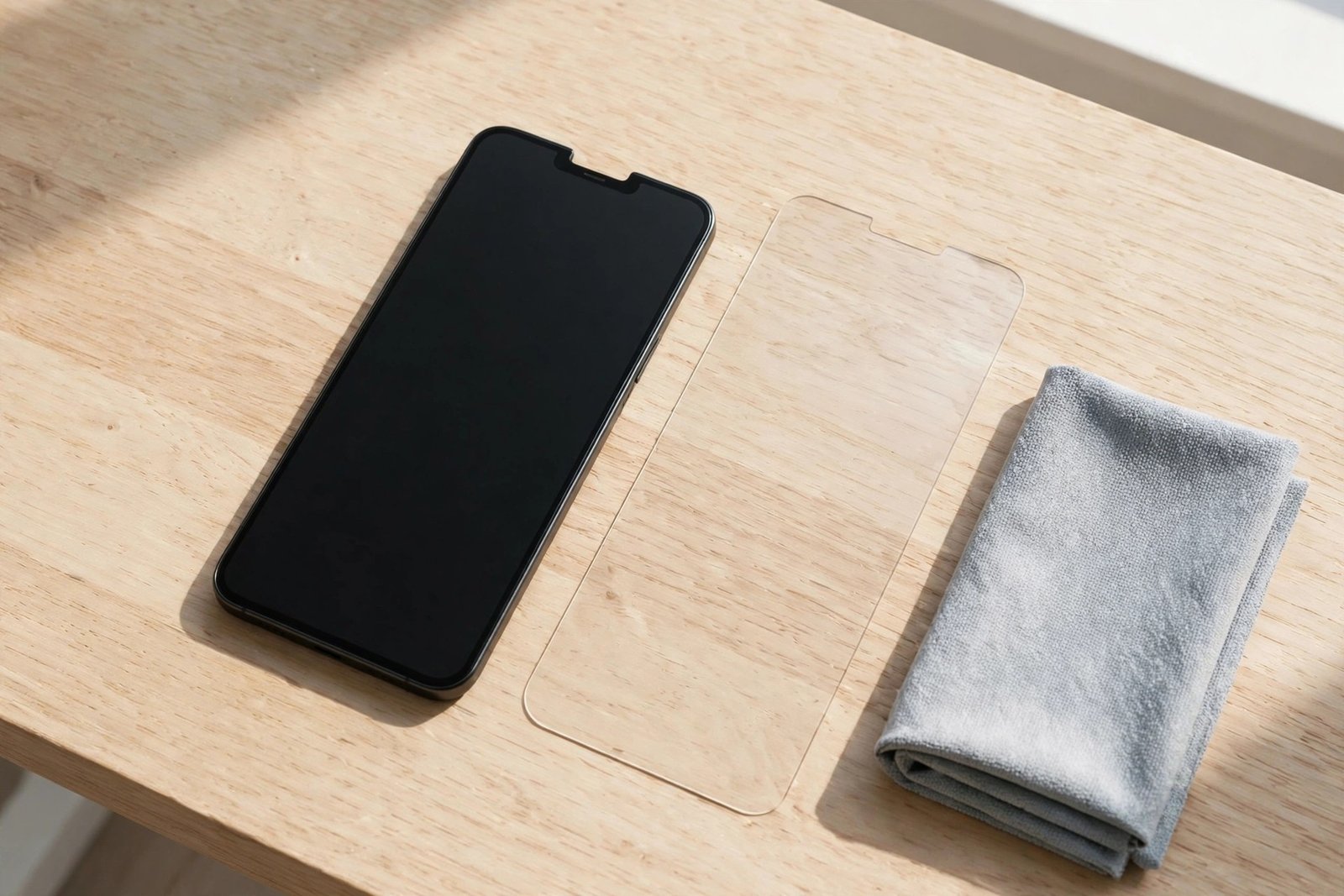
Because the XS is an older phone now, stock from some sellers has been sitting around for years — check that the adhesive hasn’t been compromised by looking for protectors sold in sealed multi-packs from reputable brands rather than loose single sheets. An alignment frame, if included, makes fitting far easier given the notch alignment matters for Face ID. The protector must not cover the TrueDepth sensors: correct X/XS protectors either leave the notch area open or use a window that keeps the sensors unobstructed.
One XS-specific point: the phone carries an IP68 rating, but that has nothing to do with protector choice — any correctly fitting X/XS glass or film is fine, and fitting one does not affect water resistance, since the protector sits on the outside of the sealed display. Take the usual care fitting it — clean screen, dust-free room, align from the notch — and it will serve as well as it did when the phone was new.
- Since the XS is a legacy model, buy a multi-pack while you can find them. Protector ranges for older iPhones shrink every year, and a spare in the drawer beats discovering your exact size has been discontinued after a drop.
Frequently Asked Questions
Will an iPhone 11 Pro protector fit the XS? It’s also 5.8 inches.
Not reliably. Although both are 5.8-inch phones, the 11 Pro has different body dimensions and a different front layout, so its protectors are cut differently. Stick to protectors listed for the iPhone X / XS, which are dimensionally identical to your phone.
Does the XS Max protector fit the XS?
No. Despite the similar name, the XS Max is a much larger 6.5-inch phone. Its protectors are far too big for the XS and cannot be trimmed down — tempered glass cannot be cut after manufacture without shattering.
Glass or film for the iPhone XS?
Tempered glass is the better all-round choice: it feels like the original screen, resists scratches well and offers some sacrificial impact protection. Film is thinner and cheaper but marks more easily and offers little drop protection. Either way, the sizing rules are the same — buy for the X / XS.
For the iPhone XS, the secret is simple: shop for its twin. iPhone X protectors fit it exactly — everything with a similar name and a different size does not.