Tempered glass is the default recommendation almost everywhere — but is it actually a good screen protector, or just the most popular one? The short answer: for most people, yes. It offers the best balance of scratch resistance, drop help, feel and price of any protector type. But it isn’t perfect, and it isn’t the right choice for everyone.
This guide weighs tempered glass against plastic film and liquid coatings, explains where glass genuinely excels and where it falls short, and helps you decide whether it’s the right protector for how you use your phone.
Key Takeaways
- Tempered glass gives the best all-round protection: strong scratch resistance plus real, if limited, help in drops.
- It feels like the bare screen — smooth, clear and responsive — unlike film, which can feel rubbery.
- Its weakness is edges and curved screens: glass can’t bend, so coverage on curved displays is incomplete and edges can chip.
- Film is thinner and cheaper and suits scratch-only protection; liquid coatings offer the least protection of all.
- Tempered glass is a consumable — when it cracks, it has usually done its job, and you replace it rather than the screen.
What Makes Tempered Glass Good
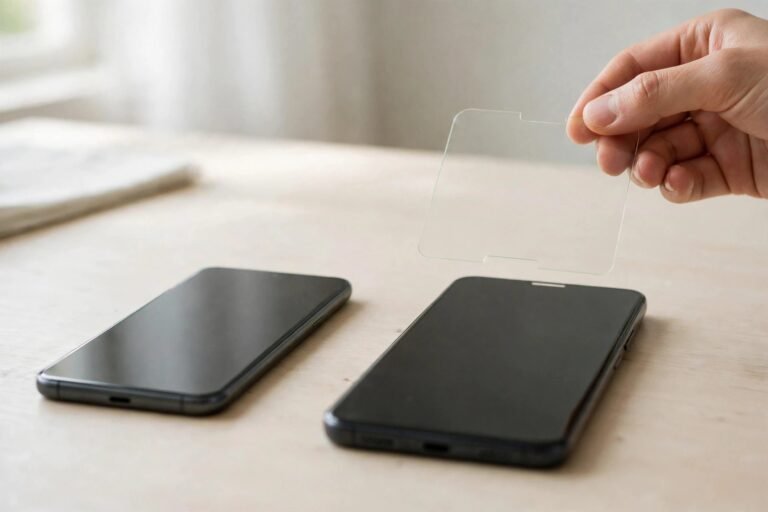
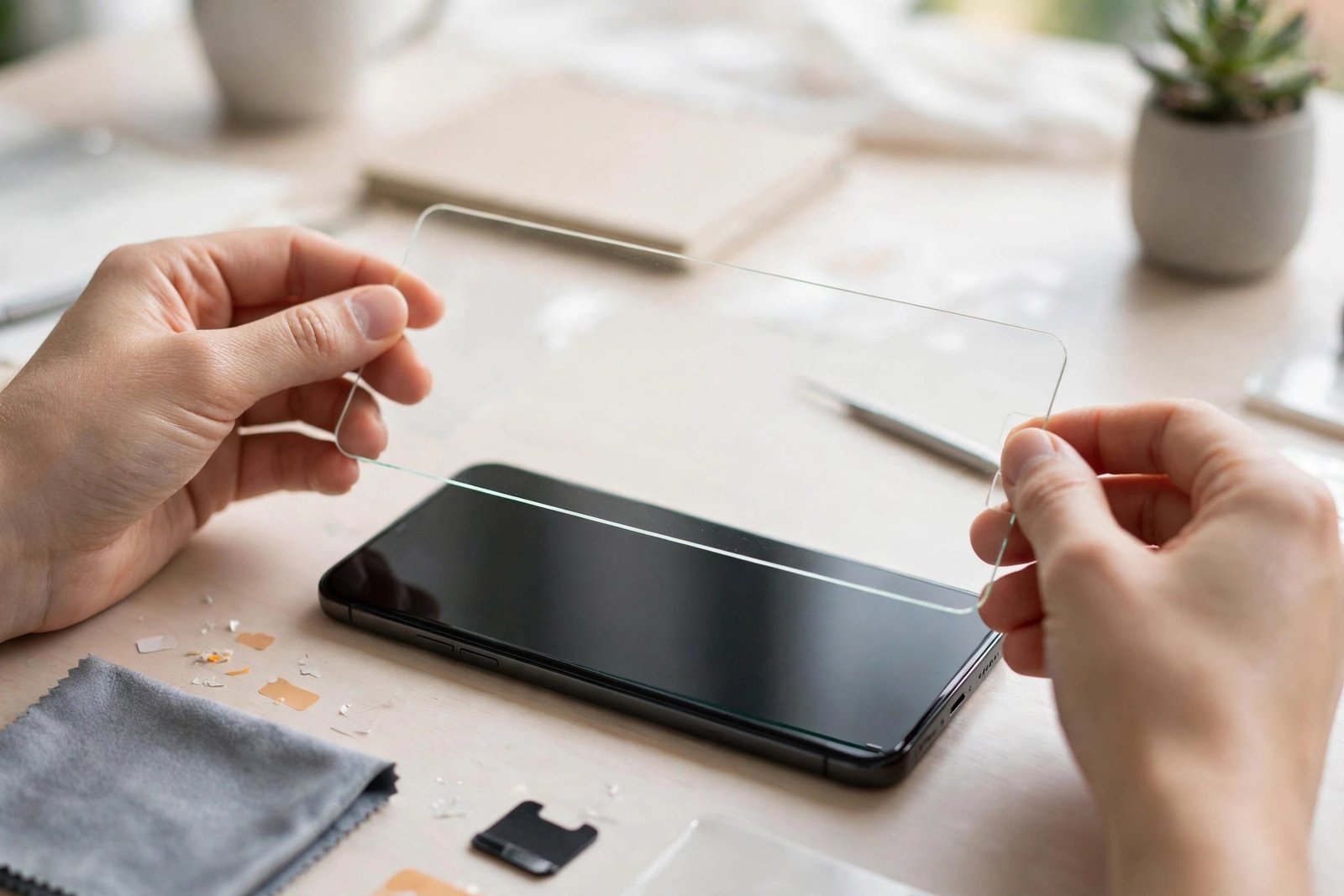
Tempered glass is real glass that has been heat-treated to increase its strength, then cut to match your phone’s screen. Its surface resists scratches from keys, coins and everyday grit far better than plastic film, and because it is a rigid sheet bonded across the display, it can spread the force of a face-down impact and crack in place of your screen. That sacrificial behaviour is its greatest strength: the cheap layer breaks so the expensive one doesn’t.
Just as important is how it feels. Glass has the same smooth, low-friction surface as the screen itself, with an oleophobic coating that resists fingerprints. Touch response and display clarity are essentially unchanged. Film protectors, by contrast, often feel slightly soft or draggy under a fingertip, and they show scratches quickly because plastic is simply not as hard.
Where Tempered Glass Falls Short
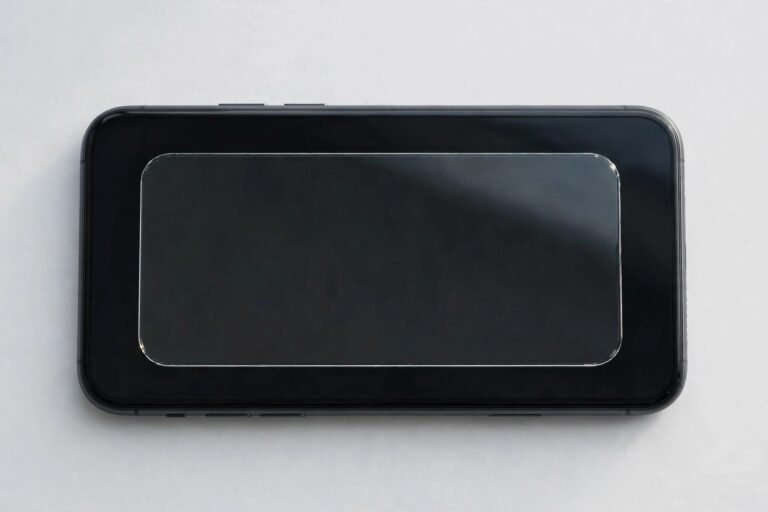
Glass is rigid, and that creates two problems. First, on phones with curved screen edges, a flat sheet of glass cannot follow the curve, so manufacturers make protectors slightly smaller than the screen — leaving a border uncovered — or use adhesive only around the edges, which can affect touch sensitivity. Second, the edges of the protector itself are vulnerable: a knock on an exposed edge can chip or crack the glass even when the phone is otherwise fine.
There are smaller drawbacks, too. Glass adds a little thickness, which occasionally conflicts with very tight cases that then lift the protector’s edges. And while multi-packs keep the cost per protector low, it is still a recurring purchase if you’re hard on your phone. None of these are deal-breakers for most people, but they’re worth knowing before you assume glass is automatically best for your setup.
- If you use a case, choose a protector labelled “case-friendly” — it’s cut slightly smaller so the case’s lip won’t catch the edge and peel the glass up.
Tempered Glass vs Film vs Liquid
Film protectors (PET or TPU) are thin, flexible and inexpensive. They wrap curved edges fully and are nearly invisible, but they only guard against scratches — in a drop they add almost nothing. Liquid nano-coatings are wiped on and leave an invisible layer measured in nanometres; they may slightly reduce fine scuffing, but there’s no sacrificial layer, so they sit firmly at the bottom for real protection. Tempered glass sits at the top for protection and feel, with film winning only on thinness, edge coverage and price.
So who should choose what? If your phone faces pockets, bags, building sites or children, tempered glass is the sensible default. If your phone leads a gentle life and you only fear micro-scratches — or your curved screen makes glass fit badly — film is a reasonable, honest compromise. Liquid coatings suit people who dislike the idea of a visible protector and accept minimal protection in exchange.
- Ignore “9H hardness” as a buying guide — it measures scratch resistance against graded pencils, not drop survival. Fit, edge coverage and an alignment tray matter far more in real life.
Frequently Asked Questions
Does tempered glass affect touch sensitivity or the fingerprint sensor?
A well-fitted glass protector shouldn’t noticeably affect touch. With in-display fingerprint sensors, follow the maker’s guidance — some phones ask you to re-register your fingerprints after fitting glass, and some sensor types work better with specific protector designs.
How long does a tempered glass protector last?
It depends entirely on use. It may last the life of the phone, or crack in its first drop — in which case it has done its job. Replace it when it cracks, chips at the edges, or starts lifting, because damaged glass protects poorly. It’s worth keeping a spare from the multi-pack in a drawer, so a crack never leaves you using an unprotected phone while a replacement is on its way.
Can I use tempered glass on a curved screen?
Yes, but with compromises: the protector will either cover only the flat portion of the display or use edge-only adhesive. If full edge-to-edge coverage matters more to you than impact help, a flexible film may suit your phone better.
Tempered glass isn’t flawless, but for most phones and most people it’s the protector that does the most, feels the best, and asks the least in return.