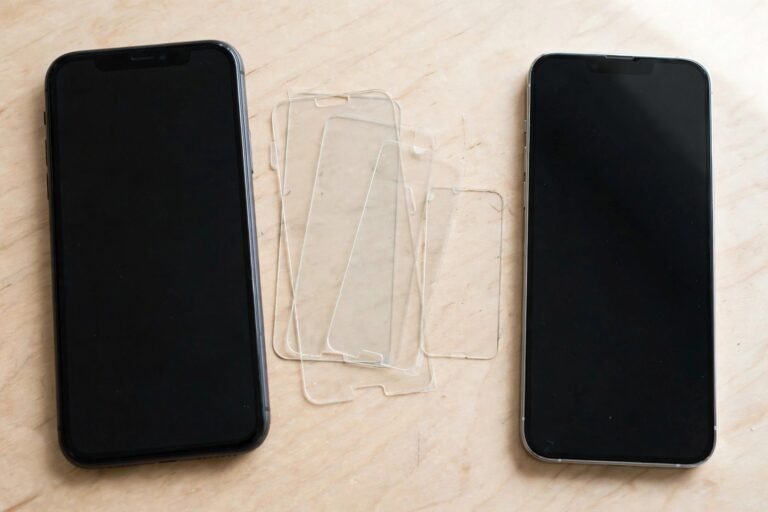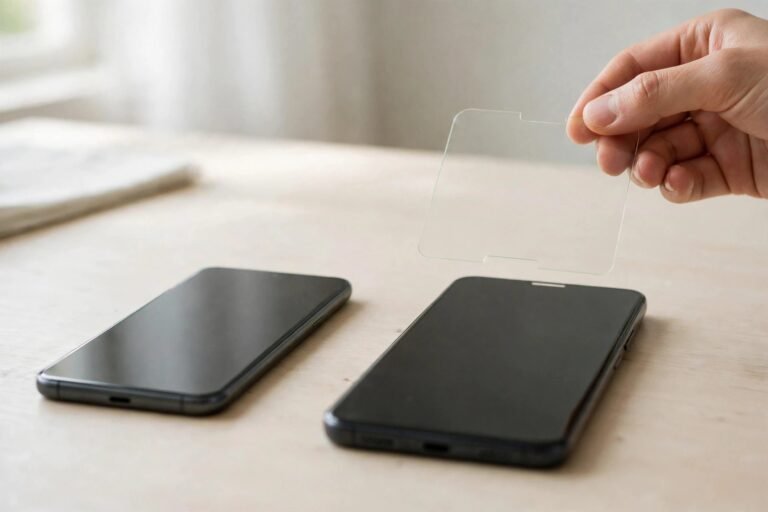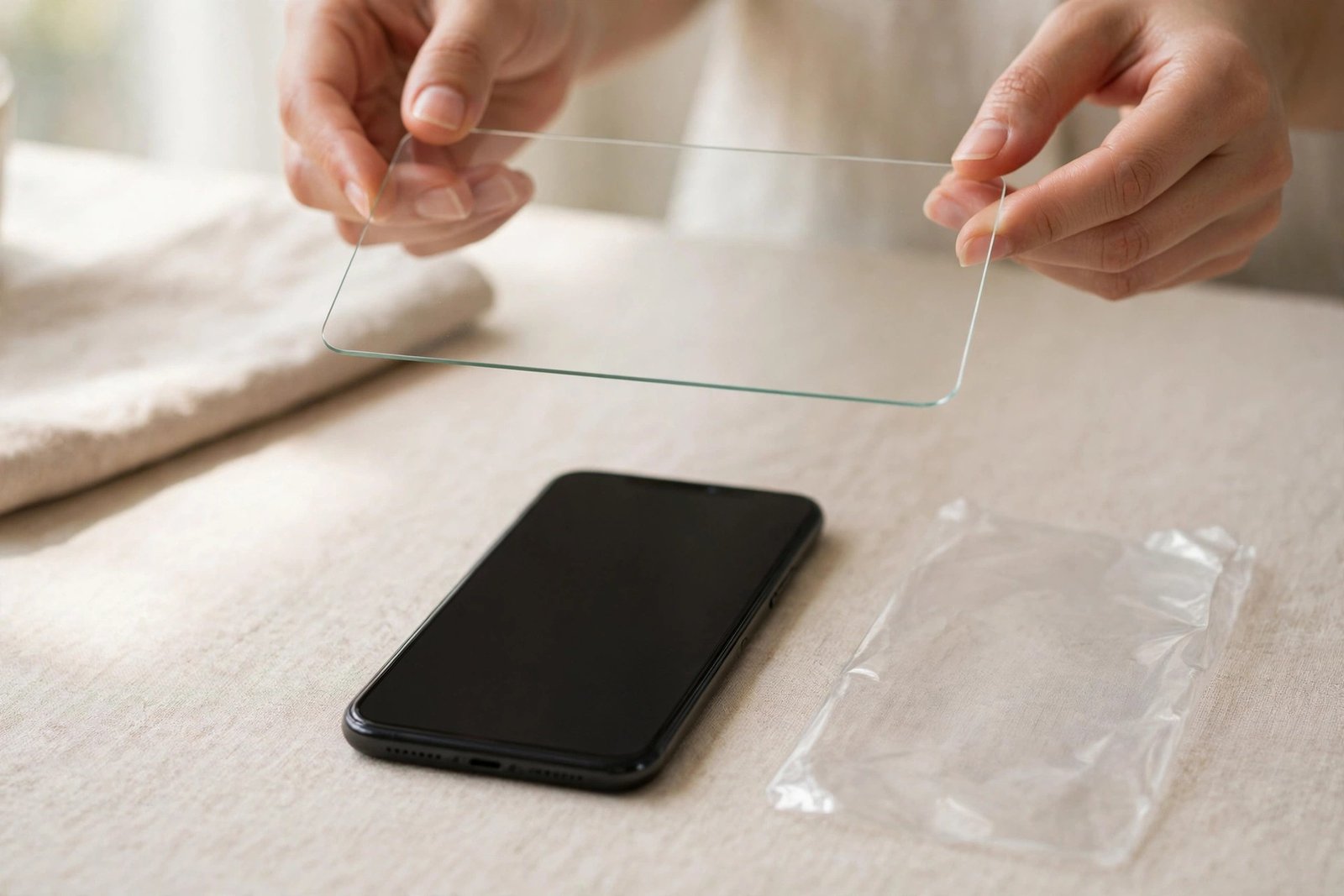
Screen protectors are meant to be cheap insurance — so when one comes off intact, it is tempting to ask whether it can simply go back on. Perhaps your case pushed a corner up, or you removed the protector to clean underneath it. The honest answer is: it depends entirely on the type of protector and what happened in the seconds after you removed it. Tempered glass and film behave very differently once peeled away from the screen.
This guide explains why most removed protectors cannot be reused successfully, the narrow circumstances in which reusing one can work, how to attempt it if you decide to try, and how to recognise the point where fitting a fresh protector is simply the sensible option.
Key Takeaways
- Tempered glass almost never survives removal — its adhesive layer is designed for a single application and loses its grip once peeled.
- Dust is the real killer: the exposed sticky side attracts airborne particles within seconds, and every speck becomes a permanent bubble.
- Film protectors can occasionally be reused — but only if the adhesive side went straight back onto its backing liner after removal.
- Never reuse a protector that is cracked, chipped, or bent; it has already done its job and cannot protect properly again.
- If you attempt a reuse, work immediately — the longer the adhesive stays exposed, the worse the result.
- Given how inexpensive protectors are, a fresh one from a multi-pack is usually the better answer.
Why Tempered Glass Cannot Usually Be Reused
Tempered glass protectors use a full-surface silicone adhesive layer that is engineered to bond evenly to a perfectly clean screen — once. When you peel the glass away, that layer stretches, wrinkles microscopically, and loses the uniform contact it needs. Even if the glass itself looks flawless, the adhesive underneath has been compromised, and refitting it typically produces cloudy patches, edges that refuse to seal, and corners that lift within hours.
There is a second problem: contamination. The moment the sticky side is exposed to the air, it begins collecting dust, fibres from clothing, and skin cells. Unlike a brand-new protector — which is peeled from its backing seconds before application — a removed one has been handled, set down, and waved around. Every particle that lands on the adhesive will sit between the glass and your screen, visible forever and impossible to smooth out. Peeling also risks flexing the glass enough to create hairline cracks that only appear once it is back on the phone.
The One Exception: Film Stored on Its Liner
Flexible film protectors are slightly more forgiving. If you removed a film protector and immediately pressed its adhesive side back onto the original backing liner — the stiff sheet it was originally peeled from — the sticky surface stays clean and protected. Stored that way, flat and away from heat, a film protector can sometimes be refitted days later with acceptable results.
Be honest about the conditions, though. If the film spent any time stuck to a desk, draped over a chair, or folded into a pocket, the adhesive is contaminated and the experiment is over. Film is also prone to stretching during removal; a stretched film will never align with the speaker and camera cut-outs again, no matter how clean it is.
- If you ever remove a protector intending to refit it, decide before you peel: have the original backing liner (or a clean sheet of the plastic from the packaging) ready and waiting, and transfer the protector onto it sticky-side down within seconds.
How to Attempt a Reuse (and When to Stop)
If your protector came off cleanly and quickly, and you want to try, work in a steamy bathroom to keep airborne dust down. Clean the phone screen thoroughly with a wet wipe, dry microfibre cloth, and dust-removal sticker, exactly as you would for a new install. Inspect the protector’s adhesive side under a bright light: dab any visible specks off with the sticky side of a dust-removal sticker, never with your fingers or a cloth, which only add fibres.
Align carefully and lower the protector onto the screen once. Judge the result honestly after a few minutes. A few tiny edge bubbles that press out are acceptable; anything more — a dusty constellation in the middle, edges that will not seal, a rainbow of unbonded patches — means the adhesive has had enough. At that point you are spending more time than a replacement costs, and a poorly bonded protector leaves gaps that collect grit against the screen it is meant to protect.
- Most quality protectors are sold in packs of two or three for exactly this reason — when one comes off, reach for the spare in the drawer rather than fighting to resurrect the old one.
Frequently Asked Questions
Can I wash a removed screen protector and reuse it?
Washing is occasionally suggested for film protectors, and a gentle rinse can remove loose dust — but water and any soap residue interfere with the adhesive, and drying it without attracting fresh dust is extremely difficult. In practice, washed protectors rarely bond well again. Treat washing as a last resort for film only, and never for tempered glass.
My protector only lifted at one corner. Do I need to replace it?
Not necessarily. If the protector is still fitted and only an edge has lifted, you have not broken the adhesive seal across the whole surface. Press the corner down firmly and hold it; if dust has crept underneath, lift just that corner with tape, dab the speck away with a dust sticker, and press it back down. That is a repair, not a reuse, and it often works.
Is reusing a protector bad for my phone screen?
A clean, intact protector will not harm the screen, but a contaminated one can trap grit between the protector and the glass, and trapped grit is a scratch risk. If the adhesive side is not visibly clean, do not refit it — the protector meant to prevent scratches could end up causing them.
Protectors are consumables, not heirlooms: refit one only if it came off clean and went straight onto its liner — otherwise, a fresh protector is faster, cleaner, and safer.