You dropped your phone, the screen is cracked, and the repair quote made your eyes water — or the appointment is days away. So here’s the question everyone asks: can you put a screen protector on a cracked screen to buy yourself some time? The short answer is yes. It won’t fix anything, but as a stopgap measure it can genuinely help.
A screen protector over cracked glass holds loose shards in place, keeps dust and moisture out of the fractures, and gives your fingertip a smooth surface to swipe on. But it comes with real limits — dead touch zones, spreading cracks, and lost water resistance won’t be solved by a layer of glass or film. This guide covers exactly what to expect, which type to use, and when to stop waiting and book a repair.
Key Takeaways
- Yes, it works as a temporary hold — a protector contains the damage but never repairs it.
- It keeps glass splinters in place and stops cracks snagging on pockets, bags, and fingers.
- Tempered glass bridges hairline cracks best; flexible film conforms better to uneven, shattered surfaces.
- It won’t fix dead touch zones, spreading cracks, screen discolouration, or lost water resistance.
- Apply gently — heavy pressure during installation can worsen the damage.
- If cracks are spreading or touch is failing, book a repair instead of relying on the stopgap.
What a Screen Protector Actually Does on a Cracked Screen
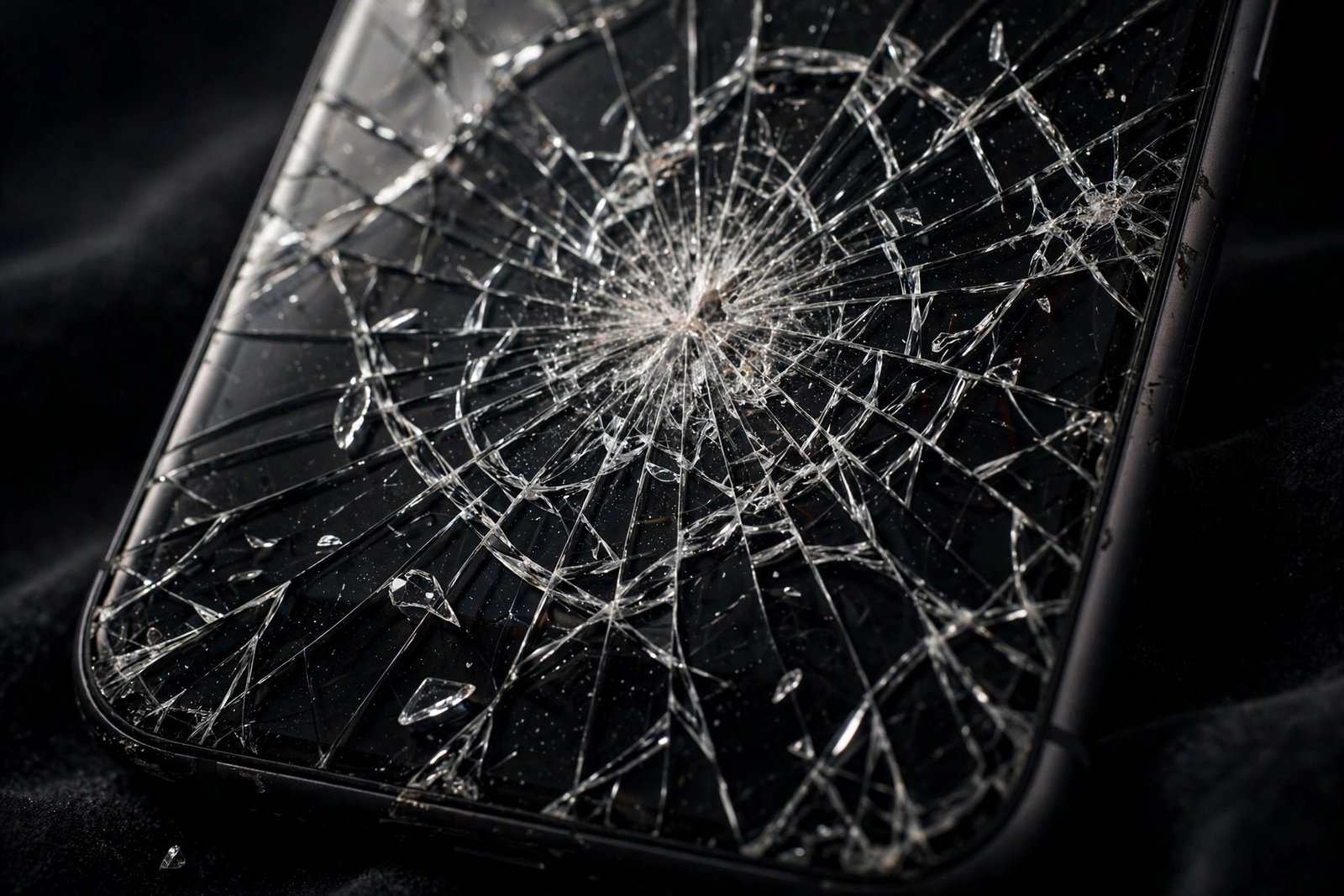
The main benefit is containment. A cracked screen sheds tiny glass splinters — the glitter-like shards you find on your fingers after swiping. A screen protector’s adhesive bonds across the whole surface, pinning those fragments down. The cracks stop catching on fabric when you pull the phone from a pocket, and your fingertip glides over a smooth surface instead of a jagged fracture line.
It also seals the fractures against dust and moisture. Every crack is an open door into the display assembly beneath. A protector won’t make the phone waterproof again — that factory seal is already broken — but it meaningfully reduces what gets in during everyday use. Less grit working into the cracks means less grinding against the display layers below.
Day-to-day use simply feels better. Typing, scrolling, and gaming over a smooth protector beats dragging your thumb across broken glass, and you stop worrying about a shard working loose at an awkward moment.
What It Can’t Fix
Let’s be clear: a protector is first aid, not surgery. It won’t fuse the glass back together, and it won’t reliably stop a crack from spreading. Cracks grow through thermal expansion, flexing, and pressure changes — a thin adhesive layer slows snagging but can’t counteract the structural forces moving through damaged glass. A crack that was going to spread will usually keep spreading.
Touch problems are the other hard limit. If the digitiser beneath the glass is damaged — dead spots, phantom touches, areas that need a hard press — a protector won’t help, and adding another layer over an already struggling sensor can occasionally make sensitivity slightly worse. If touch was perfect before you applied the protector and feels off after, the protector may be bridging unevenly over the cracks; if touch was already bad, the damage is underneath.
Finally, water resistance is gone and a protector doesn’t bring it back. Treat a cracked phone as vulnerable to rain, steam, and spills regardless of what’s stuck on the screen.
- For a badly shattered screen, lay strips of clear packing tape over the cracks first, then apply the protector over the tape. The tape keeps everything flat and contained, and makes later removal much cleaner.
- Choose a full-coverage protector that extends past the cracks’ endpoints — cracks almost always spread outward from their tips.
Tempered Glass vs Film on a Cracked Screen
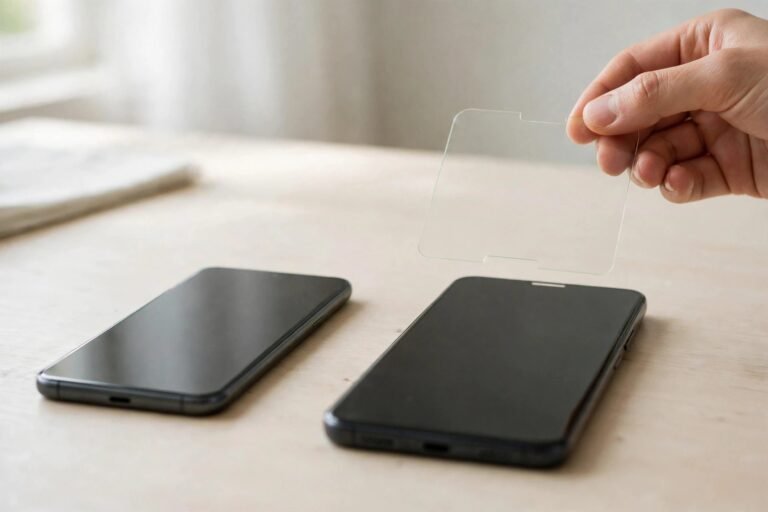
Tempered glass is rigid, so it bridges across cracked areas like a splint, holding everything beneath it flat and stable. It’s the better pick when the cracks are hairline and the surface is still mostly level — the glass sits flat, the adhesive bonds well, and shard containment is excellent. The downside: if the screen is uneven or pieces are lifting, rigid glass can’t follow the contours. You’ll get air gaps, lifting edges, and poor adhesion around the worst damage.
Flexible PET or TPU film conforms to uneven surfaces far better. It drapes over dips and raised shards where glass would bridge and lift. It’s also cheaper, so there’s less waste if the stopgap only needs to last a week or two. The trade-off is weaker shard containment and less impact protection going forward — film is scratch armour, not structural support.
Rule of thumb: hairline cracks → tempered glass; shattered or uneven → film (ideally over packing tape). Either way, treat it as temporary.
How to Apply It Without Making Things Worse
Clean the screen very gently. Skip the usual firm wipe-down — no hard scrubbing over cracked areas, which can press shards deeper or dislodge loose pieces. Use a soft, dry microfibre cloth with light touches to lift surface dust, and don’t chase a perfect clean over the fractures themselves.
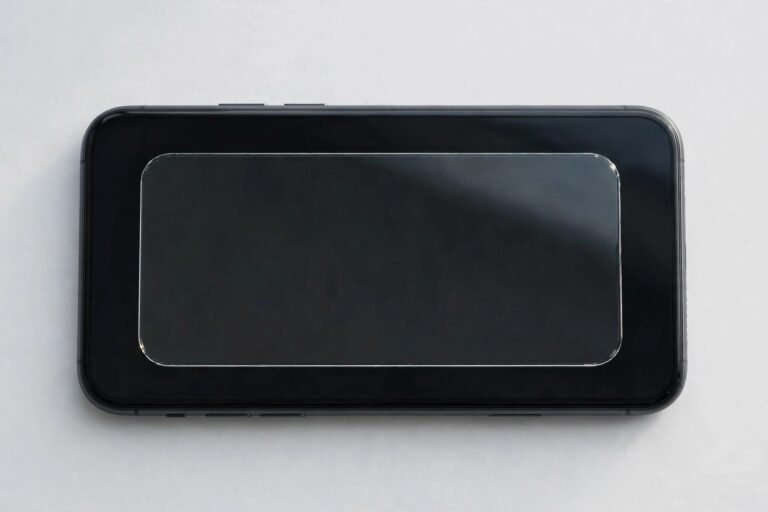
Align the protector and lay it down with minimal pressure. Don’t squeegee hard across cracked zones; let the adhesive spread on its own as much as possible, and press only on undamaged areas to work out air. Expect some bubbles sitting directly over crack lines — that’s unavoidable where the surface isn’t flat, and it’s purely cosmetic.
If a shard lifts or the crack audibly creaks while you’re applying, stop pressing that area. The goal is coverage, not perfection.
When to Skip the Stopgap and Repair Instead
A protector buys time; it doesn’t buy a solution. Book a repair if any of these are true: the cracks are visibly spreading day to day; touch is unreliable or dead in zones; glass pieces are lifting or falling out; or the screen shows discolouration, lines, or ink-like bleeding — that last one means the display panel beneath is damaged, and no protector will help.
Also consider your warranty or insurance. Some policies want damage documented as-is, so check the terms before covering everything up — photos of the original damage are worth taking either way.
On cost: a protector is a few pounds and a repair is significantly more, but only the repair restores touch reliability, water resistance, and resale value. The stopgap makes sense for days or weeks, not months.
Frequently Asked Questions
Will a screen protector stop the crack from spreading?
Not reliably. It reduces snagging and keeps shards in place, which removes two common causes of worsening cracks — but thermal expansion and flexing can still extend the fracture. If the crack is actively growing, bring the repair forward.
Will my touchscreen work normally under the protector?
If touch worked fine before, it usually keeps working — the protector is thin enough that a healthy digitiser reads through it. If there were already dead zones or phantom touches, the protector won’t fix them, and uneven adhesion over deep cracks can occasionally make sensitivity patchy.
Can I remove the protector later without pulling glass off?
Peel slowly from one corner, keeping the angle low. If shards lift with the protector, that’s a sign the screen needs professional repair rather than another stopgap. The packing-tape-first method makes removal noticeably cleaner.
Is it safe to keep using a cracked screen?
Mostly yes once a protector is containing the shards — the main risks are worsening damage and sudden display failure. Back up your data now; a dying display can fail without further warning, and a backup turns a bad week into a minor inconvenience.
A screen protector on a cracked screen is first aid, not surgery — it buys you comfort and time, but the real fix is still a new screen.