Search for a cheap fix for a cracked screen protector and this tip surfaces everywhere: rub in some toothpaste, buff it out, good as new. It is one of the most repeated hacks in phone care — passed around forums, short videos, and well-meaning advice columns for years. It sounds plausible, it costs nothing, and your bathroom cabinet already has the supplies. So does it work?
The honest answer is: almost entirely, no — and understanding why tells you something useful about what toothpaste does to a surface. There is one narrow case with a grain of truth, several where it makes things worse, and one real fix that costs little more than the tube you were about to squeeze.
Key Takeaways
- Toothpaste is a mild abrasive polish — it works by wearing a surface down, not by filling or repairing anything.
- It can slightly soften the look of hairline scratches on plastic film protectors — the one narrow case with any truth to it.
- It cannot repair cracked tempered glass: a fracture through the glass cannot be polished away, ever.
- On modern coated glass it can strip the oleophobic coating, leaving a patch that smudges worse than before.
- The real fix for a cracked protector is replacement — protectors are cheap precisely because they are disposable.
Why People Believe It: What Toothpaste Actually Does
The myth survives because it is built on a real mechanism, misapplied. Toothpaste — particularly the plain white, non-gel kind — contains fine abrasive particles, traditionally silica, designed to polish enamel. Rubbed on any smooth surface, those particles act like an extremely fine sandpaper: they abrade the material immediately around a blemish until the edges of the blemish are worn down closer to level with the surrounding surface.
That is why the trick has a long history with scratched CDs and dull watch crystals, and why a hairline scratch can look slightly less visible afterwards. Nothing has been healed — the surface around the scratch has been lowered to meet it, so light catches the softened edges less sharply. It is cosmetic camouflage by abrasion, and the distinction matters for everything that follows.
The One Case With Some Truth: Hairline Scratches on Plastic Film
If your protector is a plastic film (PET or similar) and the damage is a fine surface scratch — not a crack — toothpaste polishing can marginally improve how it looks. The plastic is soft enough for the abrasive to level the scratch’s raised edges, so the line catches less light and becomes less noticeable at a glance. People who swear the hack worked are usually describing exactly this: a scratched film protector, a scratch that was never structural.
Even here, manage expectations. The improvement is partial, the area you polish may end up with a slightly different sheen from the rest of the film, and you have spent effort decorating a protector that is, by design, a consumable. If the result matters to you at all, a fresh film from the multipack in your drawer is a better five minutes.
- If you insist on trying it on a scratched film protector: use plain white non-gel toothpaste, a pea-sized amount, and a soft cloth in small circles with almost no pressure for under a minute. Gel and whitening formulas contain different chemicals and grittier abrasives — they are the ones most likely to cloud the surface.
Why It Cannot Fix Cracked Glass
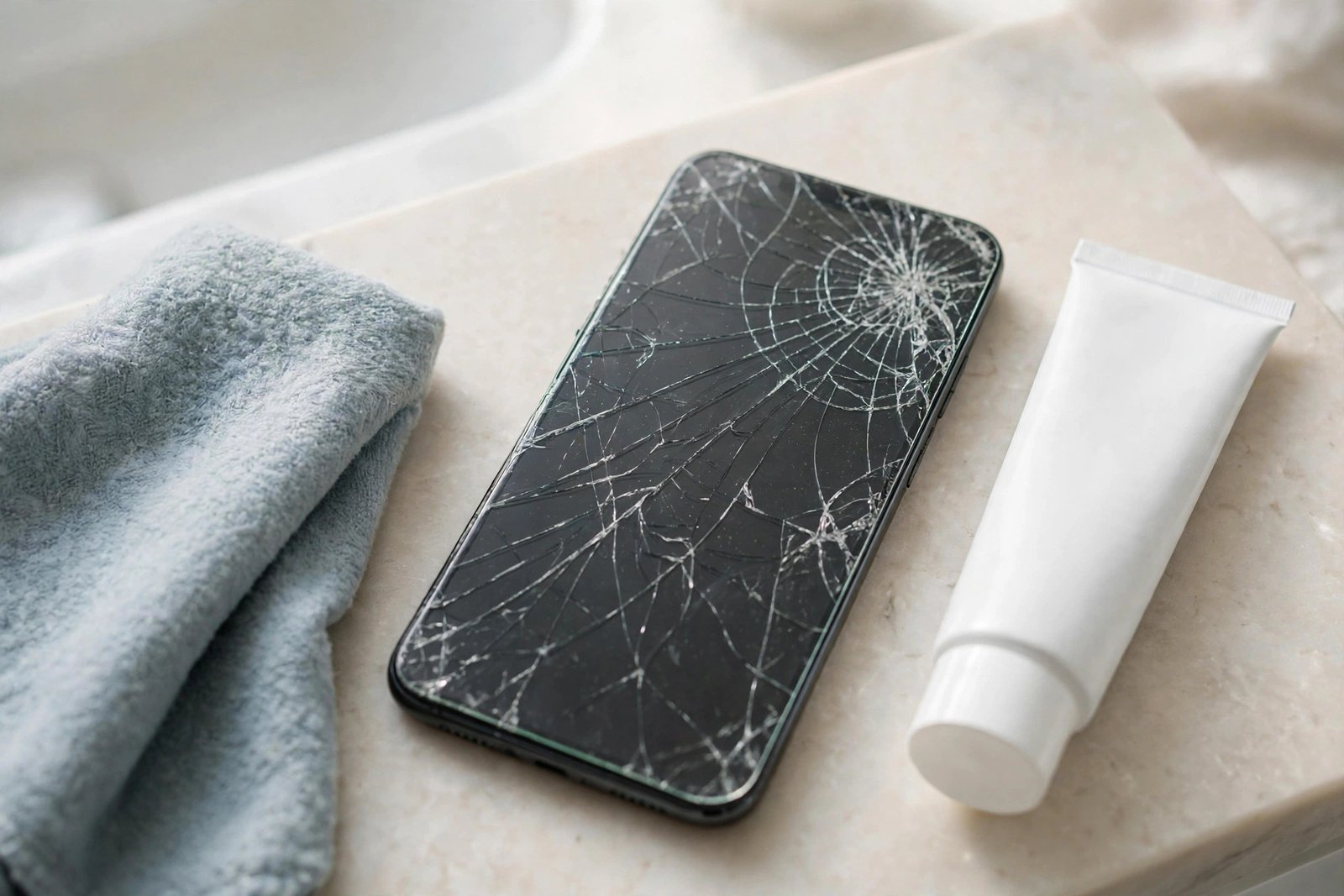
A crack is not a scratch, and the difference is not a matter of degree — it is a different kind of damage entirely. A scratch sits on a surface; a crack in tempered glass is a fracture running through the material, often a radiating network of breaks through the full thickness of the sheet. There is nothing for polish to level: the glass is separated along the fracture lines, and no amount of rubbing puts the pieces back into one piece.
Think of it this way — you cannot polish a cracked window back into a window. All that buffing a cracked protector achieves is to work abrasive grit and moisture into the fracture network, potentially making the crack lines more visible, while the protector’s structural job is already lost: cracked glass has spent the strength it was there to sacrifice, and it will not protect the screen beneath from the next impact the way an intact one would.
How Toothpaste Can Make Things Worse
Modern tempered glass protectors carry an oleophobic coating — the slick layer that makes fingerprints wipe off easily. An abrasive does not know the difference between a scratch and a coating: it simply wears away whatever is on top. Buff a coated protector and you can strip that layer in the polished area, leaving a dull patch that collects smudges faster than the rest of the screen and shows a visible boundary where you rubbed.
There are smaller hazards too. Gritty whitening formulas can add a haze of new micro-scratches of their own, particularly on film. Moisture worked under a lifting edge can cloud the adhesive. And time spent polishing a cracked protector is time the crack spends exactly as it was — only now with toothpaste in it. The hack’s real cost is not the tube; it is the false sense that the problem has been handled.
- If a cracked tempered glass protector is shedding or feels rough under your thumb, cover it with clear packing tape until the replacement arrives. That genuinely helps — it holds fragments in place and smooths the surface — unlike polishing, which does neither.
The Real Fix: Replacement
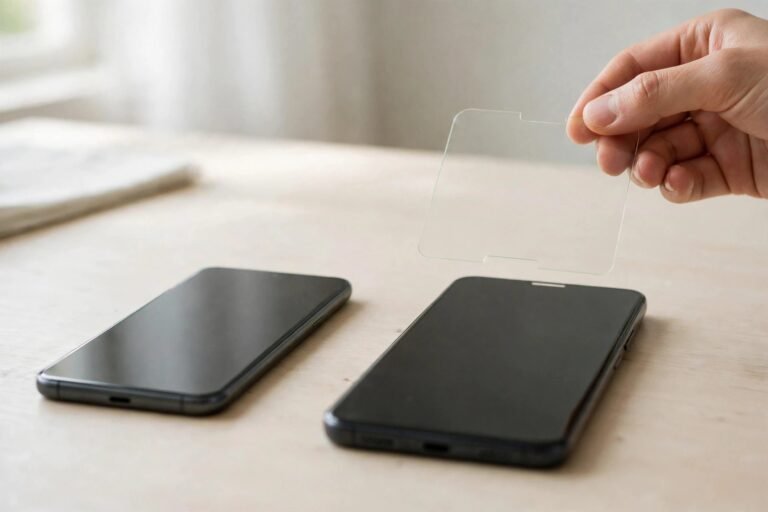
Here is the unglamorous truth the hack distracts from: a screen protector is a cheap, disposable, sacrificial part. When it cracks, it has usually just done its job — it took damage your screen did not — and the correct response is to peel it off and fit the spare, or a fresh one, in five minutes. Multipacks exist precisely so that a replacement is already in the drawer. No polishing ritual comes close to the protection of intact glass.
When you remove the cracked one, peel slowly from a corner (tape it first if it is badly shattered), clean the bare screen properly, and confirm the display underneath is undamaged before fitting the replacement. If the screen itself — not just the protector — is cracked, that is a repair-shop conversation, and no household paste was ever going to change it.
Frequently Asked Questions
Does toothpaste fix scratches on a phone screen itself?
No — and trying it on a bare display is riskier than on a protector. The abrasive can strip the screen’s own oleophobic coating and add micro-hazing, while doing nothing for anything deeper than the faintest surface mark. A display is expensive and permanent; a protector is neither. Keep abrasives away from the screen itself.
Why do so many videos show toothpaste “fixing” a crack?
Most demonstrations rely on confusing scratches with cracks: a fine surface scratch on plastic can look better after polishing, and on camera the improvement exaggerates well. A genuine through-glass fracture has never been repaired this way, because it physically cannot be.
Is it dangerous to keep using a cracked protector?
Mostly it is just ineffective: the cracked glass no longer offers the impact protection it did when intact, and sharp fracture edges can shed fine fragments. Tape it over as a stopgap and replace it promptly — but do not rely on it, polished or otherwise, to protect your screen from the next drop.
Toothpaste polishes teeth and, faintly, scratches on plastic. Cracks are beyond it — peel the old protector off, fit a fresh one, and let the myth retire.