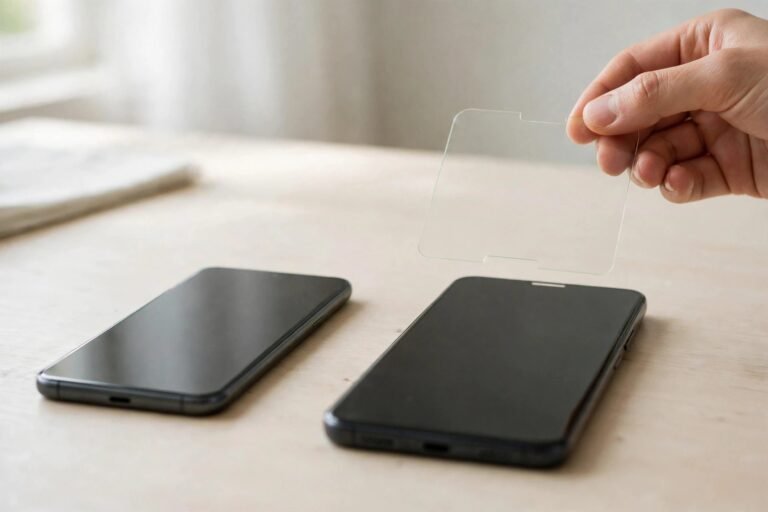
It’s one of the most common questions people ask after buying a new phone: you’ve fitted a screen protector, you’ve chosen a case — but will the two actually get along? The fear is understandable. Nobody wants to snap on a brand-new case only to watch the edges of their protector peel up in the corners.
The short answer is yes, you can use a screen protector with a case, and the vast majority of combinations work perfectly well together. Problems only appear with certain pairings — usually a full-coverage protector squeezed by a tight-fitting case. This guide explains which combinations clash, why it happens, and how to choose parts that live happily together.
Key Takeaways
- Most protectors and cases work together fine — conflicts are the exception, not the rule.
- Choose a “case-friendly” protector: it’s cut slightly smaller than the screen so the case lip never touches its edges.
- Full-coverage, edge-to-edge glass is the type most likely to clash with tight cases, causing lifting corners and halo gaps.
- Fit the protector first, let the adhesive settle, and only then fit the case.
- Some rugged cases include a built-in screen cover — with those, you don’t add a separate protector at all.
Why Protectors and Cases Sometimes Clash
A case protects your phone by wrapping around its edges, and most designs have a raised lip that curls slightly over the front of the screen. That lip is what keeps the display off the ground in a face-down drop — but it also means the case occupies a millimetre or two of the screen’s border. If your protector extends into that same border zone, the two end up competing for the same space.
When the case goes on, its lip presses against the edge of the glass. Tempered glass is rigid, so instead of flexing out of the way, it gets levered upwards. The result is the familiar pattern of lifting corners, a pale “halo” gap around the edges where the adhesive has let go, and bubbles that keep coming back no matter how often you press them down.
What “Case-Friendly” Actually Means
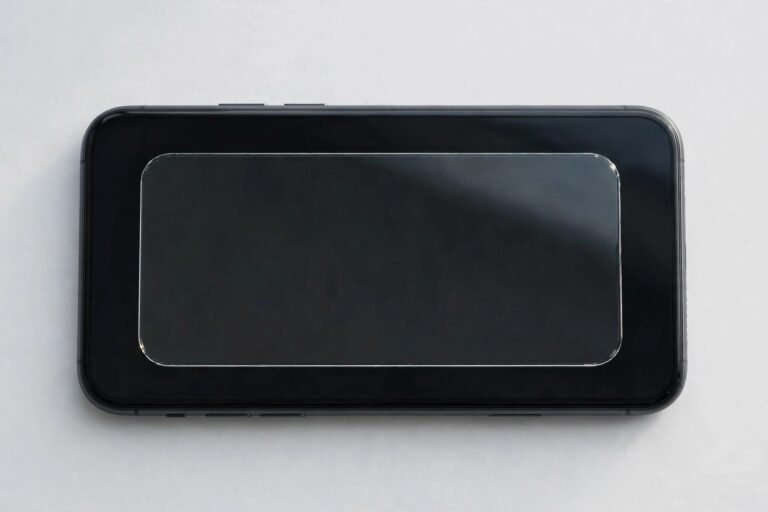
Case-friendly protectors are deliberately made a fraction smaller than the phone’s screen. The glass stops a millimetre or so short of where the display’s visible area ends, leaving a small border of uncovered screen around the edge. That gap looks minor, but it’s exactly the clearance a case lip needs to grip the phone without ever touching the protector.
The trade-off is coverage: the outer edge of your screen is technically unprotected by the glass. In practice this matters very little, because that border zone is precisely where the case’s raised lip stands guard. The protector and the case end up dividing the work — glass covers the flat face, the lip shields the edges and corners.
- If a listing doesn’t say “case-friendly” or “case-compatible”, assume the protector is full-coverage — and check the reviews for complaints about lifting with cases before you buy.
Full-Coverage Protectors: When They Work and When They Don’t
Full-coverage (or edge-to-edge) protectors are designed to look invisible, extending right to the borders of the screen, often with a coloured frame printed around the edge to mimic the phone’s own bezel. They pair beautifully with slim cases, open-backed shells, and cases whose lips sit low and tight against the phone’s frame rather than curling over the glass.
They struggle with chunky, high-lipped cases — rugged bumpers, wallet cases, and heavy-duty shells that wrap generously over the front. If you love a full-coverage look and a protective case, fit the protector first and test the case gently: if a corner lifts as the case seats, the pairing won’t settle, and forcing it will only worsen the lifting over the following days.
The Right Order: Protector First, Case Second
Always install the protector on a bare, caseless phone. A case makes edge alignment harder, and its lip can prevent the glass from settling flat during those crucial first seconds while the adhesive spreads. Work on the naked phone, get the protector down cleanly, and press firmly around all the edges.
Then give the adhesive time to settle before the case goes on — fifteen to thirty minutes is a sensible minimum, and longer does no harm. When you do fit the case, ease it on one side at a time rather than snapping it down in one motion, and check each corner of the protector afterwards to confirm nothing has been nudged up.
- If your case keeps lifting a full-coverage protector, don’t keep pressing the glass back down — the adhesive weakens each time. Swap to a case-friendly protector instead; it’s the permanent fix.
What About Cases With Built-In Protectors?
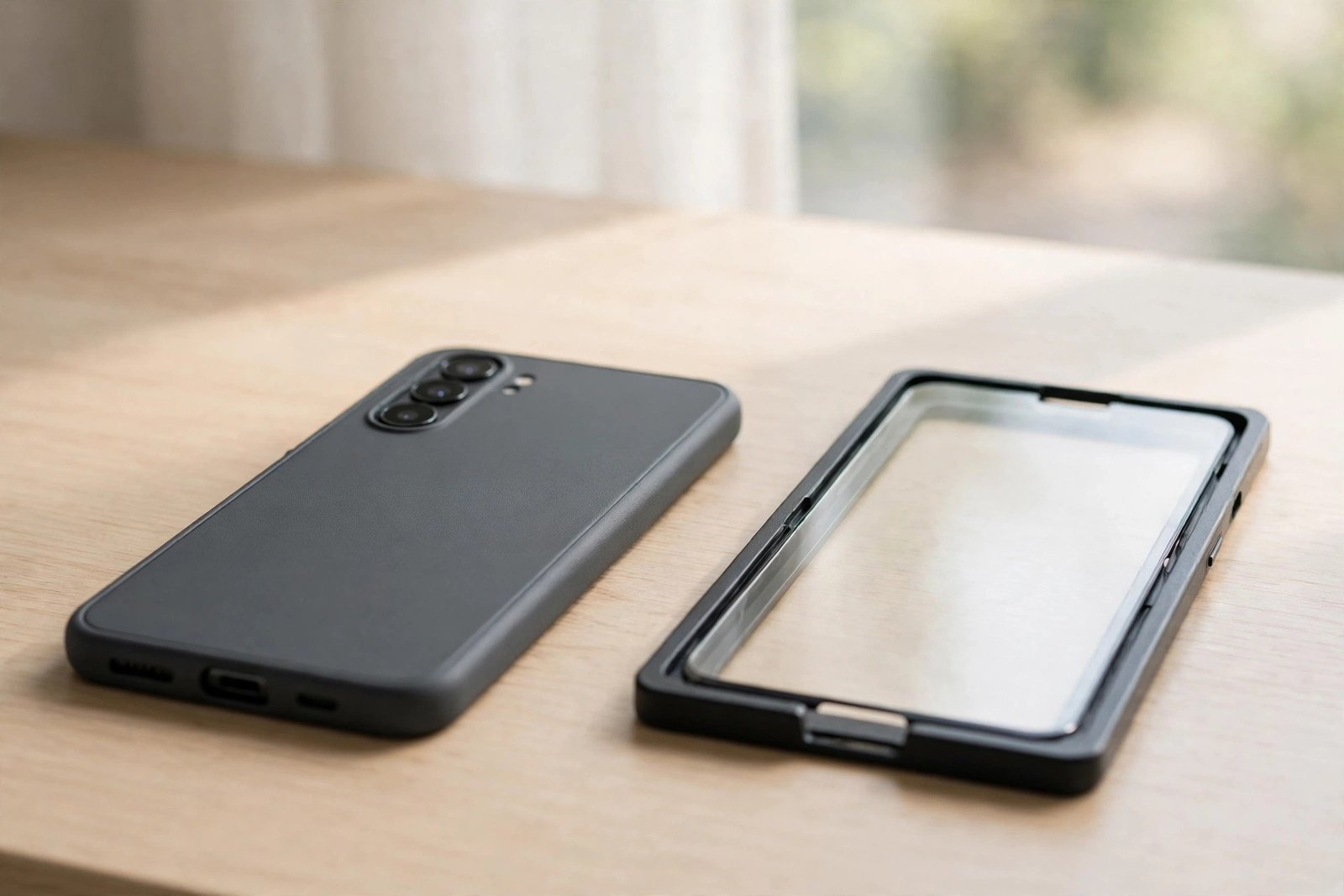
Some rugged, full-body cases come with their own screen protection built in — historically a plastic film set into the front frame, though many modern heavy-duty cases are now “screenless” designs that rely on a deep raised lip instead. If your case has a built-in cover, you generally don’t fit a separate glass protector underneath it as well: stacking two layers can dull touch sensitivity and trap dust between them where you can’t clean it.
Plenty of owners do remove the built-in film from a rugged case (it usually pushes or peels out of the frame) specifically so they can use proper tempered glass instead — the frame works fine without it. That’s a personal preference, but note it can affect the case maker’s warranty, and the case loses whatever dust and splash sealing the film provided.
Frequently Asked Questions
Will a case damage my screen protector?
A compatible case won’t. The only real risk is a tight, high-lipped case pressing on the edges of a full-coverage protector and gradually lifting them. Choosing a case-friendly protector removes the conflict entirely.
Can I fit a protector if my case is already on?
You can try, but it’s not recommended. The case lip gets in the way of alignment and can stop the glass sitting flat at the edges. Take the case off, fit the protector properly, let it settle, then put the case back on.
My protector’s corners lift every time I fit the case. What’s wrong?
Your protector is almost certainly too wide for your case — the lip is levering the glass up each time. Pressing it back down is only a temporary fix. Switch to a case-friendly protector, or a case with a lower lip, and the problem disappears.
A protector and a case aren’t rivals — they’re partners, as long as each leaves the other room to work. Pick a case-friendly protector, fit it first, and the two will protect your phone together for years.