You have just unboxed a new iPhone, peeled off the film covering the screen, and wondered whether that film was actually a screen protector Apple fitted for you. It is one of the most common questions new owners ask — and the answer is straightforward: no iPhone comes with a fitted screen protector. Not the standard models, not the Pro models, and not at any price point.
What every iPhone does come with is a thin sheet of transit film — plain packaging material whose only job is to keep the glass pristine between the factory and your hands. This guide explains how to tell the difference, why so many people believe their phone arrived protected (some other brands genuinely do pre-fit a protector), and what to fit instead if you want real protection from day one.
Key Takeaways
- No iPhone ships with a fitted screen protector — Apple has never included one as a pre-applied protector or a boxed accessory.
- The film on a new iPhone screen is transit packaging: no adhesive layer for long-term use, no hardened surface, and often a pull tab for removal.
- Some Android brands — Samsung, OnePlus, Xiaomi and others on certain models — do pre-apply a thin film protector, which is where the expectation comes from.
- Leaving the transit film on is a poor substitute: it marks easily, dulls the display, and lifts at the edges within days.
- If you want protection, fit a tempered glass protector made for your exact model as soon as you set the phone up.
What Is Actually on the Screen When You Unbox
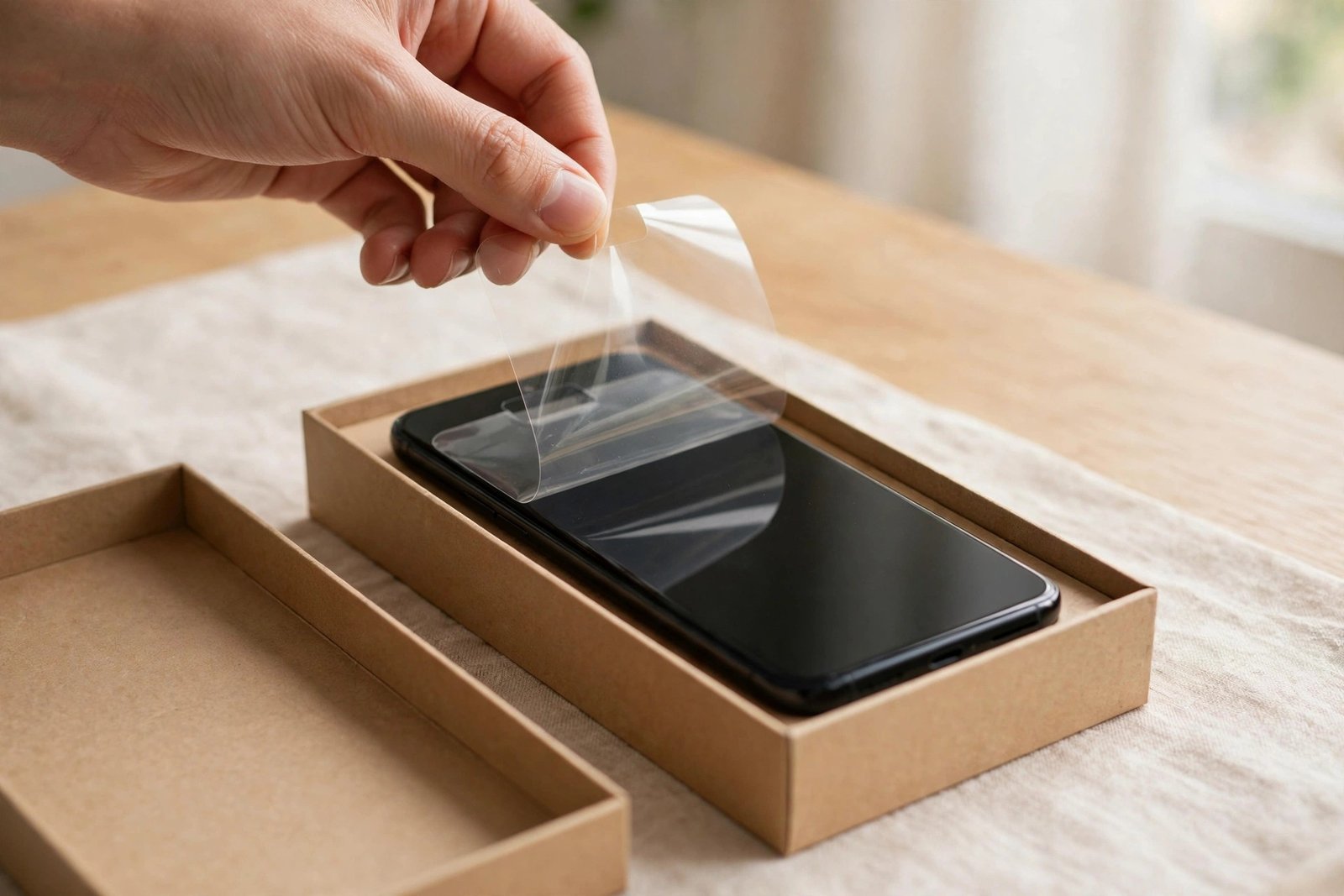
Every new iPhone leaves the factory with a plastic film covering the front. On recent models this film is part of the paper-based inner packaging and comes away as you lift the phone out or peel it back during setup. It feels smooth and covers the whole display, which is exactly why it gets mistaken for a protector. But it has none of a protector’s properties: there is no hardened layer, no proper adhesive designed to stay bonded for months, and no impact protection of any kind. It is there to stop the glass picking up scuffs and fingerprints while the phone is boxed, shipped and handled in store — nothing more.
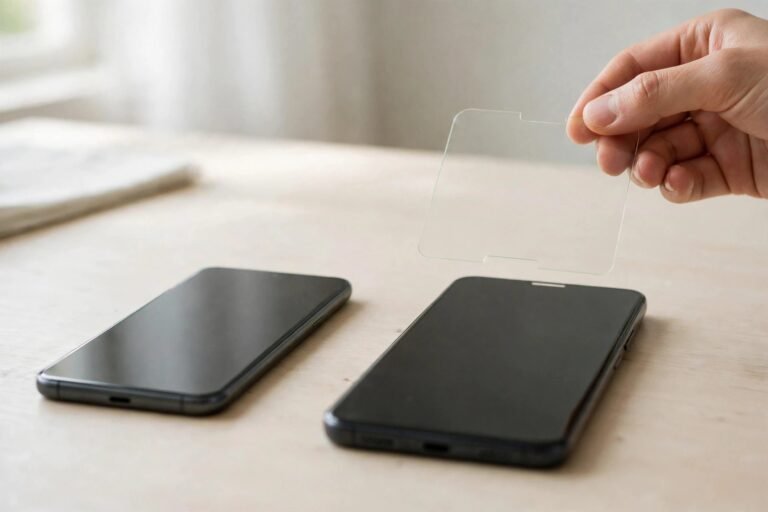
The easiest test is how it behaves once removed. A real protector is a separate, shaped piece — rigid if it is glass, or a precisely cut film with cut-outs for the earpiece and sensors — and it resists scratching. Transit film is flimsy, often has a tab or overhang to grip, and marks if you so much as run a fingernail across it. If the covering on your phone crinkles like cling film, that is because it is packaging, not protection.
Why People Think Their iPhone Came Protected
The confusion is understandable, because the phone industry is split on this. Several Android manufacturers genuinely do fit a protector at the factory. Samsung has pre-applied thin film protectors to many Galaxy models over the years; OnePlus built a reputation for shipping its phones with a film already fitted; and various Xiaomi, Oppo and Vivo models arrive the same way. If your last phone was one of those, you may have used it for months with a factory film you never consciously noticed — and fairly assumed your iPhone would be the same.
Apple has simply never taken that approach. Its position, in effect, is that the glass itself — Ceramic Shield on recent generations — is the protection, and that anything beyond that is the owner’s choice. Practice varies by brand, model and sometimes by region, so it is always worth checking what your specific phone shipped with rather than assuming either way. But for every iPhone, the answer is the same: film in the box is packaging.
- Not sure whether the film on a phone is packaging or a real protector? Look for a pull tab or loose edge and try a fingernail on a corner — transit film lifts and wrinkles immediately, while a fitted protector sits flat, resists lifting and has precise cut-outs.
Should You Just Leave the Transit Film On?
Some owners keep the shipping film on as a free protector. It is better than nothing for a day or two, but it degrades fast: the soft plastic picks up fine scratches from pockets and cloths, clouds the display, traps dust at the edges and starts to peel. Because it was never bonded like a proper film protector, it also tends to interfere with the crisp feel of the touchscreen and can bubble as it shifts. Treat it as what it is — something to remove during setup — and either use the phone bare or fit a real protector in its place.
If you do want protection, the moment of unboxing is the easiest install you will ever get: the screen is factory-clean, free of dust, oils and micro-scratches. A tempered glass protector fitted then, ideally with the alignment frame most kits include, takes a couple of minutes and will outlast the shipping film by years. Just make sure the protector matches your exact model — as the other guides in this series show, even phones that look identical often need different glass.
- Order your protector before the phone arrives, or buy it with the phone — fitting it to a factory-clean screen during setup is far easier than cleaning a week of pocket dust off first.
Frequently Asked Questions
Does the iPhone Pro or Pro Max come with a protector because it costs more?
No. The more expensive models ship exactly the same way as the standard ones: transit film only, no fitted protector and none in the box. Price makes no difference — protection is an accessory you add yourself on every iPhone.
Do any phones come with a real screen protector fitted?
Yes. Many Samsung Galaxy models, OnePlus phones and various Xiaomi, Oppo and Vivo handsets have shipped with a thin film protector pre-applied at the factory, though the practice varies by model and region and can change between generations. These are genuine protectors, but basic ones — most owners eventually replace them with tempered glass.
Does Ceramic Shield mean I do not need a protector at all?
Ceramic Shield improves drop resistance, but it does not make the glass scratch-proof — sand, grit and keys can still mark it, and a hard fall can still crack it. A protector remains a cheap, replaceable layer that takes the damage instead. Whether you fit one is personal choice; just make it an informed one.
Every iPhone arrives wrapped, but none arrives protected — the film is packaging, and real protection is the one thing you have to add yourself.