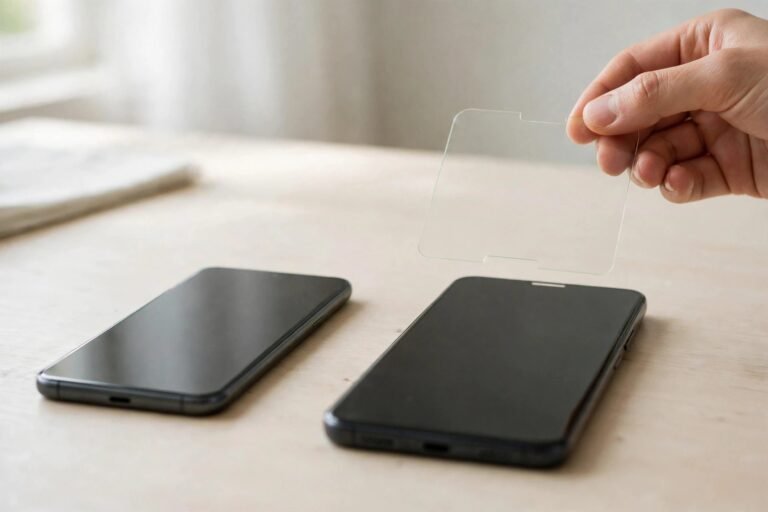
You have just upgraded from an iPhone 14 Pro Max to an iPhone 15 Pro Max, and there is a tempting leftover in your drawer: a spare screen protector that fit the old phone perfectly. Both phones have 6.7-inch displays, both have the Dynamic Island, and they look nearly identical from the front. Surely one of those protectors will work on the new phone?
The short answer is no — and the reason is measured in fractions of a millimetre. The iPhone 15 Pro Max is very slightly smaller and narrower than the 14 Pro Max, with thinner bezels and a new titanium frame. This guide breaks down exactly what changed, why it matters for a precision-cut piece of glass, and what to buy instead.
Key Takeaways
- No, a 14 Pro Max protector does not fit a 15 Pro Max — buy a protector cut specifically for the 15 Pro Max.
- The 15 Pro Max is slightly narrower and shorter, with thinner display bezels and a contoured titanium frame.
- Tempered glass protectors are cut with sub-millimetre precision — a fraction of a millimetre of overhang means lifted edges.
- Forcing the wrong size risks misaligned cutouts, edge lifting, and case interference.
- 15 Pro Max-specific protectors are widely available and cheap — there is no reason to improvise.
The Short Answer: Don’t Reuse It
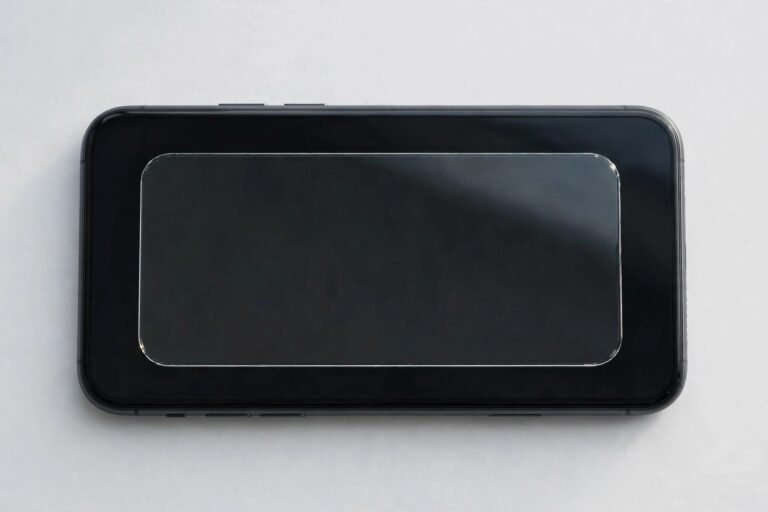
If you lay a 14 Pro Max screen protector over an iPhone 15 Pro Max, the first thing you will notice is that it overhangs the edges slightly. The 15 Pro Max trimmed roughly a millimetre of width and height compared to its predecessor, and its bezels shrank noticeably. A protector designed for the 14 Pro Max is simply too big — it will sit proud of the glass at the edges, where the adhesive cannot make proper contact.
Some people report that it “kind of fits” if they centre it carefully. “Kind of” is not good enough for a protector whose entire job depends on full, even adhesion. An overhanging protector collects dust under its lifted edges, catches on your case, and can peel within days. It is a wasted fitting that leaves your expensive new phone effectively unprotected.
What Actually Changed Between the Two Phones
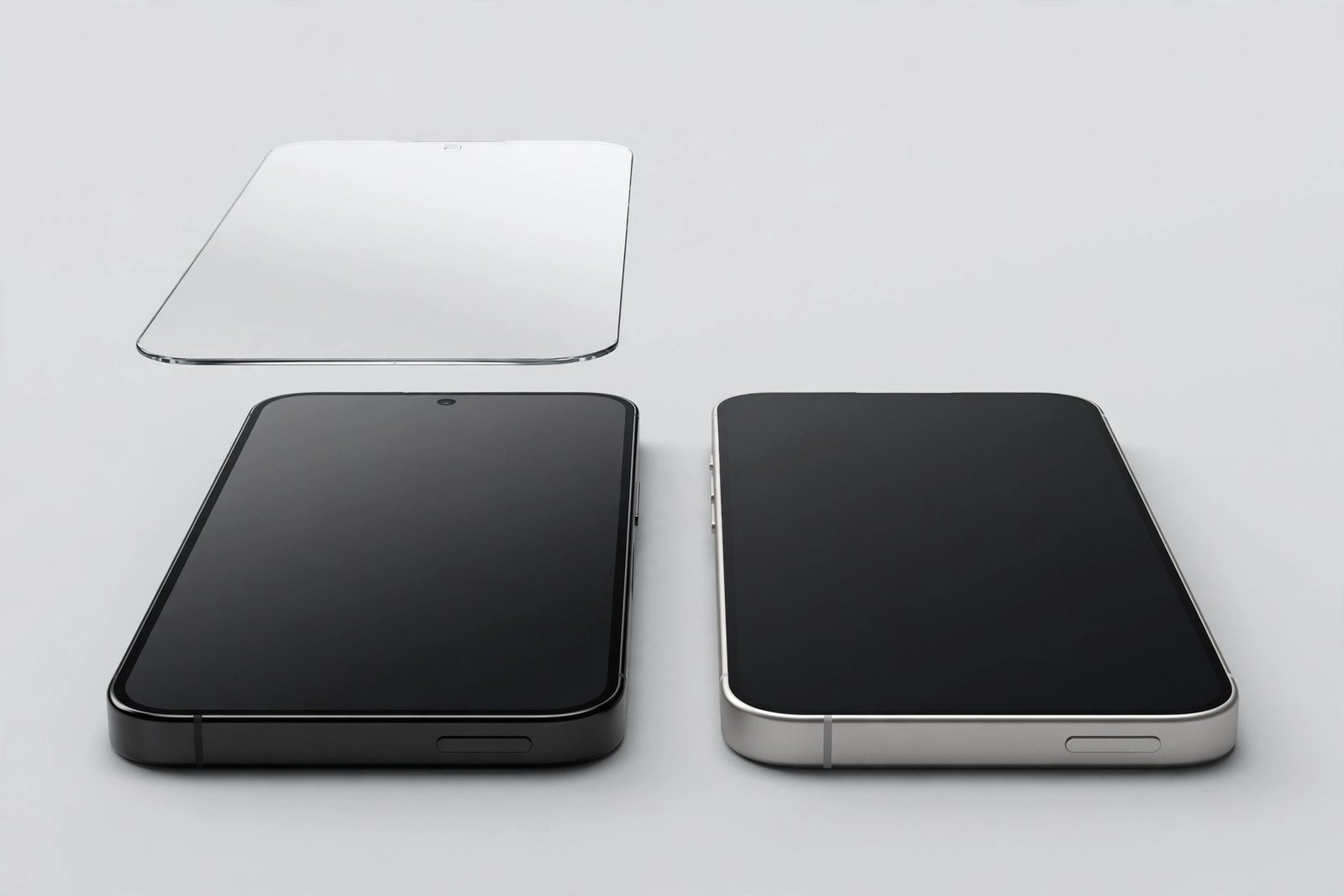
Apple moved the 15 Pro Max to a titanium frame with a contoured, slightly rounded edge, replacing the 14 Pro Max’s flat stainless-steel rails. The phone got a touch narrower and shorter overall, while the display itself stayed at 6.7 inches — achieved through thinner bezels, the slimmest Apple had ever shipped on an iPhone. So the glass is nearly the same size, but everything around it shifted: the flat area where a protector’s adhesive bonds is positioned slightly differently, and the curve where the glass meets the frame starts in a different place.
The Dynamic Island cutout area is also subtly different in its relationship to the top edge. Protectors for either model include precise cutouts or blacked-out borders around the Island and the speaker slot; a protector cut for the 14 Pro Max’s geometry can leave the 15 Pro Max’s sensors partially covered, which may interfere with Face ID reliability or the proximity sensor.
- When buying, check the listing says “iPhone 15 Pro Max” explicitly — not “14/15 Pro Max compatible.” Dual-fit protectors exist, but they are a compromise; a dedicated 15 Pro Max protector is cut for the new bezel geometry, not averaged across both.
Why Fractions of a Millimetre Matter
A tempered glass screen protector is an engineering product, not a sticker. It is cut to match the phone’s front glass within a fraction of a millimetre, because its adhesive only works when it lies perfectly flat on the planar part of the display. If the protector is even slightly too large, its edges rest on the curved portion of the glass where the adhesive cannot bond — and you get the halo effect: a ring of lifted, air-filled edges all around the screen.
The reverse is also bad. A protector cut slightly too small leaves a visible margin of unprotected glass — and more importantly, the adhesive pattern will not align with the phone’s flat bonding area. On a curved-edge design like the 15 Pro Max, where the flat zone is narrower than before, the margin for error is smaller than it was on the 14 Pro Max. This is precisely the generation where “close enough” stopped being enough.
What Happens If You Try Anyway
Let us walk through the realistic failure modes of fitting a 14 Pro Max protector on a 15 Pro Max. First, the overhang at the edges means the adhesive never fully bonds there — within days, dust creeps under the lifted edges and the corners start to peel. Second, the camera and sensor cutouts sit slightly off-centre, which can throw shadows over the front camera or trigger Face ID to behave inconsistently in bright light.
Third, and most annoying in daily use: your case will fight it. Phone cases are moulded to the 15 Pro Max’s new, slightly narrower dimensions, and their front lips overlap the screen edge by a calculated amount. A too-large protector gets pushed up by the case lip on day one — the classic case-versus-protector war, and the case always wins. You end up with a peeling protector and a phone you keep meaning to re-protect.
- Fit the protector before the case, and choose a “case-friendly” 15 Pro Max protector with a small margin at the edges. Case-friendly is not just marketing — it is the correct size for the new frame geometry.
The Titanium Frame Factor
The switch to titanium did more than change the material — it changed the shape of the phone’s edge. The 15 Pro Max’s contoured frame means the transition from frame to glass is gentler but starts further in from the outer dimension than the 14 Pro Max’s sharp flat rail. A protector drawn for the old rail’s geometry has its adhesive edge in the wrong place: part of it hangs over glass that curves away, and part of the flat glass near the frame is left relying on a bond that was never designed for that position.
This is also why older 14 Pro Max cases have the same problem and are not interchangeable either — the whole front-face geometry moved. Protectors and cases are both precision-fit accessories; when the phone’s dimensions change, both need new versions. Upgrading the phone means upgrading the accessories.
Frequently Asked Questions
Can I use a 15 Pro Max protector on a 14 Pro Max?
Not properly. It would be slightly too small, leaving a margin of exposed glass around the edges and an adhesive pattern that does not match the 14 Pro Max’s wider flat area. Buy the correct size for each phone.
What about film protectors — are they more forgiving?
A little, because flexible film can be trimmed and tolerates minor misalignment. But the sensor cutouts are still in the wrong place, and a trimmed film edge never seals as well as a factory-cut one. A dedicated 15 Pro Max film protector is the better buy and costs barely more.
Will Apple Stores fit a protector for the 15 Pro Max?
Many Apple Stores offer professional protector fitting with machine-aligned installation, and they stock protectors cut specifically for current models. It is a good option if you want a guaranteed-perfect alignment on day one.
The 15 Pro Max’s thinner bezels and titanium frame make it a better phone — and a phone that needs its own protector. Retire the 14 Pro Max glass and buy one cut for the phone you actually have.