The iPhone 12 was the phone that introduced Ceramic Shield, with Apple claiming a huge leap in drop protection — up to four times better than the generation before. If the front glass is that tough, plenty of iPhone 12 owners have wondered whether a screen protector is now an unnecessary habit carried over from more fragile phones.
It is not unnecessary, and the reason is a simple distinction Apple never makes in its adverts: Ceramic Shield was engineered to stop the screen cracking, not to stop it scratching. This guide explains what Ceramic Shield does, where the iPhone 12’s screen still needs help, and why this particular iPhone is one of the easiest to protect well.
Key Takeaways
- Ceramic Shield improves drop and crack resistance; it does not make the iPhone 12’s screen scratch-proof.
- The front glass still scratches at around level 6 on the Mohs scale, like most smartphone glass, with deeper grooves from harder materials.
- The iPhone 12 does not come with a protector fitted — only a peel-off film for shipping.
- Its flat-edged design means protectors fit neatly edge to edge, without the lifting-edge problems of curved screens.
- Sand, grit and pockets cause more long-term screen damage than drops — and a protector takes that damage instead of the glass.
- A screen repair through official channels costs far more than a protector; exact prices vary by region and model.
What Ceramic Shield Does — and What It Doesn’t
Ceramic Shield is a glass-ceramic material: nano-sized ceramic crystals are grown within the glass matrix, making it considerably harder for a crack to start and spread when the phone hits the ground. Apple rated the iPhone 12’s drop performance at up to four times better than the iPhone 11 generation, and the improvement in surviving falls is genuine — the iPhone 12 family earned its reputation as sturdy phones.
Scratching is a different physical problem. A scratch happens when something harder than the surface is dragged across it, and hardness is where Ceramic Shield behaves like ordinary premium glass: independent scratch testing has consistently shown marks appearing at around level 6 on the Mohs scale, just as with earlier iPhones. The crystals that stop cracks shattering the panel do nothing to stop a grain of quartz sand ploughing a fine groove across it.
Scratches Are Still the Main Risk
Ask owners of older iPhone 12s what their screens look like now, and the common story is not a dramatic crack — it is a fine web of micro-scratches, visible when the screen is off or the sun catches it. They come from the ordinary places: sand after a beach day, grit in a work pocket, the inside of a bag, a desk with dust on it. Each mark is tiny; together they dull a screen that was pin-sharp when new.
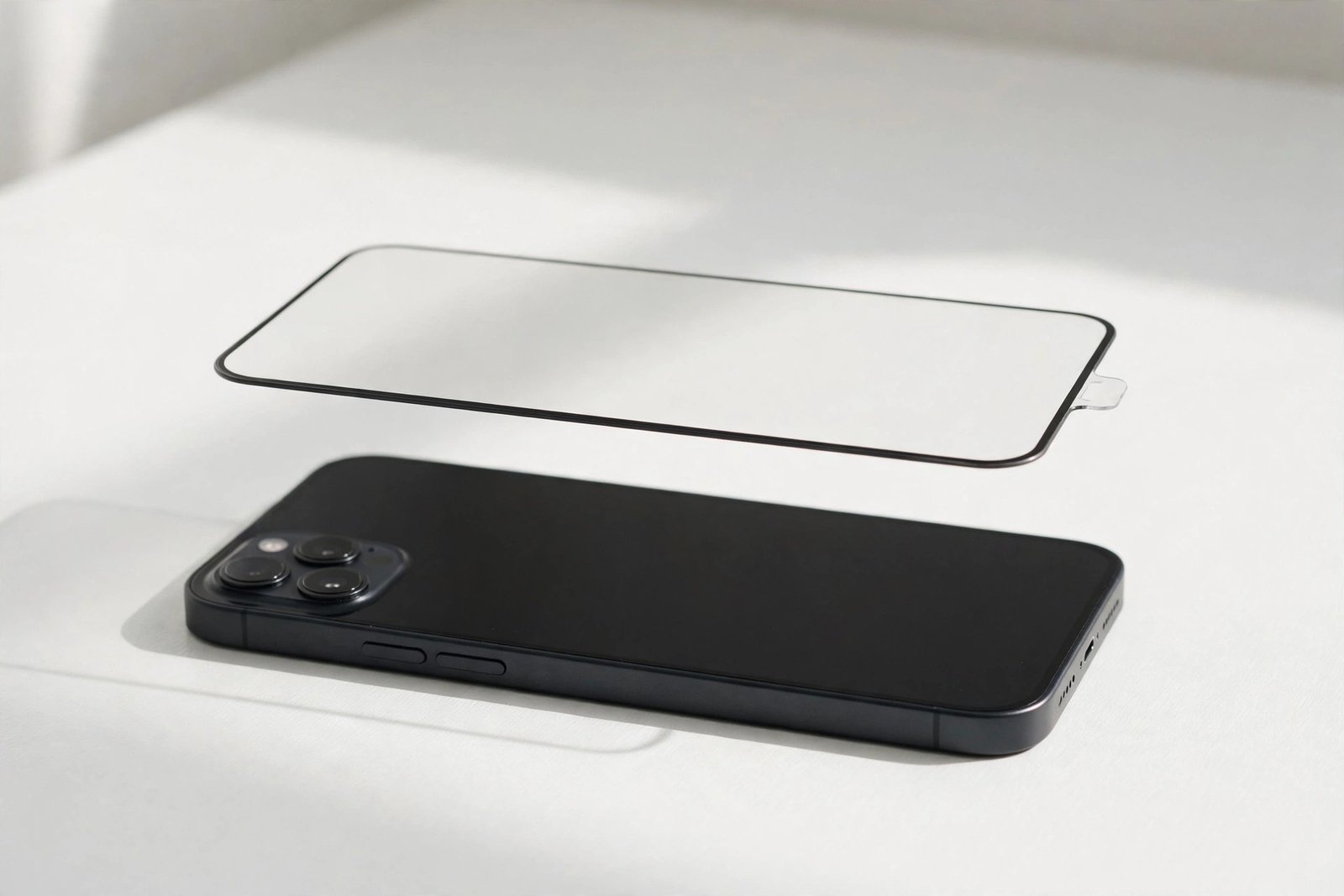
Unlike a crack, that wear cannot be repaired at all — short of replacing the whole screen, scratches are permanent. A tempered glass protector changes who takes the damage. It collects the micro-scratches sacrificially, and when it starts to look tired you peel it off and fit a fresh one, revealing glass that still looks as it did on day one. That is also worth real money when the phone is sold or traded in, because graders look at the screen first.
- The iPhone 12’s squared-off, flat front is the easiest iPhone screen shape to fit a protector on — the glass sits flat right up to its edges. If lifting edges on older curved phones put you off protectors, this model’s fit is as clean as it gets.
The Flat Design Makes Protection Easy
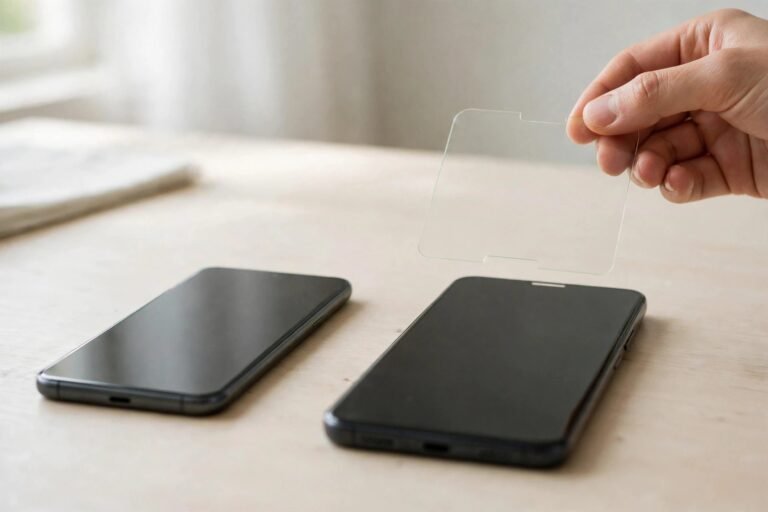
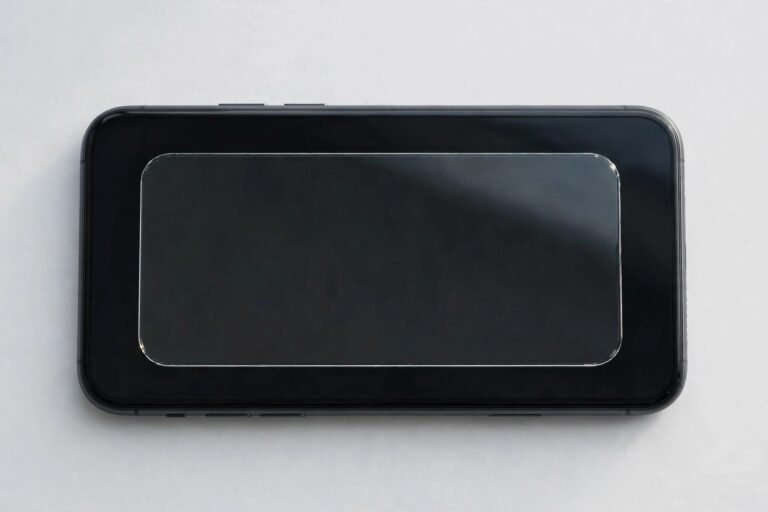
The iPhone 12 returned to a flat display with straight edges, and that design is a gift for screen protection. There are no curved shoulders for a protector to bridge or peel away from, so a correctly sized tempered glass protector seals across the whole front and stays put. Alignment kits make the job close to foolproof, and case-friendly versions leave exactly the room a case lip needs.
A case remains worth having alongside it. The flat aluminium frame and raised case edges protect the corners — where drops do their worst — while the protector guards the face of the glass itself. The two cover different surfaces and different accidents, which is why “I have a case” was never quite a complete answer to the protector question.
Who Can Reasonably Skip One?
Skipping is a legitimate choice for a narrow kind of owner: the phone lives in its own clean pocket or a soft pouch, a case with a properly raised lip is always on, accidental-damage cover is in place, and fine scratches simply do not bother you. If all of that is true, the extra layer may genuinely be surplus to requirements.
For everyone else, the costs of fitting one are minimal and the benefits concrete. Modern tempered glass is optically clear and thin, so the OLED display looks and responds exactly as it should, and model-specific protectors are cut so Face ID and the front camera are never obstructed. The only poor reason to skip is the belief that Ceramic Shield already made the screen scratch-proof — it made it crack-resistant, which is a different and narrower promise.
- Going without a protector? Hold the screen under a bright light once a month and look across it at an angle. The month the first fine scratches appear is the month to reconsider — a protector’s adhesive often makes existing light marks much less visible when it is fitted over them.
Frequently Asked Questions
Does the iPhone 12 come with a screen protector in the box?
No. The box contains the phone, a cable and paperwork, and the only thing on the screen is a temporary film that protects it during shipping and is meant to be removed during setup. Any protection on the glass after that is one you fit yourself.
Is Ceramic Shield scratch-proof?
No. Ceramic Shield is engineered for fracture resistance — surviving drops without cracking — and Apple has never claimed it cannot be scratched. In scratch testing it marks at roughly the same point as other flagship glass, around level 6 on the Mohs scale, so sand and grit can still leave permanent lines.
Will a protector affect Face ID or MagSafe on the iPhone 12?
No. A model-specific protector leaves the notch area housing the Face ID sensors unobstructed, or uses glass the sensors see through without issue, so unlocking works as normal. MagSafe is in the back of the phone and has nothing to do with the front glass at all.
Ceramic Shield made the iPhone 12 far harder to crack — it never promised to keep it unmarked. A protector handles the scratches the marketing forgot, and on this flat-fronted phone it has rarely been easier to fit one perfectly.