A titanium frame, a Ceramic Shield front, and one of the highest starting prices of any mainstream phone: the iPhone 15 Pro feels engineered to survive without help. So does it actually need a screen protector, or is fitting one an outdated habit from more fragile times?
The short answer is that most iPhone 15 Pro owners should still fit one — not because the phone is fragile, but because its toughness is aimed at the wrong enemy. This guide looks at what the titanium and Ceramic Shield genuinely protect against, why scratches remain the weak point, and the reassuring news that this particular iPhone is one of the easiest of all to protect well.
Key Takeaways
- Ceramic Shield resists cracking well, but the front glass still scratches at around level 6 on the Mohs scale — sand and grit still win.
- The titanium frame protects the edges and corners of the phone; it does nothing for the flat face of the glass itself.
- Out-of-warranty screen repairs on Pro models sit at the expensive end of the range, varying by region and model.
- The 15 Pro’s flat front glass means protectors sit flush and align easily, with far fewer lifting-edge problems than curved screens.
- Very careful users with a raised-lip case and damage cover can reasonably skip one — everyone else is better protected.
Titanium and Ceramic Shield: Strong, but Not Scratch-Proof
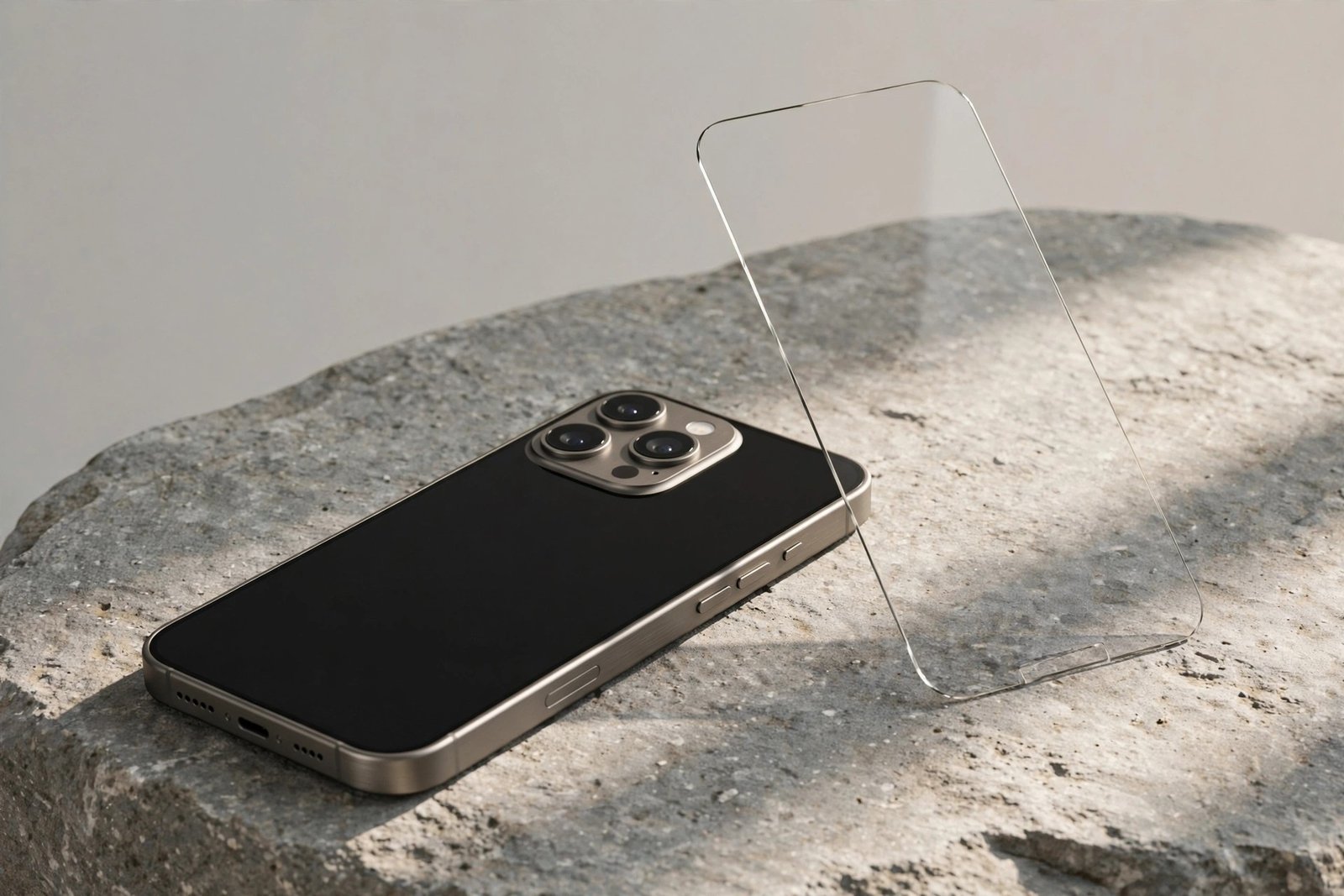
The iPhone 15 Pro replaced the stainless steel frame of earlier Pro models with titanium — lighter, very strong, and excellent at shrugging off the corner impacts that start most screen cracks. The front is Apple’s Ceramic Shield, a glass-ceramic material marketed on its drop performance, and the combination makes the phone genuinely resilient when it hits the ground.
But drop strength is not scratch resistance. Toughness is about absorbing impact without cracking; hardness is what stops a harder particle from ploughing a groove through the surface, and on that measure the 15 Pro’s front behaves like other flagship glass, picking up scratches from materials around level 6 on the Mohs scale and deeper grooves from level 7. The slim bezels add a further wrinkle: with so little frame around the display, more of the front is glass, and the glass reaches closer to the edges where knocks land.
The Everyday Enemies: Sand, Grit and Desks
The realistic threat to a 15 Pro screen is not the dramatic drop — it is the slow accumulation of micro-scratches. Quartz sand is harder than the glass, and it hides in pockets, gym bags, car seats and beach towels. Each contact is invisible on its own; together, over months, they dull the display with a fine web of marks that catches the sunlight and cannot be polished away.
This matters more on a Pro model precisely because owners tend to keep them longer. A phone traded in after a year may never collect enough scratches to notice; a phone kept for three or four years almost certainly will. A tempered glass protector absorbs all of that wear sacrificially — and when it looks tired, replacing it restores a screen that looks brand new, because the glass underneath never took the damage.
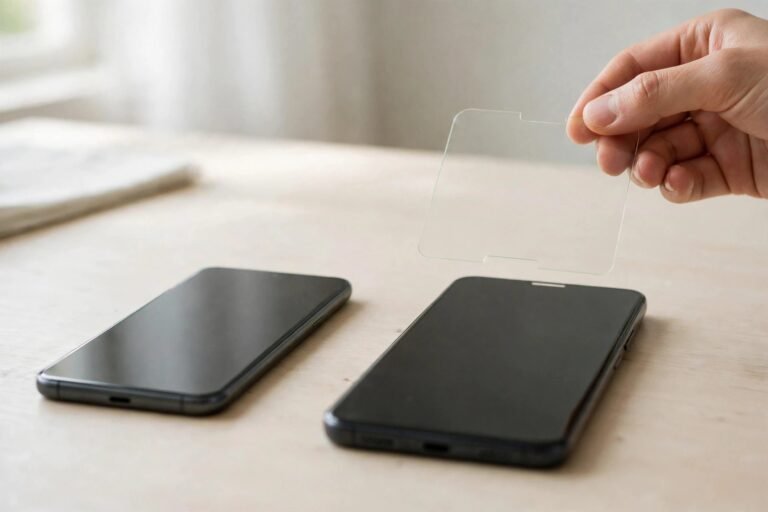
- The 15 Pro’s flat display is the easiest iPhone front to fit a protector on in years — there are no curved edges for the glass to lift away from. If halo edges on older curved models put you off protectors, this one is a straightforward five-minute, edge-to-edge fit.
The Repair-Cost Maths
Run the numbers and the case strengthens. An out-of-warranty screen replacement on a Pro-model iPhone is among the most expensive routine repairs — typically a few hundred pounds or dollars, with exact prices varying by region and by whether you own the Pro or the larger Pro Max. Even with accidental-damage cover, you usually pay an excess and lose the phone for the appointment. A quality protector costs a tiny fraction of any of those figures.
There is also the quiet matter of resale and trade-in value. Graders look at the screen first, and a display full of fine scratches moves a phone down a grade. A 15 Pro that has lived under a protector since day one presents as mint the moment the protector comes off — a small, recurring investment protecting a noticeably larger sum.
Who Can Honestly Skip It
Skipping is defensible for a specific kind of owner: the phone lives in a dedicated soft pocket, the case has a genuinely raised lip, damage cover is already paid for, and cosmetic wear simply does not bother you. If that is truly your routine, a protector is optional. What does not hold up is skipping one on the assumption that titanium and Ceramic Shield have made the screen scratch-proof — they have made it drop-tough, which is a different achievement.
For everyone else, the usual objections have largely fallen away on this model. Modern tempered glass is thin and optically clear, so the ProMotion display looks and feels as it should, and a correctly fitted, model-specific protector leaves the Face ID sensors and front camera unobstructed. On the 15 Pro, protection costs you almost nothing in experience — which removes the last good reason not to bother.
- If you decide to go without a protector, check the screen under a bright light once a month. The day fine scratches start catching your eye is the day to fit one anyway — a protector’s adhesive layer often makes existing light scratches far less visible.
Frequently Asked Questions
Will a protector affect the 15 Pro’s ProMotion display or touch response?
A quality, model-specific tempered glass protector has no perceptible effect on the 120Hz ProMotion display or on scrolling and touch — it is optically clear and thin enough for the digitiser to work exactly as before. Very cheap, unusually thick glass can occasionally dull touch feel slightly, which is an argument for a reputable protector rather than none at all.
Do protectors still fit properly with the 15 Pro’s slimmer bezels?
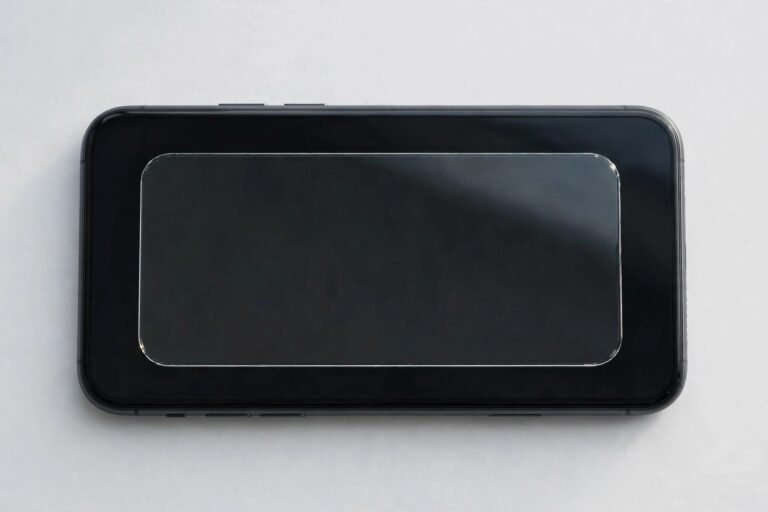
Yes — protectors are cut for the exact model, and the flatter front of the 15 Pro makes for a cleaner fit than curved-screen phones. If you use a case, choose a “case-friendly” version, which is cut a fraction smaller so the case lip cannot lever the edges up. Full-coverage versions run closer to the edge for case-free use.
Does the titanium frame mean I don’t need a case either?
The frame certainly helps — titanium rails take corner impacts well. But the two large pieces of glass, front and back, remain exposed, and the frame cannot help the face of the phone in a flat drop onto gravel. A case and a protector address different surfaces; the frame reduces risk, it does not remove it.
The iPhone 15 Pro is the toughest iPhone Apple has made — against drops. Against the sand, grit and slow wear that actually mark up screens, it is as mortal as any other phone. A protector closes that one remaining gap, and on this flat-glassed model it has never been easier to fit.