The Samsung Galaxy S24 Ultra arrives with some of the toughest glass ever fitted to a phone — Corning Gorilla Armor on the front — and marketing that leans heavily on its scratch resistance. So the question writes itself: if the glass is this good, is a screen protector an unnecessary extra?
The honest answer is “probably, but it depends on you”. Gorilla Armor is a genuine step forward, particularly against the fine scratches that dull most phone screens. Yet it is not invulnerable, an S24 Ultra screen replacement is expensive, and this phone has one protector complication of its own — the ultrasonic fingerprint sensor. This guide weighs both sides so you can decide with the full picture.
Key Takeaways
- Gorilla Armor offers improved scratch resistance over previous generations and cuts reflections noticeably — but it still scratches, at around Mohs level 6 like other flagship glass.
- The S24 Ultra’s screen is flat, which makes fitting a protector far easier than on older curved Ultra models.
- Some thick tempered glass protectors can interfere with the ultrasonic fingerprint sensor — choose one rated as compatible, or use film.
- Out-of-warranty screen replacement is typically expensive on Ultra models; a protector is cheap insurance by comparison.
- Careful owners with a good case can reasonably skip a protector — the glass is genuinely good — but grit and sand remain its weakness.
How Tough Is Gorilla Armor, Really?
Corning’s Gorilla Armor was introduced with the S24 Ultra, and its headline improvements are real. Corning’s own lab testing claimed substantially better resistance to the kind of micro-scratches that everyday handling produces — the faint lines from pockets and bags that most phone owners accept as inevitable — along with a large reduction in screen reflections, which makes the display easier to read outdoors.
What Gorilla Armor does not do is change the fundamental hardness picture. Like other flagship glass, it picks up scratches from materials around Mohs level 6 and above, which includes quartz sand — the single most common screen-scratcher in daily life. A grain of sand dragged across the display under a fingertip’s pressure can still leave a permanent mark. Tough against drops and better against scuffs, yes; scratch-proof, no.
The Fingerprint Sensor Complication
The S24 Ultra uses an ultrasonic in-display fingerprint sensor, which reads your fingerprint using sound waves rather than light. Ultrasonic sensors are more fussy about what sits on top of the glass than optical ones: some thick tempered glass protectors — especially those that do not bond fully across the sensor area — can slow unlocking down or make it unreliable.
This does not mean protectors are off the table; it means you should choose deliberately. Look for tempered glass that is explicitly rated as compatible with the S24 Ultra’s ultrasonic sensor, re-register your fingerprints after fitting (ideally with the protector on), and turn on the screen-sensitivity setting if touches feel dull. Thin film protectors sidestep the issue entirely and work with the sensor without fuss — a reasonable trade if you mainly want scratch cover.
- After fitting any protector, delete and re-register your fingerprints with the protector in place. The sensor learns your print through the glass, and this single step fixes most “the fingerprint reader stopped working” complaints.
The Case for Fitting One Anyway
Cost is the strongest argument. An out-of-warranty screen replacement on a Galaxy Ultra model typically runs to a few hundred in local currency, and the S24 Ultra’s panel is one of the most expensive Samsung fits. A protector that sacrifices itself in a drop — or simply absorbs two years of pocket wear — costs a small fraction of that. Owners who keep their phones for three or four years get the most from this trade, because wear accumulates with time.
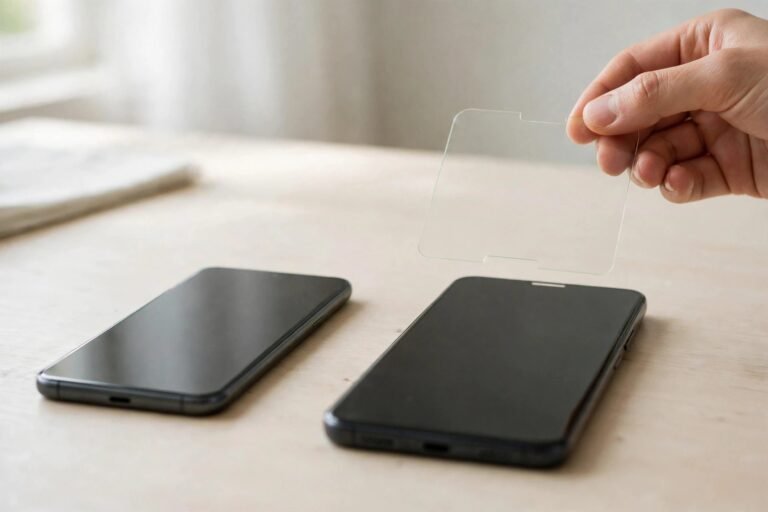
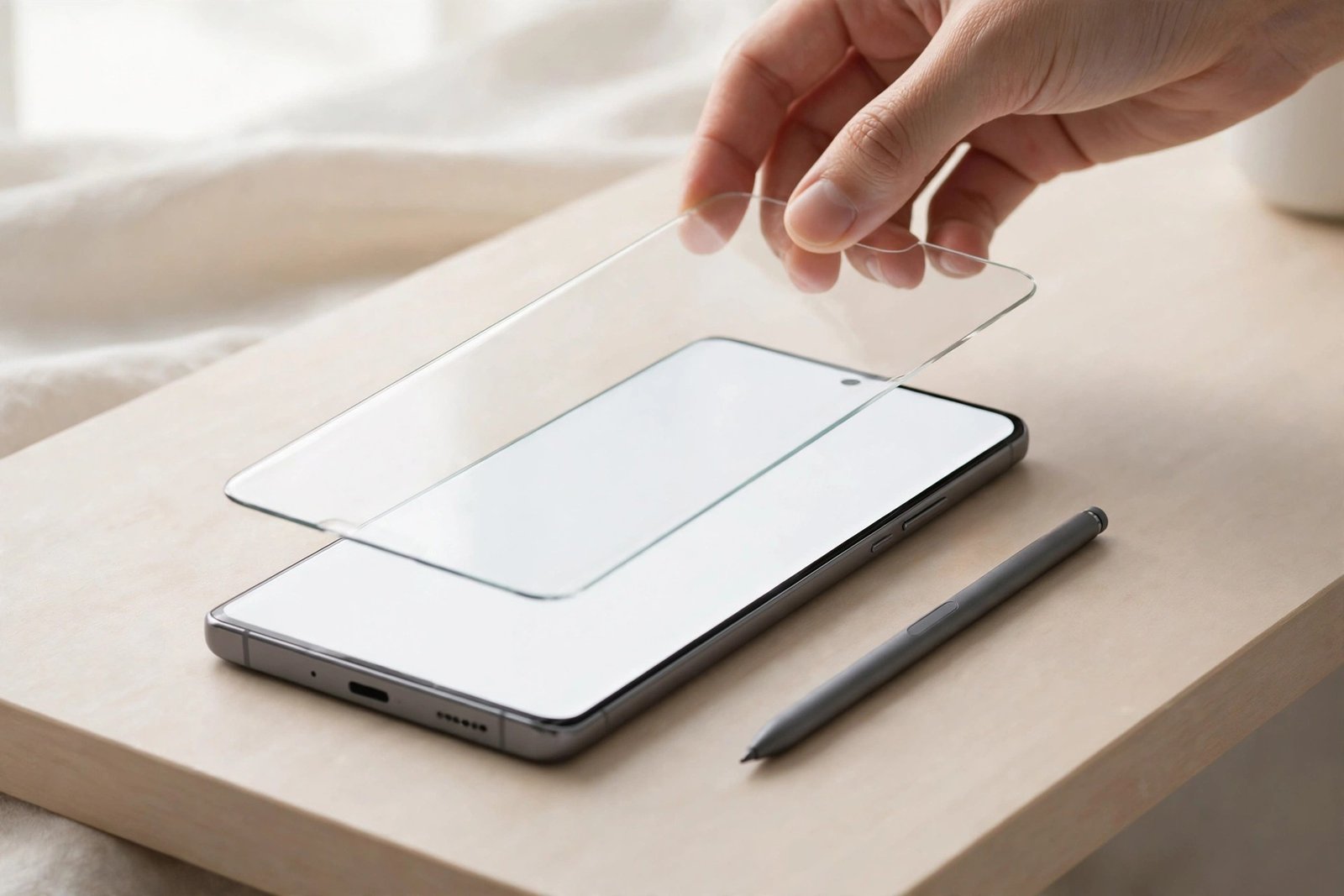
The S24 Ultra also makes fitting unusually painless. After years of curved Ultra displays, this model has a flat screen, so protectors sit down flush, edges stay stuck, and alignment is straightforward. The historical objection to protectors on Ultra phones — lifting edges and halo gaps — largely disappears on this generation.
The Case for Skipping It
There is a legitimate argument the other way. Gorilla Armor’s improved micro-scratch resistance and anti-reflective properties are features you partly give up under a protector: a layer of ordinary glass or film on top reintroduces reflections and will itself scratch at the usual rate. If you bought the Ultra partly for that display quality, covering it does dilute one of its selling points.
If your phone lives a careful life — a dedicated pocket, a case with a proper raised lip, no building sites or beaches — the realistic risk is low, and accidental damage cover, if you have it, further softens the case for going bare. The mistake is not skipping the protector; it is skipping it while believing the glass cannot scratch. It can. Decide with that in mind and either choice is a sound one.
- Heavy S Pen user? Fit your protector, then test the pen across the whole screen. Tempered glass feels closest to writing on the bare display, while soft film can feel slightly grippy under the pen tip — worth knowing before you commit to a type.
Frequently Asked Questions
Will a screen protector break the S24 Ultra’s fingerprint sensor?
It can with the wrong protector. Thick glass that does not bond fully over the sensor area may make the ultrasonic reader slow or unreliable. Choose glass rated as compatible with ultrasonic sensors, or use a film protector, and always re-register your fingerprints after fitting.
Does the S24 Ultra come with a protector already fitted?
No. In most regions the S24 Ultra ships without a pre-applied protector — the glass you see in the box is the display itself (any film present is transit packaging). If you want a protector, it is a separate purchase you fit yourself.
Glass or film — which is better for the S24 Ultra?
Tempered glass gives the best feel, the closest match to the bare screen, and sacrificial drop protection, provided it is rated for the fingerprint sensor. Film is thinner, guarantees no sensor issues, and covers scratches only. Pick based on which risk bothers you more: drops (glass) or guaranteed sensor performance (film).
The S24 Ultra’s Gorilla Armor is the best argument yet for going without a protector — and a protector is still the cheapest insurance against the one thing that glass cannot stop: sand. Decide by how you live with your phone, not by the marketing.