A broken screen protector has done its job — it took the impact your display was meant to avoid. But shattered glass is not something to pick at with bare fingers and optimism. Loose fragments can nick your skin, scratch the real screen hiding underneath, or scatter across the desk the moment you start pulling. Removal is still a straightforward job; it just has to be a careful one.
This guide covers the safe method from start to finish: taping the whole pane so it comes away in one piece, peeling slowly so nothing springs loose, checking the screen underneath, and disposing of the shards so they cannot injure anyone later — including whoever empties the bin.
Key Takeaways
- Tape the entire pane before lifting anything — the tape holds every fragment in place while you work.
- Peel slowly and keep the glass flat, folding it back over itself rather than pulling it upwards.
- Never use metal tools on broken glass — a fingernail or a plastic card is all you need.
- Work over a bin or a sheet of paper so any stray splinters are caught instead of scattered.
- Inspect the bare screen under bright light before its replacement goes on.
- Wrap the removed glass in paper or card before it goes into the household bin.
Why Broken Glass Changes the Rules
An intact protector is a single, stable sheet. A broken one is not. Cracks mean the pane is sitting under tension, and the pieces are only held together by the adhesive beneath them. Flex it carelessly during a quick peel — exactly what most removal advice tells you to do — and the glass can pop apart mid-lift, dropping fragments onto the screen and the worktop.
There are two things to protect here: your skin, because tiny glass splinters are sharp enough to lodge in a fingertip, and the display, because dragging loose grit across it under pressure can scratch the very surface the protector died defending. Everything in the method below serves one goal — keeping every fragment attached to a single surface from the first touch to the bin.
Tape the Whole Pane First
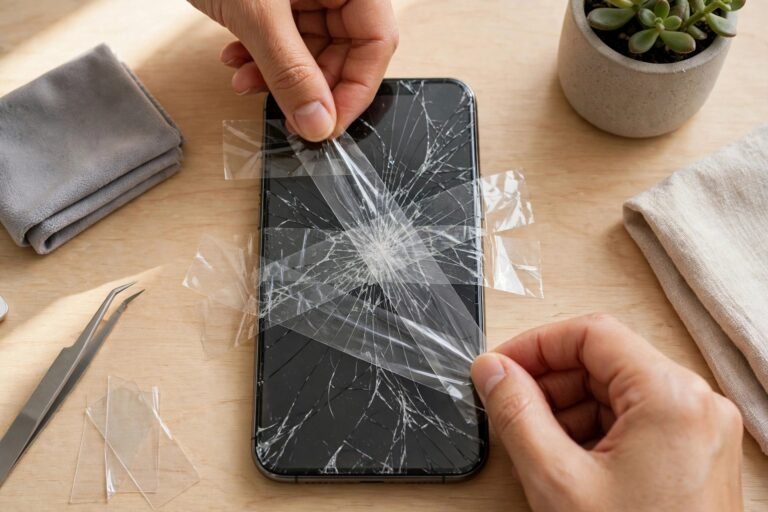
Before you lift anything, cover the entire protector with wide, clear packing tape. Lay the strips across the full surface, overlapping them slightly so no crack is left exposed, then press the tape down firmly with your thumb, working it into every crack line so it genuinely grips the fragments rather than floating above them.
Let the tape run a little past the edges of the pane to form small handling tabs — these give you something safe to grip. The tape now does three jobs at once: it binds the fragments together, it gives your fingers a non-sharp hold, and it stops shards springing free when the glass flexes during the peel. If the first layer lifts at the edges, add a second layer running crosswise.
- Press the tape into the cracks with the edge of a plastic card — it gets the tape into the fracture lines far better than a fingertip.
- If the protector is shattered into many small pieces, use two layers of tape in opposite directions before you attempt any lift at all.
Peel Slowly, Keep It Flat
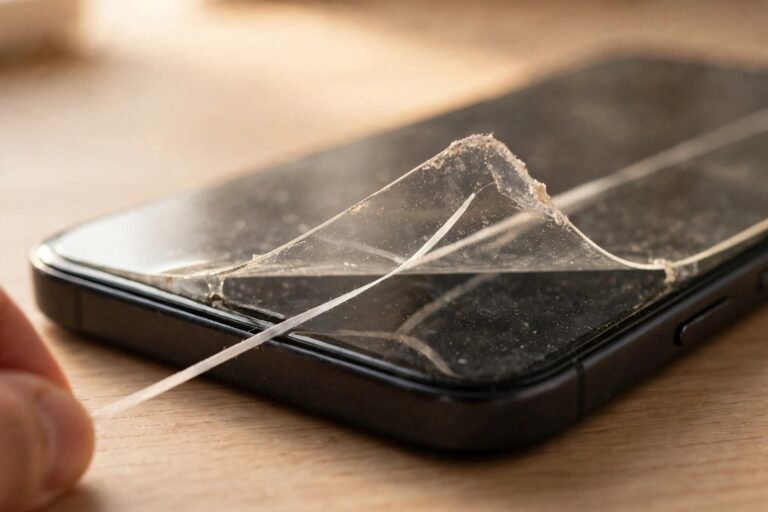
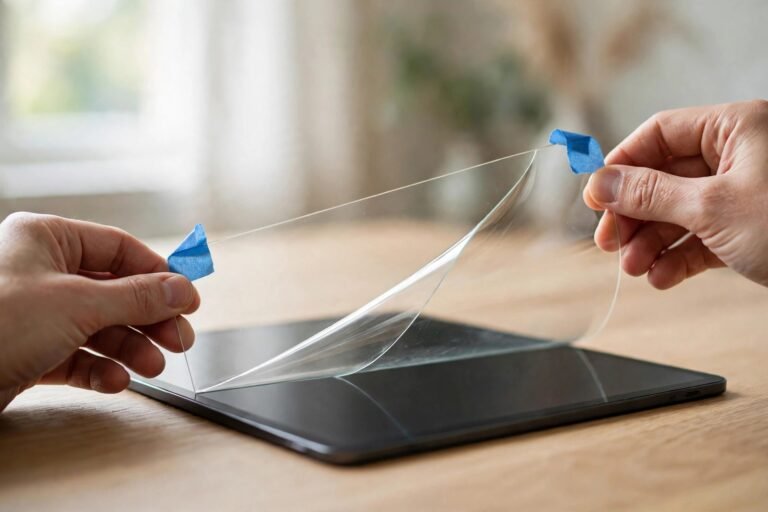
Choose the corner with the least damage and ease a fingernail or the edge of a plastic card flat into the seam between protector and screen. Lift just a few millimetres — enough to grip the tape tab — then peel slowly, folding the pane back over itself at a low angle so it stays as flat as possible throughout.
Listen as you go. Crackling sounds are the glass flexing and complaining; slow down and support the pane with your free hand underneath the peel line. If a section threatens to separate, stop, press it back down, lay another strip of tape over the weak spot, and continue. A steady peel taking a full minute is a success, not a delay.
Check the Screen, Then Bin the Glass Safely
Once the pane is off, resist fitting the replacement immediately. Wipe the screen, then drag a microfibre cloth slowly across it — the cloth snags on any micro-splinter your fingers would miss. Hold the phone under a lamp at an angle and check the display itself: damage to the real screen usually shows as dark lines, blotchy patches, or areas that no longer respond to touch.
In most cases you will find the screen completely unmarked — the protector absorbed everything. For disposal, fold the removed glass inside a sheet of paper or a piece of card, tape the parcel shut, and place it in the bin rather than dropping the pane in loose, where a hand pressing down rubbish could meet a sharp edge. Wash your hands afterwards to clear any glass dust.
- Photograph the cracked protector before taping it — it records exactly where the impact landed, which is useful if the screen misbehaves later.
- Fit the new protector straight after the check, while the screen is freshly cleaned and free of dust.
Frequently Asked Questions
Can I pull a broken protector off without tape?
You can, but it is a gamble. Even a pane with a single hairline crack can separate halfway through a peel, and once fragments are loose on the screen you are picking them off one by one. Taping takes a minute and turns a risky removal into a controlled one.
A tiny sliver of glass is still stuck to the screen. What now?
Press a fresh piece of tape firmly onto the sliver, rub it down so it grips, and lift. Repeat with clean tape if needed. Never scrape at it with anything metal — a blade or knife tip can score the display in a single slip. Stubborn slivers usually release after a little warmth from your palm.
How do I tell whether the actual screen is cracked as well?
Surface cracks in the protector look silvery and can be felt with a fingernail. Damage to the screen beneath tends to show as dark or coloured lines, inky blotches under the glass, flickering patches, or dead zones where touch stops working. If you see any of those once the protector is off, the phone needs a repairer rather than a new protector.
Broken glass rewards patience: tape it, peel it slowly, check what it was protecting, and wrap the remains before they go. Ten careful minutes, and the phone is clean, safe, and ready for its next protector.