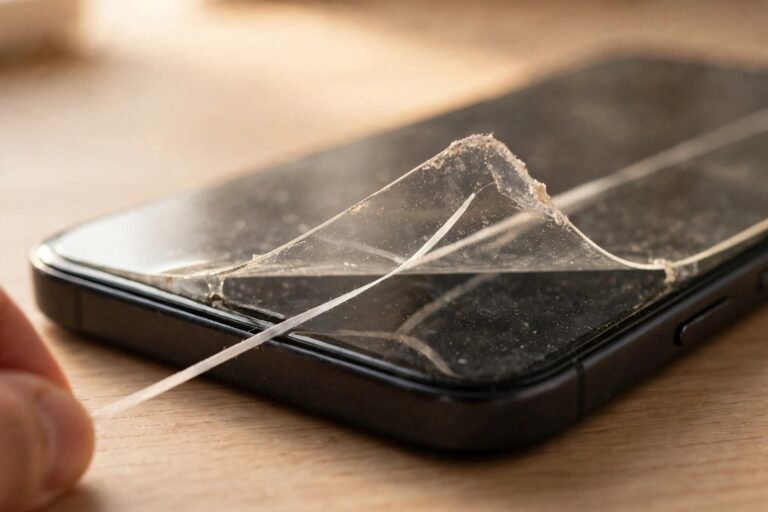
A cracked tempered glass protector presents a specific problem: the pane is no longer one piece of glass, even if it still looks like one. Lift a corner the usual way and the cracks decide where the glass separates — which is how a tidy removal turns into a confetti of sharp fragments across your screen, your desk, and your fingertips. The solution is to make the pane behave like one piece again before you lift anything at all.
The technique in this guide is taping — the full surface, not a token strip — followed by a slow peel, with a fragment-by-fragment fallback for any pieces that refuse to come along. Follow it and even a thoroughly spiderwebbed protector comes away neatly, in minutes, with nothing left behind.
Key Takeaways
- Assess the crack pattern first — a single hairline and a full spiderweb need the same method, but different amounts of tape.
- Tape the entire surface before any lifting. Partial taping leaves the untaped sections free to scatter.
- Peel slowly, low, and in one direction, supporting the pane as the adhesive lets go.
- Any fragment left behind comes off with fresh tape pressed firmly onto it — never with a blade.
- Work over paper or a tray so any escaped sliver is visible and contained.
- Finish with a slow cloth drag across the bare screen — cloth snags on splinters that eyes and fingers miss.
First, Read the Crack Pattern
Take ten seconds to actually look at the damage before reaching for the tape. A single hairline crack running from one edge means the pane is essentially in two pieces — manageable, and usually cooperative. A starburst or spiderweb from an impact point means dozens of small fragments held only by the adhesive film beneath them; that pattern sheds pieces the moment it is disturbed.
Also note where the cracks reach. Fractures running to the very edge of the pane are the ones most likely to release fragments during a peel, because there is nothing beyond them to hold the pieces in. Knowing the pattern tells you how much tape you need and which corner is the safest place to start — almost always the corner furthest from the worst damage.
Tape the Entire Surface — No Exceptions
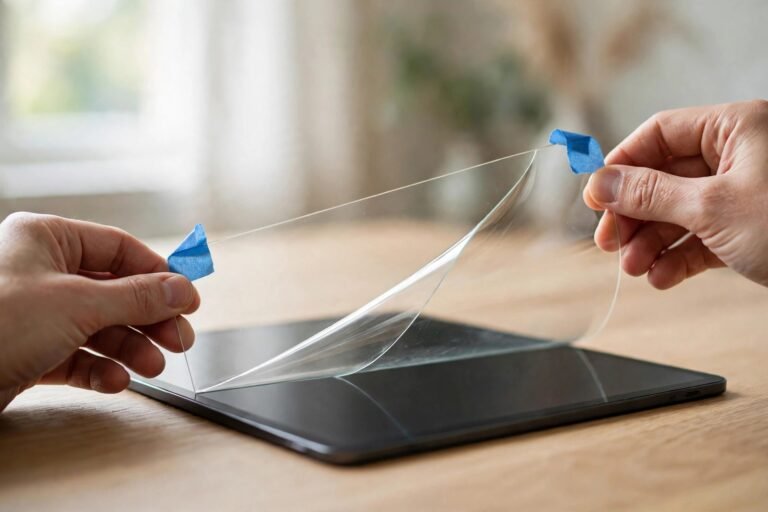
Cover the whole protector with strips of wide, clear packing tape, each strip overlapping the last, until every crack sits under at least one layer. Then press the tape down thoroughly — run your thumb firmly along every strip, and pay special attention to pressing tape into the crack lines themselves, since a fragment only stays put if the tape is genuinely gripping it.
For a spiderweb pattern, add a second full layer at right angles to the first. Extend the tape slightly beyond the edges of the glass to form tabs you can hold. Resist the temptation to tape only the visibly broken area: cracks you cannot see are still cracks, and the untaped corner of a pane is precisely where fragments escape from.
- Clear tape beats masking tape here — you can see the crack pattern through it while you work, so nothing surprises you mid-peel.
- If a corner is already loose, tape it down flat first rather than starting there — a flapping edge sheds fragments as it moves.
The Peel, and the Fragment Fallback
Start at the corner furthest from the worst cracking. Ease a fingernail or plastic card under it, lift a few millimetres, then grip the tape tab and peel slowly, folding the pane back over itself at a low angle. Support the glass from beneath with your free hand as the peel line advances, and if you hear crackling, slow down further — the tape is doing its job, but it has limits.
If a fragment stays behind — it happens, usually at the impact point where the adhesive grips hardest — do not chase it with a fingernail. Press a fresh piece of tape firmly onto the fragment, rub it down hard so it bonds, and lift the fragment away with the tape. Repeat piece by piece. Each one comes off the same way, and none of them requires anything sharper than tape.
The Final Clean and Inspection
With the glass off, wipe the screen and then drag a microfibre cloth slowly across it in one direction. The cloth will catch and snag on any remaining micro-splinter, announcing leftovers your eyes would miss entirely. Check around the speaker slot and the edges, where fragments like to lodge. Any adhesive residue rolls away under a fingertip or lifts with a dab of tape.
Then examine the display under a bright light, screen on and screen off. In the great majority of cases it will be flawless — the protector sacrificed itself exactly as designed. Dark lines, blotches, or touch dead zones would suggest the impact reached the screen itself, which is a repair conversation rather than a protector one. Fold the removed glass inside its own tape and a sheet of paper before binning it, and wash your hands to clear any glass dust.
- Shake the work surface paper over the bin when you finish — any sliver that escaped the tape ends up there, not on the desk.
- Keep the tape on the removed pane when you bin it. The tape that held it together for removal keeps it together in the rubbish too.
Frequently Asked Questions
What if I do not have packing tape?
Any wide, strong tape is better than none — even several overlapping strips of ordinary sticky tape will hold a hairline-cracked pane together. What matters is full coverage and pressing it firmly into the cracks. What you should not do is skip taping altogether because the ideal tape is not in the drawer.
The protector broke into pieces as I peeled. Did I do it wrong?
Not necessarily. A heavily shattered pane sometimes separates despite good taping, particularly around the impact point. It is an inconvenience rather than a failure: every remaining piece comes off with the fresh-tape method, and the end result is the same clean screen — it just takes a few extra minutes.
Can a cracked protector scratch the screen while I remove it?
Only if loose fragments are dragged across the surface under pressure. That is exactly what the full-surface tape prevents: fragments stay bonded to the tape instead of sliding around. Peel gently, never scrub at the screen mid-removal, and the display stays unmarked.
A cracked protector is only untidy if you let the cracks decide how it comes apart. Tape the whole surface, peel with patience, pick up the stragglers with fresh tape — and the glass leaves as neatly as it arrived.