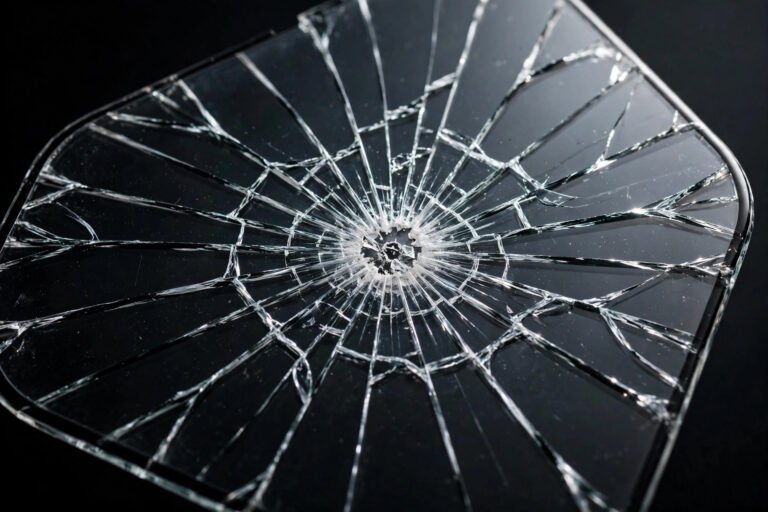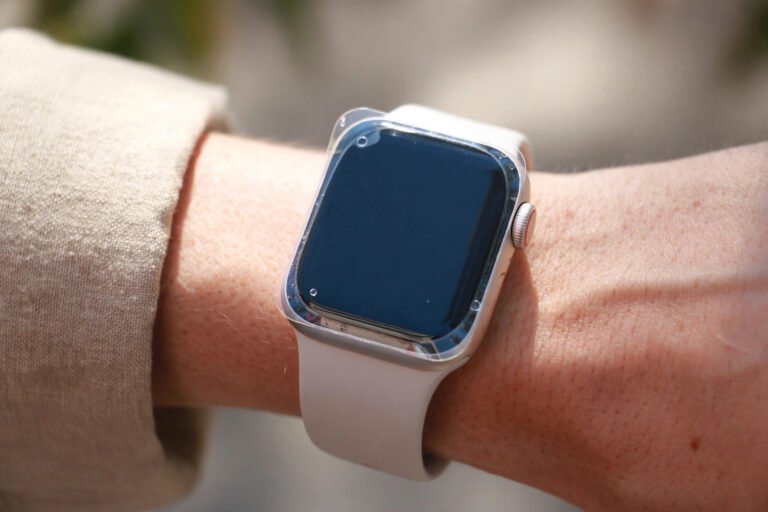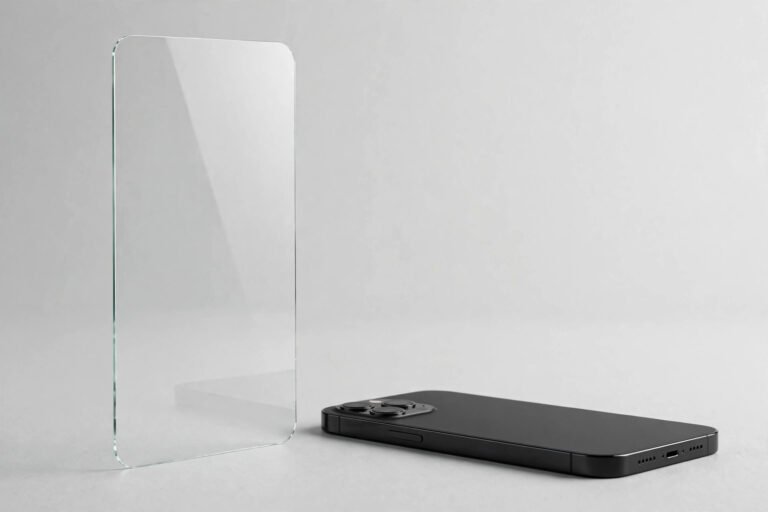
A tempered glass screen protector is a thin sheet of hardened glass that sits on your phone, tablet or smartwatch display and takes the damage so the screen underneath does not have to — a sacrificial layer that cracks or scratches in place of your actual display.
But not every protector labelled “tempered glass” is the same, and terms like “9H hardness” often confuse more than they clarify. This guide explains what tempered glass is, how the hardening process works, what its layers do, and how it genuinely protects your device — plus comparisons with plastic films and how to spot a fake.
Key Takeaways
- Tempered glass is strengthened by a heating-and-cooling process that locks its surface in compression, making it far harder to crack.
- A protector works as a sacrificial layer: it absorbs impact energy and cracks instead of your display.
- Most protectors have three layers: an oleophobic coating, the tempered glass, and a silicone adhesive backing.
- “9H hardness” refers to the pencil scale — a useful quality signal, not a guarantee against every scratch.
- Glass beats PET film and TPU on impact protection and touch feel; films only win on curved-edge coverage.
- Replace a cracked protector promptly, even if the crack is small — fractured glass no longer spreads impact force evenly.
What Tempered Glass Actually Is
Ordinary glass is strong under compression but weak under tension: a tiny scratch or chip concentrates tension at one point, and that is where a crack begins. Tempered glass is the same basic material put through a strengthening process that defeats exactly that weakness.
The usual method, thermal tempering, heats a glass sheet to around 600°C then cools its surfaces rapidly while the centre cools more slowly. The outer layers solidify first and the inner layers shrink afterwards, locking the surface in permanent compression — any blow must overcome that built-in squeeze before a crack can start. The result is glass four to five times stronger than untreated glass of the same thickness. A second method, chemical strengthening (ion exchange), achieves the same effect with a hot potassium salt bath, and is how many phone displays themselves are toughened.
How a Screen Protector Is Built
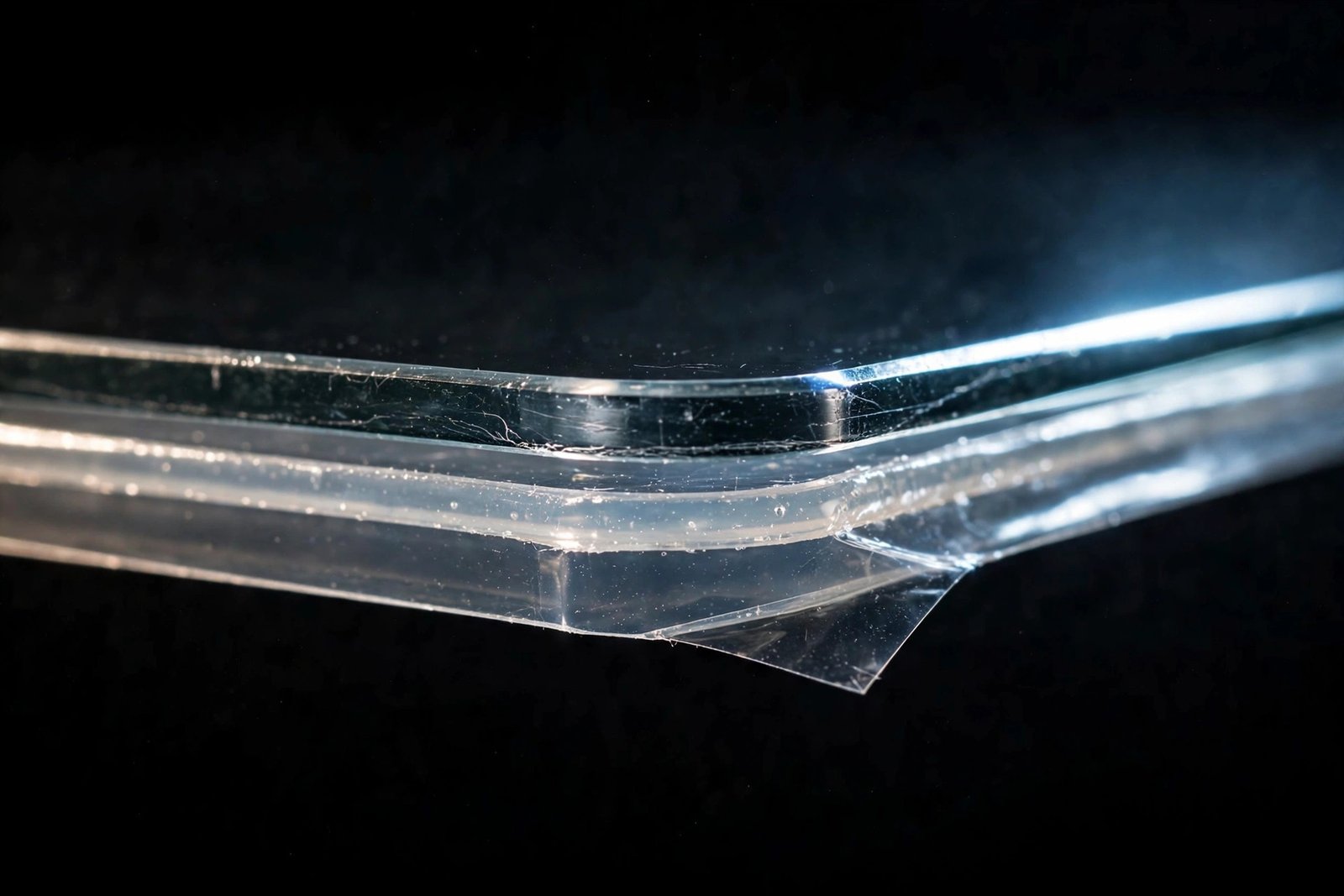
A protector is not just a slab of glass — most are built from three functional layers, each with a distinct job:
Oleophobic coating
An ultra-thin oil-repelling coating on the top surface resists fingerprints and gives a smoother glide. It wears away with cleaning and use — which is why an old protector feels stickier than a new one.
Tempered glass layer
The middle layer is the tempered glass itself, usually 0.2mm to 0.5mm thick, with polished or slightly rounded edges so they do not feel sharp or chip easily.
Silicone adhesive backing
Good adhesive keeps it clear, bubble-free and touch-responsive; edge-only glue leaves a visible gap, a hollow tap and touchscreen dead spots.
- Choose full-coverage adhesive over edge-only glue — the difference between a glass-like feel and a cheap, hollow tap.
How It Protects Your Screen
When your phone hits a hard surface, the protector absorbs and spreads the impact energy. If the force is too great, the protector cracks — spending the energy that would otherwise have reached your display. A shattered protector over a pristine screen means it worked as designed.
Against scratches, the hard surface resists everyday contact with keys, coins and fingernails far better than an unprotected display. It will not make your phone indestructible: a direct strike on a corner or a drop onto a sharp stone can still damage the screen.
9H Hardness, Explained Honestly
Nearly every protector claims “9H hardness” — the pencil hardness scale, where 9H is the hardest pencil grade. It means the glass resists scratching by a 9H pencil. It does not mean the protector rates 9 on the Mohs mineral scale (where diamond is 10), even though some listings imply it.
In practice, 9H glass shrugs off keys, coins and pocket grit. But quartz — the main ingredient in sand — is harder than protector glass, so one grain of sand can still scratch it. Treat 9H as a useful quality signal, not a promise of invulnerability.
Tempered Glass vs PET Film vs TPU
PET film
PET film is the classic thin plastic protector: cheap and good against scratches, but it offers almost no impact protection and feels plasticky, with more friction and a slightly duller display.
TPU
TPU is a flexible, rubbery film, sometimes sold as “self-healing” for minor scratches. Its flexibility lets it cover curved screen edges that rigid glass cannot follow — at the cost of a softer feel and edges that can lift over time.
Tempered glass
Tempered glass wins on impact protection, scratch resistance and touch feel — it genuinely feels like the phone’s own display. Its weakness is rigidity: it cannot bend around curved edges, and a hard enough impact will crack it (by design).
Thickness, Touch Sensitivity and Curved Screens
Most protectors are 0.2mm to 0.5mm thick, with 0.3mm the sweet spot for phones. Thinner glass preserves touch responsiveness and suits in-display fingerprint sensors; thicker “extra strong” glass can cause missed taps. Alignment matters too — a protector over the proximity sensor or front camera can cause dim selfies or a screen that will not wake properly.
Curved-edge displays are the hard case for rigid glass. The usual compromise covers only the flat portion; the alternative is a UV-cured protector, applied with liquid adhesive hardened under a UV lamp for full edge-to-edge coverage. It works well when installed carefully, but spilled adhesive can damage speaker grilles and buttons.
- Replace a cracked protector promptly, even if the crack is small — fractured glass no longer spreads impact force evenly, so the next knock hits a weak point.
How to Tell Real Tempered Glass From a Fake
Some protectors sold as “tempered glass” are actually plain plastic or untreated glass. Real tempered glass feels cool and rigid, and gives a clear ringing sound when tapped with a fingernail; plastic sounds dull. Water beading is another clue — a genuine oleophobic coating makes droplets bead and roll off, while a fake’s surface wets flat.
No single test is definitive, but together they are a reliable screen: if a “glass” protector bends easily or scratches with a fingernail, it is not tempered glass, whatever the packaging claims.
Frequently Asked Questions
Does a protector affect screen clarity?
A good-quality protector is optically clear and invisible in normal use. Cheap ones with poor adhesive or a hazy finish can dull the display or cause a rainbow effect in certain light.
How long does a protector last?
The glass can last for years, but the coating typically wears noticeably within 6 to 12 months of daily use, leaving the surface less smooth and quicker to smudge — which is why many people replace theirs yearly.
Can I reapply a protector after removing it?
Generally not. The adhesive picks up dust and loses tackiness once lifted, so a reapplied protector usually ends up bubbled with weak adhesion. Clean the screen thoroughly, align carefully, and treat installation as a one-shot process.
Do I need one if my phone already has toughened glass?
Modern displays are chemically strengthened and far tougher than the glass of a decade ago, but they are still glass and can still scratch and crack. A protector remains a cheap way to keep a flawless display flawless — and screen condition strongly affects resale value.
A tempered glass screen protector is a simple idea executed with real materials science: compressed, hardened glass that sacrifices itself so your display does not have to. Understand the process, the layers and the honest limits of claims like 9H, and you can choose a protector with confidence rather than guesswork.