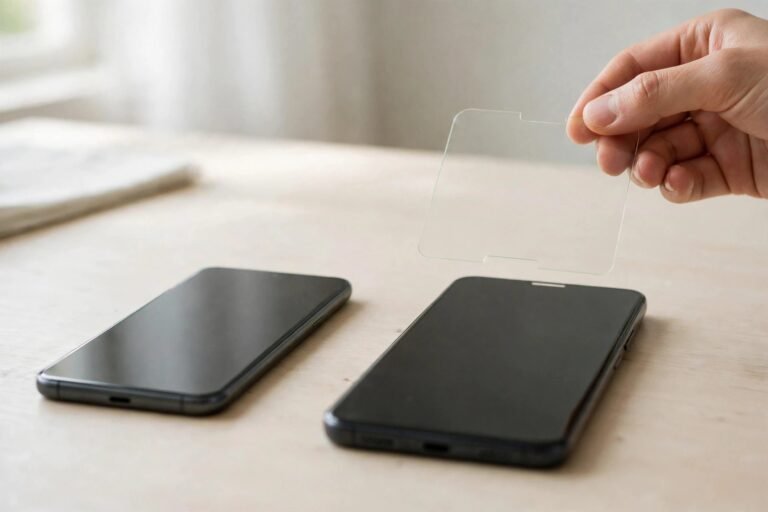
The iPhone XR causes more screen protector confusion than almost any other model, thanks to a misleading number. The XR has a 6.1-inch display — the same headline figure as the iPhone 12, 13, and 14 — which leads many owners to assume protectors for those phones will fit. They will not. The XR’s body is noticeably larger than that later family, and protector fit follows the body, not the brochure’s diagonal measurement.
Knowing what size screen protector fits the iPhone XR comes down to one helpful pairing and one firm warning. The pairing: the iPhone 11 shares the XR’s body, so its protectors fit. The warning: protectors for the 12, 13, and 14 are too small despite the matching 6.1-inch label. This guide explains the dimensions behind both facts, and how to order the right protector first time.
Key Takeaways
- The iPhone XR has a 6.1-inch display in a body measuring about 150.9 x 75.7mm — larger than the iPhone 12, 13, and 14 bodies.
- Buy a protector listed for the iPhone XR or the iPhone 11 — the two phones share the same body, so their protectors interchange correctly.
- iPhone 12, 13, and 14 protectors are too small for the XR, even though all are labelled 6.1-inch.
- Screen size is measured diagonally and says nothing about bezel width, notch shape, or body dimensions — all of which decide protector fit.
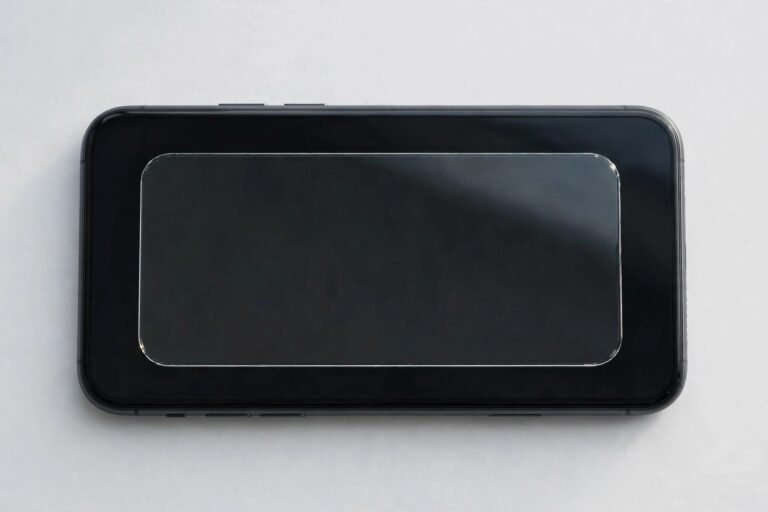
- A correct protector sits with a hairline gap of about a millimetre around the flat area of the screen; a large visible border means the wrong model.
- Choose a case-friendly cut if your case has a raised lip, to prevent the case pushing the protector’s edges up.
Why 6.1 Inches Does Not Mean the Same Size
Display sizes are measured diagonally, and that single number hides everything else that matters for fit. The XR’s body measures roughly 150.9mm tall by 75.7mm wide. The iPhone 12, 13, and 14 family measures roughly 146.7mm tall by 71.5mm wide. Both achieve a 6.1-inch diagonal, but the later phones use slimmer bezels in a smaller body, while the XR’s screen sits inside wider borders — same advertised size, entirely different fronts.
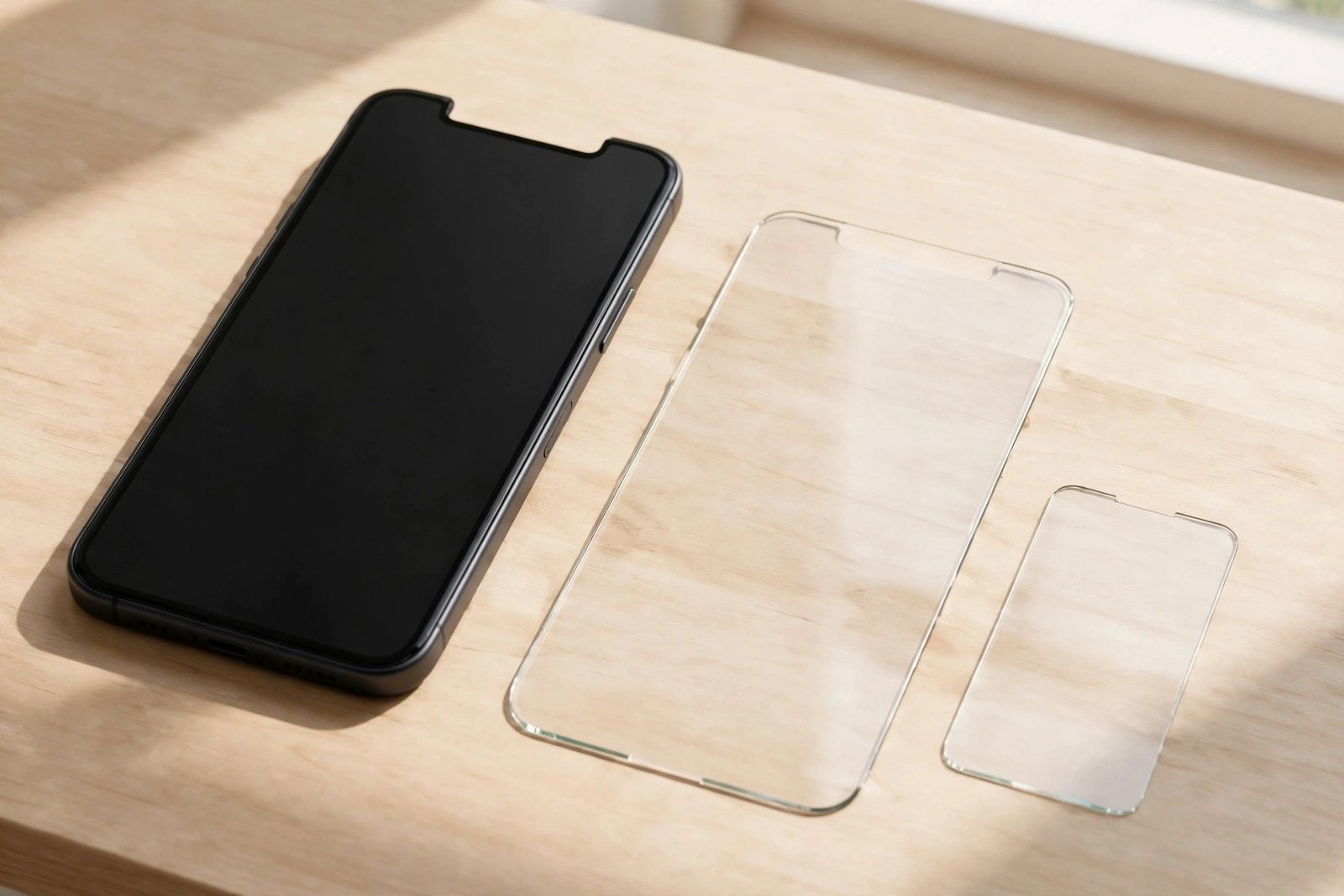
A protector is cut for the front of a specific phone — its overall height and width, the position of its notch, and the location of its speaker slot. Placed on an XR, a protector made for the iPhone 12 family is several millimetres too short and too narrow, so it floats in the middle of the screen leaving a wide exposed border, and its narrower sensor cutouts do not correspond to the XR’s wider notch. No careful alignment can fix a protector that is simply the wrong physical size; the mismatch is built into its dimensions.
The iPhone 11 Pairing That Does Work
The iPhone 11 was built on the XR’s body. It shares the same approximate dimensions — about 150.9 x 75.7mm — the same 6.1-inch display size, and the same wide notch with the same speaker and sensor layout. For that reason, protectors for the iPhone 11 and iPhone XR are genuinely interchangeable, and the vast majority of sellers list a single product for both models. In this case the joint listing reflects identical hardware fronts rather than marketing optimism, and you can buy either listing with confidence.
This pairing is convenient because the iPhone 11 sold in enormous numbers, so protectors listed under its name are plentiful — glass, privacy, and matte variants are all easy to find. If XR choice looks thin, searching under the iPhone 11 name reveals the full range. Just check that any joint listing names XR and 11 together, rather than sweeping in the 12 family, which is where listings stop being accurate.
- Confirm your model before ordering: Settings, then General, then About shows the model name in plain text. The XR and 11 look nearly identical from the front, and even the standard iPhone 12 can be mistaken for them in photographs — the written model name settles it in seconds.
What Happens If You Fit a 12, 13, or 14 Protector Anyway
Owners sometimes try to use up a newer protector, reasoning that slightly small is better than nothing. As a short stopgap it covers the central screen against scratches, but the drawbacks arrive quickly. The exposed border leaves the screen’s edges — the most chip-prone part of any display — with no cover at all. The notch cutout sits visibly off-centre, and the protector’s edges, ending mid-screen, catch dust and begin lifting far sooner than a correct protector would.
Cases make the mismatch worse. An XR case is moulded for the XR’s larger body and its lip expects a protector of matching size; a small protector can shift under the lip or have its corners nudged each time the case flexes. The sensible verdict is that a too-small protector is an emergency measure for a day, not a fitting. Correct XR and 11 protectors are inexpensive and widely stocked, including in multi-packs, so there is rarely a good reason to persist with the wrong size once a replacement can be ordered.
Choosing and Fitting the Correct XR Protector
Shop by model name, not by inches: search for iPhone XR or iPhone 11, and prefer tempered glass for clarity and impact help on the XR’s flat display. Choose standard or case-friendly cut based on your case — case-friendly protectors are trimmed slightly smaller to clear a case lip. As with all iPhones, expect the protector to stop about a millimetre short of the screen’s edges; that border is intentional, because the front glass curves at its edges and adhesive needs a flat surface to seal.
When fitting, align from the notch. The XR’s wide notch and speaker slot are your most precise landmarks: if the cutout mirrors them symmetrically with an even hairline border, the protector is correctly placed. Lay it over the screen before removing its backing to rehearse, and if the cutout looks narrower than the notch or the border looks wide, stop — you almost certainly have a 12-family protector in hand.
- Because the XR is an older model, buy a multi-pack and keep a spare. Protector ranges for older phones shrink over time, and having the correct size in a drawer is far better than improvising with a newer model’s protector that cannot fit.
Frequently Asked Questions
Will an iPhone 11 screen protector definitely fit my XR?
Yes. The iPhone 11 and XR share the same body dimensions, display size, and notch layout, so their protectors are made to one size and are almost always listed together. This is the correct and intended pairing, not an approximation.
Why is my 6.1-inch iPhone 14 protector too small for my 6.1-inch XR?
Because the diagonal measurement is the only thing the two screens share. The iPhone 14 achieves 6.1 inches inside a smaller body with slimmer bezels, while the XR’s body is about 4mm taller and 4mm wider. Protectors are cut to the body and notch of a specific model, so the 14’s protector falls short on the XR in every direction.
Will an iPhone XS or X protector fit the XR?
No. The X and XS are smaller 5.8-inch phones with different bodies and a narrower notch. Their protectors are considerably too small for the XR. For the XR, the only correct choices are protectors listed for the XR itself or for the iPhone 11.
With the XR, forget the inches and trust the body: if the protector was made for the XR or its twin the iPhone 11, it fits — and if it was made for any other 6.1-inch iPhone, it simply does not.