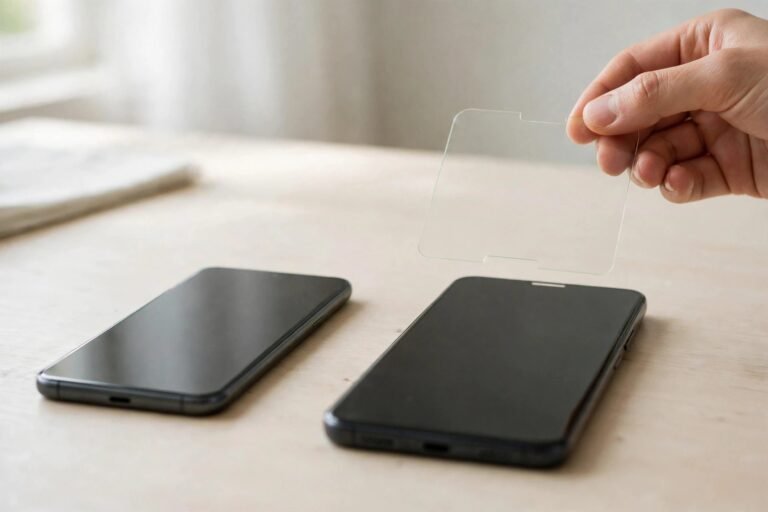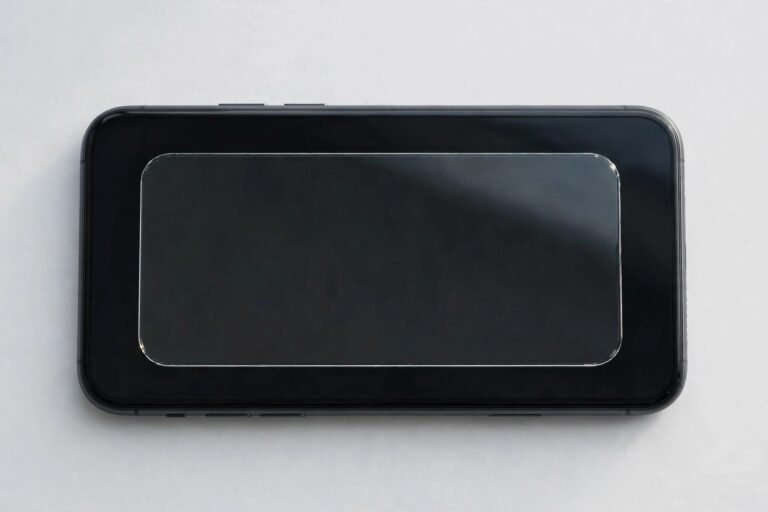
“Tempered glass or a screen protector — which is better?” It is one of the most common questions people ask when protecting a new phone, and it rests on a misunderstanding: tempered glass is a screen protector. The two aren’t rivals. The real choice is between the different types of screen protector — tempered glass, plastic film, and liquid coatings — and which one is better depends on your phone, your screen shape, and how you treat it.
This guide clears up the naming confusion first, then compares the types fairly across drop protection, scratch resistance, feel, and fit — finishing with a straightforward recommendation for different kinds of users.
Key Takeaways
- Tempered glass is one type of screen protector — the real comparison is glass vs film vs liquid.
- For drop protection, tempered glass wins: it is a rigid, sacrificial layer that can crack so your screen doesn’t.
- Glass also feels like the bare screen and shrugs off everyday scratches better than plastic film.
- Film wins on curved screens, thinness, and special finishes — and TPU film can self-heal minor marks.
- Liquid coatings add a little scratch resistance but nothing meaningful against drops.
- For most people with a flat-screened phone, tempered glass is the sensible default.
First, Clear Up the Names
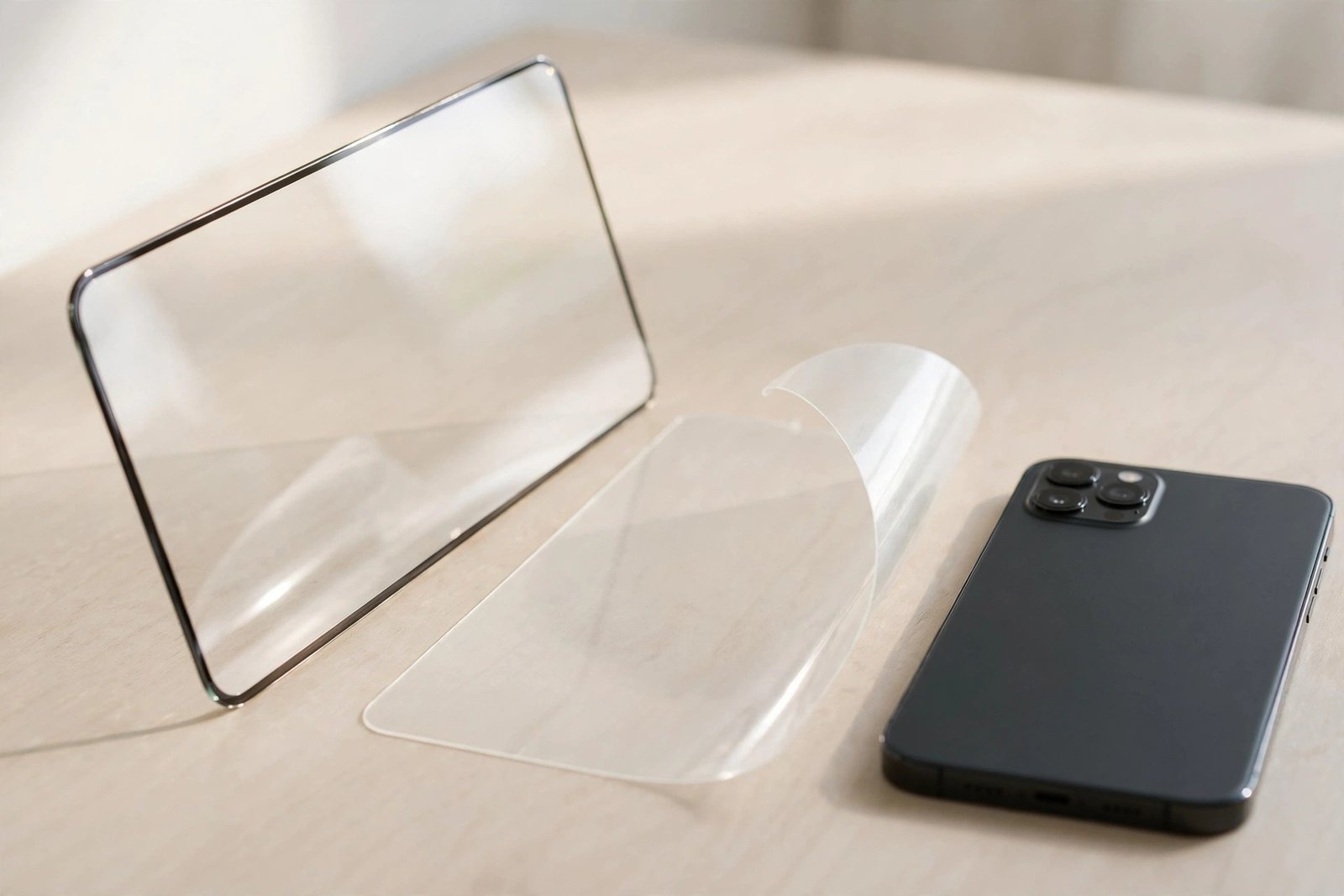
“Screen protector” is the umbrella term for anything you apply over a display to protect it. Under that umbrella sit three main families. Tempered glass protectors are thin sheets of chemically strengthened glass with an adhesive layer. Film protectors are plastic — either PET, a thin and fairly rigid plastic, or TPU, a softer, flexible material that can slowly self-heal light scratches. Liquid protectors are nano-coatings you wipe on and let cure; there is no sheet at all, just an invisible bonded layer.
One marketing term deserves a footnote: the “9H hardness” quoted for glass protectors refers to a pencil hardness scale, not 9 on the Mohs mineral scale. It means the surface resists scratching from a 9H pencil — a useful sign of a hard coating, but not a promise that the glass is nearly as hard as diamond. Keep that in mind when comparing bold claims.
Drop and Scratch Protection Compared
Against drops, the families are not close. Tempered glass is rigid and bonded across the whole screen, so when the phone lands face-down it spreads the impact and — if the force is too much — cracks itself, absorbing energy that would otherwise reach your display. It does not make a phone drop-proof, and corner impacts can still defeat it, but it converts a meaningful share of would-be screen cracks into a replaceable broken protector.
Film, by contrast, is a scratch shield only. A soft layer a fraction of a millimetre thick cannot absorb or spread meaningful impact energy, whatever the packaging suggests. Liquid coatings sit below even film for impact: they slightly harden the surface against micro-scratches and restore a slick feel, but for drops they are essentially nothing. For scratches, the order flips slightly closer — glass resists keys, grit and daily abrasion best and stays looking clear for months, while plastic films mark up quickly and start to look tired, which is why film users tend to replace theirs more often.
- A cracked glass protector has done its job — replace it rather than peeling it off and going bare. A cracked sheet no longer absorbs impacts properly, and its edges are sharp enough to scratch the very screen it saved.
Feel, Clarity and Fit
This is where film claws back ground. Glass feels exactly like the phone’s own screen — smooth, cool, with crisp taps — and offers the best clarity, but it adds noticeable thickness and its rigidity is a liability on curved displays: it either adheres only at the edges, leaves gaps, or simply won’t follow the curve. Film is whisper-thin and wraps around curves happily. TPU has a slightly rubbery drag under the thumb and can show an orange-peel texture, while PET looks cleaner but is less forgiving to fit.
Two practical details matter as well. In-display ultrasonic fingerprint sensors can struggle through thick glass, whereas thin film rarely interferes. And film is where the special finishes live: matte film is the artist’s choice for drawing with a stylus and cutting glare, and privacy filters are commonly film-based too. Glass versions of both exist, but the choice is wider and the effect better in film.
So Which Should You Choose?
For most people, the answer is tempered glass. If your phone has a flat screen and your main fear is the drop onto the kitchen tiles, glass gives you the best impact protection, the best feel, and the best scratch resistance in one sheet — and it practically installs itself, since the rigid glass settles flat and the adhesive spreads on its own.
Choose film instead if your screen curves at the edges, if you draw or write with a stylus and want a matte, paper-like surface, or if your fingerprint sensor sulks under glass. TPU’s self-healing makes it the pick for people whose protectors always end up covered in fine marks. And be honest about liquid coatings: if you never drop your phone and only want a little extra resistance to micro-scratches, they are a legitimate, invisible option — just never mistake one for drop protection. Whichever you pick, pair it with a case that has raised edges; protector and case cover each other’s blind spots.
- Fit matters more than material. A carefully fitted film beats a badly fitted glass protector with lifting edges — those gaps let in grit, and trapped grit under any protector can scratch the screen it was meant to save.
Frequently Asked Questions
Is tempered glass stronger than my phone’s own screen?
Not necessarily — modern phone glass is very tough in its own right. The protector’s value is that it is sacrificial and replaceable: it sits in front of the real screen, takes the scratches and the worst of an impact, and can be swapped in minutes when it has done its job.
Do film protectors protect against cracks at all?
Essentially, no. Film is excellent at its real job — keeping the screen free of scratches and scuffs — but it is far too thin and soft to absorb or spread the energy of a drop. If cracked screens are your worry, you need glass, plus a case with raised edges and reinforced corners.
Can I stack a film over tempered glass for double protection?
It isn’t recommended. Stacked layers reduce clarity and touch sensitivity, can confuse fingerprint sensors, and don’t add meaningful drop protection — the glass still takes the impact exactly as it would alone. Pick the one type that matches your phone and your habits, and fit it well.
So: tempered glass or a screen protector? Both — tempered glass is the screen protector most people should choose, film is the specialist’s tool, and liquid is a light-touch extra. Match the type to your phone and your habits, and any of them beats a bare screen.