If you are on your third screen protector this year, it is natural to wonder whether you are unusually clumsy — or whether the protectors themselves are letting you down. In most cases it is the second one. Some glass is genuinely fragile, and a handful of everyday habits around cases and fitting quietly set a protector up to fail long before any dramatic drop happens.
Tempered glass is hard but brittle by design: it resists scratches superbly, yet it has weak points, and cracks almost always begin at those weak points rather than in the middle of the pane. This guide works through the real reasons protectors crack “for no reason” — glass quality, edges, your case, and stress introduced while fitting — and how to make the next one last longer.
Key Takeaways
- Very thin or cheaply made glass chips and cracks far sooner than quality tempered glass — a 9H rating describes scratch resistance, not toughness.
- Most cracks start at the edges: a small chip from a knock later spreads into a full crack.
- A case whose lip presses on the protector’s edge can flex it repeatedly until it gives way.
- Curved screens keep edge-adhesive glass under constant tension, so it lives closer to its limit.
- Stress from fitting — bending the sheet, pressing hard on a corner, trapping dust underneath — can seed cracks that appear days later.
- Corner drops concentrate force exactly where glass is weakest, and even good glass can fail there.
Thin, Cheap Glass Is the Usual Suspect
Not all tempered glass is equal. Very thin sheets flex more under pressure and chip more readily at the edges, and the bargain multi-packs that seem almost too cheap often get there by using thinner glass with rougher-cut, less carefully polished edges. Those unfinished edges are full of microscopic flaws, and every flaw is a potential starting point for a crack. Better-made protectors use slightly thicker glass with smoothed, rounded edges that resist chipping noticeably better — quality varies enormously between brands, which is why two protectors with identical “9H” claims can live very different lives.
That 9H figure deserves a word of its own, because it misleads many buyers. It refers to the pencil hardness scale used to rate scratch resistance — how hard a material must be to mark the surface. It says very little about impact toughness or how readily the sheet itself will fracture. A protector can be superb at resisting keys and coins and still crack the first time its corner meets a table edge.
Almost Every Crack Starts at the Edge
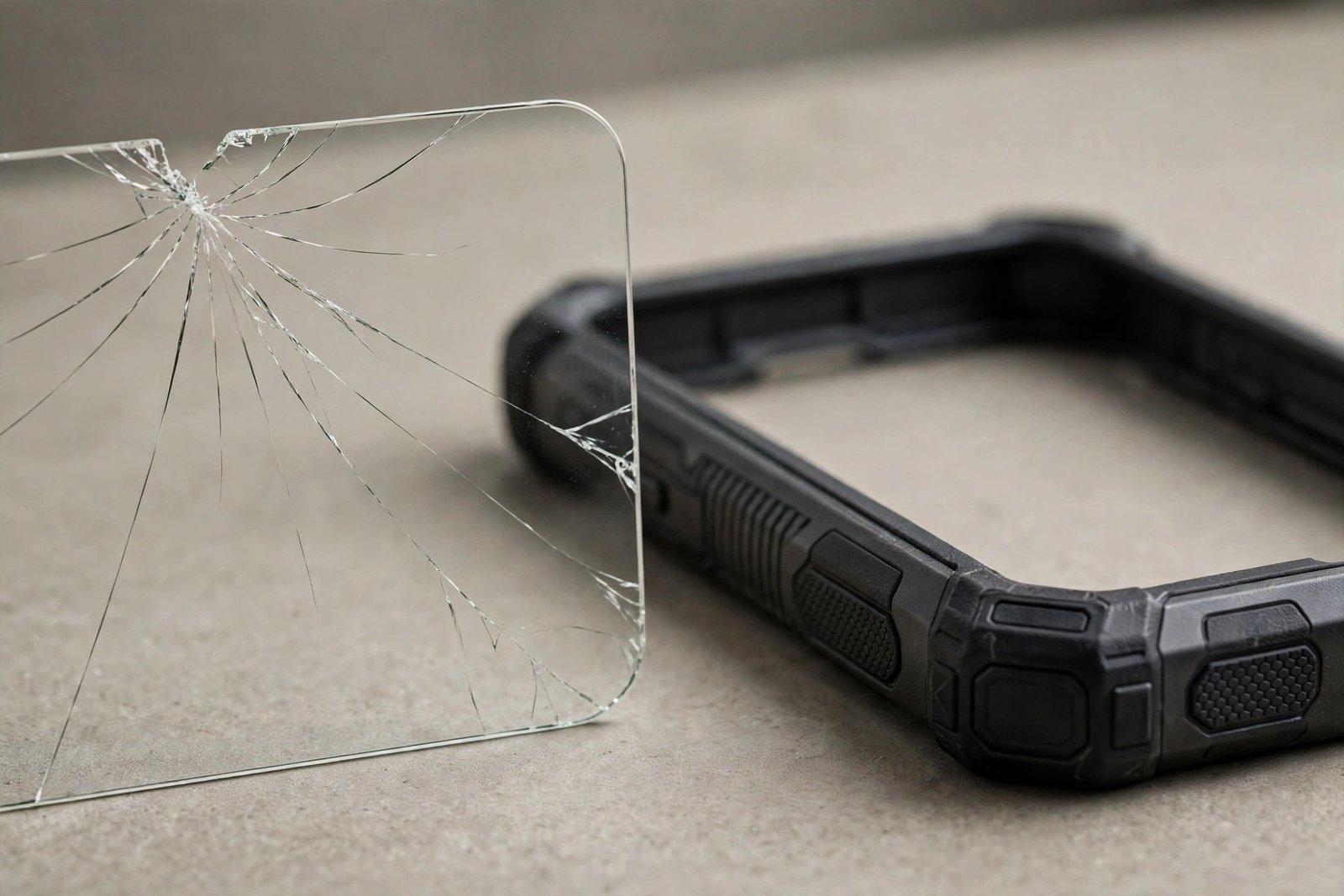
The middle of a protector almost never cracks first. Edges and corners take the knocks — against keys, coins, table edges, and the inside of your own case — and each knock risks a tiny chip you may not even notice. A chip concentrates stress at a single point. Days or weeks later, an otherwise trivial event — a small bump, a squeeze in a tight pocket, a change in temperature — gives that stress somewhere to go, and the chip blooms into a crack running across the screen. This is why so many cracks seem to appear from nowhere overnight.
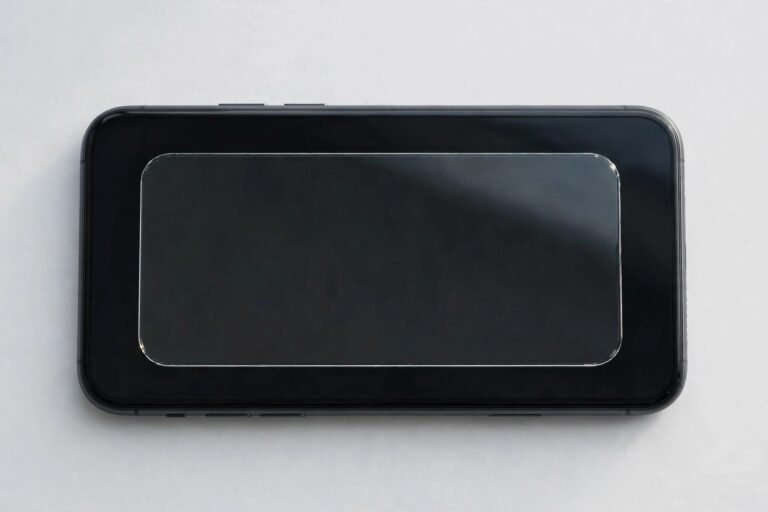
Curved screens make edge trouble more likely. So-called full-coverage glass for curved displays often adheres only around its borders, leaving the sheet effectively suspended and under slight tension. It flexes when you press near the edge, and that repeated flexing works on any microscopic edge flaw until it spreads. On such phones, a case-friendly protector that stops short of the curve — or a hybrid or film protector — often survives longer in practice.
- Run a fingertip slowly around the edges of your protector once a week. If you feel a chip or rough spot, replace the protector soon — a chipped edge is both a crack waiting to spread and a weak point in your impact protection.
Your Case May Be Cracking It
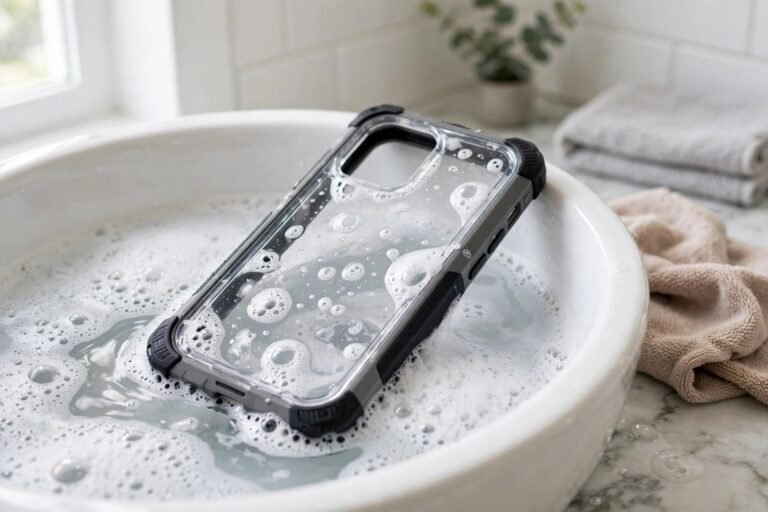
A snug case with a high, stiff lip can overlap the border of a full-size protector. Every time the phone flexes slightly — in a pocket, in a bag, in your hand — the lip presses and releases on the glass edge, thousands of tiny times. Eventually the glass gives way along the pressure line. Trapped grit between the case lip and the glass edge makes matters worse, acting as a hard pressure point. If your cracks consistently start along one side, or appear shortly after fitting a new case, this is the likely cause. Protectors sold as “case-friendly” are cut a fraction smaller specifically to leave clearance for the case lip.
Fitting Stress and Corner Drops
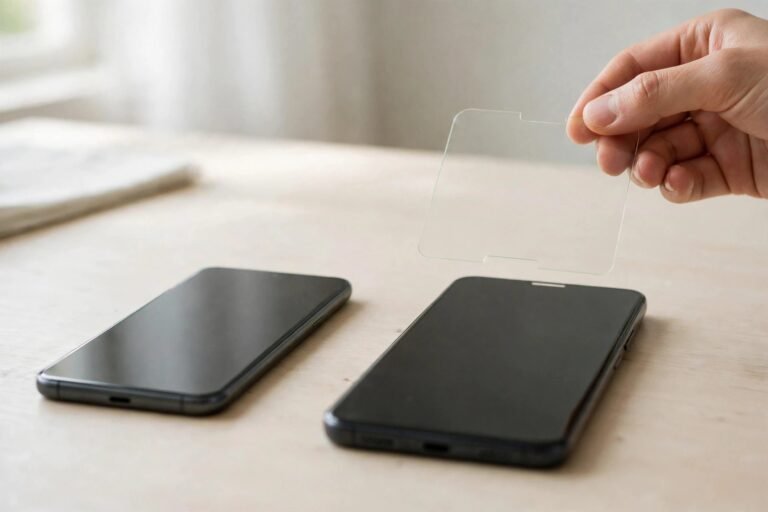
Some protectors are doomed in the first five minutes. Bending the sheet as you peel off its backing, pressing down hard on one corner to chase out a bubble, or fitting it over a screen with a speck of dust trapped beneath all create localised stress or a hard pressure point in the glass. The sheet may look perfect, but the damage is seeded — and the crack that appears “spontaneously” days later often radiates from exactly that spot. Gentle fitting matters: let the adhesive spread largely on its own, and only ever press lightly in the centre.
Finally, the honest cause: corner drops. When a phone lands on its corner, the force travels through the frame straight into the corner of the glass, the weakest point of any protector. No tempered glass is immune to a bad corner impact, and it is worth remembering that a protector cracking in a drop is often the system working as intended — it absorbed energy your screen would otherwise have taken.
- When fitting a new protector, lower it into place and let the adhesive spread by itself before touching it. Pressing hard at the edges to force out bubbles is one of the most common ways to seed a crack that shows up later.
Frequently Asked Questions
Does a higher 9H rating mean my protector won’t crack?
No. The 9H rating comes from the pencil hardness scale and describes resistance to scratches, not resistance to cracking. Impact toughness depends on the glass’s thickness, edge finishing and how it is fitted — none of which the 9H figure tells you.
Why did my protector crack in my pocket with no drop?
Pockets are harsher than they look. Sitting down with the phone in a tight pocket flexes it, keys or coins can press a hard point into the glass edge, and a case lip can bear on the border. Point pressure like this can crack glass — especially glass with an existing edge chip — without any drop at all.
Should I switch to film if my glass protectors keep cracking?
It can be the pragmatic choice. Film and hybrid protectors do not crack — they scratch, dent or tear instead — and on curved screens they often outlast glass in everyday use. The trade-off is less impact protection in a serious drop, so the right answer depends on whether your phone’s enemy is everyday knocks or hard falls.
A protector that cracks every few weeks is usually telling you something — about the quality of the glass, the fit of your case, or the way it was installed. Fix the cause, and the next one should quietly last the life of the phone.