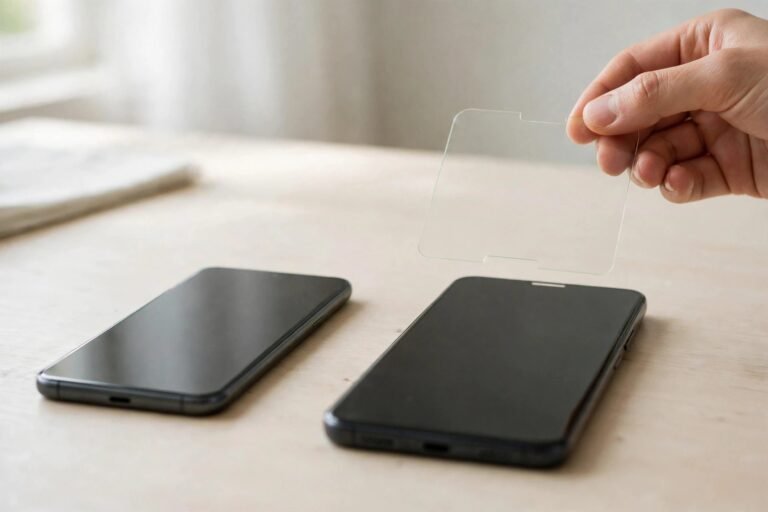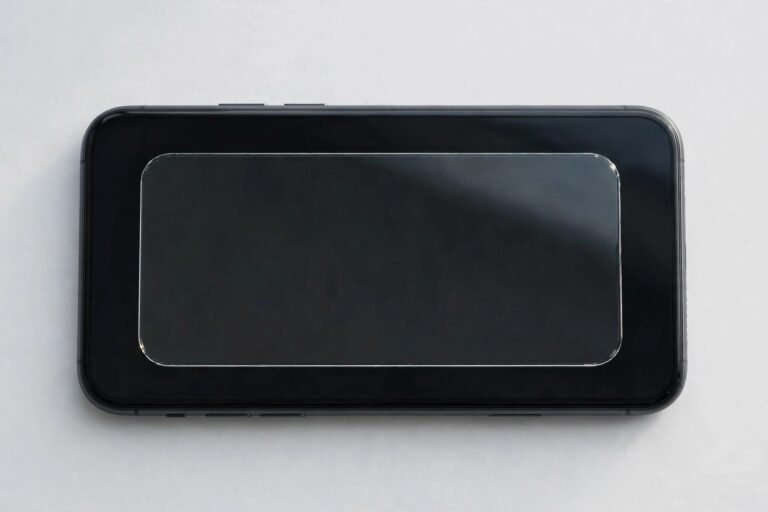
You have a tempered glass protector that is slightly too big — for an older phone, a tablet, or a device nobody makes protectors for any more — and a pair of scissors or a craft knife within reach. Can you just trim it down to size? It is a fair question, and this guide will give you the honest answer rather than the one you were hoping for.
That answer is: no, not really. Tempered glass cannot be cut, trimmed, or reshaped after tempering — attempting it almost always shatters the sheet. This is not a skill issue or a tools issue; it is built into how tempered glass is made. The good news is that the problem you are trying to solve has real solutions, and this guide covers them: what people actually do when no off-the-shelf protector fits, and which types of protector genuinely can be cut to size.
Key Takeaways
- Tempered glass cannot be cut after tempering — the internal stresses that make it strong make it shatter instead of cutting.
- Scoring, sawing, drilling, or grinding a tempered protector typically ends in a sheet of fragments, not a smaller protector.
- Even professional glass cutters will refuse the job — glass must be cut to size before it is tempered, not after.
- Film protectors (PET and TPU) can be trimmed with scissors or a craft knife, and are the practical cut-to-fit option.
- For odd or discontinued devices, look for universal cut-to-fit films or custom-cut services that machine-cut a protector to your exact model.
- Sanding a tempered protector’s edge is sometimes suggested online — it weakens the sheet and risks sudden failure. Do not rely on it.
Why Tempered Glass Refuses to Be Cut
Tempering is a heat treatment: the glass is heated and then its surfaces are cooled rapidly, which locks the outer layers into compression and the inner core into tension. That stored energy is the whole point of the material. It is what makes a tempered protector resist scratches and flexing in daily use — and what makes it burst into small fragments when it does break, rather than into dangerous shards.
The same stored stress is why cutting fails. The moment a blade, score line, or drill disturbs the surface compression in a local spot, the tension inside is released across the entire sheet at once. The glass does not crack neatly along your line; it crazes and disintegrates throughout, usually in a fraction of a second. Anyone who has seen a tempered car window or shower door fail has seen the same physics: all or nothing, never partial.
What Happens If You Try Anyway
People try three approaches, and all three end the same way. Scoring and snapping, which works beautifully on ordinary window glass, fails because the score line triggers the stress release before any clean snap can happen. Sawing or using a rotary tool with a diamond disc sometimes survives a few millimetres of grinding before the sheet gives up entirely — and floods the work area with glass dust and fragments in the process. Drilling a camera hole is the fastest failure of all.
There is also a safety point worth taking seriously: the failure is sudden, and you will be holding the sheet in your hands, applying pressure, when it goes. Eye protection and gloves reduce the risk, but the sensible conclusion is the one glaziers reach — this material is finished the day it leaves the tempering furnace. Every legitimate tempered protector on the market was cut to its final shape first, and tempered second.
- Protector slightly too big in one spot only — blocking a case edge, for example? Do not trim the glass. Swap to a “case-friendly” version of the same protector, which is deliberately cut a fraction smaller all round, or adjust the case. The sizing problem is real; cutting is just not its solution.
What Actually Works: Protectors You Can Cut
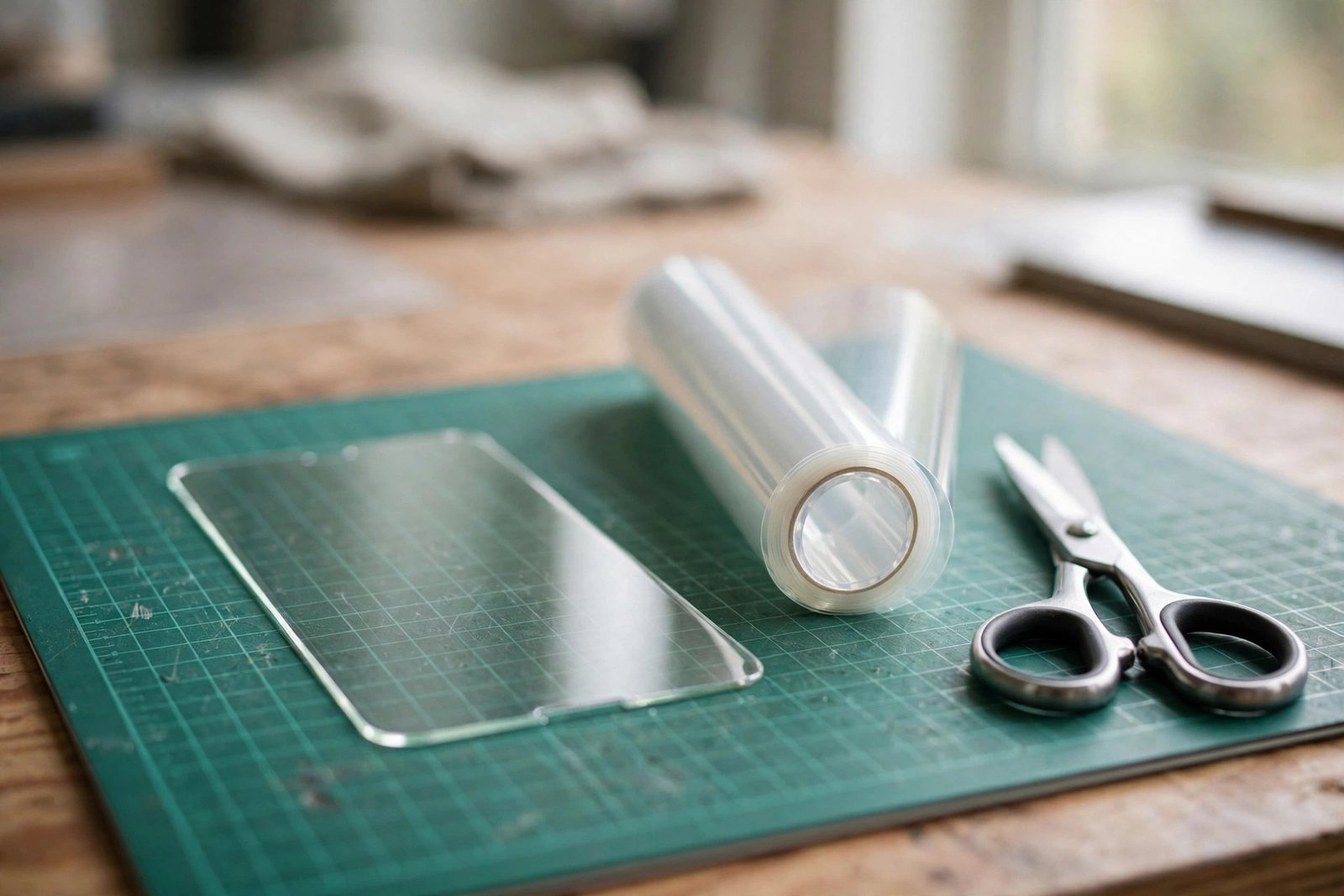
If cut-to-fit is genuinely what you need — an obscure tablet, an old phone, a sat-nav, an e-reader — film is your material. PET and TPU film protectors can be trimmed cleanly with sharp scissors or a craft knife and a straight edge. The technique: use the device itself or a paper template as the guide, mark the outline, cut slightly inside the line (a millimetre of clearance beats a millimetre of overhang), and round the corners so they do not catch and peel. Universal film sheets are sold in larger sizes precisely for this purpose.
Film will not match tempered glass for impact protection or that real-glass feel — but a well-cut film beats a shattered glass protector on every measure, and for scratch protection on a device with no other options, it is entirely respectable.
The Other Real Solution: Get One Made to Size
For phones, a better answer usually exists. Custom-cut services — kiosks in phone shops and online services alike — machine-cut protectors on demand from a database of device dimensions, including models the big brands have abandoned, and some offer glass-like hybrid materials that are cut before finishing. If your device is a known model, search for a protector by its exact name first, including smaller specialist sellers; the catalogue of available cuts is far larger than most people expect, and “discontinued” phones are often still covered.
And a final, unglamorous tip: protectors for a physically identical sibling model sometimes fit — the same phone sold under a different name in another market, for instance. That is worth ten minutes of research before you reach for the scissors, because a correct factory cut, however you find it, always beats anything made on a kitchen table.
- Making a paper template first is worthwhile even for film: trace the screen, cut the paper, check it on the device, adjust — and only then cut the film once. Film is cheap, but a template turns a guess into a measurement and saves the second and third attempts.
Frequently Asked Questions
Can a glazier or jeweller cut a tempered protector for me?
They will almost certainly decline, for the same reason: it is the material, not the tools or the skill. Professional glassworkers cut glass to size before tempering as a matter of routine and know that a tempered piece cannot be altered afterwards. Specialist waterjet or laser cutting exists in industrial settings for some tempered products, but it is not a service realistically available — or worth paying for — for a phone protector.
I only need to sand down one corner. Is that safe?
It is the least catastrophic idea and still not a good one. Grinding through the compressed surface layer compromises the sheet’s integrity; the protector may survive the sanding and then fail spontaneously days later, in a pocket or during a small knock. A protector whose strength you cannot trust is not protecting anything — replace it or switch to film.
Can I cut a hybrid or “ceramic” protector instead?
Often, yes. Hybrid protectors — a flexible plastic base with a hard coating, sometimes marketed as ceramic or unbreakable film — are not tempered glass and many can be trimmed like film, though they are tougher to cut neatly and the edges may feel rough. Check the material before cutting: if it flexes noticeably, it is a film-type product and trimming is reasonable; if it is rigid glass, it is tempered and the answer is no.
Tempered glass earns its strength by refusing every alteration after the furnace — that stubbornness is the feature, not a flaw. Work with the materials that welcome a blade, and leave the tempered sheet exactly the size it was born.