You fitted the protector carefully. You pushed the bubbles out. It looked perfect — and three days later, there they are again: a bubble blooming at the corner, a halo crawling along the edge, a mysterious blister dead centre that definitely was not there on Tuesday. If your screen protector keeps getting air bubbles no matter how carefully you install it, the problem is almost never your technique. Something specific is going wrong, and recurring bubbles are the symptom that tells you what it is.
This guide works through the five usual causes of recurring bubbles — trapped dust, case pressure, a warped or mismatched protector, screen curvature, and tired adhesive — and, more importantly, the fix for each one. Diagnose the cause first; the cure depends entirely on which one you have.
Key Takeaways
- A bubble that returns in the same spot almost always means a speck of dust or grit is sealed under the glass there.
- Bubbles along one edge or corner usually mean your case is pressing on the protector and slowly prising it up.
- A protector that arrives warped or mismatched to your screen’s curve will lift forever — no amount of pressing fixes bad geometry.
- Cheap protectors with thin, weak adhesive lose their grip within weeks, especially in hot pockets and cars.
- Fresh small bubbles are normal for 24–48 hours after fitting — recurring bubbles after a week are a diagnosis, not a settling period.
First, Read the Bubble Pattern
Before you peel anything off, study what you have. Where the bubble appears and when it appears are the two clues that identify the cause. A single round bubble in the middle of the screen that keeps reforming in the same place is a different problem from a creeping air channel along the bottom edge. A bubble that appears after your phone has been in a hot car is different again. Note the pattern — the sections below match each pattern to its cause and fix.
Cause 1: Dust or Grit Sealed Under the Glass
The classic recurring bubble: one stubborn spot, often with a tiny visible speck at its centre. A particle of dust creates a microscopic tent in the glass — the adhesive bonds everywhere except that pinhead of contamination, and air pools around it. You can push the bubble out a dozen times; the particle is still there, so the bubble patiently reforms within a day or two.
The fix: lift the nearest corner of the protector slowly with a piece of sticky tape, slide a dust-removal sticker (or another piece of tape, sticky side down) under the glass to dab the particle off both the screen and the protector’s underside, then lower the glass back down and smooth it out. Work in a steamy bathroom if you can — humid air carries far less floating dust to replace the speck you just removed.
- Never use your fingertip to fish dust out from under the glass — fingers deposit more contamination than they remove. Always use a dust sticker or clean tape, and lower the protector in stages so you can catch new specks before they seal in.
Cause 2: Your Case Is Prising the Edge Up
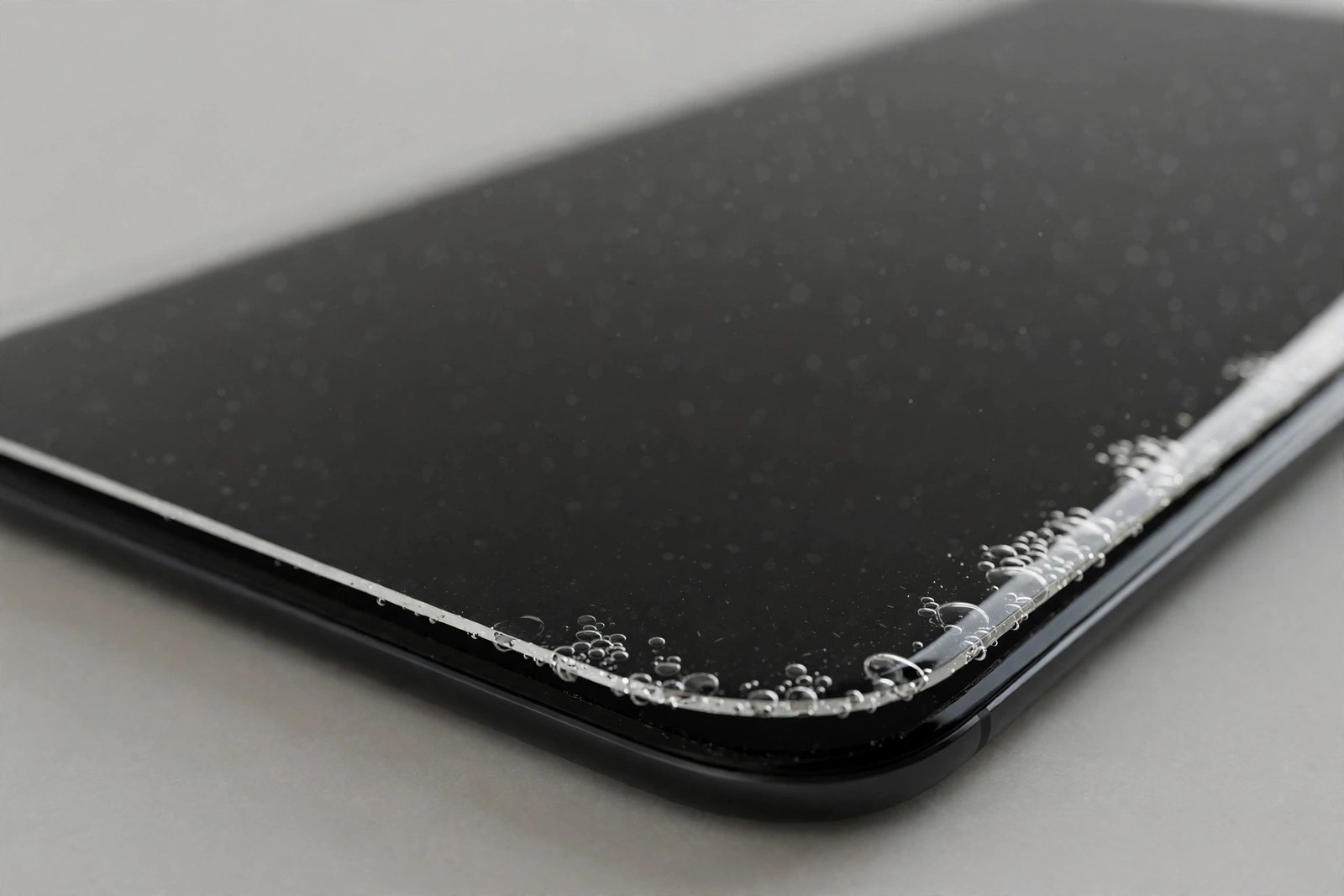
If the bubbles creep in from one edge or corner — especially after you have snapped the phone into its case — the case is the culprit. Many cases have a raised lip that overlaps the screen slightly. If your protector is a full-coverage size, the case lip presses directly on the glass edge, and every time you squeeze the phone, charge it (heat expands materials), or take the case off, the lip works the edge upward a fraction. Air follows, and the bubble grows inward like a tide line.
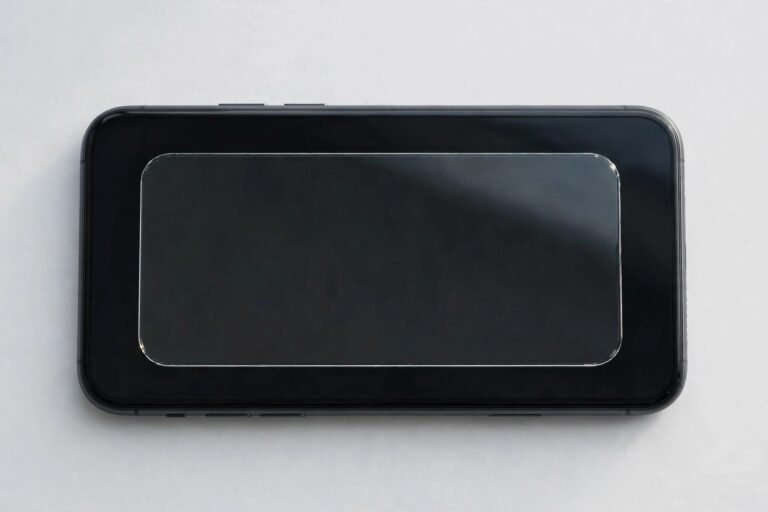
The fix: switch to a case-friendly protector, deliberately cut a millimetre or two smaller on every side. That tiny gap is the difference between a protector your case fights and one it never touches. Alternatively, change the case — but protectors are cheaper than cases, so start there.
Cause 3: A Warped Protector or a Curve It Cannot Follow
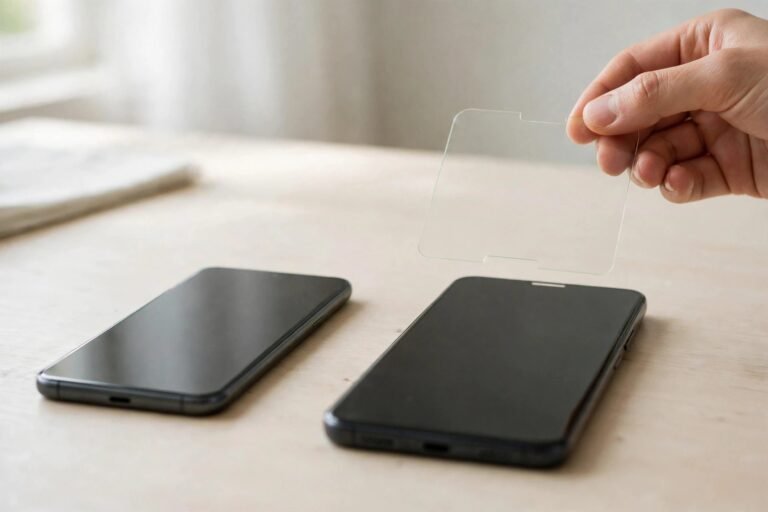
Some protectors are simply not flat — cheap glass can carry a slight warp from manufacturing or storage, and a warped sheet will never sit down: press one side flat and the other lifts, like a seesaw. The related geometry problem is a curved-edge screen: many modern displays curve away at the perimeter, and a flat protector cut too generously bridges over the curve, leaving a permanent air channel — the halo — along the edges.
The fix: this one has no repair. Pressing, warming, and waiting will not change the shape of glass. Replace the protector with one from a reputable brand that is cut for your exact model and, for curved screens, sized to sit on the flat central area only. Hold a new protector against a window before fitting — any visible wobble or rock is a warp; use the next one in the pack.
Cause 4: Tired, Thin, or Heat-Damaged Adhesive
A protector is only as good as its adhesive layer, and budget glass often skimps on exactly that. Weak adhesive holds for the first fortnight, then lets go in patches — typically starting where the phone gets warmest, or after time in a hot car, a sunny dashboard, or a tight pocket on a summer day. The result is bubbles that appear weeks after a perfect install, often as irregular blotches rather than neat circles.
The fix: replace, and buy better. Established brands use full-coverage, evenly applied adhesive that stays put for the protector’s whole life. Also check the protector’s age before fitting: glass that has sat in a drawer for two years may have adhesive that has already degraded on the shelf.
- After fitting any new protector, give it 15–30 minutes before snapping a tight case back on, and avoid leaving the phone in direct sun or a hot car for the first day. Fresh adhesive reaches full strength over roughly 24 hours — early heat and edge pressure are at their most damaging in that window.
Frequently Asked Questions
Are some bubbles normal after fitting a new protector?
Yes — small, dust-free micro-bubbles commonly disappear within 24–48 hours as the adhesive finishes flowing. Bubbles that persist past two days, or appear after the first week, have a cause from the list above and will not settle on their own.
Why do bubbles appear after my phone gets warm?
Heat softens protector adhesive and makes trapped air expand. If the adhesive is weak or the edge seal is already compromised by case pressure, a hot car or heavy gaming session is often the trigger that turns a sealed install into a bubbling one.
Can I just keep pushing the bubbles out?
Pushing treats the symptom, not the cause — and repeated lifting and pressing works dust further under the edges and fatigues the adhesive. Identify which of the five causes you have and fix that; on a healthy install, bubbles simply do not come back.
A returning bubble is your protector filing a complaint — about dust, your case, its own shape, or its glue. Read the pattern, fix the cause, and the next install will stay as clean as the day you fitted it.