A liquid screen protector is not a sheet you peel off — it is a nano-coating wiped onto the glass that bonds to the surface and gradually wears away with use. That makes “replacing” it different from replacing tempered glass: there is nothing to remove, and the job is really about recognising when the coating has worn off and reapplying a fresh one correctly.
This guide covers the signs that a liquid coating has worn out, how long coatings typically last, the reapplication process step by step, and how all of this differs from swapping a glass protector. Follow your specific product’s instructions where they differ — timings and methods vary between brands.
Key Takeaways
- Liquid protectors wear away gradually rather than peeling or cracking — replacement means reapplying a new coating over the old one’s remains.
- Typical coatings are marketed as lasting several months to around a year, depending on the product and how heavily the phone is used — treat brand claims as optimistic.
- Signs of wear include water no longer beading, fingerprints smearing more easily, and fine scratches appearing where none did before.
- Thorough cleaning before reapplication is the step that decides success — coating will not bond properly to grease or residue.
- Respect the curing time in your product’s instructions; using the phone too soon weakens the fresh coating.
- Unlike glass, a liquid coating offers little impact protection — replacing it restores scratch resistance and smoothness, not drop protection.
Signs Your Liquid Coating Has Worn Off
Because there is nothing visible to inspect, wear shows up in behaviour. The most reliable test is water beading: a fresh coating makes water droplets sit up in tight beads on the glass. As the coating thins, droplets flatten and spread. Try a drop or two on a cleaned screen and compare how it behaves with how it did when the coating was new.
Other signs are everyday ones. Fingerprints start to smear and cling the way they did before you applied the coating, the screen loses its slick feel under your thumb, and hairline scratches begin to appear from normal pocket use. None of these has a precise threshold — coatings wear fastest where thumbs swipe most — so judge by the overall change, not a single symptom.
How Long Do Liquid Coatings Last?
Honest answer: it varies, and brands’ claims should be read generously. Many products are marketed around a window of several months up to roughly a year, but real-world life depends on how often the phone is handled, whether it lives in a pocket with keys, exposure to hand creams and cleaning chemicals, and how well the original application was done. Heavy users may find the slickness fading within a few months; light users may get much longer.
A sensible routine is to check the water-beading behaviour every few months and reapply when it has clearly faded, rather than working to a fixed calendar date. Reapplication costs little and takes minutes, so there is no harm in renewing early if you are unsure.
- Take a quick photo of a water droplet on your screen right after a fresh application. Comparing later droplets against that photo makes wear far easier to judge than memory.
How to Reapply a Liquid Screen Protector
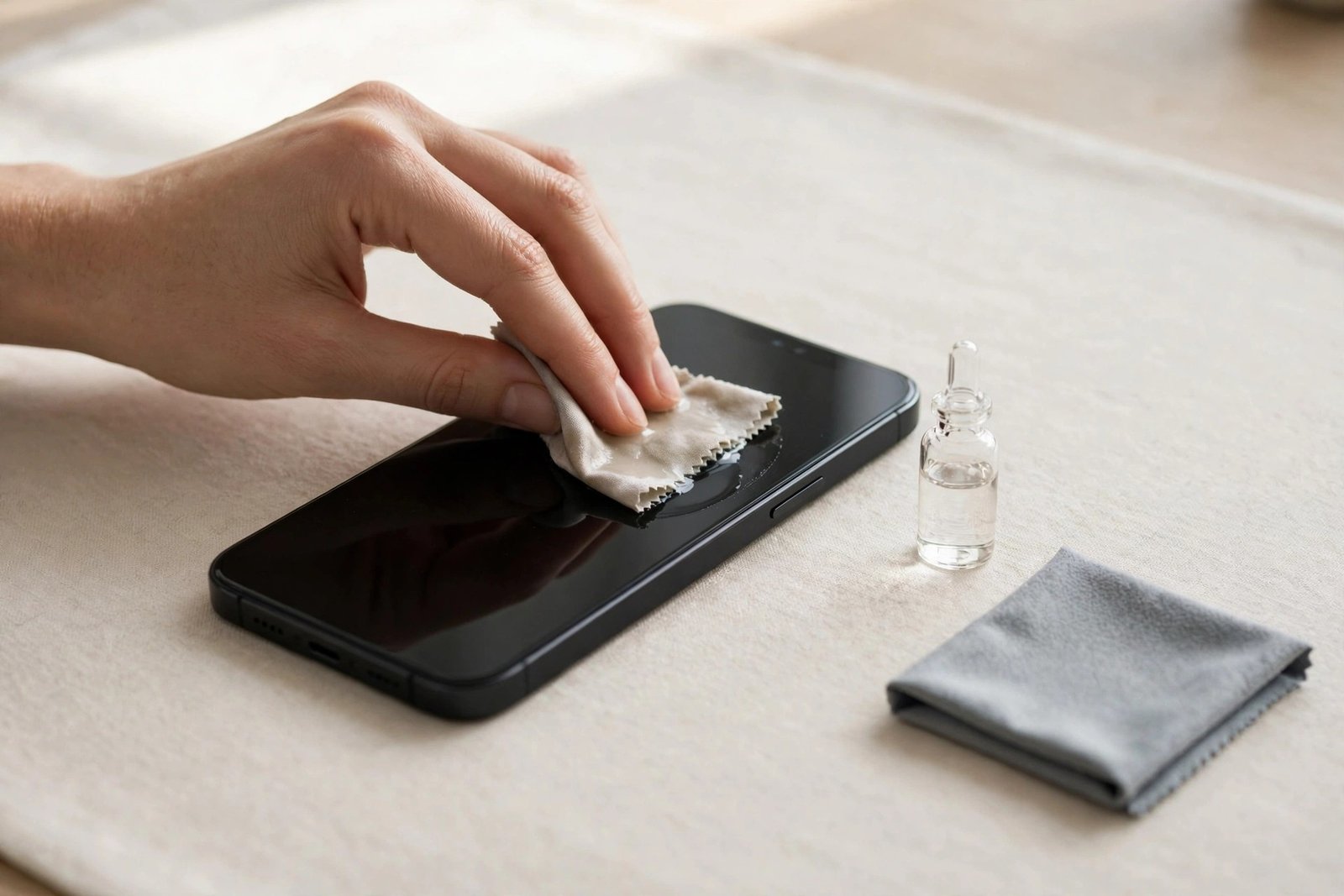
Step 1: Clean thoroughly. Remove your case and clean the screen with the alcohol wipe from the kit, then buff with a microfibre cloth. Keep going until the glass is completely free of grease, dust, and any residue — the new coating bonds to the glass itself, and anything left on the surface becomes a weak spot. Work in a dust-free spot, just as you would for glass.
Step 2: Apply the coating. Following your product’s instructions, wipe or dab the liquid evenly across the whole screen, working methodically so no area is missed and none is flooded. Most kits use a saturated cloth or vial; cover edges and corners deliberately, as these are the areas people most often skip. Step 3: Buff and cure. After the stated waiting time, buff lightly if the instructions say to, then leave the phone untouched for the full curing period — commonly several hours, sometimes overnight depending on the product. Avoid pockets, cases, and water during curing.
How This Differs from Replacing Tempered Glass
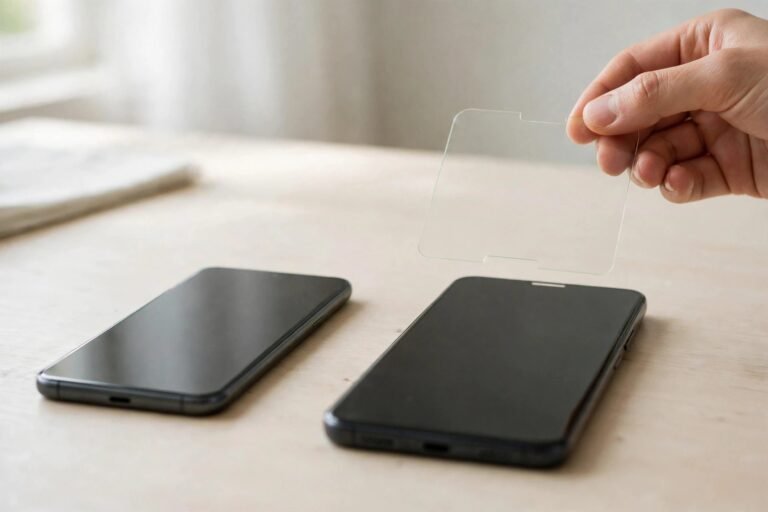
Replacing glass is a physical swap: peel the old sheet off, clean, align, drop the new one on. The old protector leaves completely, and a cracked one must be handled carefully and replaced immediately because its protection is gone. A liquid coating never leaves in one piece — it thins unevenly over months, and the worn remnants do not need stripping off; a fresh application goes over the cleaned surface and renews the layer.
The protection profile differs too. Fresh glass restores both scratch resistance and meaningful impact absorption. A fresh liquid coating restores scratch resistance, smoothness, and water behaviour only — it was never thick enough to absorb a drop. If impact protection is what you are replacing, you need glass, not another coat of liquid.
- Apply a fresh coating in the evening and leave the phone on a desk overnight. That gives it an uninterrupted cure with no pocket friction, calls, or cleaning — the easiest way to get the full lifespan the product promises.
Frequently Asked Questions
Can I apply a new liquid coating over an old one?
Yes — that is the normal process. The old coating will have largely worn away, and its remnants do not need to be stripped. What matters is cleaning the screen thoroughly first so the new layer bonds to the glass evenly rather than to grease and residue.
How do I remove a liquid screen protector completely?
In practice, you mostly do not — it wears off through normal use, which is why replacement is really reapplication. There is no film to peel. Aggressive solvents are not recommended, as they can damage the screen’s own factory coating; time and ordinary handling remove a liquid coating on their own.
Can I put liquid coating over a cracked screen or glass protector?
It will not repair a crack, and coating over damaged glass adds no meaningful strength. Liquid coatings are for intact screens. Most manufacturers also advise against layering products; if you use tempered glass, skip the liquid coating — choose one system and maintain it properly.
Replacing a liquid protector is really renewing it: clean the glass properly, apply evenly, let it cure undisturbed — and repeat whenever the water stops beading.